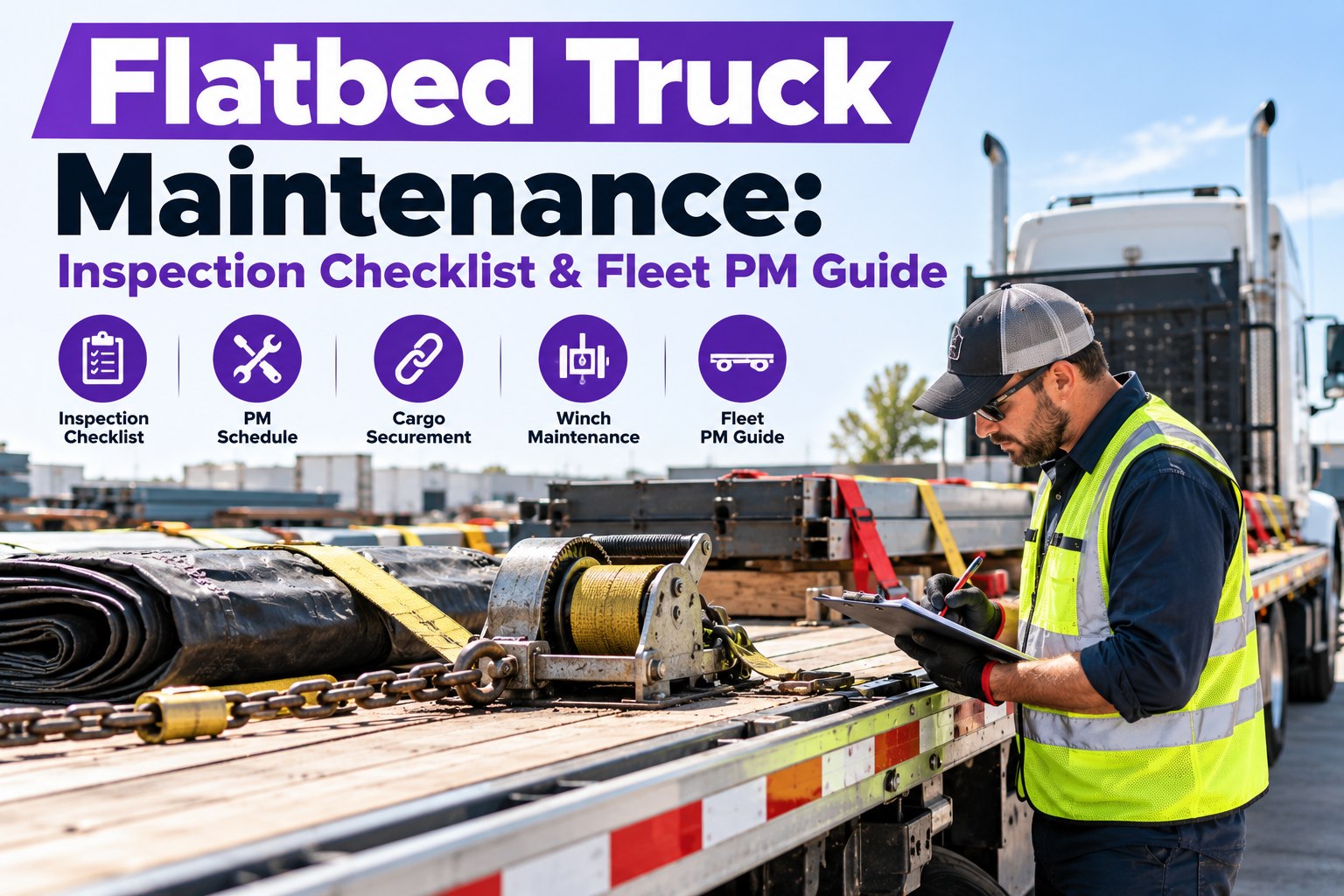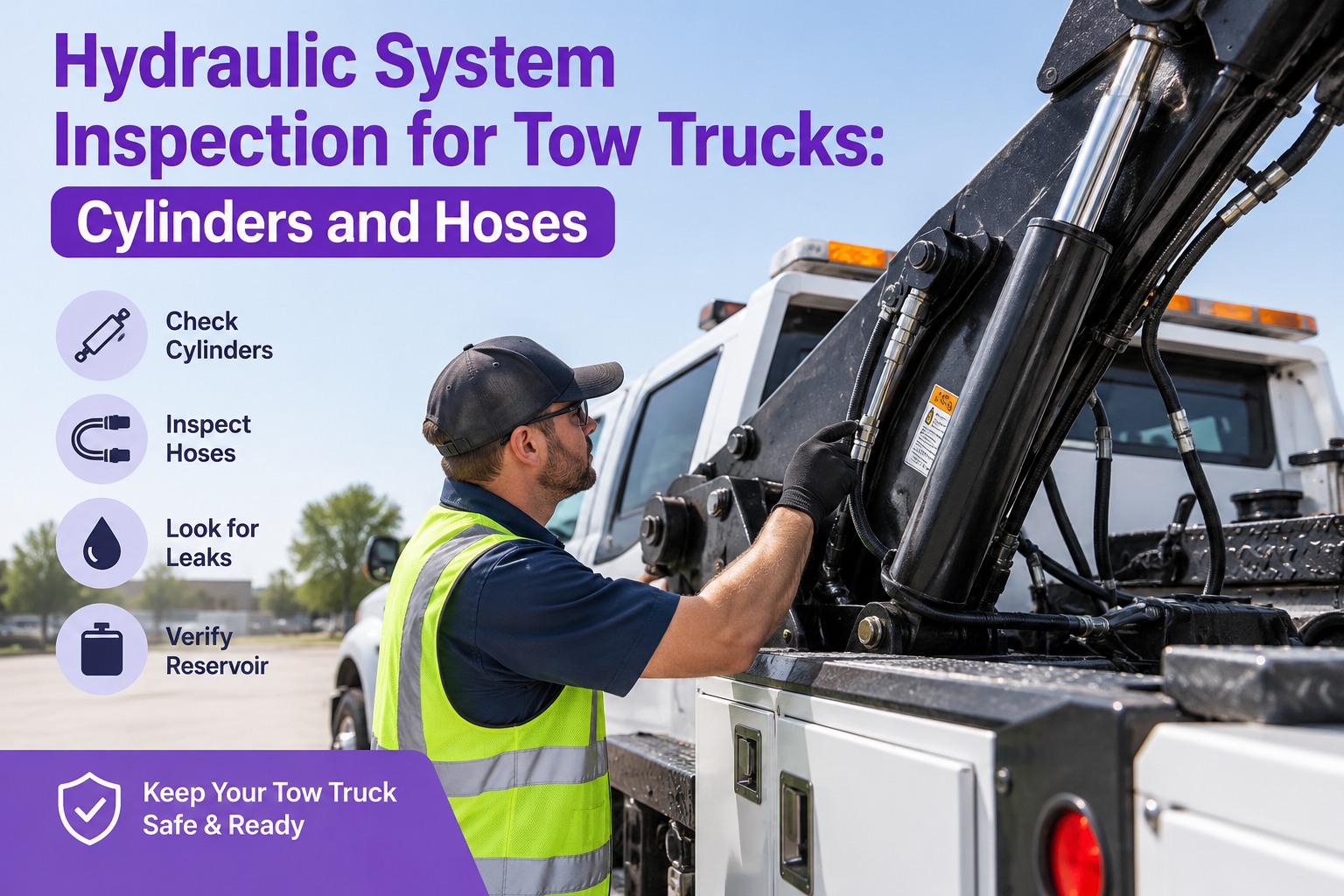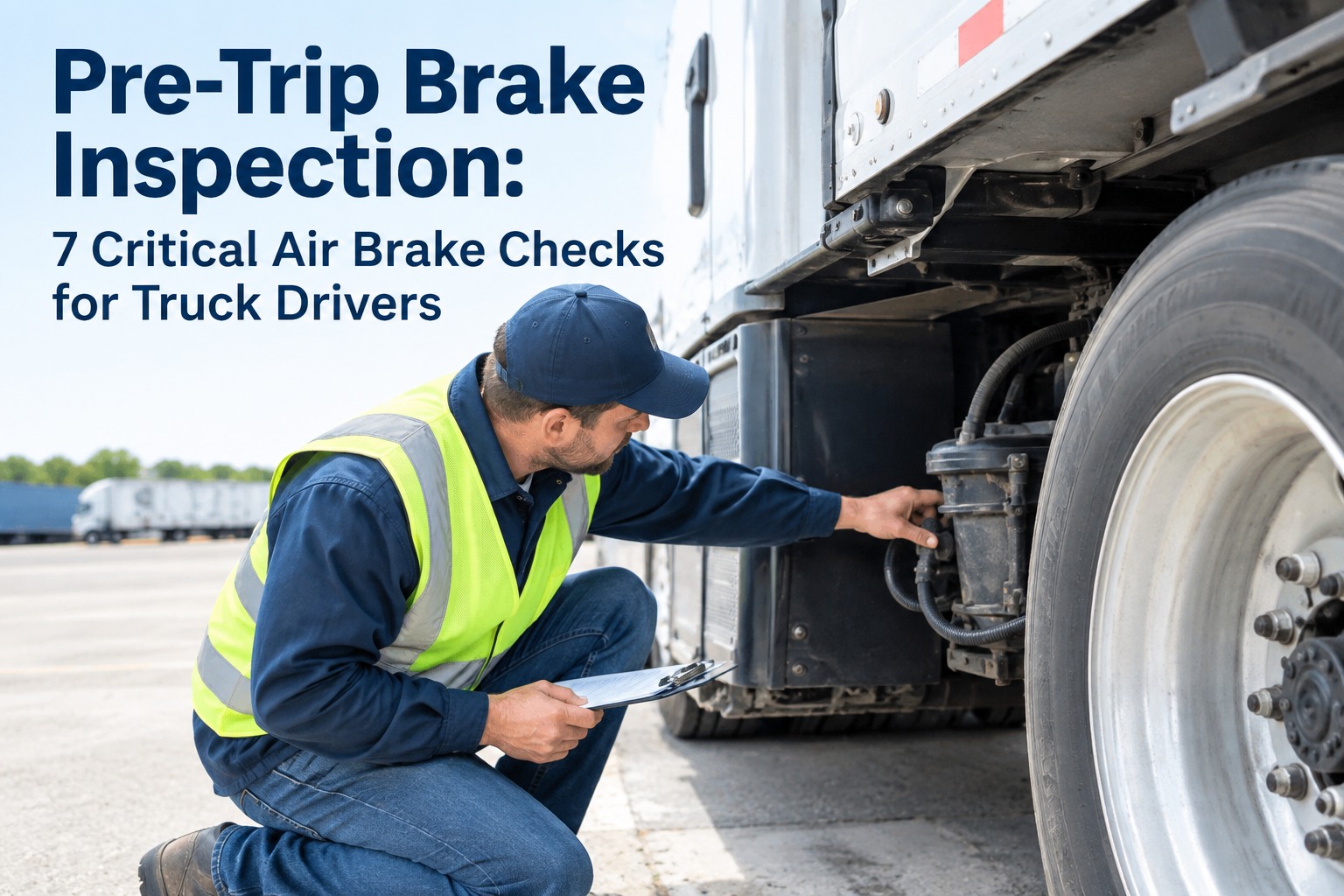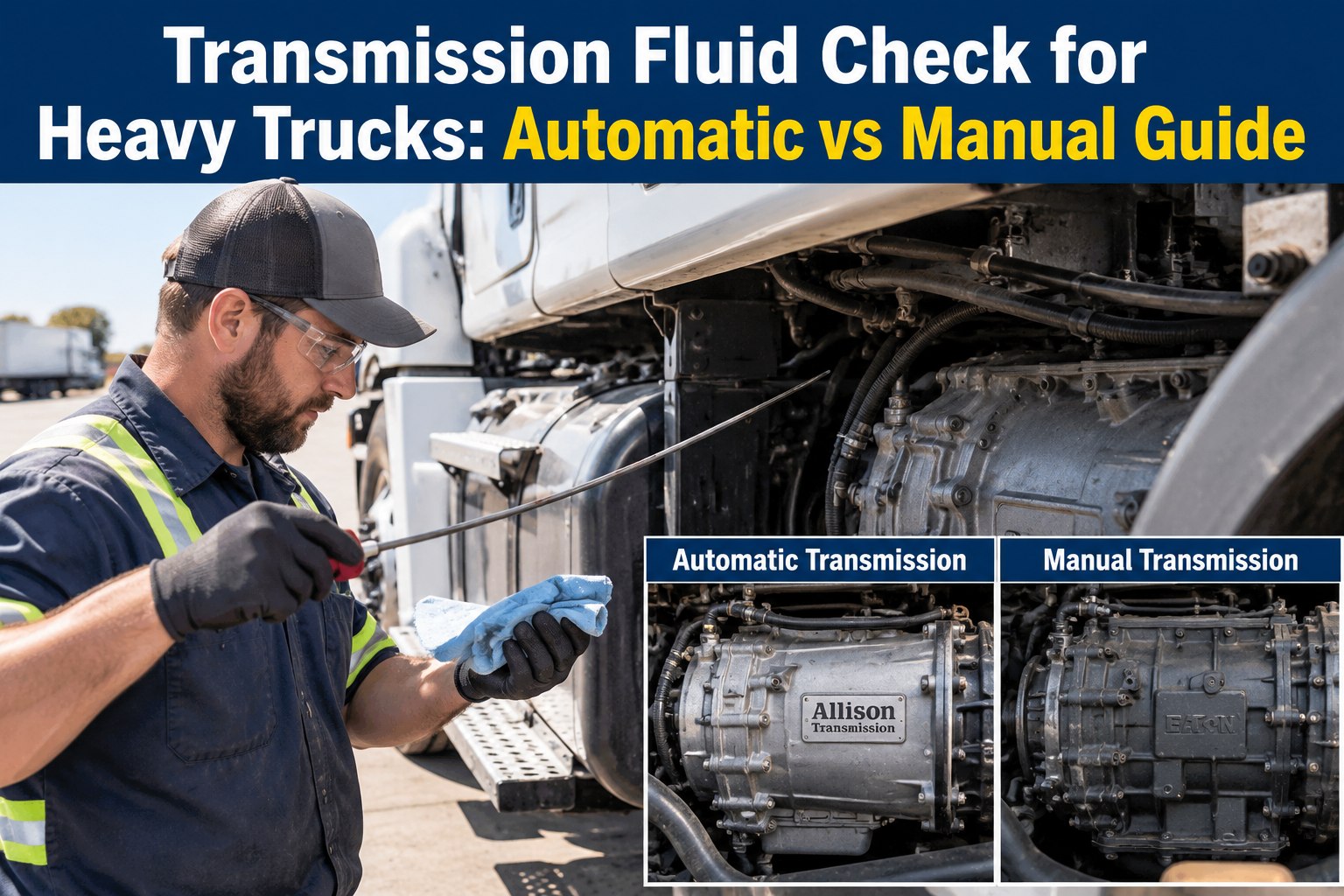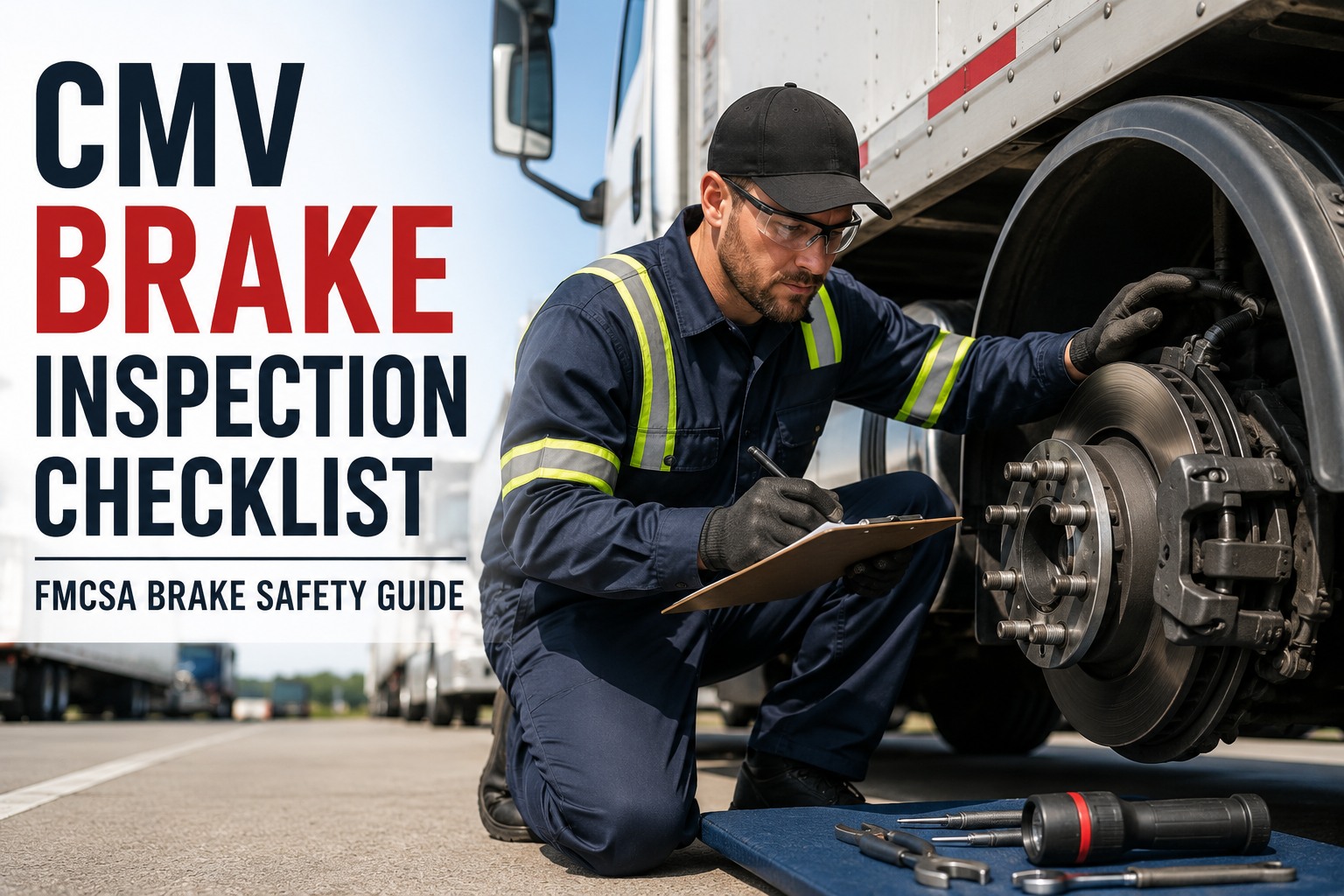
Two commercial trucks can sit side by side in the same yard and need completely different brake maintenance. The Class 8 tractor runs air brakes — its number-one enemy is water condensing inside the reservoirs, purged by a daily drain. The medium-duty box truck runs hydraulic brakes — its enemy is moisture the fluid pulls out of the air on its own, silently dropping the boiling point until the pedal fades on a long downgrade. Same fleet, same drivers, two totally different failure modes, two totally different checks. Get either one wrong and you're looking at a roadside out-of-service order, a failed CSA inspection, or worse — a truck that can't stop when it matters. This guide covers both brake architectures: what to check, how often, what the numbers mean, and how to make sure neither check ever quietly falls off the schedule. Truck Inspection & Maintenance puts the right brake checklist on each truck automatically and routes any defect straight to a work order — sign up free or contact our team.
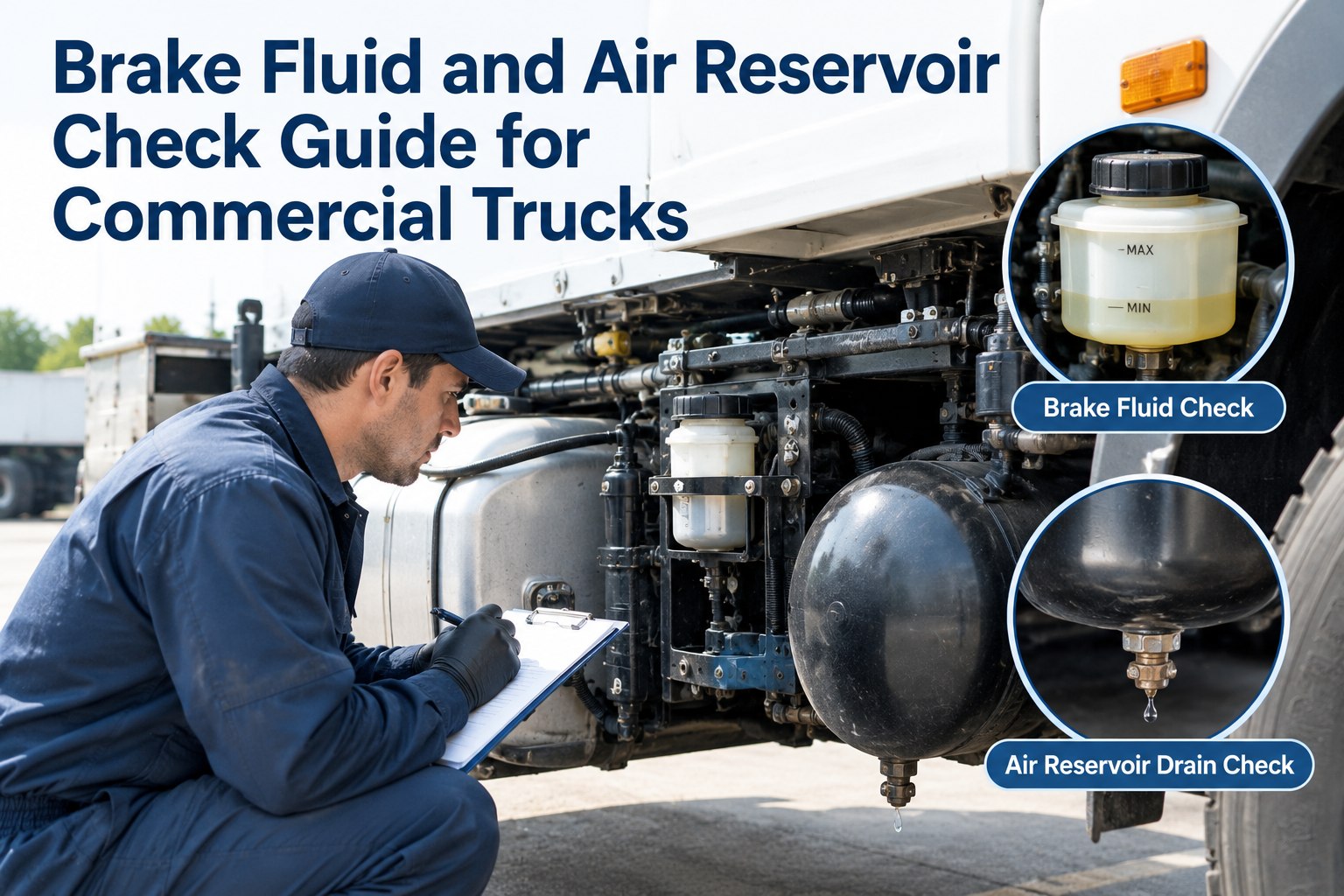
Brake Fluid & Air Reservoir Check Guide for Commercial Trucks
Two brake architectures. Two enemies. Two checks. One missed drain or one saturated fluid = one truck that can't stop.
Why Brake Checks Sit at the Top of the Violation List
Brakes aren't just another PM line item — they're the single most cited system in roadside enforcement. Three numbers frame the stakes:
Brake-related defects are consistently among the top causes of out-of-service orders under CVSA inspection criteria. A single flagged truck is off the road on the spot — plus the CSA score hit that follows your carrier for two years.
DOT 3 fluid boils at 401°F dry. At 1% absorbed water the boiling point falls to ~370°F, at 2% to ~320°F, at 3% to ~295°F. That fade shows up exactly when you need brakes most — on a long, hot descent.
An air reservoir never drained fills with water and oil, corroding the tank wall from inside until it can rupture under normal pressure. Daily draining is the cheapest catastrophic-failure prevention a fleet has.
Put the right brake check on every truck automatically. Start a free account and stop guessing which trucks got inspected.
System A — Air Brake Reservoir Checks
Air brake trucks store compressed air in wet and dry reservoirs. Moisture is the biggest enemy of the whole system — here's the check sequence that keeps it out:
Want a printable air-reservoir daily-drain card for the cab? Contact our team and we'll send one, free.
System B — Hydraulic Brake Fluid Checks
Medium and light-duty trucks use hydraulic brake fluid. It's hygroscopic — it pulls moisture from the air whether the truck runs or not — so it needs its own distinct check discipline:
The Mistake Mixed Fleets Make Most — Running One Brake Checklist for Two Different Systems
A fleet with both air-brake tractors and hydraulic-brake box trucks that uses a single generic "check brakes" line loses on both ends: the air trucks miss the daily drain, and the hydraulic trucks never get a fluid-moisture reading or a flush. The fix isn't more inspections — it's the right inspection per truck. When the system tags each vehicle by brake type and hands the driver only the checklist that applies, nothing gets skipped and nothing irrelevant gets in the way. Start a free account and assign brake-type-specific checklists across your whole mixed fleet in minutes.
Air vs. Hydraulic — The Check-by-Check Comparison
The same word — "brakes" — hides two entirely different maintenance jobs. Here's how they line up side by side:
Not sure how to split your fleet by brake type? Get in touch for a free 15-minute setup walkthrough.
Where Both Checks Quietly Fall Off the Schedule
Neither check is hard. They fail for process reasons, not technical ones — and the same software fix solves both:
Paper DVIRs That Nobody Reads
A driver notes "wet tank drained" on a paper sheet that lands in a bin. When the dryer starts failing, the pattern is invisible. Mobile DVIR capture makes every check a searchable, timestamped record — and surfaces the truck that's been discharging water for a week.
One Generic Checklist for a Mixed Fleet
Air and hydraulic trucks need different checks, but a single template treats them the same. Assign brake-type-specific checklists per vehicle so each driver sees only what applies — the drain check on air trucks, the fluid check on hydraulic ones.
Defects That Never Become Work Orders
A flagged spongy pedal or a stuck drain valve gets noted and then forgotten. Instant defect routing turns any failed brake check straight into a work order assigned to the shop — closing the loop from inspection to repair automatically.
Flush & Desiccant Intervals With No Alarm
Time-based services — fluid flushes and desiccant swaps — slip because they aren't tied to a mileage trigger anyone watches. Automated PM scheduling fires them on calendar, so the moisture-driven services never depend on someone remembering.
The right brake check on every truck, captured on a phone, routed to a work order, and logged for your next DOT audit.
Assign air-reservoir or hydraulic-fluid checklists per vehicle, capture them on driver phones, auto-route defects to the shop, and keep every record audit-ready. Free forever for up to 3 vehicles — create your free account or talk to our team.
KPI Dashboard — 5 Brake-Health Metrics Worth Tracking
Pass/fail on inspection day tells you nothing about trend. These five numbers show whether your brake program is actually working:
Share of air-brake trucks with a documented reservoir drain each operating day. Below 100% is corrosion and freeze risk building silently.
Roadside out-of-service orders for brake defects. Every one is downtime plus a CSA score hit that lingers for two years.
Measured water content in hydraulic brake fluid. At or above 3% the boiling-point margin is gone — flush before it fades.
psi/min loss on the leakdown test, held within FMCSA limits. Rising trend between PMs flags a developing leak early.
Failed brake check to open work order. Above 24 hours means defects sit unaddressed while the truck keeps running.
Track all five automatically as your drivers complete checks — create your free account in 10 minutes.
The 5 Brake-Check Mistakes That Cost Fleets Most
Five patterns show up again and again in fleets that keep getting flagged:
Skipping the Daily Reservoir Drain
Pattern: "The air dryer handles it." The dryer's desiccant saturates, water reaches the tanks, valves freeze one cold morning and the truck won't build pressure. Two minutes a day would have prevented it.
Topping Off Instead of Diagnosing
Pattern: Hydraulic reservoir keeps reading low, so it keeps getting topped off. The real cause — worn pads or a slow leak — goes unaddressed until the pedal drops to the floor.
Never Testing Fluid Moisture
Pattern: Fluid looks "fine," so it's never measured or flushed. It's quietly at 4% water and its boiling point has collapsed. The fade only reveals itself on a long, loaded descent.
Leaving Brake Fluid Bottles Open
Pattern: A half-used bottle sits open on the bench between jobs. Glycol fluid pulls moisture straight out of the shop air, so the "fresh" fluid poured in next week is already contaminated.
One Checklist for Both Brake Types
Pattern: A generic "inspect brakes" item covers the whole mixed fleet. Air trucks skip the drain, hydraulic trucks skip the fluid check, and both gaps stay invisible until an inspector finds them.
Frequently Asked Questions
How often should air brake reservoirs be drained?
Daily — at the end of each operating shift. Draining purges accumulated water and oil before it can corrode tanks, stick valves, or freeze air lines in cold weather. Start with the supply (wet) tank nearest the compressor, where the most moisture collects.
Does hydraulic brake fluid really go bad on its own?
Yes. Glycol-based DOT 3/4/5.1 fluid is hygroscopic — it absorbs roughly 1–2% water per year from the air even if the truck sits. That water lowers the boiling point, so fluid needs periodic flushing on the OEM schedule regardless of mileage.
What's the FMCSA air-loss limit for a leakdown test?
With the engine off and brakes applied, no more than 3 psi per minute for a single vehicle and 4 psi per minute for a combination, plus an extra 1 psi per minute for each additional towed unit. Anything beyond that means a leak to repair before operating.
How do I know if my brake fluid needs changing?
Check color and moisture. Fresh fluid is clear to amber; dark or murky fluid signals age. Test strips or a moisture meter read water content — at 3% or higher, flush it. A spongy pedal or brake fade on grades is a late warning sign that shouldn't be reached.
My fleet has both air and hydraulic trucks — how do I manage both?
Tag each truck by brake type and assign it the matching checklist so drivers only see the check that applies. That keeps the daily drain on air trucks and the fluid/flush discipline on hydraulic trucks without one generic list letting either slip.
How does Truck Inspection & Maintenance help with brake checks?
It assigns brake-type-specific checklists per vehicle, captures them via mobile DVIR, routes any defect straight to a work order, and schedules flushes and desiccant swaps automatically — with every record kept audit-ready. Free forever for up to 3 vehicles — sign up in 10 minutes or contact us.
Two brake systems, two enemies, two checks — one platform that makes sure the right one runs on every truck, every time.
Air-reservoir and hydraulic-fluid checklists assigned by vehicle, captured on driver phones, routed to work orders, and logged for your next DOT audit — with flush and desiccant intervals fired automatically. Free forever for up to 3 vehicles — no hardware, no contract, no credit card.