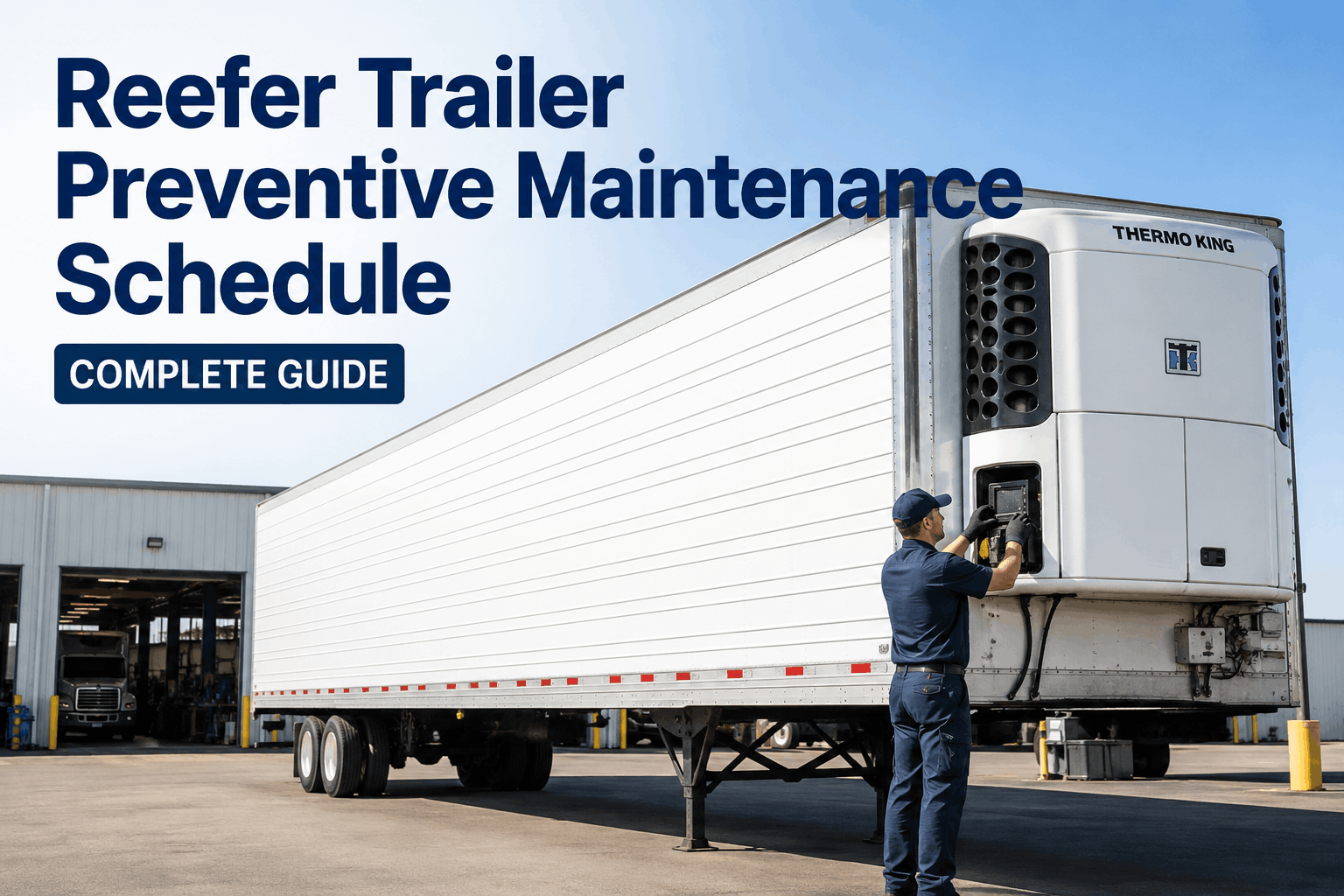
Reefer PM Schedule: Quarterly and Annual Service Checklist Guide
By William Jerry on September 29, 2026
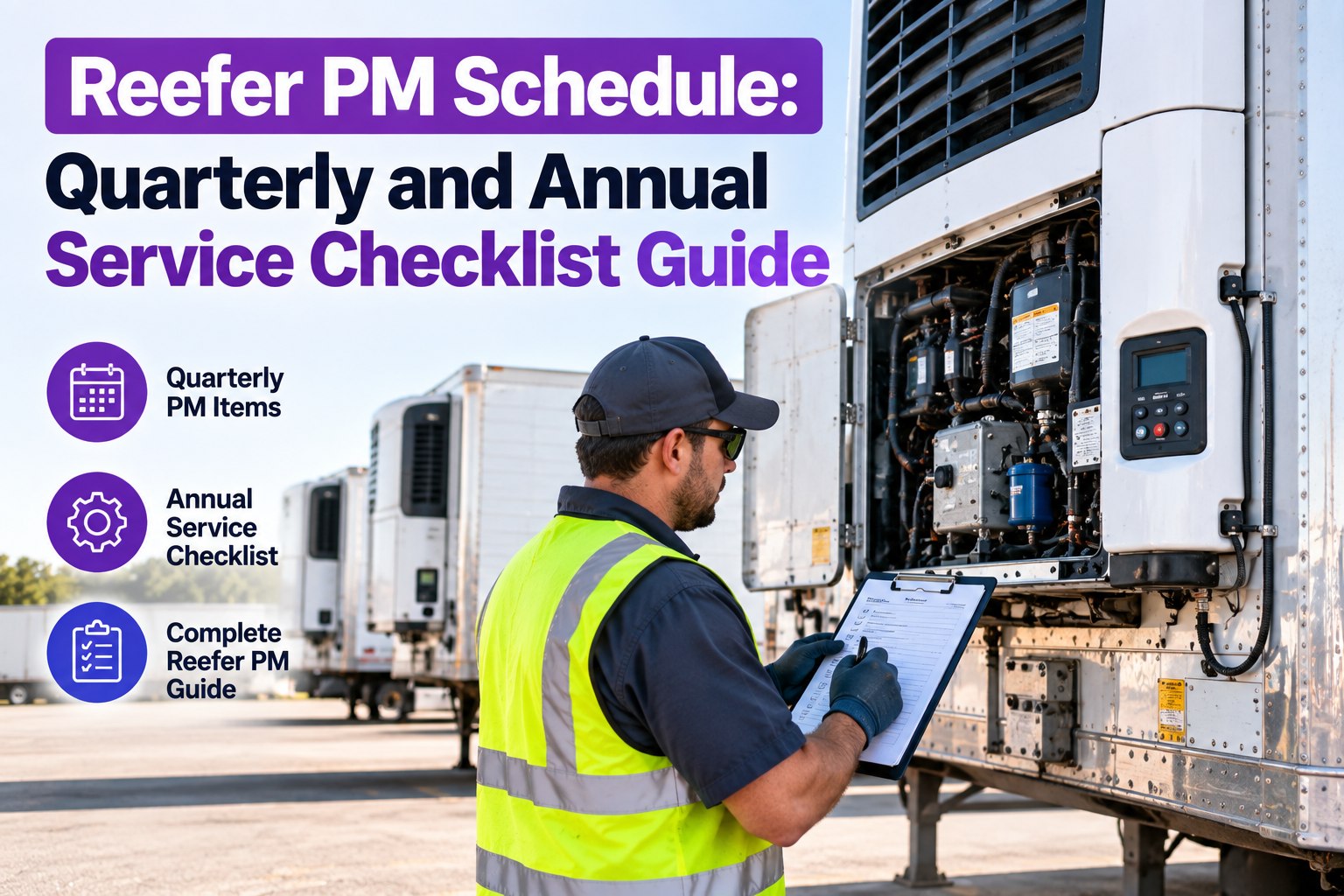
Here's what trips up fleets new to reefers: the trailer's odometer lies. A reefer's diesel engine keeps running when the trailer is parked — idling at the dock, holding a load overnight — so it stacks up engine hours completely independent of miles. Schedule PM on mileage and you'll service a hard-run unit far too late. Reefer PM runs on engine hours, in stacked tiers: a quick 250-hour look, a 500-hour service, a 1,000-hour major, and a 1,500-hour overhaul review. Miss the rhythm and the failure shows up in the worst place — mid-load, in peak season, with a trailer full of product going warm. This guide lays out the hour-based schedule plus the quarterly and annual checklists, and how Truck Inspection & Maintenance Management Software (TIM) tracks every reefer's hour meter and fires each interval on time. Start free and schedule reefer PM by engine hours.
Engine-Hour PM · Quarterly · Annual · Peak-Ready
The Trailer's Odometer Lies. Your Reefer Runs on Engine Hours.
You want a reefer PM program timed to how hard the unit actually works — not the miles the trailer rolled while the engine idled at a dock all night. This guide gives you the hour-stacked schedule, the quarterly checks, and the annual service that keeps a unit reliable through peak. TIM runs it: track the hour meter, fire each interval on time, and log every service. A defect logged gets a first response within 4 hours — acknowledged, graded, and assigned.
Hoursnot miles — reefers idle hours the trailer never rolls
4 tiers250 · 500 · 1,000 · 1,500-hour service stack
4-hourfirst response on every logged defect
The Hour-Stack — Why Reefer PM Isn't Like Diesel Truck PM
Each tier builds on the last: everything in the 250-hour check happens again at 500, plus more. Read it as a stack, not four separate lists. The engine-hour clock is what catches wear a mileage schedule misses entirely.
~250 hrs
Quick visual
Belt tension, door seals, refrigerant pressure, and overall unit condition — a fast eyes-on between services.
Compressor performance test, condenser/evaporator cleaning, and full defrost-system verification.
~1,500 hrs
Overhaul review
Overhaul assessment and component-replacement planning before wear becomes failure.
Intervals are illustrative of common reefer service tiers — Thermo King and Carrier publish their own engine-hour schedules. Always follow your unit's OEM schedule for exact timing.
The Quarterly Checklist — Catch Drift Before It Costs a Load
On top of the hour tiers, run a quarterly pass focused on the parts that drift silently — the ones that fail without an alarm until product is already warm. These are the quarterly-cadence items.
QuarterlyRun every ~3 months, on top of the hour-tier services
The Annual Service — the Deep Pass Before Peak
Once a year the unit gets the full workup — the components a quarterly glance can't judge. Time it before your peak season so the trailer that's hardest to spare isn't the one that fails in July.
AnnualRun once a year — schedule it before your peak season
Why timing matters most A reefer failure isn't like a tractor failure — it doesn't just strand a truck, it can spoil an entire trailer of product. That's why the annual deep service is scheduled before peak season, not during it: the unit you can least afford to lose in July is the one that's been running the most idle hours all spring. PM timed to engine hours catches the wear; PM timed to the calendar puts the deep pass where it protects the season.
A Reefer's Hour Meter Doesn't Watch Itself. TIM Does.
TIM tracks each reefer unit by engine hours, not trailer miles — so the 250, 500, 1,000, and 1,500-hour services fire on the clock that actually matters, with the quarterly and pre-peak annual passes scheduled per unit. A failed belt, a drifted probe, or a low charge gets photographed, opens a work order, and holds the unit until it's certified. Every service, calibration, and alarm lands in a searchable record — the trail an FSMA audit and a warranty claim both need.
Why is reefer PM scheduled by engine hours instead of miles?
Because a reefer's diesel engine keeps running when the trailer isn't moving — idling at the dock, holding a load overnight — so it accumulates engine hours independent of trailer mileage. A unit that's logged few miles can still have run hundreds of hours, and a mileage-based schedule would service it far too late. That's why reefer PM stacks on engine hours: roughly a 250-hour visual, a 500-hour routine service, a 1,000-hour major, and a 1,500-hour overhaul review. Start free and schedule by hour meter.
What's done at each reefer service interval?
The tiers build on each other. At ~250 hours: a quick visual of belt tension, door seals, refrigerant pressure, and overall condition. At ~500 hours: oil and filter change, coolant inspection, air-filter replacement, and battery/wiring check. At ~1,000 hours: compressor performance test, condenser and evaporator cleaning, and defrost verification. At ~1,500 hours: overhaul review and component-replacement planning. Thermo King and Carrier publish their own exact hour intervals, so always confirm against your unit's OEM schedule. Contact us to load your OEM schedule into TIM.
Why does temperature-probe calibration matter so much?
Because a drifted sensor creates an invisible failure. The reefer reads and holds its set point off the probe, so if that probe has drifted, the unit will happily run a load warm while every log looks perfect — no alarm, no warning, until the product arrives out of spec. Verifying probes against a known reference on the quarterly pass, and recalibrating annually, is what keeps the temperature you see matching the temperature the product actually feels. Start free and log every probe calibration.
When should the annual reefer service be done?
Before your peak season, not during it. A reefer failure can spoil a whole trailer of product, so the deep annual pass — compressor test, full fluids, electrical, defrost, structural, and recalibration — is best timed ahead of the months you can least afford a unit down. Units accumulate the most idle hours in the run-up to peak, so scheduling the annual just before it catches that wear while there's still slack to take a trailer out of service. Contact us to time the pre-peak service per unit.
Time the PM to the Hours — and Head Into Peak Reliable
Four hour-based tiers, a quarterly drift check, and a pre-peak annual deep service. TIM tracks each reefer's engine hours, fires every interval on time, and keeps the service and calibration trail an audit and a warranty claim both need — so the unit you can't spare isn't the one that fails.