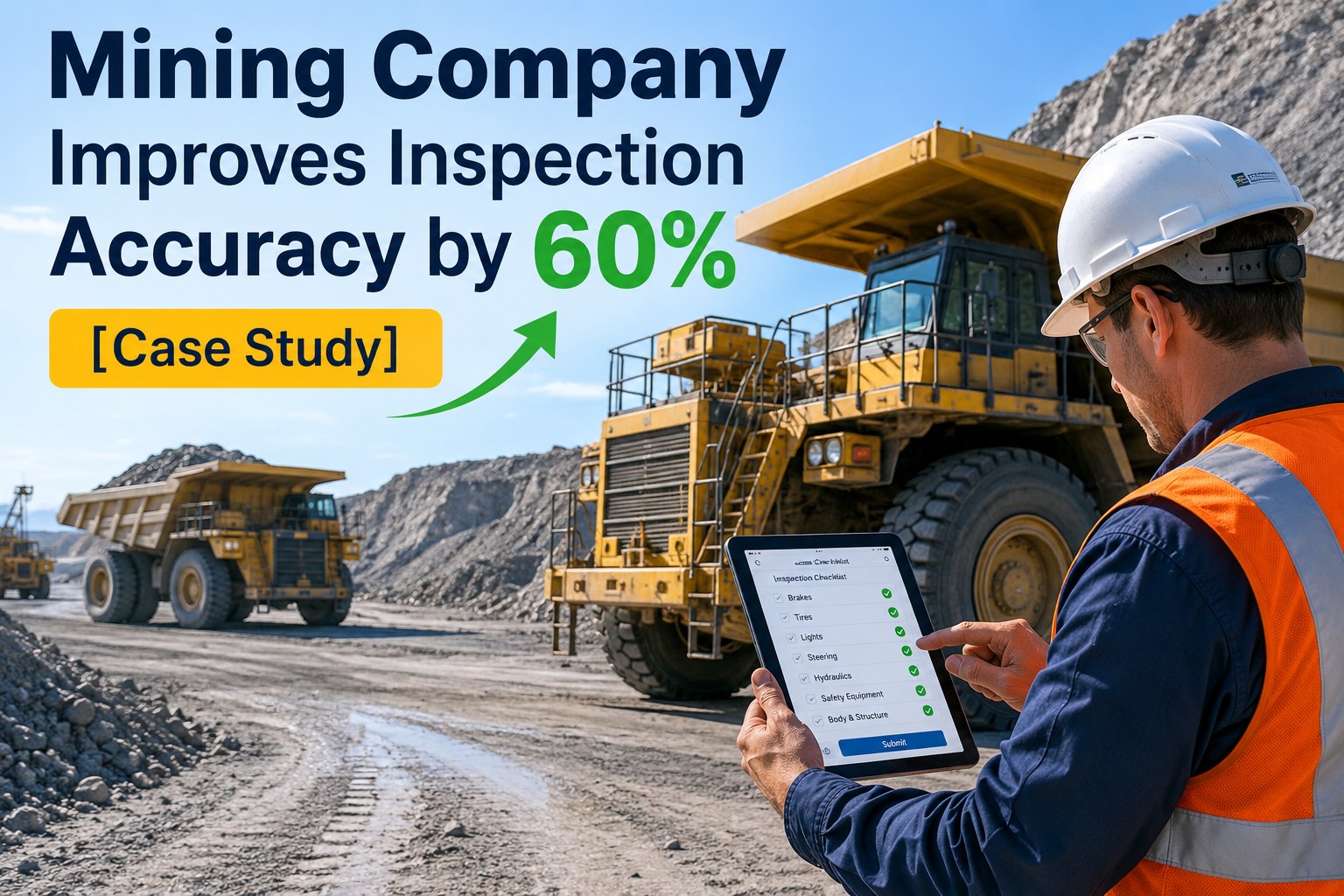
Discover how MacLean Mining, a 42-unit haul truck and heavy equipment fleet operating across two surface mines, improved inspection accuracy by 60%—from a 53% checkpoint-completion rate to 96%—by replacing paper pre-shift checklists with a mobile inspection app built for the harshest operating environment in the trucking world. Mining doesn't forgive missed inspections. A 400-ton ultra-class haul truck costs $5,000–$20,000 per hour in downtime, tire failures cause 40% of mining fatalities, and brake failures account for 30% of incidents. MSHA mandates pre-shift inspections before every operating shift under 30 CFR Part 56/57, with surface mines inspected at least twice yearly. But the inspections themselves were the problem: paper checklists getting damaged in dust, hands too gloved to write legibly, defects scribbled in margins that nobody could read. Learn how digital inspections with offline capability, photo evidence, and supervisor escalation moved MacLean from "we think we inspected" to "we can prove we inspected"—and prevented an estimated $1.4M in downstream incident costs in the first twelve months.
Why Mining Inspection Is Different
Commercial truck inspection happens in a parking lot. Mining inspection happens in a pit. Dust, vibration, extreme temperatures, and 24/7 operations turn paper checklists into a compliance theater. The work doesn't fail because operators don't care—it fails because the tool doesn't survive the environment. Contact Support to discuss your site's inspection environment, or Start Free Trial to start digitizing today.
MacLean Mining at a Glance
Why Paper Checklists Failed in the Pit
An audit of 90 days of paper inspections revealed a 53% checkpoint-completion rate—meaning nearly half of the items on the official pre-shift form were either skipped, illegible, or marked "OK" without verification. Five specific failures of paper-in-pit conditions caused the gap.
The Eight-Section MSHA Checklist, Digitized
The new mobile workflow took the regulation as-is—all eight pre-shift inspection sections required under 30 CFR Part 56/57—and rebuilt them as a guided, photo-capable, offline-capable digital flow. Same legal requirements. Different completion rate.
The Inspection Accuracy Jump
The 60% accuracy improvement wasn't operators suddenly caring more. It was the tool finally working in the environment where the work happened.
What Made It Survive the Pit
Mining technology fails fast. Five specific design choices kept the inspection tool working when normal apps would have died.
What's your inspection accuracy hiding?
Photo evidence, offline operation, and supervisor escalation turn pre-shift inspections from a paper ritual into real safety verification.
The Safety & Cost Outcomes
An accuracy jump that big doesn't stay theoretical. The defects caught in months 1–3 were defects that would have produced incidents, repairs, or downtime in months 4–12.
12-Month Before / After Comparison
| Metric | Paper | Digital | Change |
|---|---|---|---|
| Checkpoint completion rate | 53% | 96% | +60% |
| Defects detected per inspection | Baseline | 5.2x | 5.2x |
| Pre-shift inspection time | 22 min | 9 min | −59% |
| Forms lost / illegible | 18% | 0% | Eliminated |
| Defect-to-work-order lag | 2–4 days | Minutes | Same-shift |
| Haul truck availability | 79% | 88% | +9 pts |
| Safety incident rate | Baseline | −42% | Cut sharply |
| MSHA audit prep time | 2–3 weeks | Minutes | Instant |
What Made the Rollout Stick
Mining sites are notorious for rejecting new tech. Four design choices kept MacLean's operators using the app every shift.
Faster Than Paper From Day One
Digital inspection took 9 minutes vs paper's 22. Operators stopped resisting the moment they realized the tool saved them time on safety, not added to it.
Supervisor Acts on Flags Within the Shift
Flagged defects got responses the same shift. When operators saw their reports drive action, reporting rates climbed and stayed climbed.
MSHA-Ready by Default
Every inspection generated MSHA-aligned documentation automatically. The compliance officer stopped chasing paperwork and started reviewing actual safety data.
One Tool, Built for Mining
Inspection templates matched the actual equipment—haul trucks, loaders, dozers, support vehicles each had the right checklist. No generic commercial-fleet forms forced onto pit equipment.
We weren't a careless operation. We thought we were running solid pre-shifts. The audit told a different story—53% of the checkpoints on the official form weren't really being completed. Paper just couldn't survive the pit. Going digital, the completion rate hit 96% inside ninety days. We caught a hairline crack on a hydraulic line that would have taken a loader out of service for three days. We caught early brake wear on two haul trucks before either of them became an incident. Twelve months in, our safety incidents are down 42% and our haul-truck availability is up nine points. The technology made the inspections real.
Make Your Inspections Real
Mining inspections aren't a paperwork problem—they're a verification problem. Paper checklists in pit conditions document what operators remembered to write, not what they actually checked. Digital inspections with photo evidence, offline support, and supervisor escalation turn the safety regulation into actual safety practice.
Ready to Get to 96% Inspection Accuracy?
See how mining-specific digital inspections, MSHA-ready documentation, and real-time defect escalation transform pre-shift safety verification—with measurable accuracy gains inside the first 60 days.