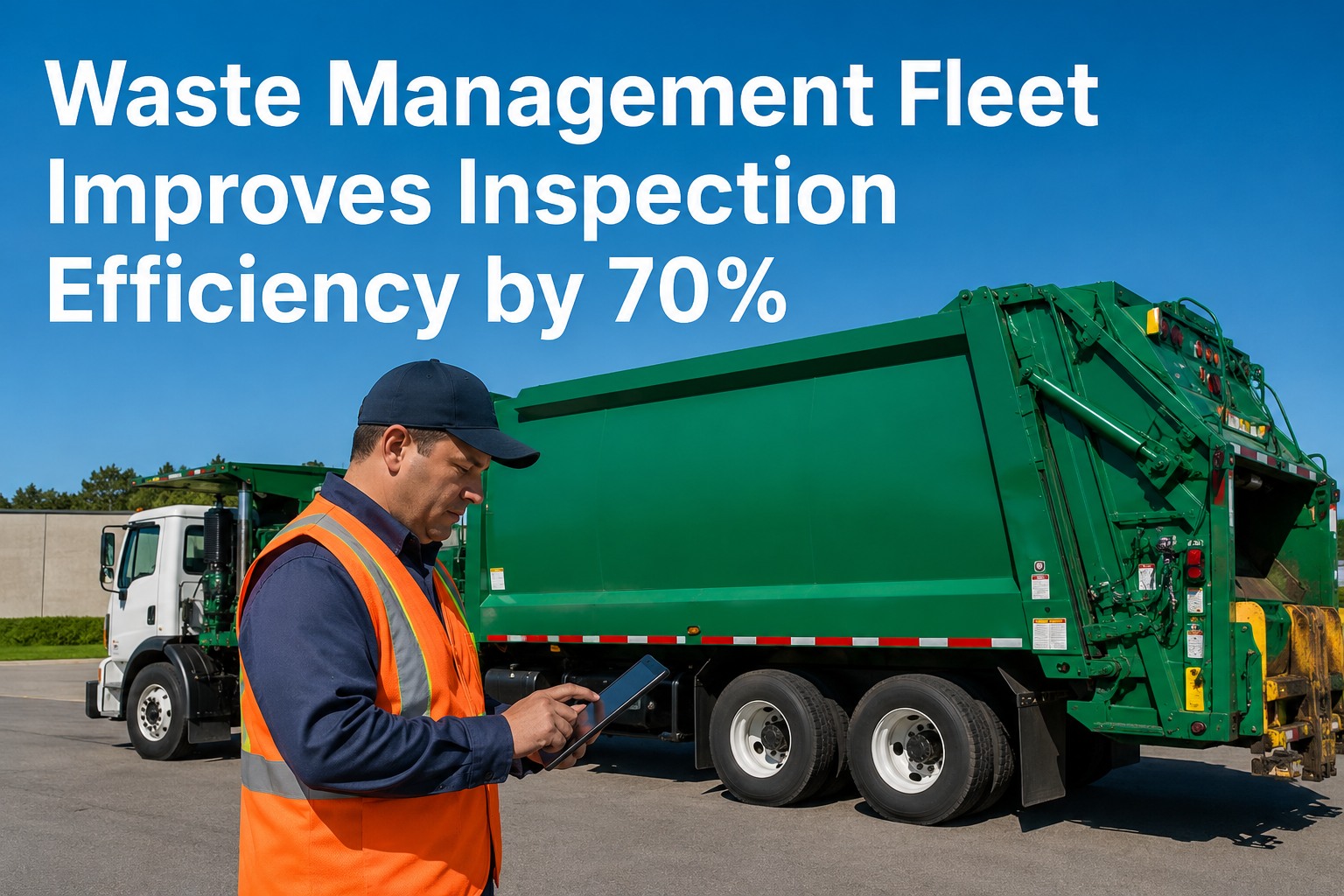
Discover how a 64-truck waste management fleet improved inspection efficiency by 70%—cutting average pre-trip inspection time from 14 minutes per truck down to under 4 minutes—by replacing generic paper DVIRs with a refuse-specific mobile inspection app. With drivers running 800–1,200 stops per shift in stop-and-go residential routes, hydraulics cycling thousands of times a day, and engine wear accumulating 3–4x faster per mile than over-the-road trucks, refuse trucks operate in the harshest conditions of any commercial vehicle class. The fleet was losing 90+ minutes every morning to inspections that, on paper, were "completed"—but skipped hydraulic line checks, ignored packer panel alignment, and missed the riding-step grip surface defects that produce OSHA-citable incidents. Learn how a refuse-specific digital DVIR with photo evidence, truck-type-specific checklists (rear loader, front loader, side loader, roll-off), and real-time defect routing turned the morning inspection ritual from a 14-minute paper exercise into a 3.9-minute photo-verified safety record—and cut hydraulic-related mid-route breakdowns by 64% in the same year.
Why Refuse Trucks Break Standard DVIRs
A standard FMCSA pre-trip checklist was written for over-the-road tractors. Refuse trucks share four wheels and a frame with OTR trucks—and nothing else. Five characteristics make generic DVIRs systematically inadequate for waste fleets. Contact Support to discuss your waste-fleet inspection setup, or Start Free Trial to start digitizing today.
The Waste Fleet at a Glance
The 70% Time Cut, Per Truck
The clearest way to see the efficiency gain is at the single-truck level. Each morning, every driver completed an inspection. The paper version took 14 minutes. The digital version takes under 4. Multiply by 64 trucks, 250 working days, and the math gets uncomfortable for paper.
- Find the right form, find a pen
- Walk around with clipboard, hands occupied
- Write narrative descriptions of any defects
- Carry form back to office, file or hand off
- Forms get lost or damaged in cab folders
- Open app, scan truck QR code, form auto-loads
- Guided walk-around with truck-type-specific items
- Photo defects in seconds, severity auto-classifies
- Digital signature, submission complete
- Work order auto-created for any defect
The Truck-Type-Specific Checklists
The single biggest reason paper DVIRs underperform for waste fleets: one form fits no trucks. Refuse operations run four distinct vehicle types, each with unique high-failure components. Generic forms either bury operators in irrelevant checkpoints or miss critical ones entirely.
The Refuse-Specific Defect Map
Once truck-type checklists were live, the defect mix changed dramatically. The paper system had been catching tires and lights—the easy ones. The digital system surfaced the categories that actually drive refuse-truck breakdowns: hydraulics, body, and safety interlocks.
Paper caught the easy wins. Digital surfaced the refuse-specific defects that actually drive mid-route breakdowns. Hydraulic catches quadrupled. Safety interlock catches multiplied 7x.
How many hidden refuse-specific defects is your paper missing?
Truck-type-specific checklists, photo evidence, and auto work-orders surface what generic forms can't see.
A $200 Hose vs an $8,000 Roadside
The financial case for catching hydraulic issues at the depot, before dispatch, is brutal arithmetic. The same hose costs 25x more if it fails mid-route. The digital DVIR found those weeps before they ruptured.
The Annual Numbers
12-Month Before / After Snapshot
| Metric | Paper | Digital | Change |
|---|---|---|---|
| Pre-trip inspection time per truck | 14 min | 3.9 min | −72% |
| DVIR submission rate | ~68% | 100% | +32 pts |
| Hydraulic defects caught at depot | Baseline | 4.0x | Quadrupled |
| Mid-route hydraulic failures / yr | 33 | 12 | −64% |
| Defect-to-work-order lag | 2–3 days | Under 60 sec | Near-instant |
| Lost or illegible forms | 21% / month | 0% | Eliminated |
| OSHA-citable safety findings | 4 / year | 0 | Eliminated |
| Audit prep time | 3–4 weeks | Minutes | Instant |
What Made It Work in the Yard
Refuse fleets are notorious for rejecting software that doesn't survive yard conditions. Four design choices kept this inspection app in daily use, on every truck, in every kind of weather.
Faster Than Skipping It
A 3.9-minute digital inspection took less time than the workarounds drivers used to dodge paper. When the easy path is the right path, adoption happens without enforcement.
One Truck, One QR Code
Scanning a QR sticker on the cab auto-loaded the right truck-type checklist. Zero ambiguity about which form, which vehicle, which version.
Photo for the Mechanic, Not the Driver
Drivers tapped a defect and snapped a photo. The mechanic saw the actual problem. Ambiguous handwritten descriptions disappeared.
Glove-Friendly & Offline-Capable
Large tap targets, voice notes, offline operation. The tool worked in winter gloves, summer heat, and dead-zone yards. Adoption tracked usability.
For years our morning inspections were a 14-minute paperwork exercise that didn't catch the things that actually break our trucks. Hydraulics, packer alignment, riding-step grip—the items that put workers and the public at risk—were buried in a generic form designed for highway tractors. Going digital, our drivers complete inspections in under four minutes, our mechanics see photos of every defect, and our hydraulic failures dropped 64%. The seventy-percent efficiency gain isn't just about speed—it's about finally inspecting the right things.
Inspect Like a Refuse Fleet, Not a Highway Fleet
Waste trucks aren't OTR trucks with a different paint job—they're a different vehicle class with different failure modes and different safety risks. Refuse-specific digital inspections with photo evidence and truck-type-specific checklists turn the morning ritual from a 14-minute paperwork exercise into a 4-minute safety record that catches what paper has been missing for decades.
Ready to Cut Inspection Time by 70%?
See how refuse-specific digital DVIRs, truck-type-specific checklists, and photo evidence transform morning inspections—with measurable efficiency and safety gains inside the first 30 days.