Logistics operations in 2026 face an unprecedented combination of pressures: rising tariff-driven equipment costs, tighter emissions reporting, mandatory ELDs that audit hours-of-service in real time, customer SLAs demanding 30-minute delivery windows, and a driver labor market where retention costs $8,000-$12,000 per replacement. Add the 2026 FMCSA CSA "Driver Observed" methodology penalizing inspection gaps directly in carrier safety scores, and the gap between fleets that operate reactively and those that operate strategically has never been wider. Industry data shows logistics fleets running unified management platforms achieve 12-22% fuel reduction through dynamic route optimization, 70% less time on regulatory documentation, predictive maintenance that catches component failures 20-45 days before breakdown with 85-95% accuracy, and aggregate cost reductions of 25-35% within the first year. Truck Inspection & Maintenance is the cloud-based fleet management platform built for logistics operations — handling digital inspections, PM scheduling, work order automation, compliance reporting, and real-time visibility in one integrated system. This guide walks through the eight strategies winning logistics fleets are deploying in 2026 and the tools that actually deliver. Talk to our team for a logistics fleet walkthrough.
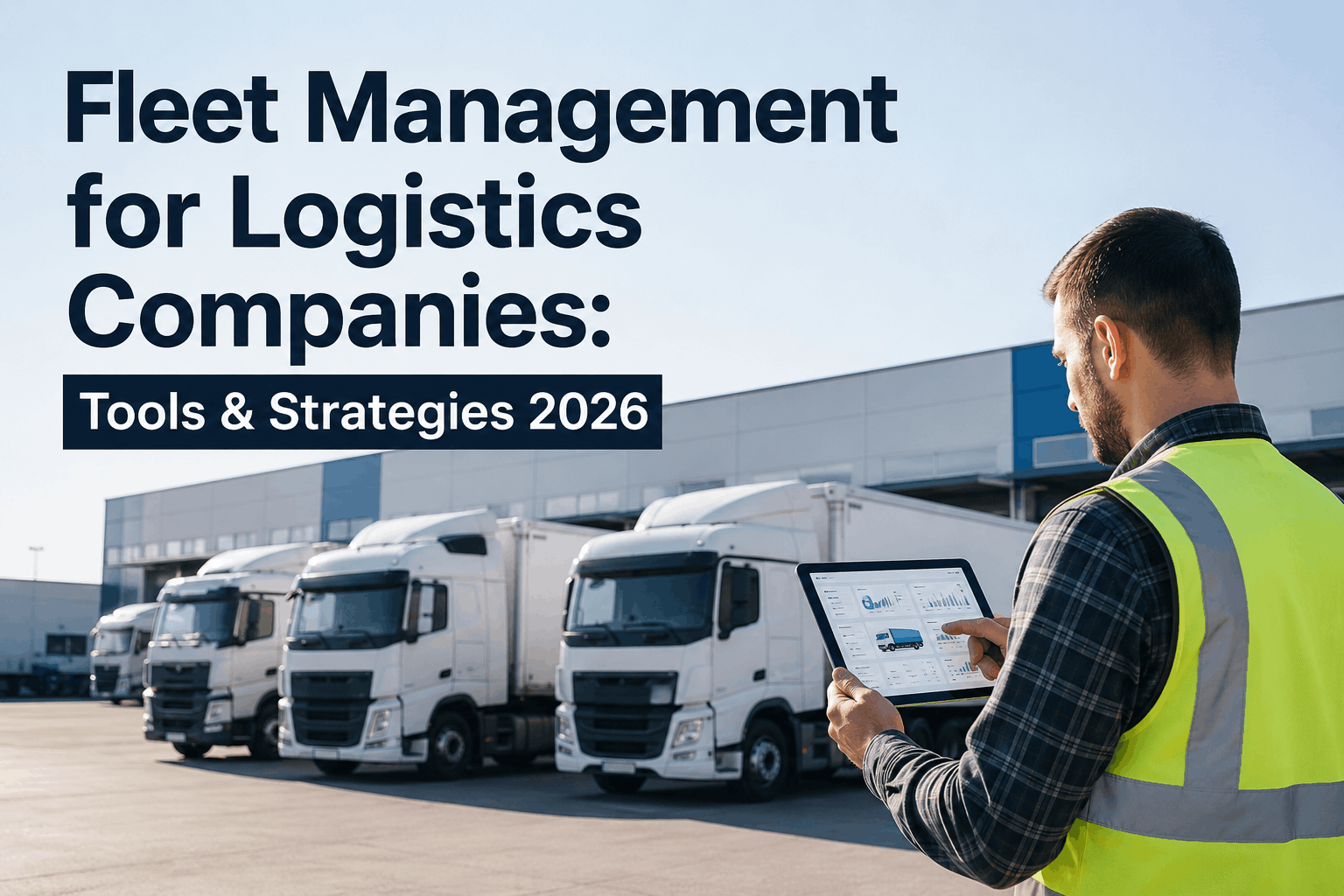
Fleet Management for Logistics Companies: Tools & Strategies 2026
Route optimization. Digital inspections. Real-time visibility. Truck Inspection & Maintenance unifies it.
The 6 Pressures Defining Logistics Operations in 2026
Every logistics fleet manager is navigating these six pressures simultaneously. Truck Inspection & Maintenance addresses each one through specific capabilities:
Equipment Cost Inflation
Section 232 steel/aluminum tariffs flowing through parts and new equipment costs. Heavy-duty trucks up 3.7% year-over-year. Lifecycle management decisions now central to profitability.
Tighter FMCSA & CSA Scoring
2026 CSA "Driver Observed" methodology penalizes inspection thoroughness gaps directly. $19,000 DVIR falsification fines. Insurance underwriters price the changes in.
Customer SLA Compression
30-minute delivery windows now standard for premium contracts. Missed pickups trigger SLA penalties. Real-time visibility no longer optional — it's the contract requirement.
Driver Retention Economics
Replacing a driver costs $8,000-$12,000. Drivers stay 3x longer on fleets with reliable equipment and digital tools. Maintenance program quality directly affects retention.
Emissions & Sustainability Reporting
2026 brings mandatory emissions reporting in many jurisdictions. Shippers increasingly require "certified green" partners. EV adoption accelerating from pilots to fleet integration.
Insurance Premium Volatility
Nuclear verdicts averaging $27.5M push commercial trucking insurance up 15-40% at renewal. Fleets without documented safety programs face market-decline territory.
The 8 Strategies Winning Logistics Fleets Deploy
These eight strategies separate logistics fleets gaining market share from those losing margin. Truck Inspection & Maintenance enables every strategy in one platform:
Dynamic Route Optimization
Truck-grade routing factoring vehicle dimensions, weight, toll cost, road restrictions, hazmat, HOS, and live traffic. 12-22% fuel reduction. Replaces static dispatch with real-time recalculation.
Digital DVIRs at Scale
Mobile inspection apps replacing 39,000+ paper forms per 50-truck fleet annually. 99% compliance vs 61% paper. GPS-tagged, photo-verified, FMCSA-authorized eDVIRs.
Predictive Maintenance
AI pattern recognition catches component failures 20-45 days before breakdown with 85-95% accuracy. Truck Inspection & Maintenance correlates DVIR data, telematics, and PM history.
Automated Compliance Reporting
DOT, FMCSA, IFTA, state-level reporting auto-generated from existing operational data. 70% reduction in admin time. One-click audit exports across regulations.
Real-Time Fleet Visibility
Live position, ETA forecasting, defect status, PM compliance — visible to dispatch, customer service, and customers simultaneously. Customer disputes resolve in minutes.
Lifecycle-Based Replacement
Replace decisions based on maintenance history + fuel efficiency + residual value — not just age/mileage. 15-25% lifecycle cost reduction with data-driven planning.
Driver Performance Coaching
Per-driver scorecards on inspection quality, defect detection rate, MPG variance, harsh-event frequency. Data-driven coaching replaces generic "drive safer" exhortations.
EV & Sustainability Integration
EV fleet tracking (battery state, charge scheduling, range planning). Emissions reporting per vehicle. Eco-routing factoring CO₂ alongside time and cost.
The Tool Stack Every Logistics Fleet Needs
Modern logistics operations require six integrated tool categories. Truck Inspection & Maintenance delivers all six in one platform — eliminating the integration gaps between separate systems:
Mobile Inspection (eDVIR)
Driver pre-trip and post-trip inspections via mobile app. Photo capture, GPS tagging, severity routing. FMCSA-authorized under 49 CFR §396.11.
PM Scheduling Engine
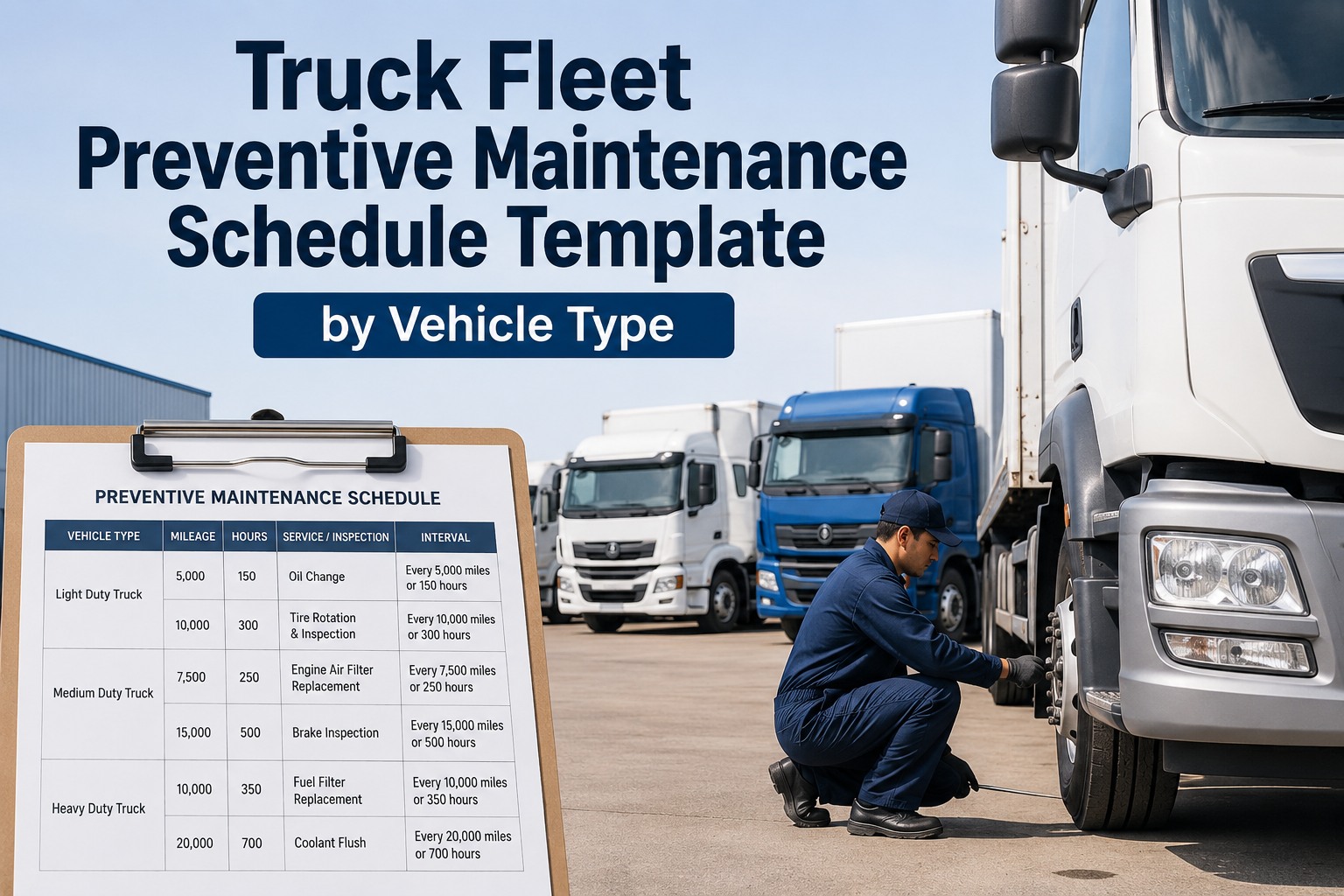
Multi-trigger logic: mileage, engine hours, calendar, cycle count. Auto-generates work orders at threshold. Parts pre-staging eliminates "waiting for parts" delays.
Work Order Management
Auto-creation from DVIR/PM/telematics. Smart technician assignment. Mobile tech app. Parts integration. Compliance auto-logging on FMCSA repair certifications.
Real-Time Analytics
CPM, MTTR, MTBF, planned-vs-reactive ratio, fuel efficiency. Live dashboards refreshed continuously. Industry benchmarks built in for context.
Telematics Integration
Geotab, Samsara, Motive, Verizon Connect data flows in for real-time mileage, engine hours, fault codes, driver behavior. No manual odometer entry.
Compliance & Audit Tools
DOT, FMCSA, CSA, IFTA, state reporting auto-generated. One-click audit packets per vehicle/date range. Retention schedules automated per regulation.
The Routing Revolution — Beyond Shortest Path
Traditional routing optimized for shortest distance or fastest time. 2026 logistics routing optimizes for operational outcomes across eight dimensions simultaneously. Truck Inspection & Maintenance integrates the data that makes this possible:
Run your logistics fleet on one platform, not five
Truck Inspection & Maintenance unifies inspection, PM, work orders, compliance, and analytics for logistics operations. 12-22% fuel reduction, 70% less compliance admin, 20-45 day predictive maintenance window. Sign up free on your first 3 vehicles in 10 minutes.
The Financial Math for Logistics Fleets
Industry data from logistics fleet deployments shows consistent results. Truck Inspection & Maintenance delivers measurable ROI across six categories:
The aggregate impact: A 25-truck logistics fleet typically recovers $300,000-$650,000 annually across these categories combined. Truck Inspection & Maintenance pays for itself many times over in year one — and the gap compounds month-over-month as the program matures.
The Implementation Timeline
Logistics fleets transitioning to integrated platforms follow a predictable rollout curve. Truck Inspection & Maintenance deploys in 2-6 weeks depending on fleet size:
Setup & Configuration
Upload fleet list (VINs, vehicle types, current mileage/hours). Configure PM triggers per asset type. Set up inspection templates by vehicle class. Integrate telematics provider.
Pilot Deployment
3-5 drivers download the mobile app. Begin digital pre-trip and post-trip inspections with photo verification. Technicians receive automated work orders on devices. Adjust workflows.
Full Fleet Rollout
All drivers onboarded. Defect-to-work-order automation enabled. PM auto-scheduling and parts tracking activated. Compliance alerts live. Driver coaching begins.
Optimization & ROI Tracking
Dashboards configured for executive review. KPIs tracked. Cost-per-mile baseline established. Predictive maintenance patterns surface. First quantified ROI measurable.
The Evaluation Criteria for Logistics Platforms
When evaluating fleet management platforms for logistics operations, six criteria separate market-ready solutions from glorified spreadsheets. Truck Inspection & Maintenance is built around all six:
Frequently Asked Questions
Integration. The capability that matters most is having inspection, PM, work orders, parts, compliance, and analytics in ONE platform — not stitched across five vendors with duplicate data entry. Logistics operations winning in 2026 deploy unified platforms that compress defect-to-repair cycles from 2.5 days to under 4 hours and surface predictive maintenance patterns across the data. Truck Inspection & Maintenance is the integrated platform. Contact our specialists for an integration assessment.
Industry data: 12-22% fuel reduction with dynamic route optimization vs static dispatch. The variation depends on operation type: urban delivery routes save more than long-haul, multi-stop routes more than point-to-point. The math: $5K-$15K annual fuel savings per truck. On a 25-truck fleet, that's $125K-$375K annually — typically funds the entire platform investment multiple times over.
AI pattern recognition correlates DVIR defect data, telematics fault codes, PM history, and component lifecycle data to predict failures 20-45 days before breakdown with 85-95% accuracy. When the pattern emerges, the system auto-creates a work order before the truck strands. Truck Inspection & Maintenance surfaces these patterns automatically — converting reactive breakdowns into scheduled repairs. Sign up free to see predictive patterns on your fleet.
Most fleets complete deployment in 2-4 weeks. Week 1: configuration (vehicle list, PM triggers, templates). Week 2: pilot with 3-5 drivers. Week 3-4: full rollout with automated work orders. Week 5-6: ROI baseline established. The transition doesn't require operational downtime — it runs in parallel with existing processes until proven, then replaces them. Truck Inspection & Maintenance includes guided onboarding support.
EV-specific capabilities: battery state monitoring, charge scheduling, range planning, regenerative braking analytics, charging cost tracking. EV PM templates pre-built for battery, motor, charging system, thermal management. Truck Inspection & Maintenance handles mixed ICE/EV fleets in one dashboard — critical as logistics operations transition through 2030. Eco-routing factors CO₂ alongside time and cost.
25-truck fleet typically recovers $300,000-$650,000 annually across six categories: fuel (12-22%), maintenance (25-35%), compliance admin (70%), insurance (10-20%), asset utilization (15-25%), and driver retention (3x longer tenure). Truck Inspection & Maintenance pays for itself multiple times in year one. The compounding effect across categories is what makes the math obvious. Talk to our team for a fleet-specific ROI calculation.
The logistics operations winning 2026 run on integrated platforms.
Truck Inspection & Maintenance handles digital DVIRs, PM scheduling, work orders, parts, compliance, route data integration, and analytics in one cloud platform. 25-35% total cost reduction year one. Free for up to 3 vehicles. No hardware required.