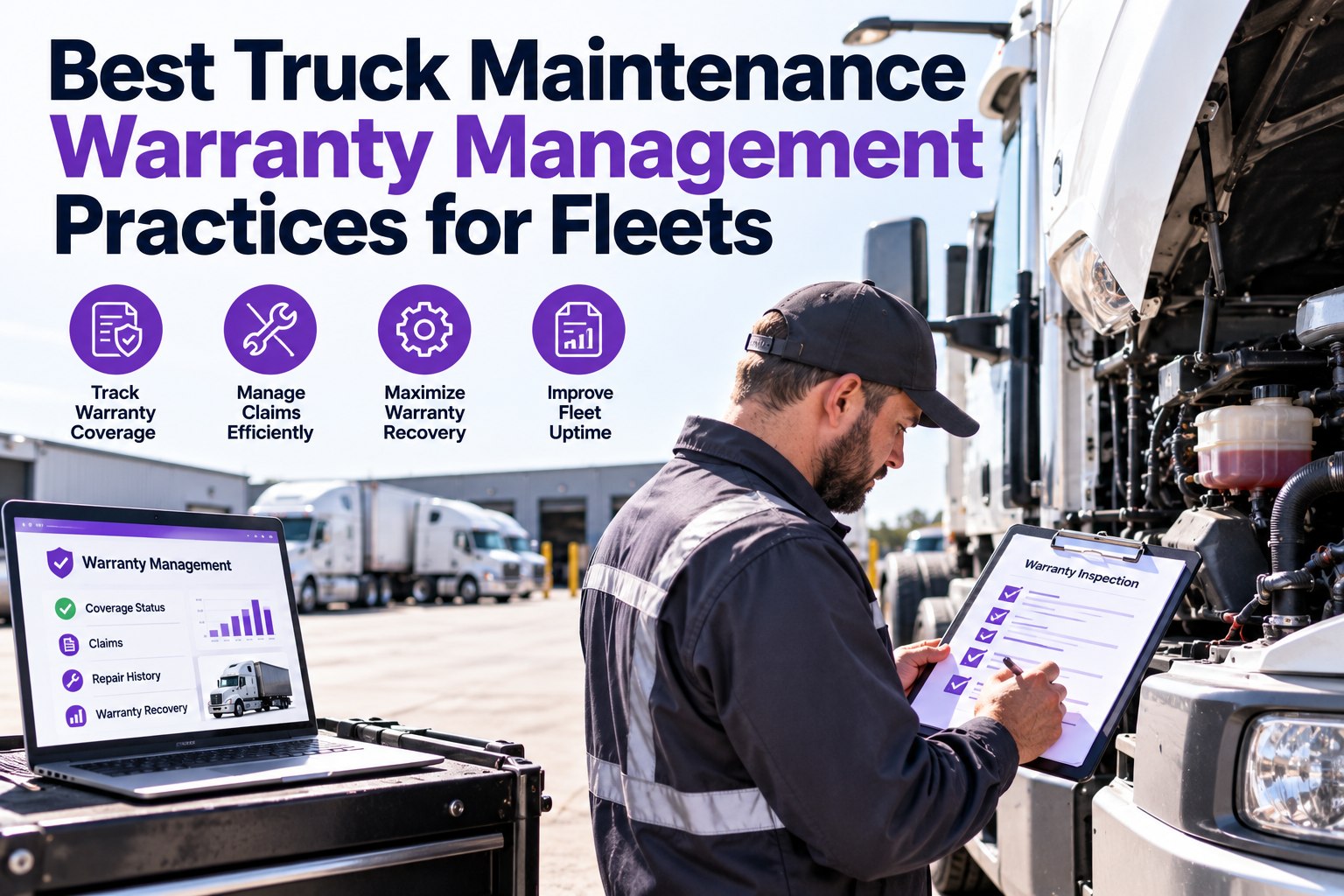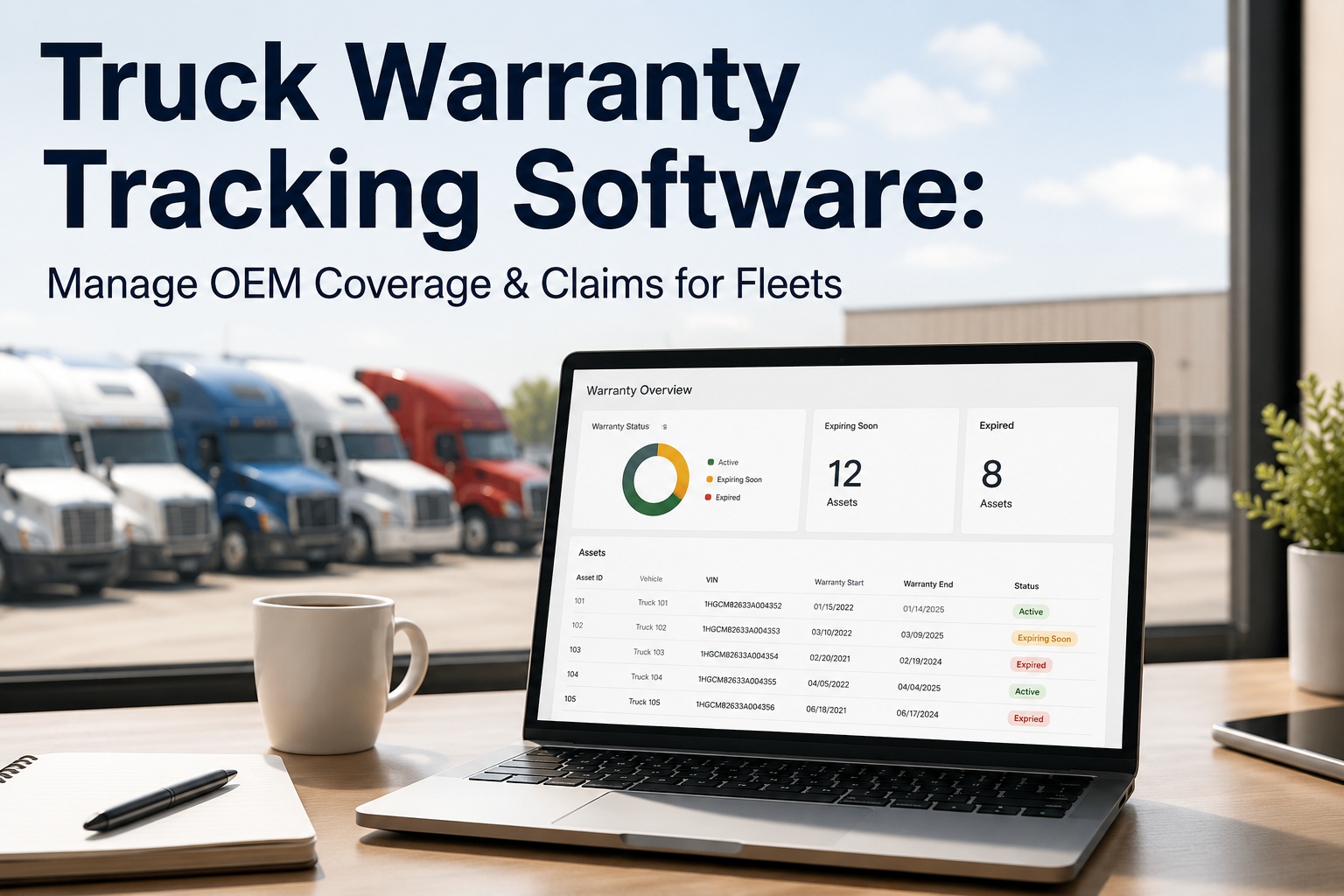
Most fleet managers know they have warranties on their trucks. Almost none know exactly which warranty covers which component, on which truck, until which mile, with what documentation required. That gap is where money disappears: a regional Ohio trucking company recently discovered, during a routine CMMS audit, that they had paid $214,000 in powertrain repairs over 18 months on vehicles still under OEM warranty. A single transmission replacement runs $4,000-$8,000 — paid out of pocket when one button-click in the right system would have transferred the bill to the manufacturer. Truck Inspection & Maintenance tracks every warranty period, every covered component, every required PM, and every claim on every truck — so the next repair invoice goes to the dealer, not your maintenance budget. Start your free trial and stop paying for repairs your OEM owes.
Truck Warranty Tracking Software
Manage OEM coverage and claims across the fleet. Recover what's covered. Stop paying for what isn't yours.
The True Cost of Warranty Leakage — Where the Money Actually Goes
"Warranty leakage" is the industry term for repairs a fleet pays for that the OEM should have covered. It happens quietly, one work order at a time, and most fleets never reconcile the loss. Truck Inspection & Maintenance closes the gap by flagging coverage status before the repair starts, not after:
One Ohio regional carrier — covered repairs paid out of pocket because warranty status wasn't tracked per VIN.
Between basic warranty expiry and powertrain expiry — the period most fleets misread coverage on.
For incomplete maintenance records, unauthorized parts, or missed PM. Documentation is the line between paid and denied.
Average recoverable warranty value across a typical fleet — gone if nobody's tracking VIN-level coverage.
The 5 Warranty Types Every Fleet Manager Should Track
Every Class 8 truck rolls off the lot with multiple overlapping warranties, each with different periods, coverage components, and documentation requirements. Truck Inspection & Maintenance stores all five per VIN so a single repair triggers the right claim against the right coverage:
Basic OEM Warranty
1-2 years · 100K miles
Bumper-to-bumper coverage on materials and workmanship. Shortest period, broadest component scope. Expires fastest — most "out of warranty" surprises come from here.
Powertrain Warranty
5 years · 250K-500K miles
Engine, transmission, driveline, axles. Most valuable per claim — single transmission swap is $4-$8K. Most fleets stop tracking this when basic expires, and that's where leakage starts.
Emissions / EPA Warranty
5-10 years · federally mandated
Catalytic converter, EGR, DPF, SCR system. EPA-mandated coverage runs longest of all — often claimable even after basic and powertrain expire. Routinely missed in claim workflows.
Cab & Corrosion Warranty
Up to 5 years
Structural defects and rust-through. Easy to forget because failures are slow. Documentation requires fleet to have logged the vehicle's exposure history.
Extended / Aftermarket Warranty
Variable · 300K-700K miles
OEM-extended or third-party ESC. Coverage scope varies by contract. Our platform stores exact covered components per contract per VIN so claims aren't guessed.
Safety Recalls & Campaigns
No expiration
NHTSA safety recalls and manufacturer service campaigns don't expire. Fleets routinely miss them. Our platform cross-references VINs against the active recall database automatically.
The Class 8 Coverage Timeline — Where Each Warranty Lives
Visualizing where each warranty applies makes the leakage problem obvious. Here's a typical Class 8 tractor coverage map — the green/amber/red zones show exactly when fleets pay for repairs the OEM is contractually obligated to cover:
Know your coverage before you authorize the repair.
Truck Inspection & Maintenance stores every VIN, every warranty period, every covered component, every required PM — and flags coverage status before a work order is approved. Free for up to 3 vehicles. Contact support to plan your rollout.
The 6-Step Claim Workflow — From Failure to Reimbursement
Warranty claims aren't a one-touch event. They're a process with six checkpoints, and a break at any one denies the claim. Truck Inspection & Maintenance enforces every step in the workflow so nothing falls through:
Failure Identified
Driver logs defect in pre-trip DVIR or mechanic finds it during PM. Photo and asset details captured immediately at point of failure.
Coverage Verified
Platform checks live warranty status by VIN — basic, powertrain, emissions, extended, recall — and confirms component is in scope before authorizing repair.
Authorized Service Routed
Repair sent to authorized service center if required by warranty terms. Unauthorized repairs are the #1 reason claims get denied — this step protects coverage.
Documentation Compiled
Full asset history, PM records, fault codes, photos, and dealer invoice attached automatically. Documentation gap is the #2 denial reason — automation closes it.
Claim Submitted
Claim filed with OEM warranty portal, third-party ESC provider, or recall campaign. Submission tracked to closure with claim number and status timeline.
Reimbursement Tracked
Payment logged against work order, asset, and warranty type. Total recovered visible per truck and per fleet — measurable ROI on the platform itself.
Why 40% of Warranty Claims Get Denied — And How to Fix It
OEMs deny claims for predictable reasons, and almost all of them trace back to documentation or process gaps. Here are the five most common denial causes and what Truck Inspection & Maintenance does about each one:
Missing PM Records
OEM requires proof of factory-recommended maintenance. No records = denied claim, even if the failure was clearly covered.
Unauthorized Parts Used
Non-OEM or non-approved parts can void coverage on the component they failed near, even if installed years earlier.
Wrong Service Provider
Many warranties require repairs at authorized dealer or certified shop. Independent shop work can deny claim entirely.
Coverage Expired
Claim submitted after mileage or time limit. Most fleets miss the threshold because they don't track per-VIN expiration live.
Submission Deadline Missed
Most OEMs require claims filed within 30-90 days of repair. Late submission = automatic denial regardless of merit.
Improper Operation
OEM claims abuse, overload, or misuse caused the failure. Driver behavior data and inspection history defends the claim.
The Annual Recovery Stack — What 25 Trucks Reclaim in Year 1
Warranty recovery is one of the most measurable ROIs in fleet tech — every recovered claim is real dollars credited back, not a soft "efficiency" savings. Realistic Year 1 numbers for a 25-truck fleet putting basic tracking in place:
Frequently Asked Questions
How does Truck Inspection & Maintenance track warranty coverage?
Each VIN is loaded with the truck's OEM warranty registration, powertrain coverage, emissions warranty, cab warranty, extended ESC contract, and active recalls. The platform tracks current mileage live, calculates remaining coverage on every warranty type, and color-codes each asset green/amber/red. Before any work order is approved, the system flags whether the repair should go to the OEM, the ESC provider, or the fleet's maintenance budget.
What's the biggest warranty mistake fleets make?
Treating "warranty status" as one number per truck. Each component is covered by a different warranty with a different expiration, and there are often 4-5 overlapping coverages on a single VIN. Fleets that look at "is this truck under warranty" miss the powertrain claim because they thought the basic expired. Sign up free to see VIN-level tracking on your first 3 trucks.
How long do typical Class 8 truck warranties last?
Basic: 1-2 years or 100,000 miles. Powertrain: 5 years or 250,000-500,000 miles. Emissions/EPA: 5-10 years (federally mandated). Cab/corrosion: up to 5 years. Extended ESC: variable, typically 300,000-700,000 miles. Coverage overlaps and expirations differ by component, which is why per-VIN tracking matters.
Why do so many warranty claims get denied?
Industry data shows roughly 40% of warranty claims face initial denial or rework requests — almost always for documentation. The top denial reasons: missing PM records, unauthorized parts used, wrong service provider, expired coverage misread, late submission. Each of these is a process problem the platform solves systematically.
Do I need to use authorized dealers for every repair?
Depends on the warranty. Basic OEM and most powertrain warranties require authorized service for the claim to be valid. Emissions warranties often have specific certified-shop requirements. Extended ESC contracts vary — some allow any ASE-certified shop. Our platform stores the rules per warranty per VIN, so the repair gets routed correctly the first time.
What's the ROI on warranty tracking software?
For most fleets above 10 trucks, the first recovered powertrain claim ($4,000-$8,000) pays for the software multiple times over. Average recoverable warranty value is roughly $8,500 per truck per year. A 25-truck fleet recovering even half of that is six figures back to the maintenance budget. Talk to our team for a quick ROI walkthrough.
Know what's covered. Recover what's yours.
Truck Inspection & Maintenance tracks every warranty period, every covered component, every required PM, and every claim — per VIN, per asset, per claim type. Free for up to 3 vehicles. No hardware. No contracts.