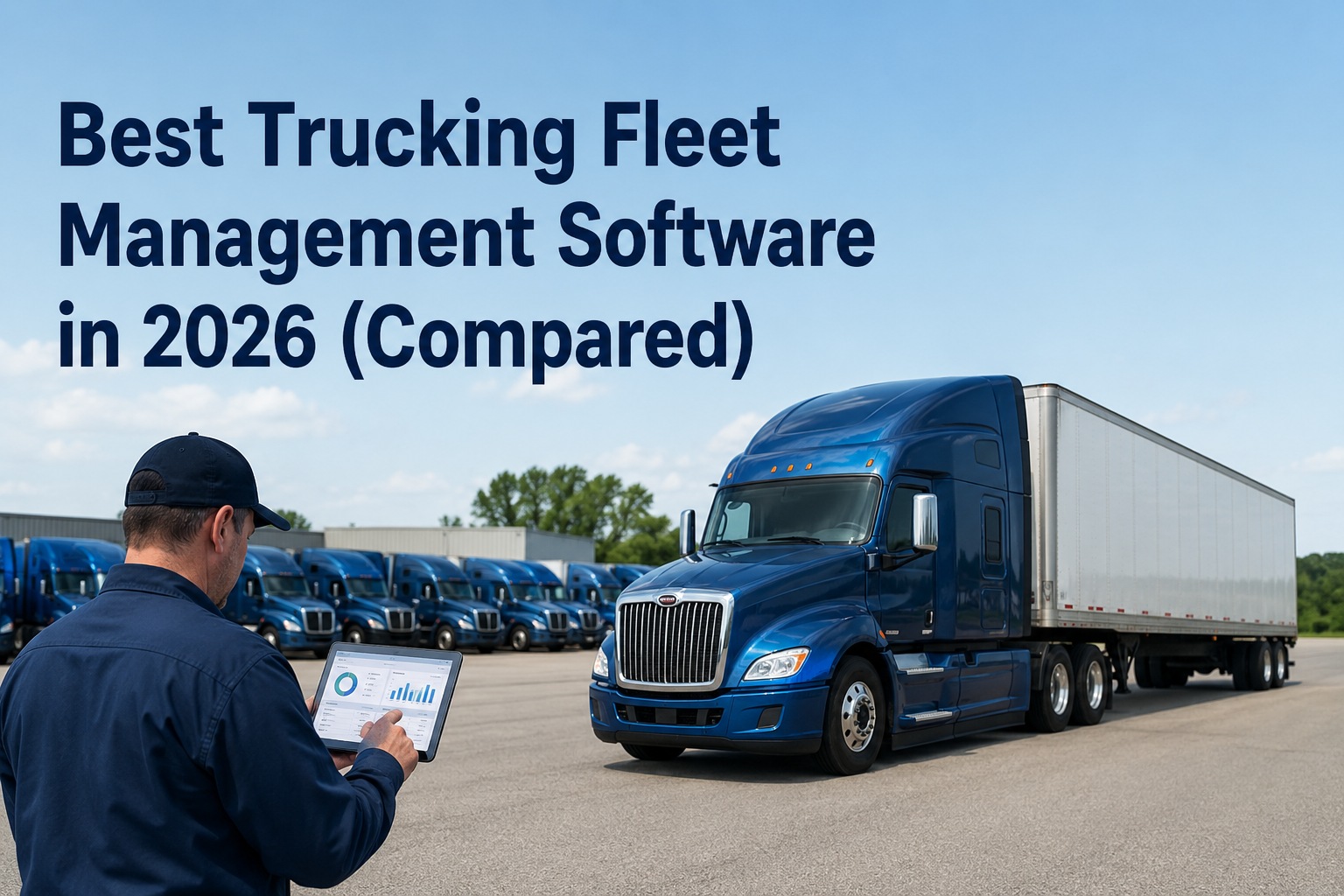
Search "best trucking fleet management software" and you'll get a hundred ranked lists that quietly disagree — because they're comparing tools that do completely different jobs. The truth most listicles skip: there is no single "fleet management software." A modern trucking operation runs a tech stack of five distinct software categories — a Transportation Management System, telematics, ELD/compliance, maintenance, and freight matching — that increasingly share data through APIs rather than running as isolated islands. The "best" platform for you depends entirely on which job you're trying to solve and how many trucks you run. Buy a $2,000-a-month enterprise TMS to fix a maintenance problem and you've wasted money; bolt on five disconnected tools and you've built a data mess. This guide decodes the five categories, maps them to fleet size and budget, lays out the pricing reality, and shows what to prioritize. Truck Inspection & Maintenance owns the maintenance-and-inspection layer of that stack. Talk to our team for a walkthrough.
Best Trucking Fleet Management Software
Five software categories, by fleet size and budget — decoded for 2026.
There's No One "Fleet Software" — There's a Stack
The single most useful thing to understand before buying: modern trucking software is five categories working together, with the TMS at the center and the others feeding data into it. Knowing which box a tool lives in stops you from buying the wrong thing — or paying for overlap. Here's the stack. Start a free account to cover the maintenance layer today.
Transportation Management System (TMS)
The hub — dispatch, load planning, driver settlements, billing, and EDI. Everything else feeds into it. This is what people often mean by "fleet software," but it's only one piece.
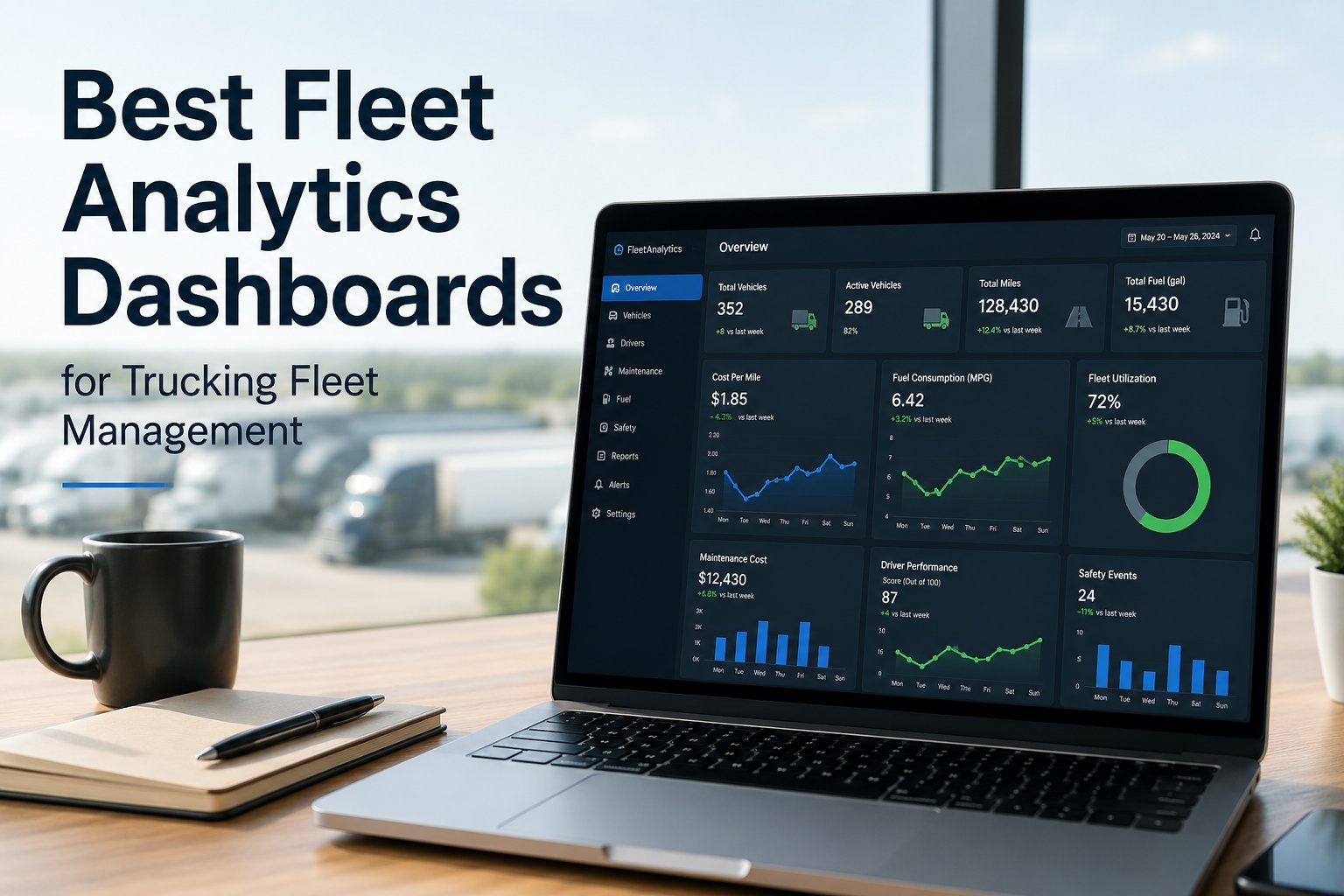
Telematics & GPS
Location plus engine data, driver behavior, fuel use, and diagnostics. GPS shows where a truck is; telematics tells you how it's running. Hardware plus subscription.
ELD & Compliance
Hours-of-service logging, DVIRs, and IFTA. Often integrates with or bundles into the TMS — what matters is HOS data flowing into dispatch decisions.
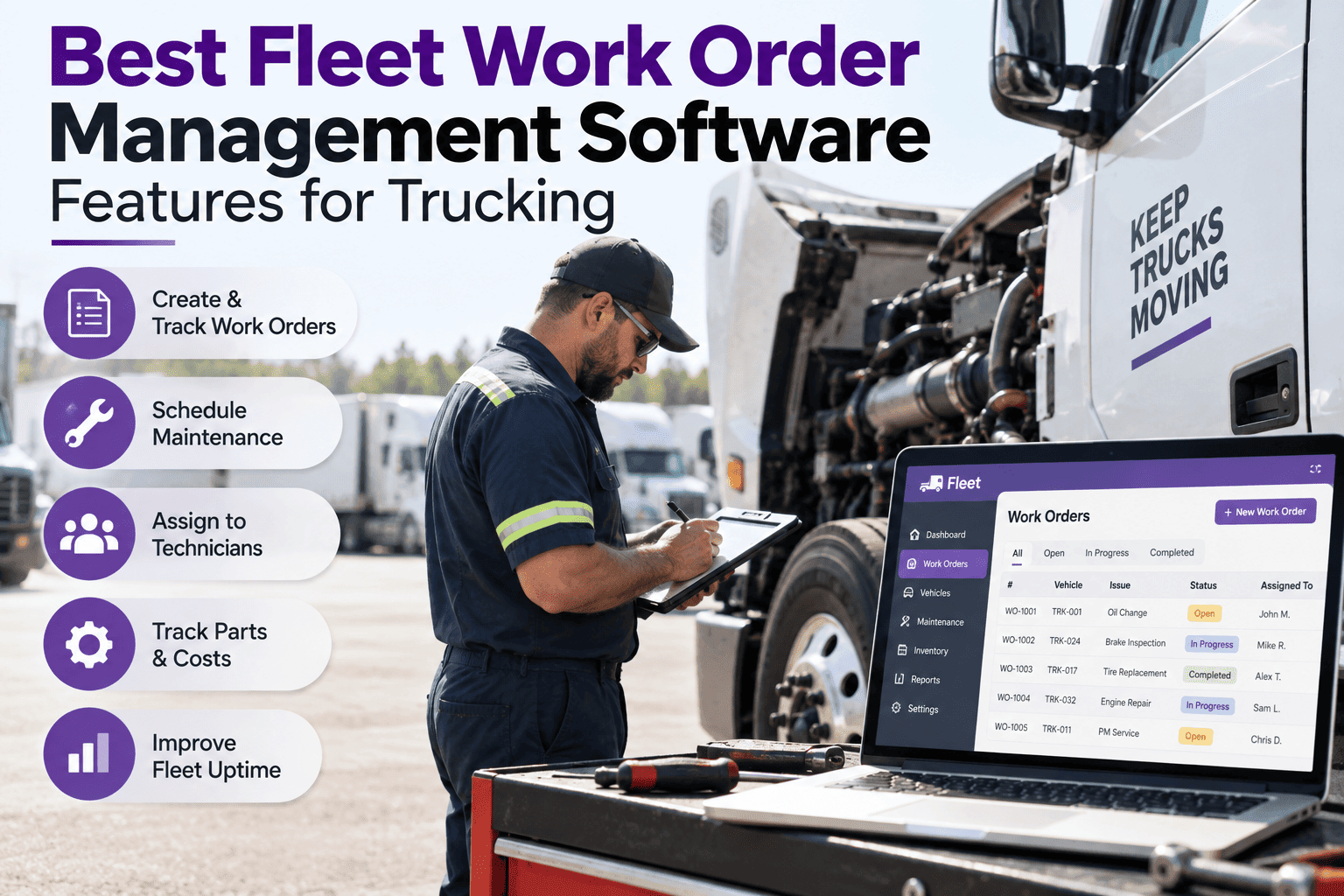
Maintenance & Inspections
Digital DVIRs, PM scheduling, work orders, parts, and cost-per-vehicle. The category that protects uptime and compliance — and the one fleets most often run on paper too long.
Freight Matching
Load boards and digital freight platforms to source and price freight. Low cost, high upside; often free with premium tiers. Feeds loads into the TMS.
What to Buy by Fleet Size
The right starting point depends almost entirely on how many trucks you run. Buying enterprise features for a 5-truck operation wastes money; outgrowing a basic tool at 50 trucks creates a painful migration. Match the tier to your scale. Reach our team to plan for the size you're growing into.
- Simple ELD compliance & basic GPS
- Automated IFTA
- Per-vehicle maintenance & inspections
- Freight matching to source loads
- Driver settlements & management
- Maintenance tracking + ELD integration
- Dispatch visibility
- Add predictive maintenance past ~10 trucks
- Comprehensive TMS & advanced dispatch
- Fleet analytics & compliance suite
- Telematics + AI safety
- Multi-terminal coordination
Start with the maintenance layer — free
Whatever your stack, the maintenance-and-inspection category is the one you can fix today. Truck Inspection & Maintenance delivers digital DVIRs, PM scheduling, work orders, and cost-per-vehicle tracking — and integrates with the rest of your stack. No hardware, no contracts. Sign up free and cover the uptime layer now.
How to Choose — By Priority
Beyond size, your single biggest pain should steer the decision. Lead with the category that solves it, then integrate outward. Open a free account if uptime and compliance are your priority.
The Pricing Reality
Pricing varies by category and model — and most fleets budget between one and three percent of revenue on software overall. Knowing how each category charges keeps the math honest. Talk to our team about total cost across your stack.
Maintenance & inspection (per vehicle/mo)
Digital DVIRs, PM scheduling, work orders, cost tracking. Tiered Essential/Premium/Elite, no hardware, often no contract. The lean, high-leverage starting point.
TMS (per month, scales with fleet)
~$200–$500/mo for 5–25 trucks; $500–$2,000+/mo for 25–100+. Dispatch, settlements, analytics. Priced per truck or by tier.
Telematics & ELD
Hardware per truck plus monthly subscription. Freight matching is often free with premium tiers. Budget the device cost and contract length.
Frequently Asked Questions
What's the "best" trucking fleet management software?
There isn't one — there are five categories that do different jobs: TMS (dispatch/billing), telematics (tracking/diagnostics), ELD/compliance, maintenance/inspections, and freight matching. The best platform for you depends on your biggest pain and your fleet size. A growing fleet with breakdown problems needs maintenance software, not a $2,000/month enterprise TMS. Identify the job first, then pick the category that owns it. Start a free account to cover the maintenance layer.
Do I need separate ELD and TMS software?
Not necessarily. Many TMS platforms integrate with ELD providers, and some bundle ELD as a module. What matters more than consolidation is integration — your HOS data should flow automatically into dispatch decisions rather than living in a silo. Whether that's one combined platform or two well-connected tools depends on your operation, but don't sacrifice good integration just to have fewer logins. Talk to our team about integration.
How much should I budget for trucking software?
Most fleets spend between one and three percent of revenue on software overall. By category: maintenance and inspection software starts around $5–$9 per vehicle per month; TMS runs roughly $200–$500/month for small fleets and $500–$2,000+/month for larger ones; telematics is hardware plus subscription; and freight matching is often free with premium tiers. Match spend to the jobs you actually need solved. Sign up free to start lean.
What's the difference between telematics and GPS tracking?
GPS shows where a vehicle is. Telematics combines that location with engine data, driver behavior, fuel use, and diagnostics — it's the broader category, and GPS is one input within it. If you only need to know where trucks are, basic GPS suffices; if you want to manage how they're driven and maintained, you want telematics. Many fleets start with GPS and grow into fuller telematics as they scale.
Should I buy one all-in-one platform or build a stack?
It depends on size and complexity, but the guiding principle is that integration matters more than consolidation. An all-in-one suite reduces logins but may be mediocre at some jobs; a best-of-breed stack excels at each job but needs clean API connections. In 2026, leading tools are API-connected and share data, so a well-integrated stack often beats a do-everything platform that's weak in your priority area. Contact us about fitting into your stack.
Are digital inspections actually compliant now?
Yes. The February 2026 FMCSA position confirms digital Driver Vehicle Inspection Reports are fully compliant, and paper forms are no longer required. FMCSA also now compares ELD data against dispatch, billing, and payroll records, with inconsistencies triggering automatic reviews — so clean, integrated digital records matter more than ever. Moving inspections and maintenance off paper is both a compliance and an efficiency win. Start free to go digital.
Own the maintenance layer of your stack.
Truck Inspection & Maintenance delivers digital DVIRs, PM scheduling, work orders, parts, and cost-per-vehicle tracking — the uptime-and-compliance category you can deploy today, integrated with the rest of your tech stack. Free for up to 3 vehicles, no hardware, no contracts.