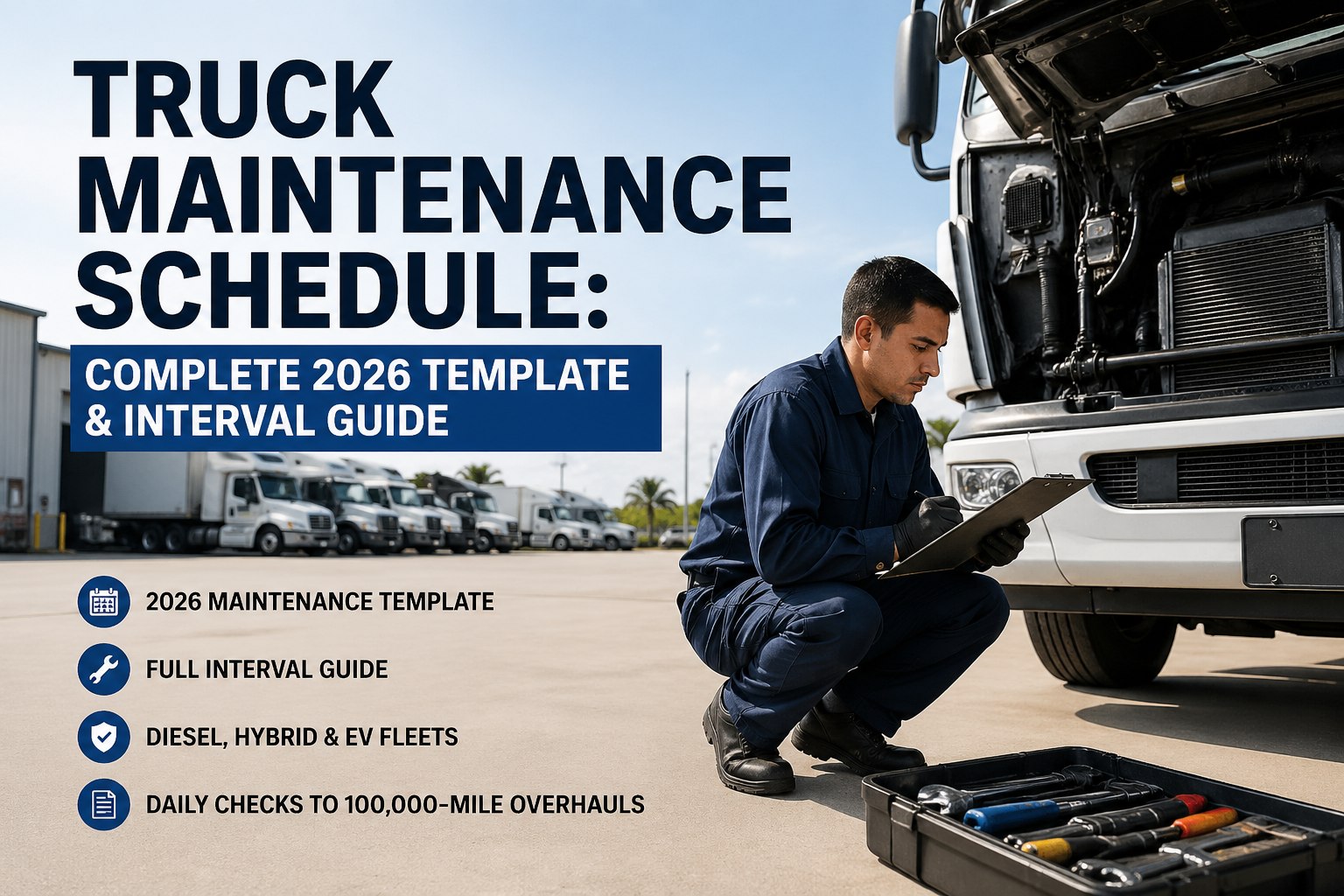
A preventive maintenance schedule is the single highest-return activity in fleet management — every dollar spent on planned PM returns three to five dollars in avoided breakdowns, downtime, and shortened vehicle life. Yet most fleets still run PM off spreadsheets, scattered service records, and a maintenance supervisor's memory, and the result is predictable: missed intervals, reactive repairs, and trucks pulled off the road during peak demand. Average PM compliance sits around 62%, while best-in-class fleets hit 94%+ — and every 10% gain in compliance correlates with roughly an 8% drop in unplanned repair costs. The fix is a structured template: defined service tiers, intervals set by vehicle type and how each truck actually accumulates wear, and a "whichever comes first" trigger across mileage, engine hours, and calendar time. This guide lays out the PM-tier framework, an interval template by vehicle class, the severe-duty adjustments, and how to turn a static template into automated reminders. Truck Inspection & Maintenance turns the template into a live schedule for every unit. Talk to our team to build yours.
Truck Fleet Preventive Maintenance Schedule
Intervals by vehicle type, mileage & hours — turned into automatic reminders.
The PM Tier System (A–D)
The backbone of every commercial PM program is a tiered "letter" system. Each level builds on the one before it — when a higher tier is due, it supersedes the lower ones and the vehicle gets all included tasks in one shop visit, then the interval clocks reset. Here's what each tier covers. Start a free account to configure all four tiers per vehicle.
Basic Service
Your most frequent touchpoint — oil & filters, fluids, tires, brakes, lights, and a safety-critical inspection. Catches small issues before they escalate.
Intermediate
All PM-A items plus deeper engine, driveline, fuel-system, and electrical checks. Finds developing problems a basic inspection misses.
Comprehensive
A and B tasks plus drivetrain, transmission service, alignment, and the annual DOT inspection. Often aligned to the 49 CFR 396.17 annual.
Major / Overhaul
Scheduled rebuild or replacement of major components — engine, transmission, axles — plus seasonal services. Driven by condition & diagnostics.
Interval Template by Vehicle Type
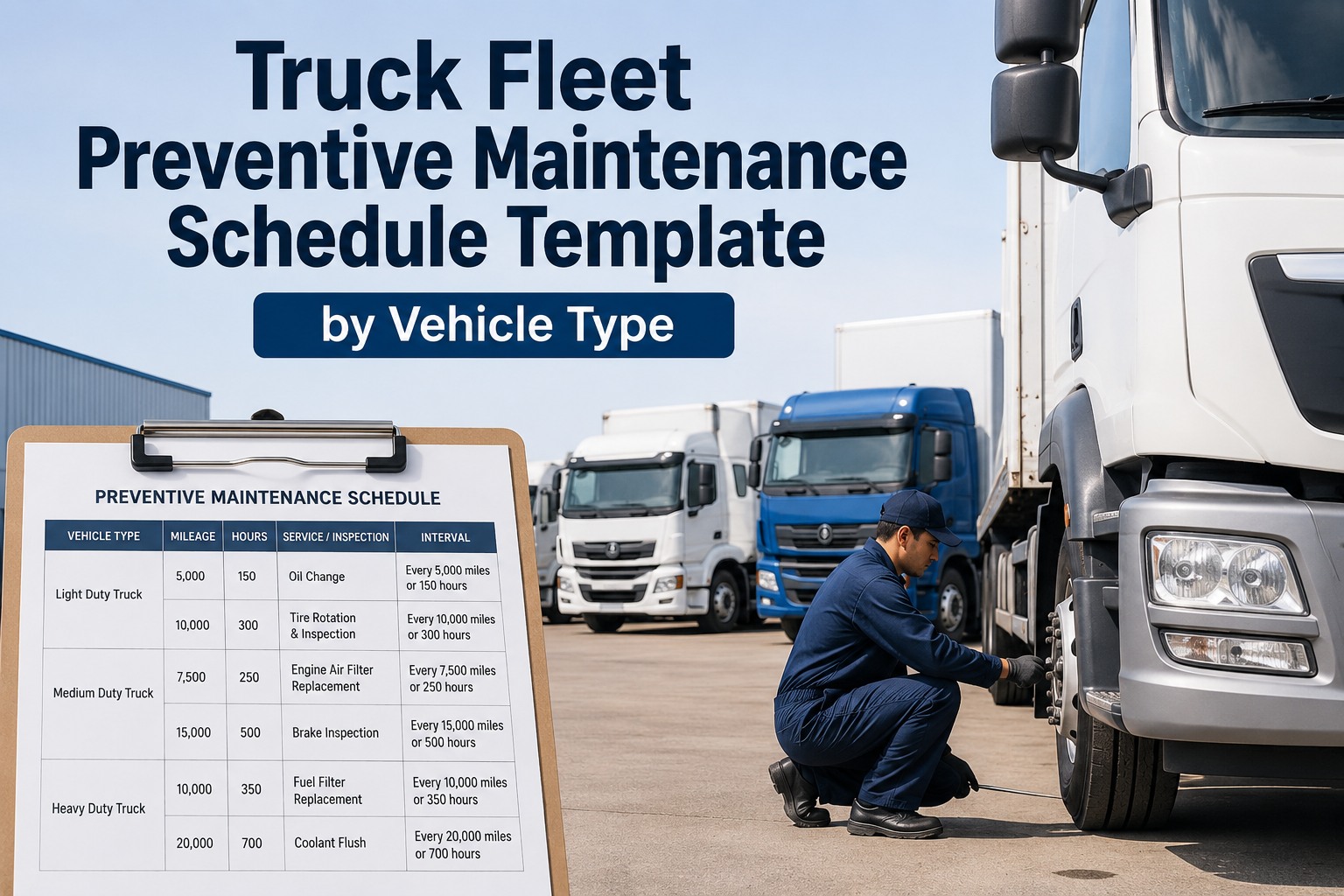
A one-size schedule fails because a linehaul tractor, a stop-and-go box truck, and an idle-heavy vocational unit wear completely differently. Assign each vehicle to its class and apply the matching baseline — then adjust to your data. Reach our team to load these templates per class automatically. Always cross-reference your OEM manual.
| Vehicle Type | PM-A Oil/Basic | Primary Trigger | Notes |
|---|---|---|---|
| Light-duty van / pickup | ~5,000–10,000 mi | Mileage | Mixed city/highway, ~20k mi/yr |
| Medium-duty box truck (Class 5–6) | ~10,000–15,000 mi | Mileage | Higher oil capacity extends intervals |
| Heavy-duty linehaul (Class 7–8) | ~15,000–25,000 mi | Mileage | Synthetic + oil analysis can extend further |
| Vocational / construction | By engine hours | Engine hours | High idle — miles understate true wear |
| Yard truck / spotter | By engine hours | Engine hours | Runs stationary; almost no odometer miles |
| Severe-duty (stop-and-go, heavy haul) | Shorten 15–20% | Whichever first | Dust, heat, mountains accelerate wear |
Turn the template into automatic reminders
A spreadsheet can't chase a due date. Truck Inspection & Maintenance assigns each vehicle its class template, tracks mileage, engine hours, and calendar days, and fires a work order when any threshold is hit — taking PM compliance from spreadsheet-average to automated. No hardware, no contracts. Sign up free and put every unit on a live schedule.
The Trigger Rule — Whichever Comes First
The single most important scheduling principle, and the one spreadsheets handle worst: every PM task should fire on the first of three triggers to arrive. Pick the wrong single trigger and you dangerously under-maintain a whole class of vehicles. Open a free account to run multi-trigger scheduling automatically.
Mileage
The natural trigger for over-the-road trucks that rack up miles fast. Misses high-idle units that wear without moving.
Engine hours
Essential for vocational, yard, and idle-heavy equipment that accumulates engine wear without adding odometer miles.
Calendar
Oil degrades over time regardless of use — a truck that sits six months still needs service. Critical for seasonal fleets.
The rule in practice: schedule PM-A at, say, 10,000 miles OR 250 engine hours OR 30 days — whichever arrives first. Applied across every tier and vehicle class, this is what keeps any unit from slipping through the cracks.
Why the Template Pays Off
A documented, executed PM schedule isn't a cost center — it's one of the highest-leverage investments a fleet makes. The returns show up across safety, compliance, and the balance sheet.
Frequently Asked Questions
What are the PM-A, B, C, and D service levels?
They're a tiered system of increasing depth. PM-A (every ~10,000–15,000 miles) is basic service — oil, filters, fluids, and safety inspection. PM-B (~25,000–30,000) adds deeper engine and driveline checks. PM-C (~50,000–60,000) adds drivetrain, transmission, alignment, and the annual DOT inspection. PM-D (~100,000 miles or annually) covers major component rebuilds. Each higher tier includes all lower-tier tasks when it comes due. Start a free account to configure all four.
Should I schedule PM by mileage or engine hours?
By whichever comes first — mileage, engine hours, or calendar date. Over-the-road trucks rack up miles fast, so mileage is natural for them. But vocational equipment, yard trucks, and idle-heavy vehicles accumulate engine wear without adding odometer miles, so they need hour-based triggers or they'll be dangerously under-maintained. And calendar matters because oil degrades over time even on a parked truck. The professional standard uses all three. Talk to our team about multi-trigger scheduling.
Do all my vehicles use the same schedule?
No — and that's the most common mistake. Different makes, models, duty cycles, and GVWR classes have different needs. A Class 8 linehaul tractor, a medium-duty box truck, and a high-idle construction unit each warrant their own interval template. Assign every vehicle to its class, apply the matching baseline, and adjust from your own maintenance history. Severe-duty applications should shorten intervals 15–20%. Sign up free to assign templates by class.
How do I adjust intervals for severe duty?
Shorten them. Vehicles in severe service — stop-and-go delivery, construction, heavy haul, mountain routes, extreme heat or dust — should run PM intervals roughly 15–20% tighter than baseline, because those conditions accelerate wear on oil, filters, brakes, and the driveline. The modest extra cost is far outweighed by avoided breakdowns and extended life. Always validate against OEM recommendations and your own oil-analysis and inspection findings. Contact us about duty-cycle adjustment.
Why move off a spreadsheet template?
Because a spreadsheet can't chase a due date. It requires manual tracking and someone remembering to check it — which is why average fleets sit near 62% PM compliance while automated fleets reach 94%+. Software assigns each vehicle its class template, tracks mileage, hours, and calendar in real time, fires work orders automatically when a threshold is hit, and documents completion. Each 10% compliance gain cuts unplanned repair costs roughly 8%. Start free to automate it.
Does a PM schedule help with DOT compliance?
Directly. 49 CFR Part 396.3 requires motor carriers to systematically maintain every vehicle and keep detailed records available for FMCSA review. A documented schedule with completion records is how you prove it — and PM-C/D intervals often align with the 49 CFR 396.17 annual inspection. Without documented schedules, auditors assume reactive maintenance and may issue citations. Digital records with date, odometer, work performed, and technician ID exceed the standard. Contact us about audit-ready records.
Give every vehicle its own automated PM schedule.
Truck Inspection & Maintenance assigns each unit its class-based template, tracks mileage, engine hours, and calendar days, fires work orders on the first trigger hit, and keeps audit-ready records for every service — turning a static template into 94%+ compliance. Free for up to 3 vehicles, no hardware, no contracts.