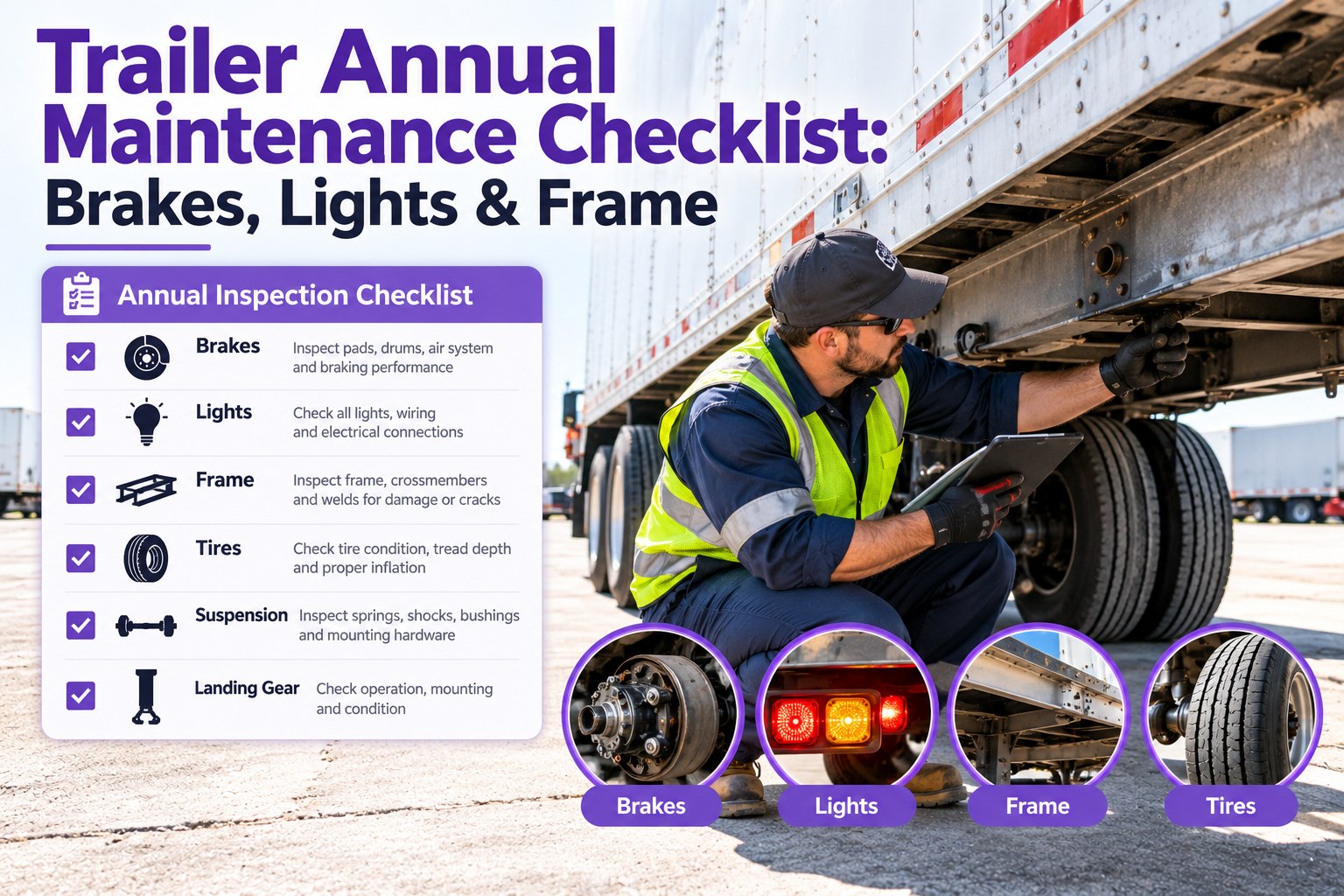
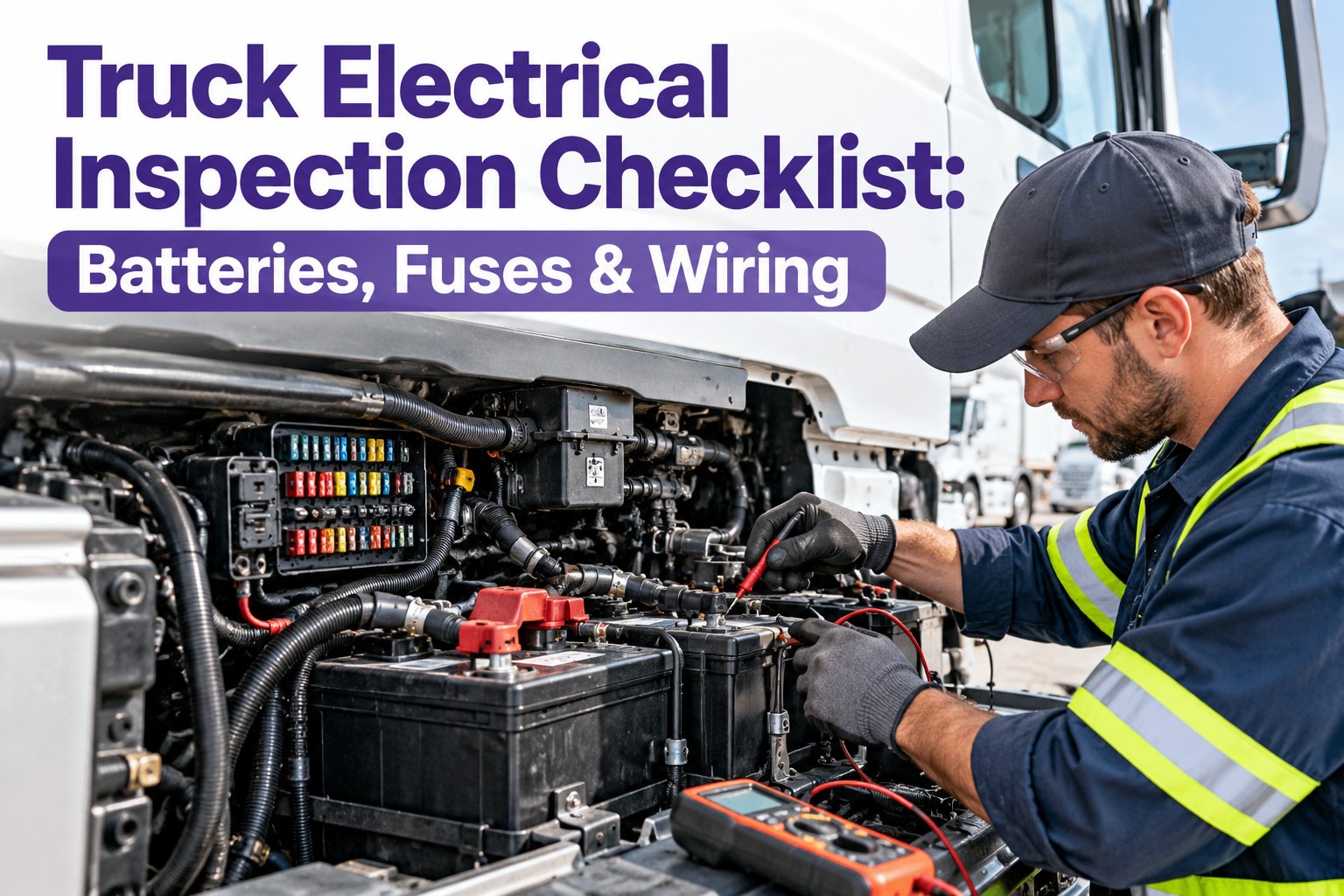
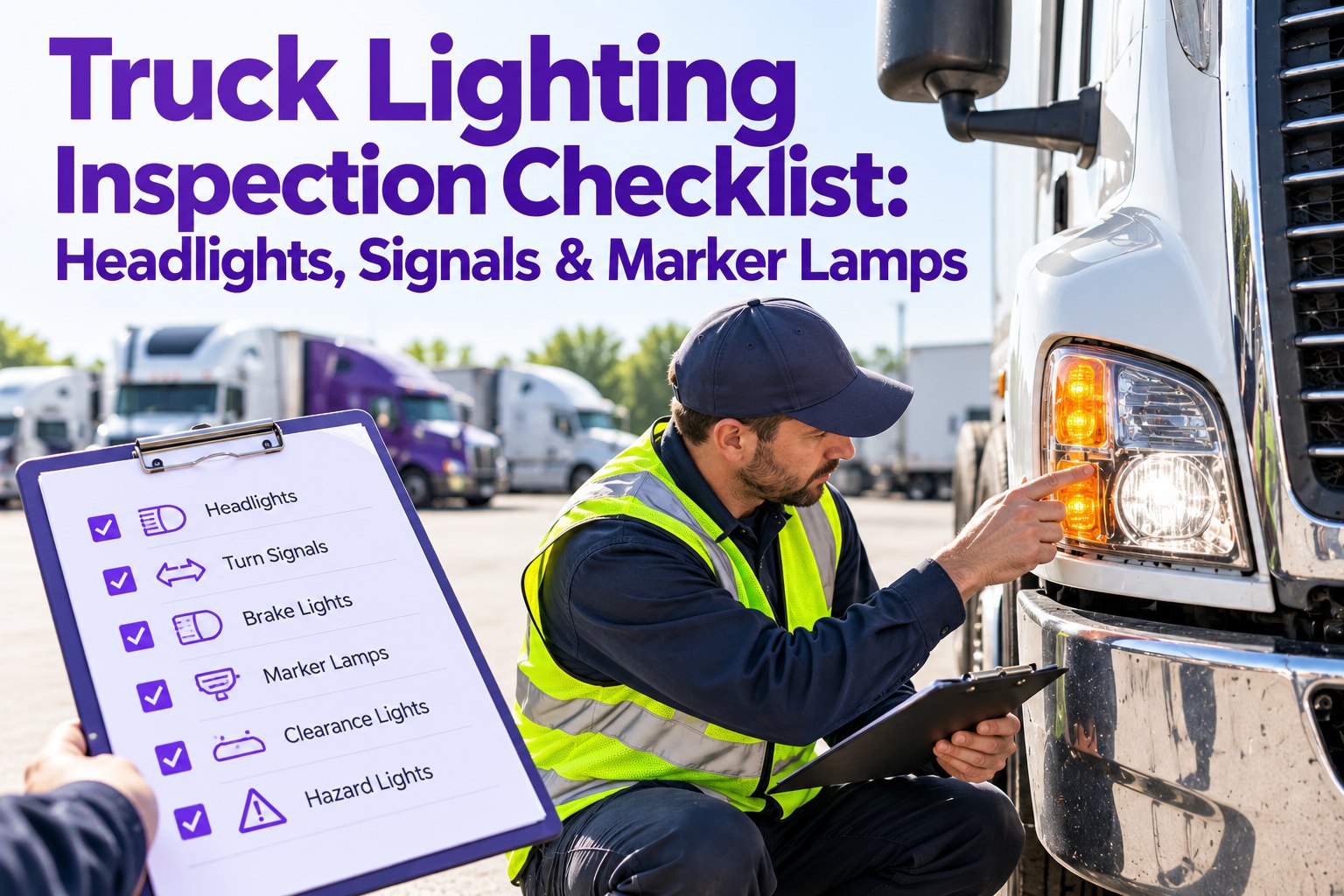
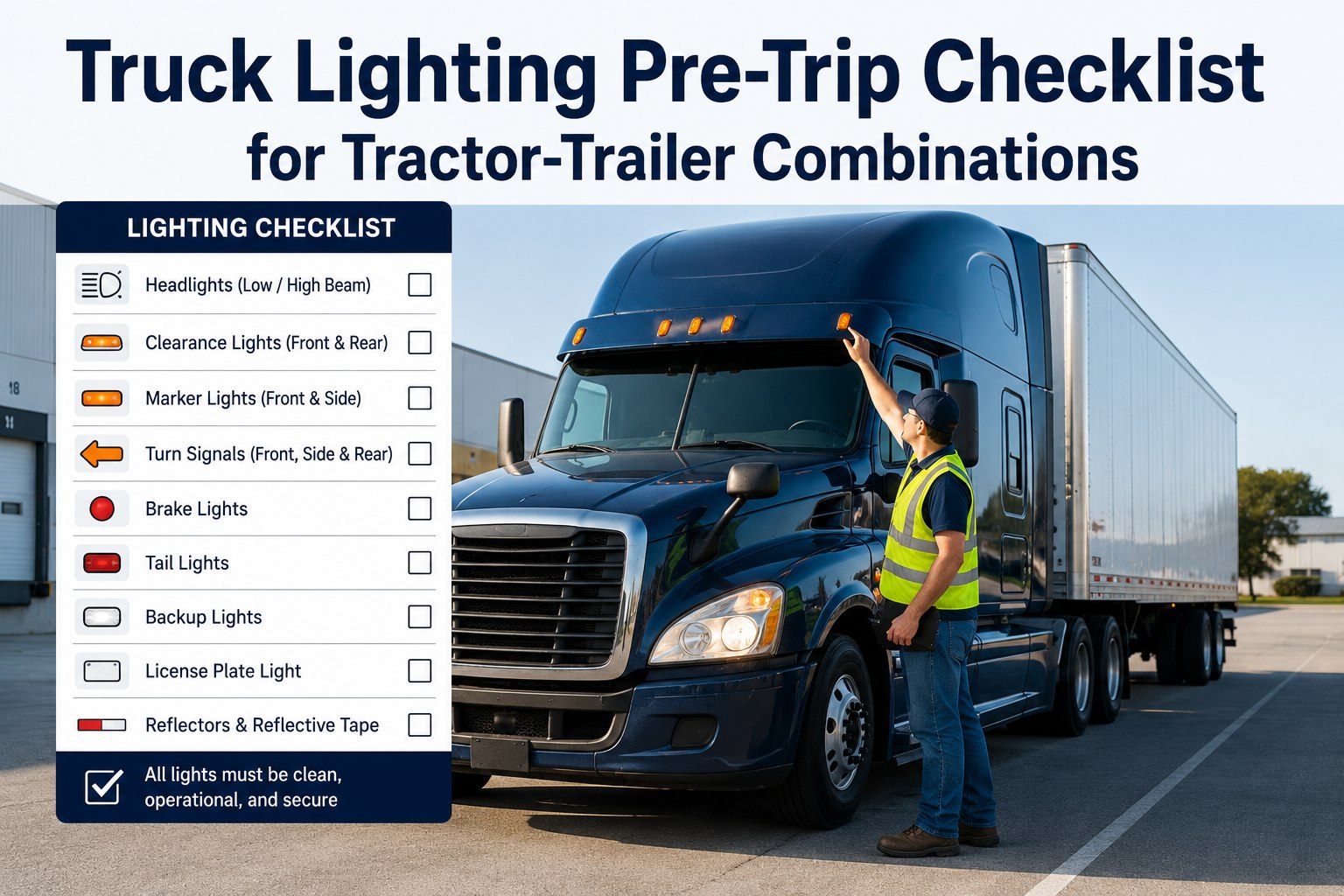
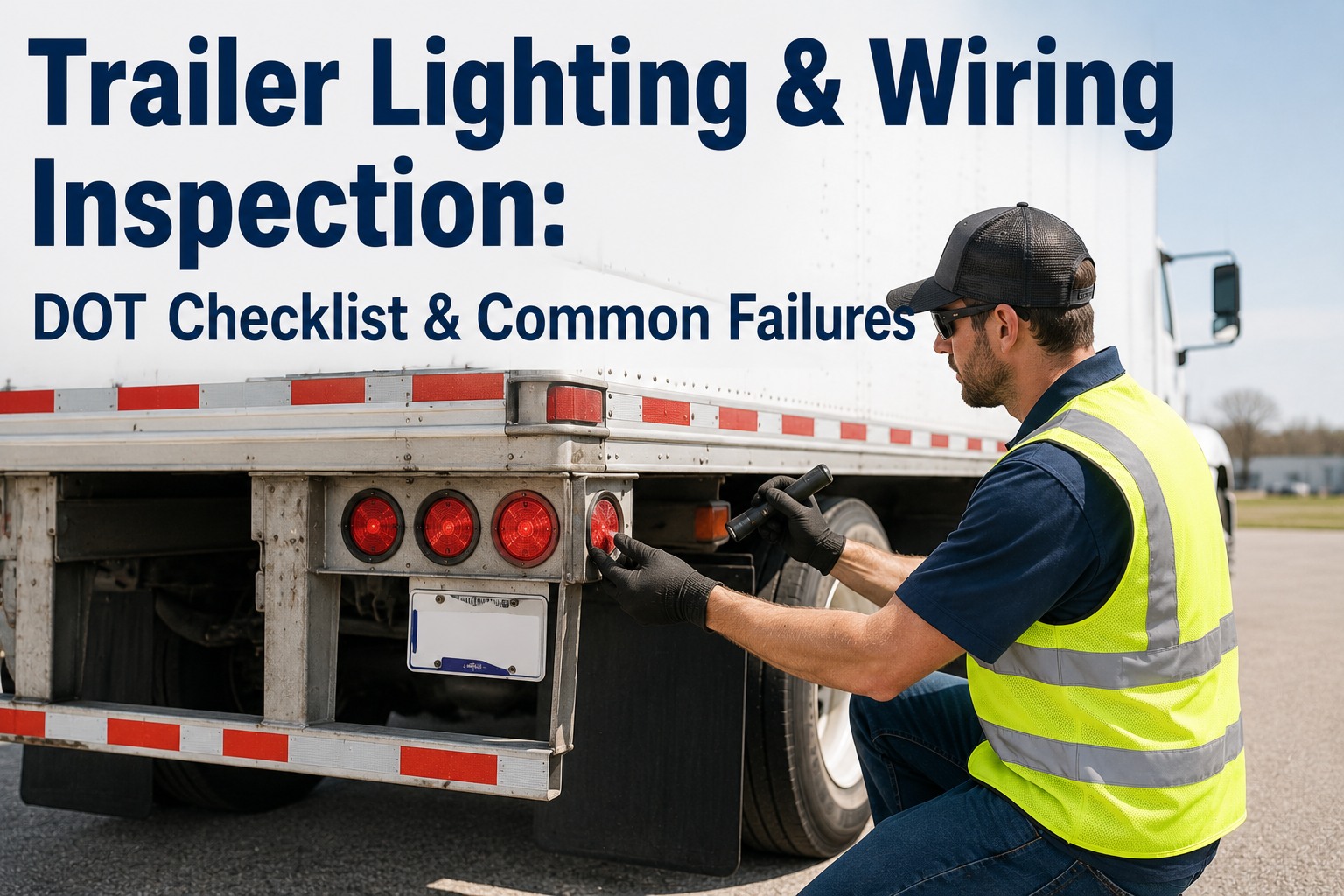
Trailer electrical faults don't fail all at once — they rot. A pigtail corrodes a little each winter, a marker lamp dims, a ground works loose, and the problems compound quietly between annual inspections until a single loose connector kills every light on the trailer at a roadside scale. Inoperative lamps and dead conspicuity tape are among the most-cited trailer violations there are, and almost all of them trace back through the same electrical chain. This guide walks that chain, plug to lamp, the way an annual inspection should. Start free and keep every trailer's electrical check on record.
Annual Trailer Inspection · Lighting & Electrical
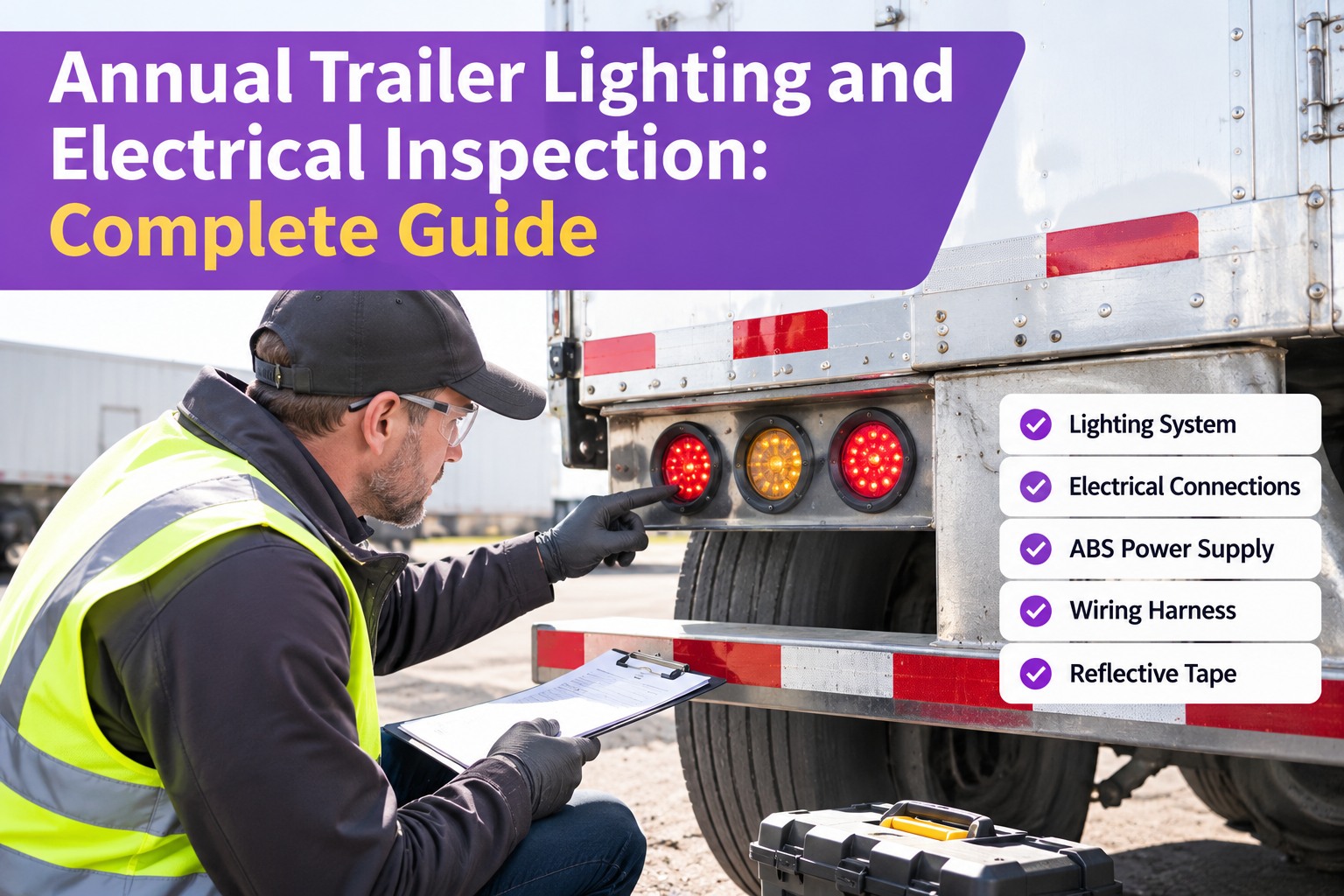
Annual Trailer Lighting and Electrical Inspection: Complete Guide
A corroded pin or a chafed ground doesn't announce itself — it waits for the night an inspector finds every rear lamp dark. Truck Inspection & Maintenance Management Software runs the loop that catches it first: a lighting-and-electrical walkaround on every digital inspection, each dead lamp or failed connector logged to the trailer's DVIR, any defect turned into an assigned work order, and the annual periodic inspection scheduled — so the whole electrical chain is verified and on the record before the trailer rolls.
7-pin plug
→
Wiring harness
→
Junction / grounds
→
Lamps & ABS
§393.9 / .11required lamps must be operable; reflective material maintained
§393.55(e)working ABS lamp required on trailers built after 3/1/1998
7-pinthe SAE J560 connector that carries every circuit
50% / rearconspicuity tape coverage — half each side, full rear width
Start at the Source: the 7-Pin Connector & Pigtail
Most "dead trailer" calls start here. A single unplugged or corroded connector takes out every circuit at once — and it is a cited violation on its own.
Pin corrosionGreen or white buildup on the pins raises resistance and dims or kills circuits. Clean and treat; replace a badly pitted plug.
Pigtail conditionCheck the cable for cracked insulation, chafing, and strain at the plug. A loose or damaged pigtail kills all trailer lighting.
Secure seatingThe plug must seat fully and latch. A connection that vibrates loose in transit is a roadside failure waiting to happen.
The seven circuits (SAE J560)
WhiteGround return
BlackBrake / auxiliary power
YellowLeft turn & hazard
RedStop lamps & antilock
GreenRight turn & hazard
BrownClearance, marker & tail
BlueContinuous ABS power
The ground return is the circuit that fails most and is blamed least — a bad ground mimics a dozen other faults. Book a demo to track connector and ground faults per trailer.
Follow the Harness: Wiring & Grounds
Between the plug and the lamps runs a harness that spends its life exposed to road spray, salt, and vibration. The annual is when you find what the weather has done to it.
01Insulation & chafingLook for cracked, brittle, or rubbed-through insulation, especially where the harness crosses the frame or a crossmember.
02Wiring protectionConfirm the harness is routed, clipped, and protected as required — unprotected wiring is its own violation.
03Junction block & connectionsOpen the junction box: tight, corrosion-free connections in a weather-tight enclosure, compression fittings intact.
04Ground pointsClean, tight grounds at every lamp and the main return. Corrosion here is the hidden cause of flicker and partial failures.
Check Every Lamp — and the ABS Lamp Especially
With power proven, verify the lamps themselves. Each one has its own requirement, and most carry a high roadside severity when out.
Stop, tail & turnAll operable, correct color, steady or flashing as required. Rear stop and turn lamps out are high-severity violations.
Marker & clearanceSide markers, clearance and identification lamps present and lit — small, often missed, still cited.
License plate lampEasy to overlook, routinely written up. Confirm it lights.
ABS malfunction lampOn trailers built after March 1, 1998, this lamp must work. A defective or dark ABS lamp is a specific, citable violation.
Carry a spare fuse for the required lamps and the ABS circuit — missing one is itself a violation. Start free and log each lamp's status by position.
Catch the Rot Before It Compounds
Electrical faults grow between annuals — a dim marker this month is a dead circuit next. Truck Inspection & Maintenance Management Software logs each lamp and connector on the walkaround, turns a flagged fault into a work order, and keeps the dated history so a slow decline is visible long before it becomes an out-of-service order.
Conspicuity Tape: Maintained Like It Was New
Retroreflective tape is not optional and not "install once." The rule requires it be kept in the same condition as when the trailer was built — faded, peeling, or missing tape is a violation.
PatternRed-and-white repeatingAt least 2 inches wide, DOT-C2 certified to FMVSS 108.
SidesAt least 50% of lengthApplied as horizontally as practical along each side.
RearFull width + upper cornersAcross the rear and marking the upper rear corners.
ConditionClean, bright, adheredReplace strips that have lost reflectivity, lifted, or gone missing.
Trailers equipped with conspicuity material see meaningfully fewer side and rear nighttime strikes — this is cheap safety that also keeps you legal. Book a demo to track tape condition at each annual.
This is an overview of the standing FMCSA lighting, electrical and conspicuity rules under 49 CFR Part 393 and the periodic inspection in §396.17. Confirm current requirements and your trailer's build-date specifics against official FMCSA sources before setting policy.
Frequently Asked Questions
1What causes most trailer lighting failures?
The electrical connection, not the bulbs. A corroded or loose 7-pin connector, a damaged pigtail, or a bad ground will take out circuits that test fine at the lamp — and "all lamps inoperative due to no electrical connection" is a cited violation on its own. Start every lighting diagnosis at the plug and the grounds, then work out to the lamps.
Book a demo to trace faults from the connector out.
2Does the trailer ABS lamp really have to work?
Yes. On trailers manufactured after March 1, 1998, the ABS malfunction indicator lamp must be operable, and a defective or dark one is a specific citable violation. It is easy to miss because the trailer still rolls and brakes without it, but inspectors check for it directly — so verify it lights on the power-up check every annual.
Book a demo to add the ABS lamp to your checklist.
3How much conspicuity tape does a trailer need?
Red-and-white retroreflective tape at least two inches wide, covering at least 50% of each side's length applied as horizontally as practical, plus the full width of the rear and the upper rear corners. It must be DOT-C2 certified and maintained in the same condition as when new — faded, peeling or missing tape is a violation, so replacing degraded strips is part of the annual.
Book a demo to track tape replacement.
4Why do electrical problems get worse between annual inspections?
Because corrosion and chafing are cumulative. Road salt works into a connector, vibration rubs insulation thin, a ground loosens a little more each trip — none of it fails outright at first, so it passes the quick glance until several small faults combine. A disciplined walkaround that logs the early signs catches the decline while it is still a cleanup, not a circuit-wide failure at the roadside.
Book a demo to spot the slow faults early.
Plug to lamp · Grounds clean · Tape bright · On record
Verify the Whole Electrical Chain, Every Annual
Truck Inspection & Maintenance Management Software walks the connector, harness, lamps, ABS and conspicuity tape as one check, opens a work order on any fault, and keeps the dated history that proves the trailer was lit and legal when it rolled — annual after annual.
No credit card required. Free for up to 3 trucks. Built for trailer and open-deck fleets.