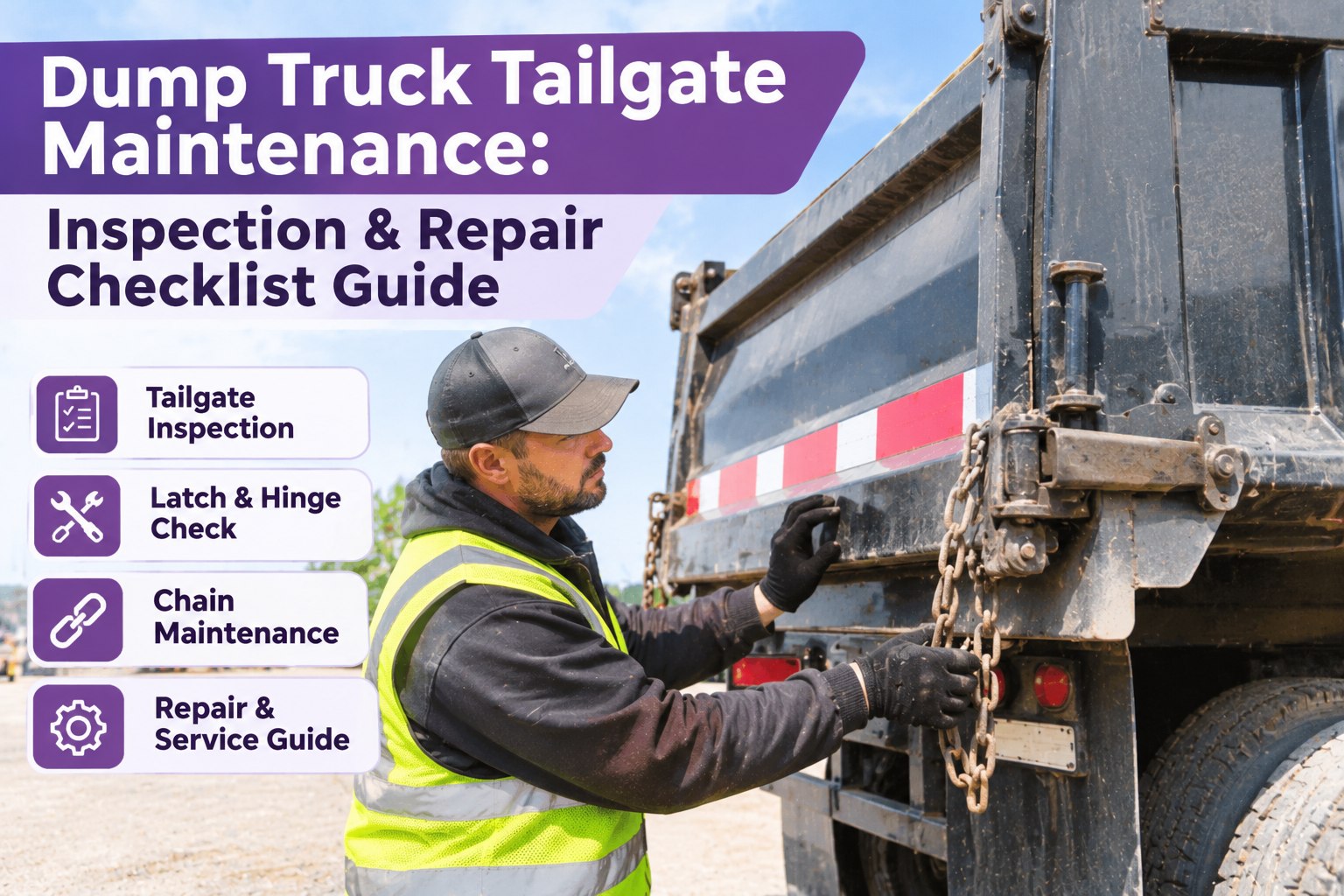
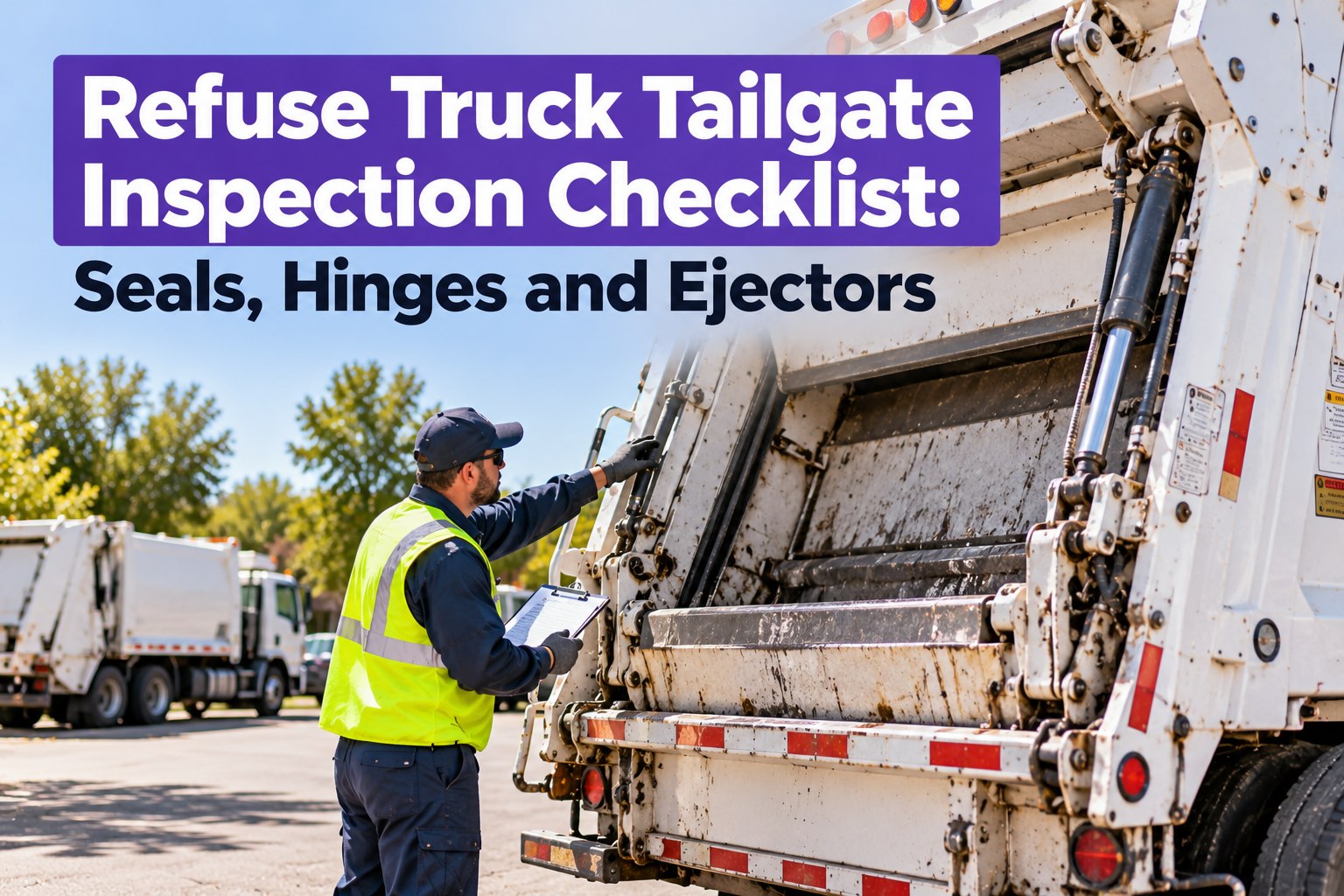
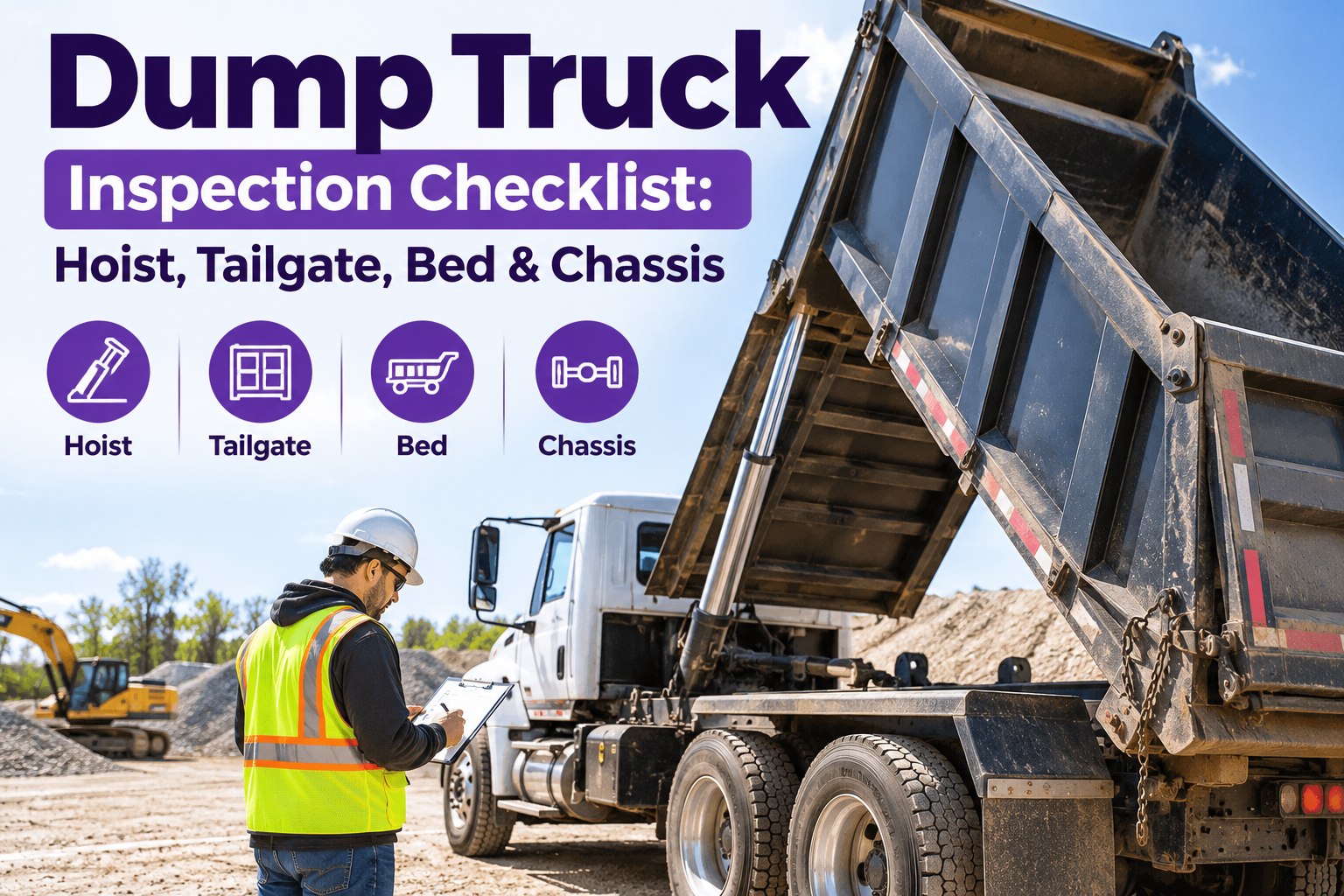
The tailgate is the one part of a dump body built to swing loose and a latch worn loose from thousands of dump cycles, a stretched safety chain, or a gate that hangs at the top of the dump is how a routine load becomes a struck-by, a slam, or a rollover. This checklist walks the latch, chains, hinges, air controls and seal on the cadence each one needs, and shows how Truck Inspection & Maintenance Management Software puts a photo of the latch on the record every time. Start free and check the tailgate on every dump truck.
A tailgate latch worn loose can release a load in transit, and a raised body with no prop can fall on whoever is behind it. Our software runs the tailgate check as a guided inspection: the latch is function-checked and photographed every load cycle, a worn pin or stretched chain becomes a work order, and the gate is scheduled by cycles — not miles. The moving, loaded parts get checked on their own clock.
The tailgate's failures aren't abstract wear — each one is a specific way someone gets hurt. The checklist exists to catch all three.
1Release under loadA latch worn loose or a stretched chain lets the gate open in transit, shedding a load on a public road.
2The slamFreeing a rock jammed between gate and bed lets the tailgate suddenly swing shut — the classic crush injury.
3The stuck gateA tailgate that hangs at the top of the dump keeps the load from shedding — a classic rollover trigger.
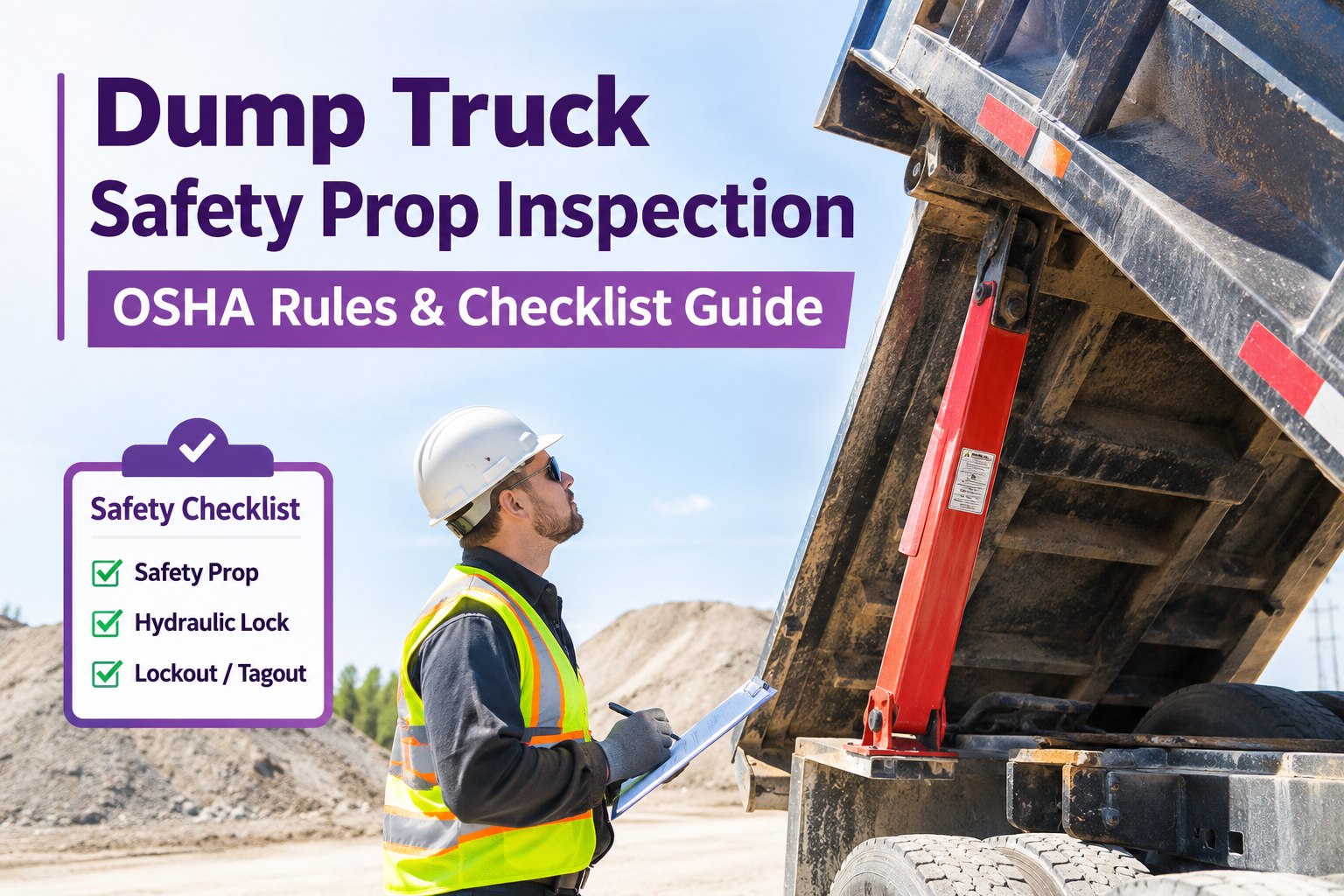
Prop It FirstNever trust the hydraulics to hold a raised body
⊘No worker goes under or behind a raised dump body without the mechanical body prop deployed — OSHA is explicit, and a hoist failure brings the body down onto whoever is there.
⊘Lock out the controls before servicing the gate. Sudden body movement traces to an inadvertent control, a pulled release cable, a hydraulic failure, or an air line reconnected too early.
The Tailgate Checklist, by Cadence
Not every part needs the same interval. The moving latch and chains are a daily function check; the structure and seal are a monthly look. Each group carries its cadence.
A daily function check and a weekly wear check, each with a photo of the latch — so the slop at a hinge pin is a tracked defect, not the reason a gate lets go on the road.
1How often should a dump truck tailgate be inspected?
Function-check the latch and chains daily — every load cycle — and do a grease-and-wear check of the hinges, pins and air controls weekly, with the seal and structure monthly. A dump truck wears by cycles, so schedule it that way. Book a demo to set the cadence.
2Why is a worn tailgate latch dangerous?
A latch worn loose from thousands of dump cycles can release a load in transit, and a tailgate that sticks at the top of the dump can trigger a rollover. Both are catastrophic, which is why the latch is a daily check. Book a demo to track latch wear.
3Can I work on the tailgate with the body raised?
Not without the mechanical body prop deployed and the controls locked out. OSHA prohibits anyone under or behind an unsupported raised body — a hoist failure gives no warning. Prop it first, every time. Book a demo to see the body-prop step built in.
4What are the signs a tailgate needs repair?
Play at the hinge or latch pins when you shake the gate, stretched or cracked chain links, an air cylinder that sticks, a worn seal that sifts aggregate, or cracks at the hinge welds. Catch any one before the next load. Book a demo to flag tailgate defects.
Latch · Chains · Hinges · Air · Seal
Check the Gate Before It Lets Go
Truck Inspection & Maintenance Management Software function-checks the tailgate daily, photographs the latch, routes a worn part to a work order, and builds the body-prop rule into the flow — so the one part made to swing loose stays under control.