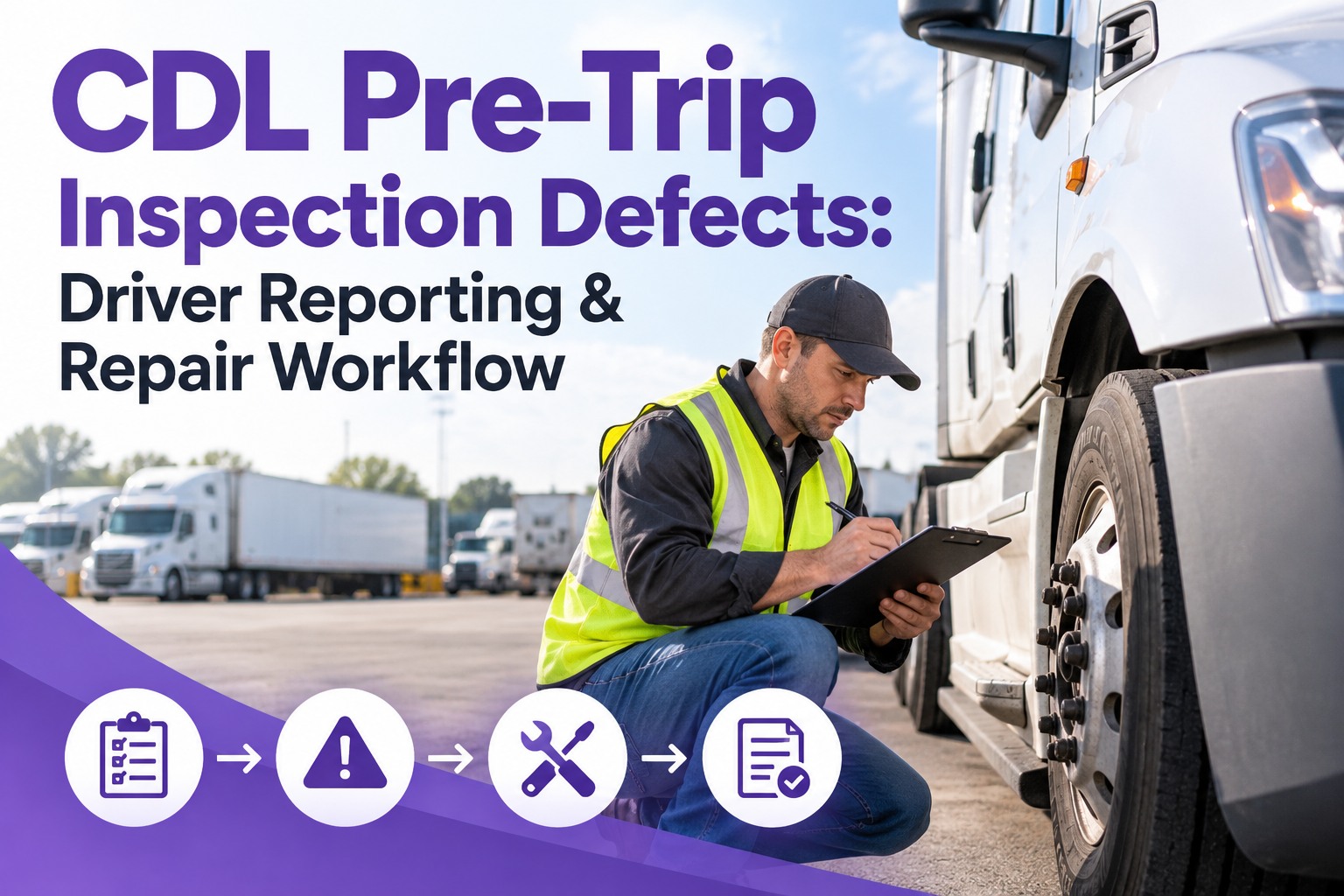
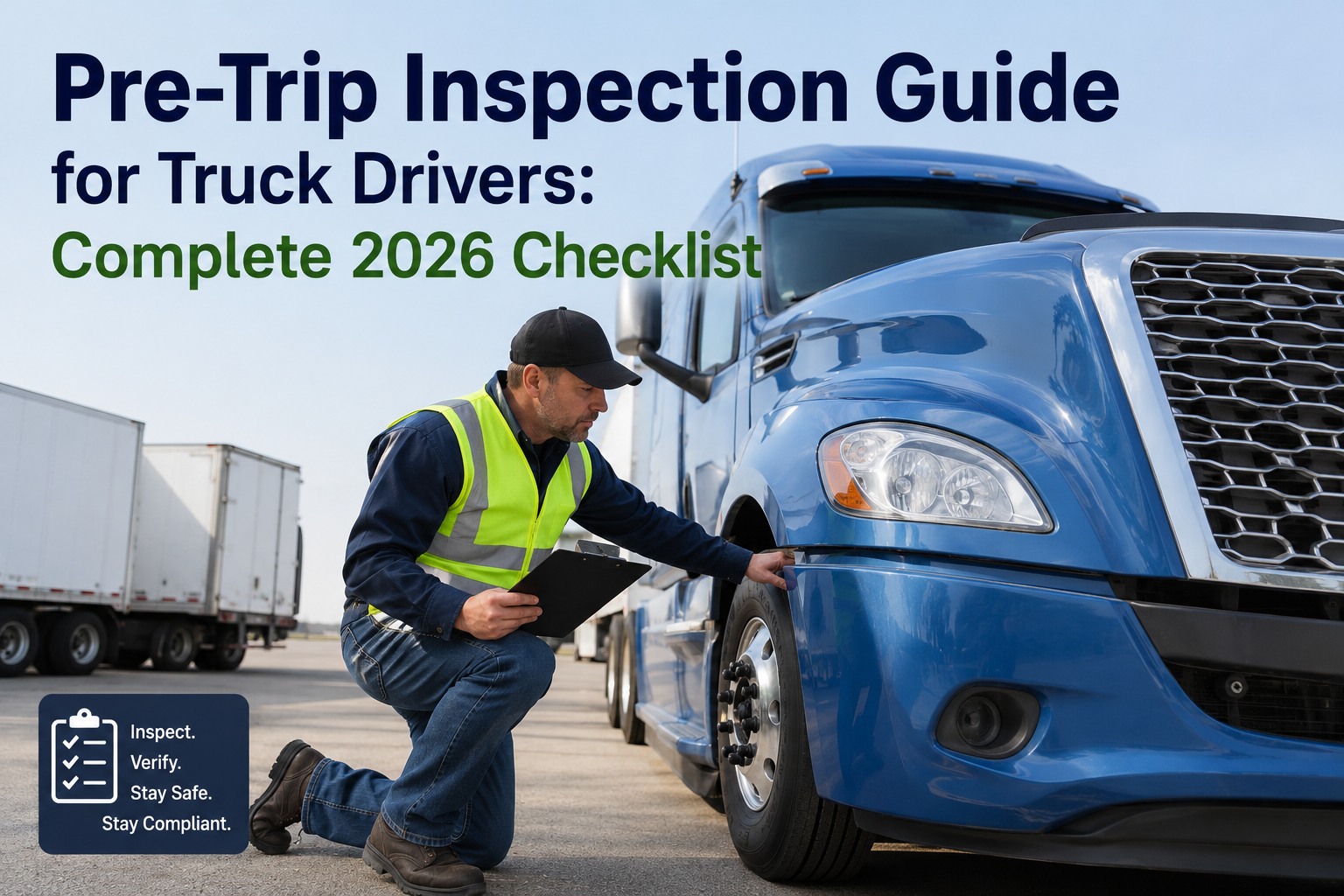
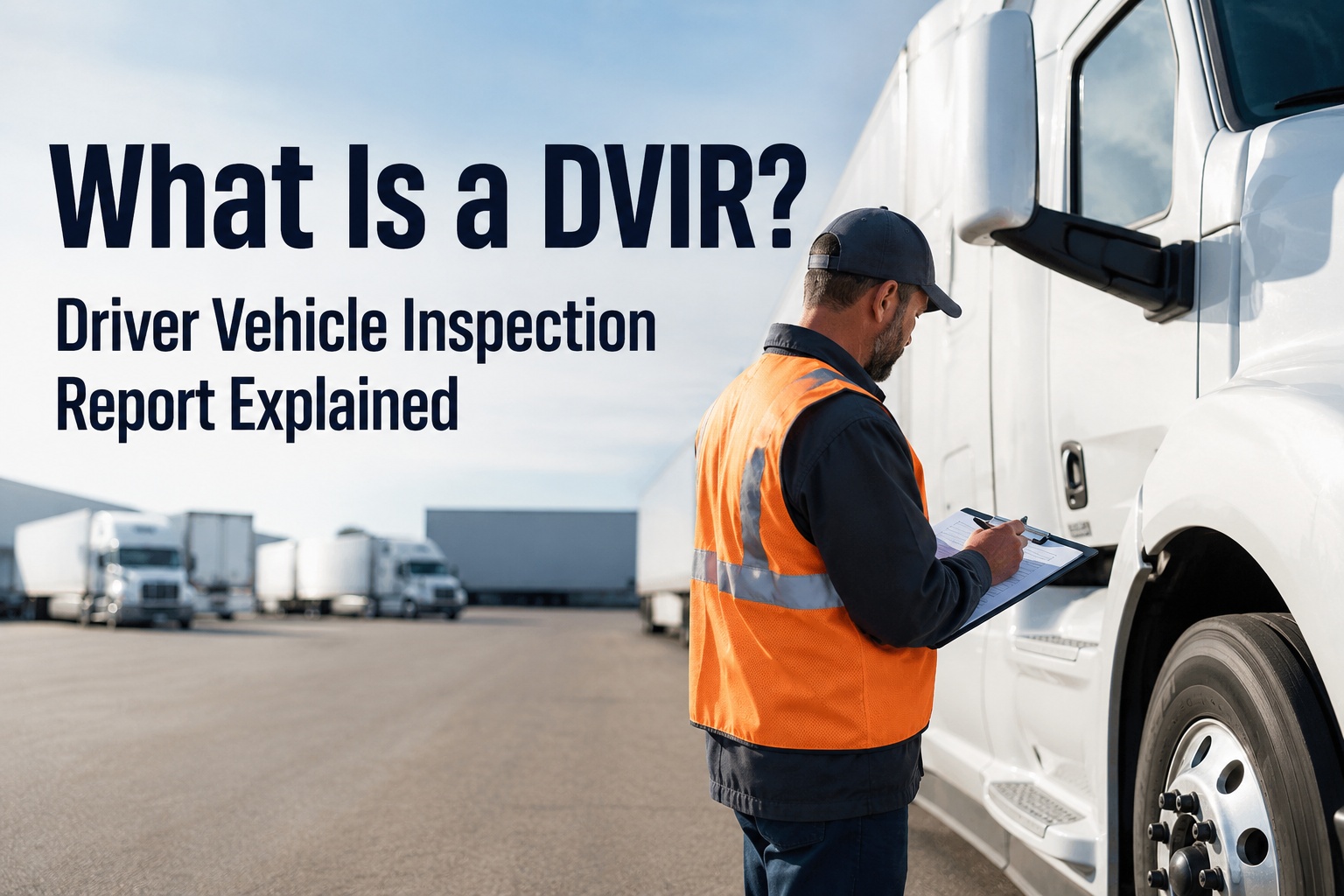
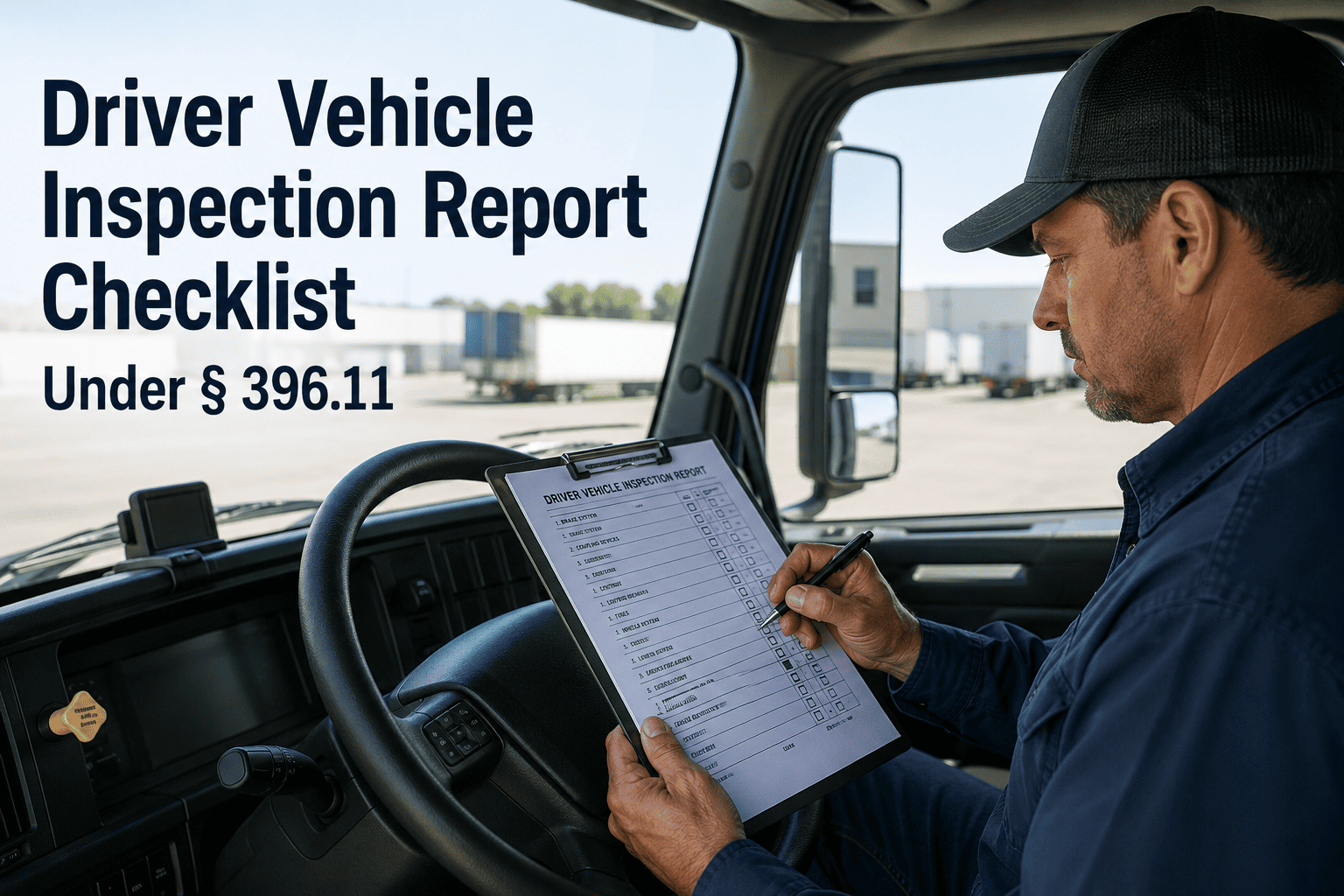
A pre-trip inspection isn't a random poke around the truck — it's one ordered walkaround, done the same way every time. Learn the seven-step method and the exam takes care of itself; run it every morning and the scale house does too. The part that trips people up is the air brake test, so this guide covers all seven steps in order, plus the L.A.B. test that fails more CDL candidates than anything else. Start free and run every pre-trip as a logged DVIR.
7 Steps · Walkaround · Air Brakes · DVIR
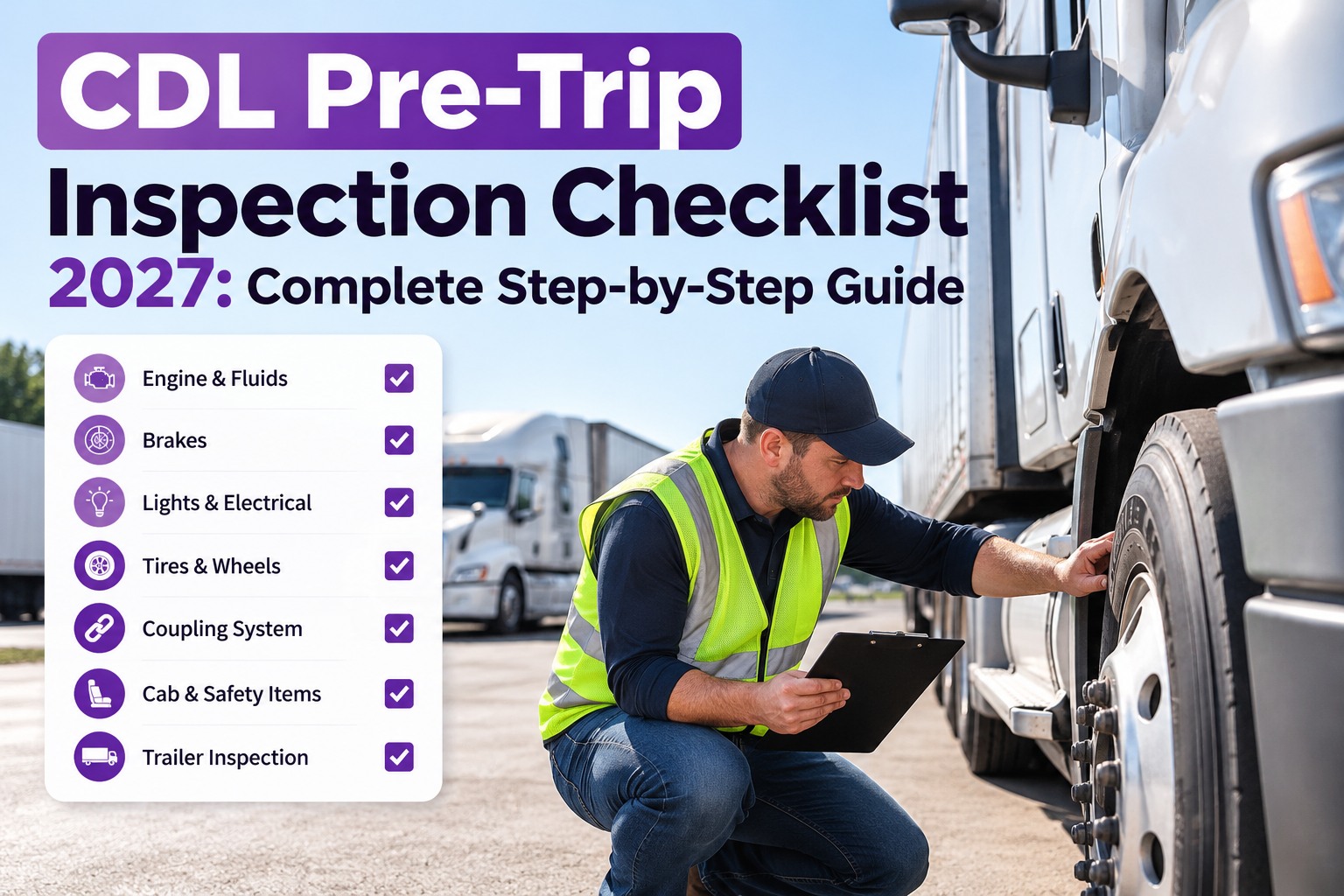
CDL Pre-Trip Inspection Checklist 2027: Complete Step-by-Step Guide
1Overview
2Engine bay
3In-cab
4Driver side
5Coupling
6Rear & curb
7Lights & brakes
The Seven-Step Method, In Order
The whole inspection follows one route around the truck. Working it in the same order every time is how nothing gets skipped — and how the walkaround becomes muscle memory instead of a checklist you read.
1
Vehicle overviewApproach and read the truck: overall lean, flat-looking tires, fluid puddles underneath, lights left on, fresh damage.
2
Engine compartmentFluids, belts, air compressor, radiator and hoses, battery terminals — engine off and cool.
3
In-cab, engine off then onThree points of contact in, seat belt, steering play, pedals, mirrors, emergency equipment, then gauges once started.
4
Driver-side walkaroundSteer axle, fuel tank, exhaust, mirrors, door hinges, DEF tank, drive axle.
5
Coupling & trailer frontFifth wheel, kingpin, air and electrical lines, landing gear (Class A combination).
6
Rear & passenger sideTrailer tires, wheels and brakes, cargo doors, rear lights, ICC bumper, then the mirror-image items up the curb side.
7
Signals & air brake testFlashers, headlights, turn and brake lights, then the air brake L.A.B. test.
The L.A.B. Air Brake Test — The Make-or-Break
If there's one part to nail, it's this. Failing the air brake portion is an automatic skills-test failure, and it's the check a roadside inspector scrutinizes most. Remember it as L.A.B. — Leakage, Alarm, Button.
L
LeakageWith brakes applied, static loss stays under 3 psi/min single or 4 psi/min combination. Build-up should climb 85 to 100 psi within 2 minutes.
A
AlarmFan the brakes down and the low-air warning light and buzzer must come on by about 60 psi.
B
ButtonKeep fanning — the spring brake valves should pop out and set between 20 and 40 psi.
The Numbers Examiners Listen For
A handful of specs come up again and again. Knowing them cold is the difference between a confident pass and a fumbled answer.
4/32"Minimum steer tire tread depth
2/32"Minimum drive & trailer tread — check inner duals
10° / 2"Maximum steering wheel play
<3/4"Maximum belt deflection, no cracks
60 psiLow-air warning activates
20–40 psiSpring brakes pop out
Specific skills-test procedures vary by state and vehicle class, so confirm the exact wording in your state's CDL manual. The ranges above are the common FMCSA-aligned values.
The Same Pre-Trip, Captured as a DVIR
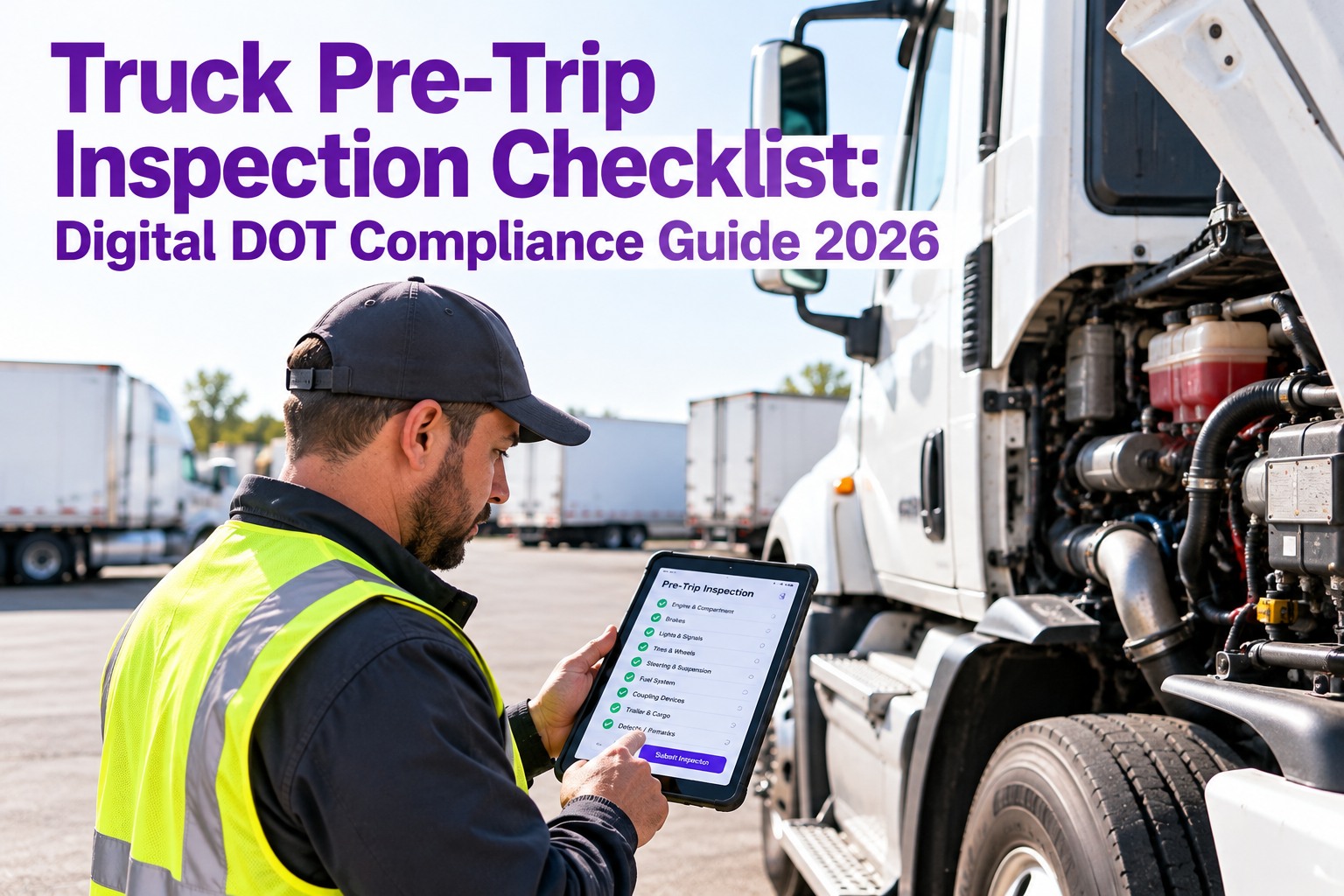
Truck Inspection & Maintenance Management Software turns this seven-step walkaround into a guided digital DVIR — the driver works the route on a phone, a defect becomes a photo-backed work order, and the signed inspection lands on the truck's record for §396.11 compliance.
The Complete Pre-Trip Checklist
Work the groups in the seven-step order. Tick each item as you confirm it — Truck Inspection & Maintenance Management Software keeps the completed inspection and any defect on the truck's record.
Pass the Exam Once, Run the Habit Every Day
The seven-step method isn't just for the skills test — it's the daily walkaround that keeps a truck legal at the roadside. Truck Inspection & Maintenance Management Software puts the same ordered inspection in every driver's hand and keeps the record for every trip.
Why Fleets Run the Pre-Trip in Software
A paper pre-trip pad proves little and gets lost. A guided digital DVIR forces the full walkaround, backs a defect with a photo, and keeps the signed record for compliance. Start free and turn the seven steps into a logged DVIR.
◳Guided seven stepsThe walkaround in order, nothing skipped on a phone.
▣Photo-backed defectsA finding becomes dated, tagged visual proof.
⚑Defect to work orderA flagged item opens a graded repair for the shop.
✎Signed DVIRDriver certification captured for §396.11.
◎Works offlineComplete the pre-trip in the yard; it syncs in range.
⌕Audit-ready historyEvery pre-trip searchable for a DOT review.
Frequently Asked Questions
01
What are the seven steps of a pre-trip inspection?
Vehicle overview, engine compartment, in-cab start-up, driver-side walkaround, coupling and trailer front, rear and passenger side, then the signal and air brake test. Working them in that fixed order is how nothing gets missed on the walkaround.
Book a demo to run the seven steps digitally.
02
What is the L.A.B. air brake test?
Leakage, Alarm, Button. Applied leakage stays under 3 psi/min single or 4 psi/min combination with build-up to 85–100 psi in two minutes; the low-air alarm sounds by about 60 psi; and the spring brakes pop out between 20 and 40 psi. Failing it is an automatic skills-test failure.
Book a demo to log the air brake check.
03
What are the minimum tire tread depths?
At least 4/32" on steer tires and 2/32" on drive and trailer tires. The inner dual is the one drivers miss — it can be below 2/32" while the outer tire still looks fine, so check both in every dual.
Book a demo to track tread by position.
04
Is a written pre-trip report required by FMCSA?
The daily pre-trip obligation under §392.7 is to be satisfied the vehicle is safe before driving; the written report that must be kept is the end-of-shift DVIR under §396.11. Many fleets require a logged pre-trip anyway, because a consistent record is strong evidence in an audit.
Book a demo to see the DVIR workflow.
Seven steps · L.A.B. test · Logged DVIR
Walk It the Same Way, Every Truck, Every Day
Give drivers the seven-step pre-trip as a guided digital DVIR — the full walkaround in order, the air brake test built in, and a signed record on every trip, whether it's exam day or a Tuesday.
No credit card required. Free for up to 3 trucks. Built for FMCSA-compliant fleets.