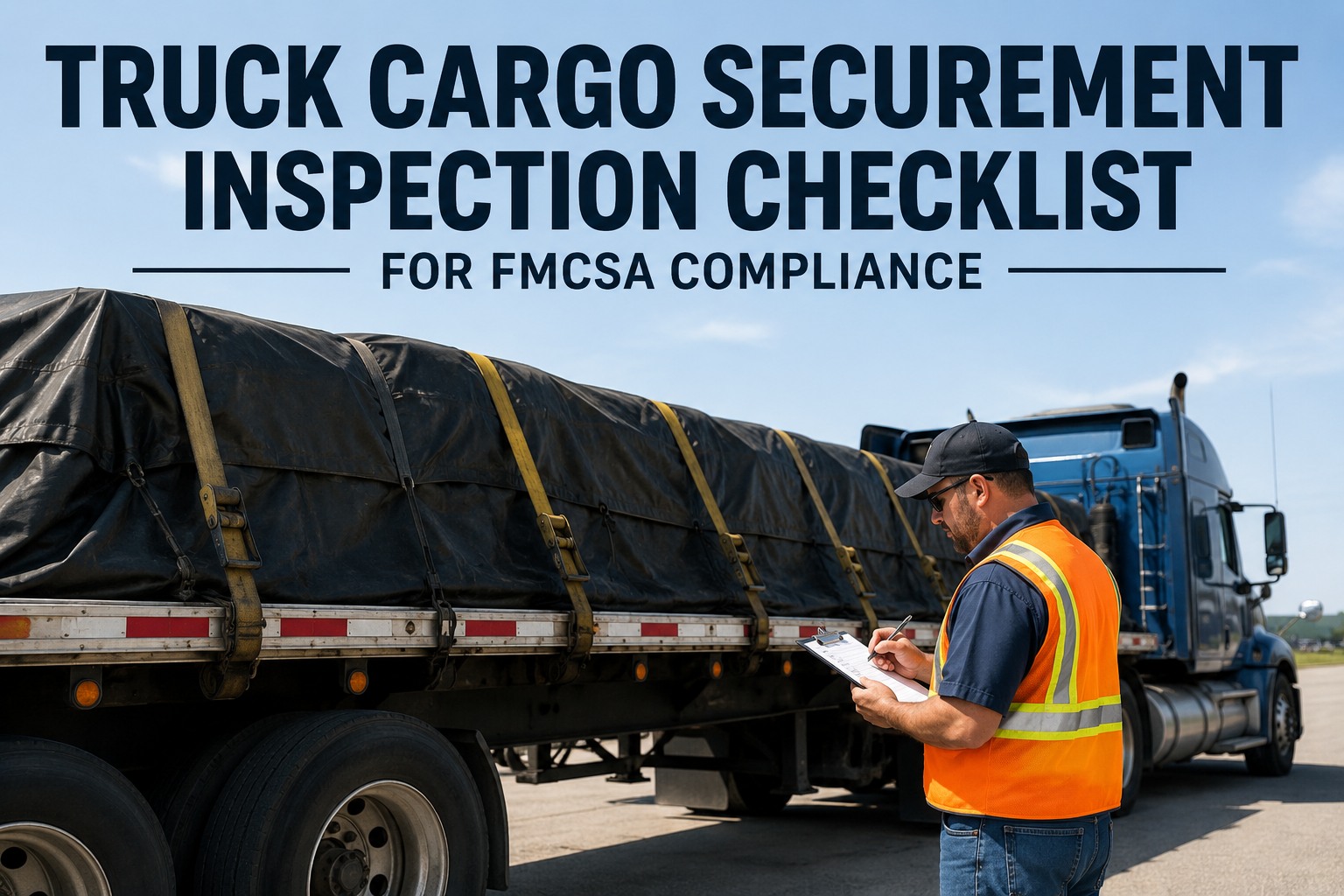
There is exactly one truck inspection rule that is the same in all 50 states: the federal annual inspection under 49 CFR §396.17. Everything else whether a state runs its own periodic safety inspection, whether your trucks need emissions testing, what they're allowed to weigh, and which rulebook an intrastate carrier follows — is stacked on top of that floor, and it changes at the state line. For a fleet that runs one state, compliance is a single checklist. For a fleet that runs several, it's knowing which layers each lane triggers and keeping every truck's proof current. This guide maps the federal floor, the layers states add, and how Truck Inspection & Maintenance Management Software keeps multi-state compliance on a calendar instead of in someone's head. Start free and track every state your trucks run.
DOT & FMCSA Compliance · Multi-State Fleets
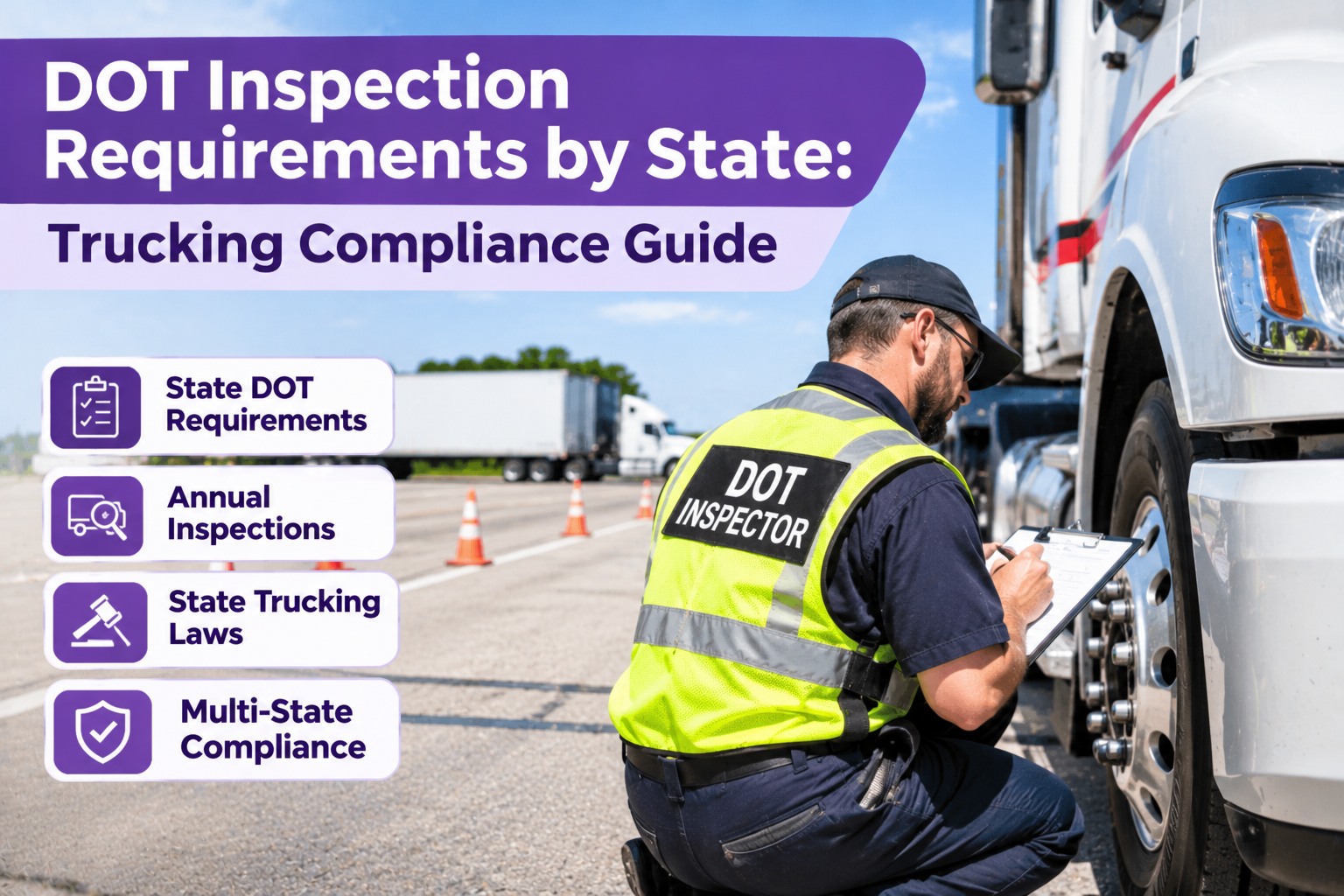
DOT Inspection Requirements by State: Trucking Compliance Guide
The federal annual inspection is uniform everywhere. What varies at the state line is everything on top of it — and a truck that's legal at home can be out-of-service across the border. Our software schedules the §396.17 annual, profiles each truck's state requirements, and alerts you before a sticker, emissions cert or permit lapses — so a truck is compliant in every state it runs, not just its home one.
Start With the Federal Floor
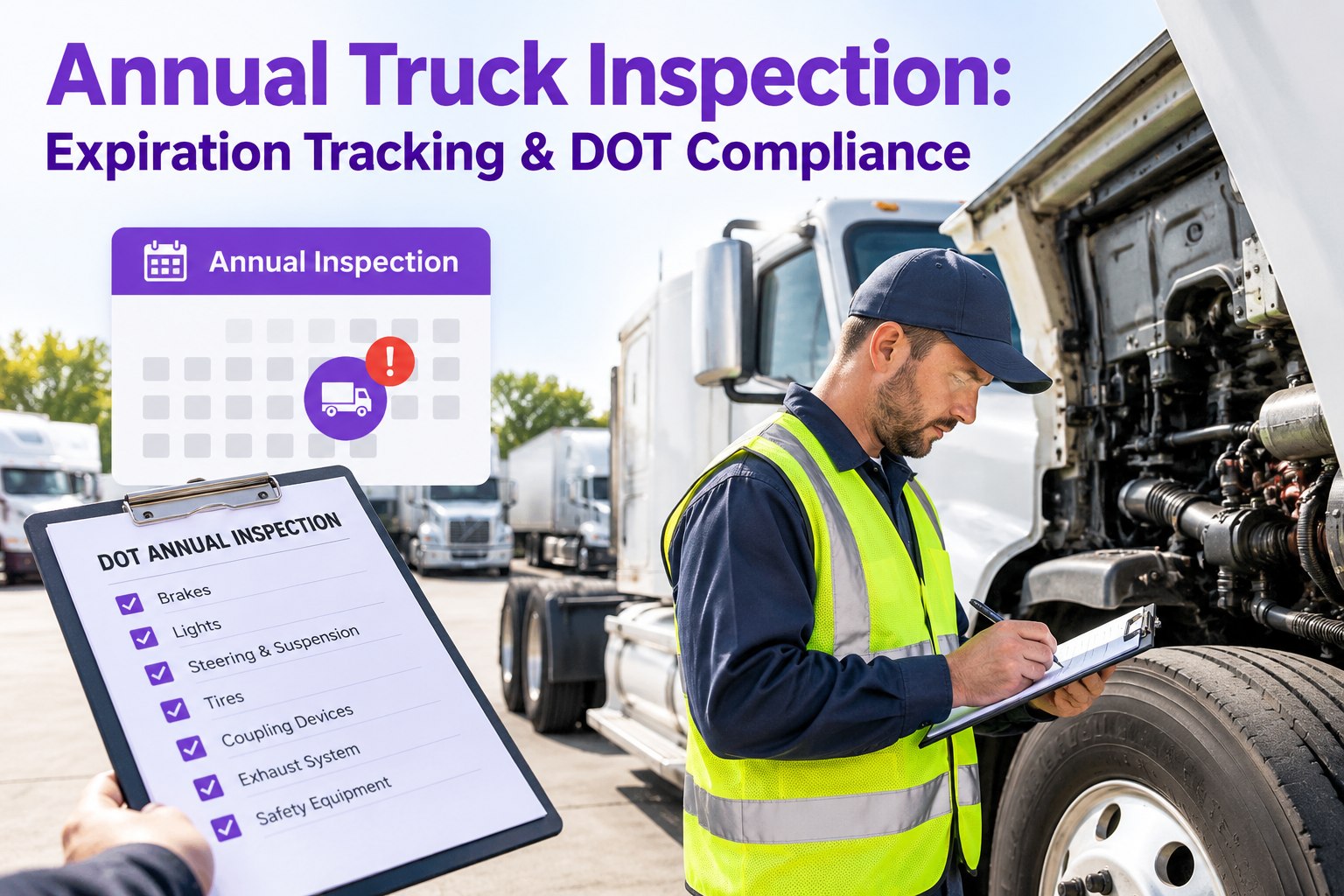
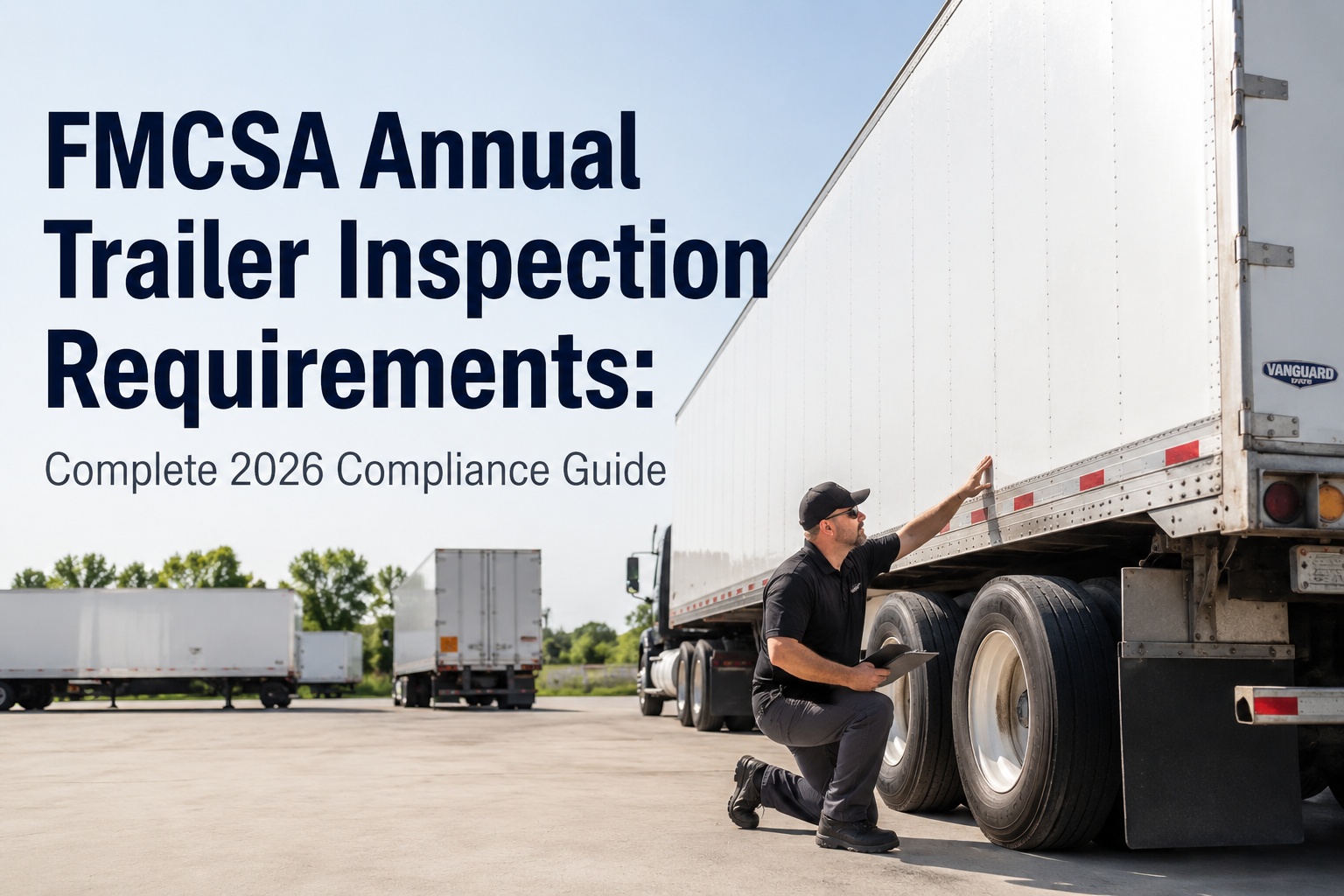
Under 49 CFR §396.17, every commercial motor vehicle must pass a periodic inspection at least once every 12 months, and proof of that inspection has to be on the vehicle. The inspection must be performed by a qualified inspector under §396.19, and the record is kept on file. That rule is identical in every state.
A state periodic inspection program can satisfy the federal annual — but only if FMCSA has determined the program is comparable to, or as effective as, §396.17. One important catch: a state's ordinary passenger safety or emissions inspection is not the CMV annual, and a roadside inspection no longer counts toward it. Book a demo to schedule the §396.17 annual across your fleet.
Four Layers States Stack On Top
Above that federal floor, four kinds of requirement vary by state. Knowing which ones your lanes trigger is most of the job.
01State inspection programsAround two dozen states plus DC run their own periodic CMV inspection that FMCSA recognizes — passing there satisfies the federal annual. In other states, you arrange a self-inspection or a third-party inspection yourself.
02Emissions testingLed by California's Clean Truck Check, which tests heavy-duty trucks operating in the state. A growing set of states adopt California-style heavy-duty or smoke-opacity rules, so emissions duty depends on where you run and register.
03Weight limits & permitsThe 80,000-lb cap is federal on the Interstate System. Off it, states set their own limits, keep grandfathered exceptions, and issue oversize and overweight permits on their own terms — the permit you need differs by state.
04Interstate vs intrastateCross a state line and you're under the federal FMCSRs. Stay inside one state and you follow that state's version — often with its own variances on driver age, medical cards and hours.
One Record, Every Jurisdiction
The §396.17 annual, the state sticker, the emissions cert and the permits — tracked per truck with the expiration dates that matter in each state it runs, so nothing lapses at a border you didn't think about.
Where Multi-State Fleets Slip
The failure mode isn't ignorance of the federal rule — everyone knows the annual. It's the layers, and it shows up three ways.
Legal at home, not across the lineA truck inspected and stickered in its base state can still hit a requirement it doesn't meet the moment it runs a lane into another.
The floor is uniform, the add-ons aren'tFleets schedule the annual well and then miss an emissions cert or a state sticker because those don't live on the same calendar.
A lapse is a roadside problemAn expired sticker, a missed emissions deadline or a permit gap turns into a citation or an out-of-service hold far from the yard.
What Has to Travel With the Truck
Compliance across states comes down to a handful of records that have to be current and findable when an officer asks. The exact set depends on the truck and the lane.
Federal annual proofEvidence of the current §396.17 inspection, on the vehicle.
State stickerThe periodic inspection decal, where that state requires one.
Emissions certProof of testing or registration where a state mandates it.
IRP & IFTAApportioned registration and fuel-tax credentials for the states run.
PermitsOversize or overweight permits for the specific lane and load.
None of these is hard on its own. The difficulty is that each has a different issuer, a different renewal date, and a different trigger — and a fleet running a dozen trucks across six states is tracking dozens of them at once. Book a demo to keep a roadside-ready document pack on each unit.
Build the Calendar, Not the Memory
No one memorizes 50 rulebooks. What works is turning the layers into dates: profile each truck once, then track every expiration against it.
Profile the truckHome state, the states it runs, weight class and fuel type decide which layers apply.
Track every expirationAnnual inspection, state sticker, emissions cert, permits and registration — each with its own date.
Alert before it lapsesA reminder ahead of each deadline turns a roadside surprise into a scheduled task.
Why Multi-State Fleets Run It in Software
A spreadsheet can hold the dates. It can't tell you which truck is about to run a state it isn't cleared for. Keeping the requirements on the truck's record is what makes multi-state compliance routine.
Annual schedulingThe §396.17 inspection planned and the record held per truck.
State requirement profileThe layers each truck triggers, by domicile and lane.
Expiration alertsStickers, emissions certs, permits and registration flagged early.
Roadside document packCurrent proof findable in seconds at a stop.
Inspection to work orderA failed item routes to the shop before it's a violation.
One record per unitEvery state's requirement on a single truck file.
The result: a fleet that stays compliant in every state it touches, without anyone holding it all in their head. Start free and run multi-state compliance in one system.
Frequently Asked Questions
1Does a federal annual inspection cover every state?
Yes — the §396.17 annual is a federal requirement that applies in all 50 states, and a valid inspection is recognized nationwide. What it doesn't cover is the extra layers a state adds, like its own emissions testing or permits.
Book a demo to schedule the annual fleet-wide.
2Which states require their own truck inspection?
Around two dozen states plus the District of Columbia run periodic CMV inspection programs that FMCSA recognizes; passing in one satisfies the federal annual. In the rest, you arrange a qualified self-inspection or third-party inspection. Check the states in your base and lanes.
Book a demo to track state inspection stickers.
3Do I need emissions testing for my trucks?
It depends on where you operate. California's Clean Truck Check tests heavy-duty trucks running in the state, and a growing number of states adopt California-style heavy-duty or opacity rules. If your lanes include those states, build the cert into your calendar.
Book a demo to track emissions deadlines.
4How do interstate and intrastate rules differ?
Cross a state line and you're under the federal FMCSRs. Operate only within one state and you follow that state's adoption of them, which often carries its own variances on driver age, medical certification and hours of service.
Book a demo to map your compliance by lane.
Federal Floor · State Layers · One Calendar
Compliant in Every State, Not Just the Home One
Truck Inspection & Maintenance Management Software schedules the §396.17 annual, profiles each truck's state requirements, and alerts you before a sticker, emissions cert or permit lapses — so multi-state compliance lives on a calendar instead of in someone's memory.
No credit card required. Free for up to 3 trucks. Built for FMCSA-compliant fleets.