A dense e-commerce route can mean 180 stops on a 12-mile loop and that duty cycle chews through a delivery van in a way highway miles never would. Brake pads wear roughly three times faster, tires scrub their edges in loading-zone turns, and idling at every stop piles on engine hours the odometer never sees. Maintain one of these vans on a highway truck's schedule and you'll meet the failures on the road instead of in the bay. Start free and put your delivery fleet on a route-based PM schedule.
Last-Mile · High-Stop · Stop-and-Go Wear
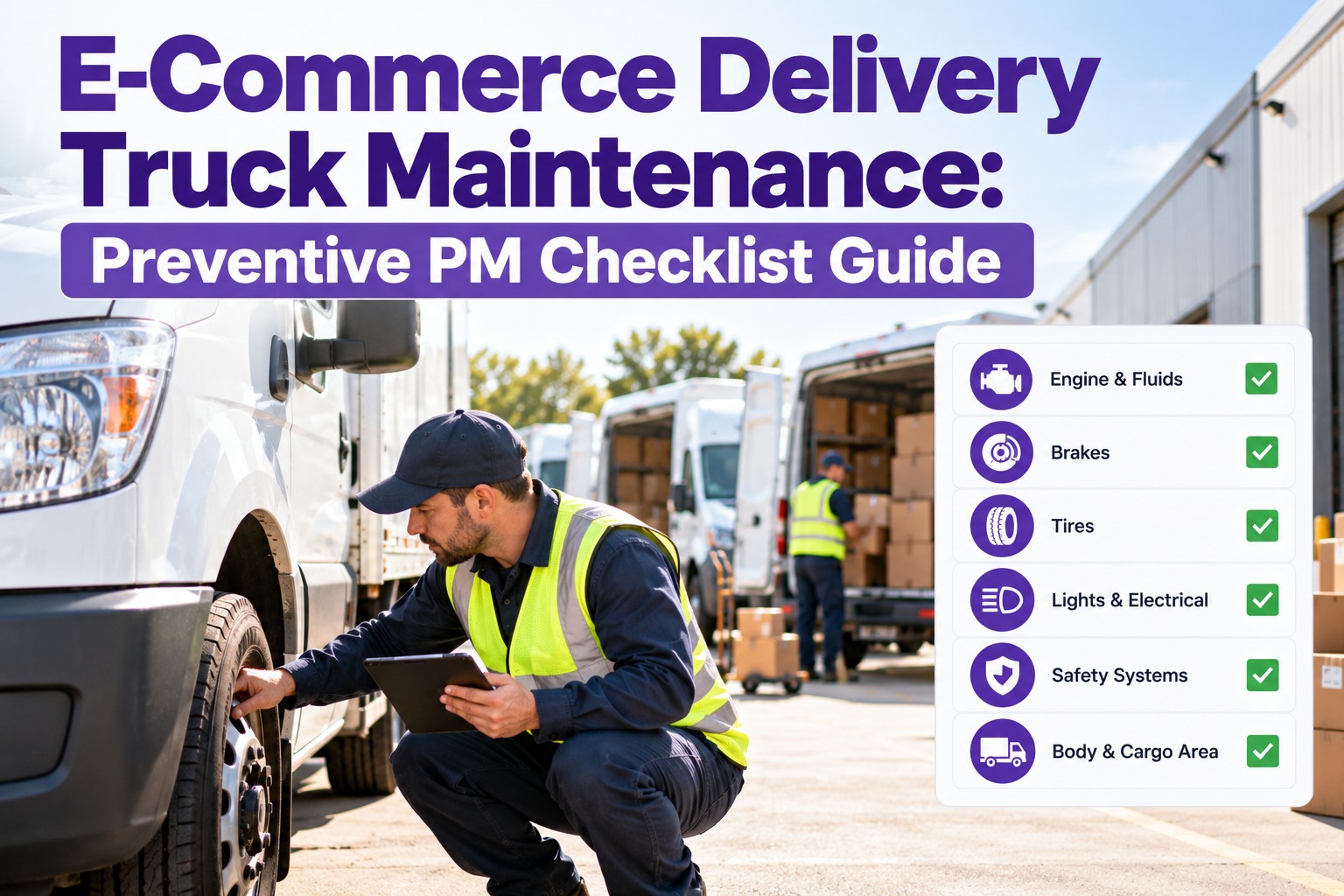
E-Commerce Delivery Truck Maintenance: The Preventive PM Checklist
A last-mile van wears by stops and hours, not just miles — so it needs a tighter, route-aware PM schedule than a long-haul truck. This checklist is built for high-stop delivery work: the daily walkaround, the weekly depot check, and the deeper services that catch brakes, tires, doors, and batteries before a van drops off a route. Truck Inspection & Maintenance Management Software runs every item on the right clock — miles or engine hours — and turns a flagged defect straight into a work order.
Every stop converts the van's momentum into brake heat, every loading-zone turn scrubs a tire edge, and every idle minute adds engine hours. That's why the components wear in a different order — and far sooner — than the maker's generic schedule assumes.
1stBrake pads~3× highway wear. On dense routes pads can reach the limit near 9,000 miles, not 25,000 — check pad thickness every 4,000 mi.
2ndTiresOuter-edge scrub from tight turns. Tread and sidewalls want a check every 6,000 mi on curb-heavy routes.
3rdDoors & stepsSliding doors, cargo doors, steps and ramps see hundreds of cycles a shift — tracks, hinges and latches wear fast.
4thBattery & idle hoursStop-start duty and long idles load the 12-volt system and add engine hours the odometer never records.
Work the checklist by frequency, not by one calendar. The quick checks happen daily and weekly; the deeper services land on mileage or engine hours. Tick each item as it's done — or let the software track completion for you.
DAILYDriver Walkaround — Before the Route
WEEKLYDepot Check
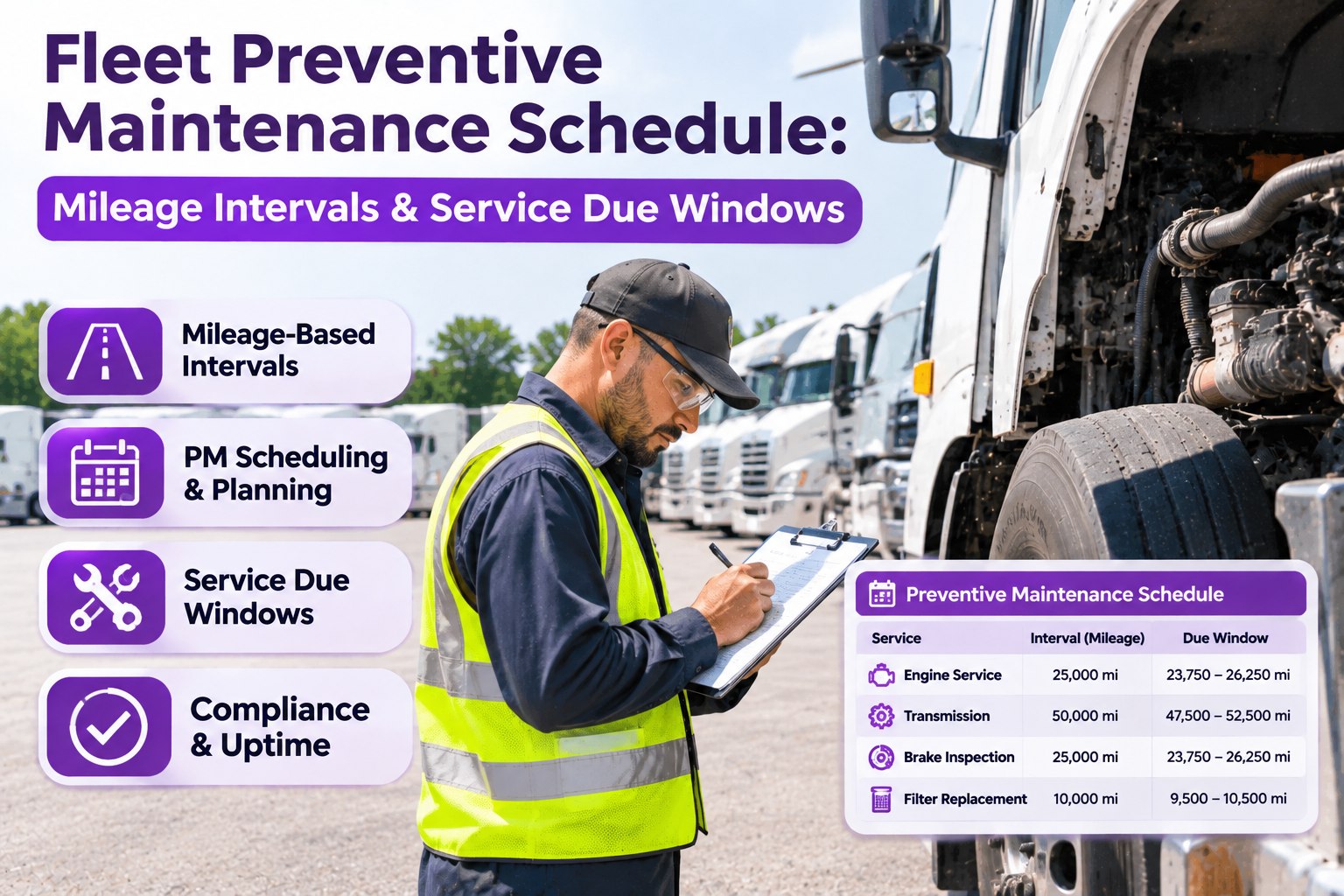
SERVICE ARoutine Service — by Miles / Engine Hours
SERVICE BMajor Inspection
SEASONALPeak & Weather Readiness
Run Each Van on the Clock It Actually Wears By
A fixed 90-day brake check doesn't fit a van burning pads in 9,000 miles. Truck Inspection & Maintenance Management Software schedules each delivery van by what drives its wear — miles for brakes and tires, engine hours for fluids on high-idle routes — and fires every PM before it comes due. The daily walkaround lives on a phone, so a worn pad or a sticking door becomes a dated work order the moment the driver flags it, not two days later. Every safety defect acknowledged, graded, and assigned within 4 hours.
On a parcel route, a down van isn't a line item — it's a whole day of stops that don't get made and a customer promise that breaks. The cheap, frequent checks are what keep the expensive failures off the road.
⊘The route stopsA van down mid-shift strands the parcels on board — missed deliveries, SLA penalties, and a scramble to cover.
⊘Emergency beats plannedA roadside brake or tire failure costs far more than the 4,000-mile pad check that would have caught it.
⊘Safety on crowded streetsWorn brakes on a stop-every-70-yards route is exactly where a failure does the most harm.
How often should I do PM on a high-stop delivery van?
Tighter than a highway truck, and on more than one clock. The driver does a daily walkaround before the route; the depot runs a weekly check on fluids, tires, battery, and cargo area. Then the deeper services land on mileage and engine hours: on dense stop-go routes, measure brake pads every 4,000 miles and check tires every 6,000, because stop-and-go wear is roughly three times highway rates. Fluids are best scheduled by engine hours rather than miles, since idling at each stop adds hours the odometer never shows. The point is to match the interval to the route, not to a generic calendar.
Why do delivery van brakes and tires wear out so fast?
Because the duty cycle is brutal on them. A dense urban route can be 180 stops across just 12 miles — every stop turns the van's weight and momentum into brake heat, so pads wear about three times faster than on highway miles and can reach the limit near 9,000 miles instead of 25,000. Tires take it on the edges: tight turns into loading zones scrub the outer tread, so a curb-heavy route can need tires around 14,000 miles. It's not a quality problem — it's the route. The fix is checking them on a mileage interval short enough to catch the wear before it becomes a failure.
Should delivery vans be scheduled by mileage or engine hours?
Both — and that's the key. Brakes and tires wear by miles and stops, so they're best tracked on an odometer interval. But fluids, filters, and overall engine load are better scheduled by engine hours, because a van idling at every one of 180 stops racks up hours far faster than its low mileage suggests. A schedule built on miles alone will service the engine too late on a high-idle route. Running both clocks — and factoring route severity — is what keeps a delivery van reliable without over- or under-servicing it.
What parts of a delivery van are easiest to overlook?
The doors and steps. Sliding doors, cargo doors, steps, and ramps cycle hundreds of times a shift, so their tracks, hinges, and latches wear quickly — but they rarely make a maintenance schedule until one jams mid-route. Build them into the daily function check and the major-service lubrication. The 12-volt battery is the other one: constant stop-start duty and long idles load it hard, so a terminal check weekly and a load test before peak season keep a dead-battery no-start from stranding a van full of parcels. Book a demo to add door and battery checks to your PM plan.
Stops · Hours · Uptime
Keep Every Delivery Van Ready for the Next Route
Truck Inspection & Maintenance Management Software puts this whole checklist on autopilot — scheduling each van by miles and engine hours, running the daily walkaround on a phone, and turning any flagged defect into a work order before it drops a van off a route. Every safety defect acknowledged, graded, and assigned within 4 hours. Keep the parcels moving and the fleet road-ready.