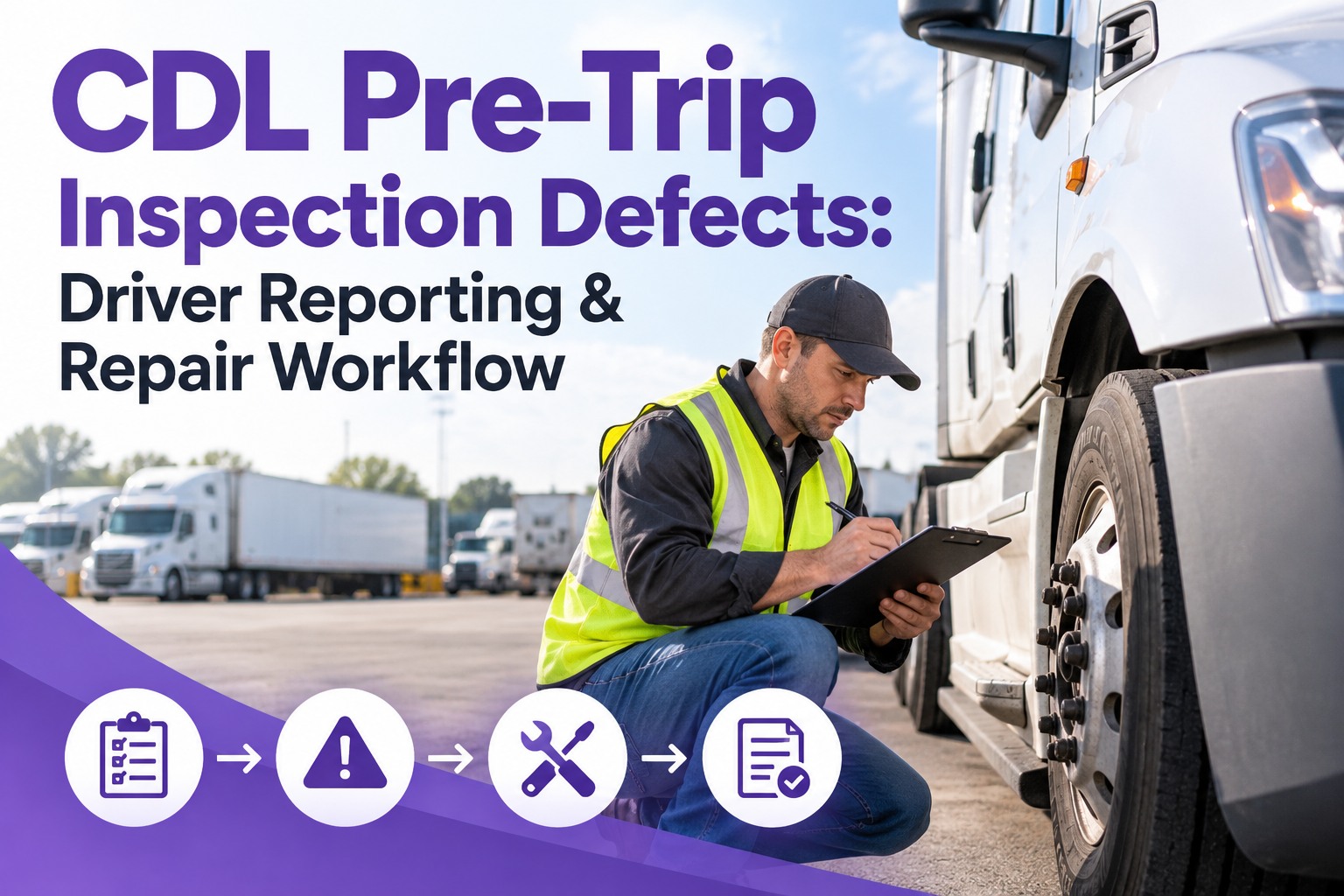
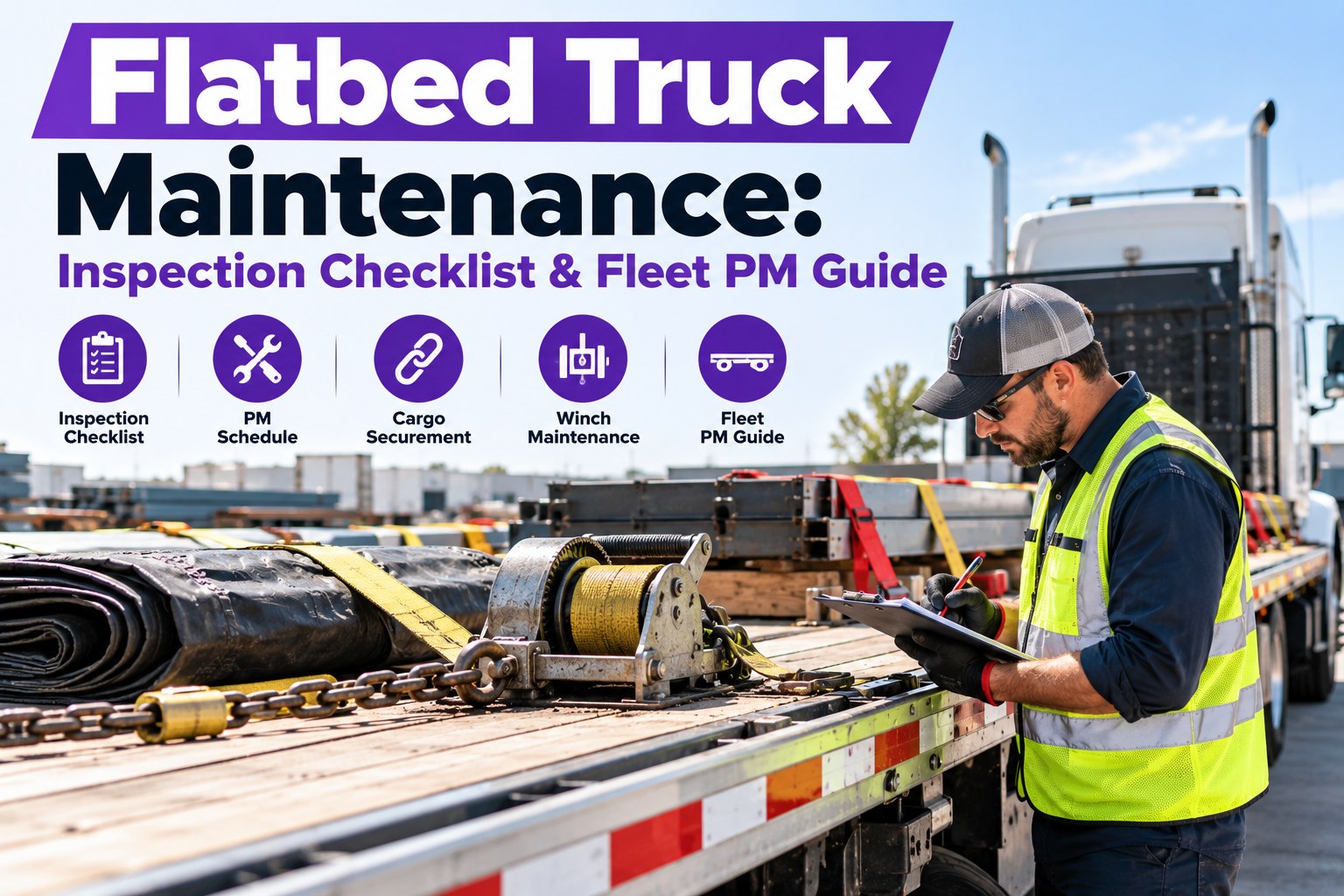
Most fleets treat inspection and maintenance as two separate chores — the driver fills out a form, and somewhere else a mechanic fixes trucks. The fleets that stay out of trouble treat them as one loop: an inspection finds a defect, the defect becomes a work order, the repair is verified, and what it teaches feeds the next preventive-maintenance cycle. This guide walks that whole loop end to end — the inspection types, the core checklist, the defect-to-repair workflow, and the compliance it satisfies. Start free and run the whole loop on TIM.
A checklist that nobody acts on is just paperwork; a repair with no inspection behind it is luck. What keeps trucks safe, uptime high, and auditors satisfied is the loop that connects them — inspect, detect, fix, verify, prevent, repeat. That's the loop Truck Inspection & Maintenance Management Software (TIM) runs for you: every inspection and DVIR flows into graded work orders, repairs are tracked to a verified close, and the pattern drives the preventive-maintenance schedule.
4-hour first responseEvery reported defect is acknowledged, graded, and assigned within four hours — so nothing a driver flags sits idle while the truck keeps running.
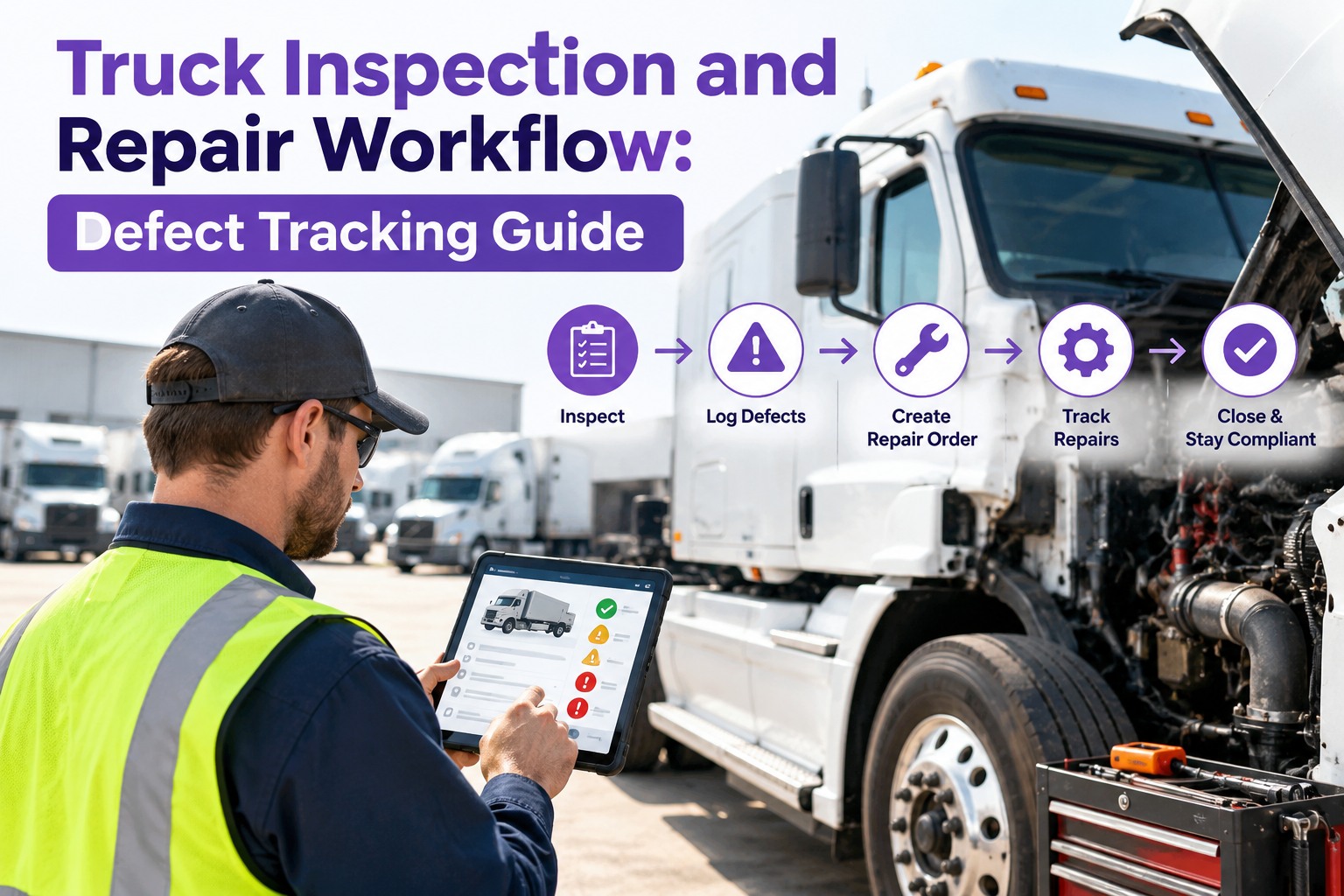
Every well-run fleet turns the same five-stage loop, over and over. Break it at any stage — a defect never reported, a work order never raised, a repair never verified — and the loop leaks into breakdowns and violations.
1
InspectDriver or technician checks the vehicle against the standard.
→
2
Detect & reportA defect is logged with detail and a photo, not left in someone's head.
→
3
Work orderThe defect becomes a graded, assigned repair job automatically.
→
4
Repair & verifyThe fix is made, signed off, and certified against the original defect.
→
5
PreventThe pattern feeds the PM schedule so the next failure is caught early.
↻…and the PM schedule sets up the next inspection — the loop closes and begins again
"Inspection" isn't one event — it's four, each with a different trigger, scope, and rule behind it. A complete program covers all four, and they all feed the same loop.
DAILY§392.7
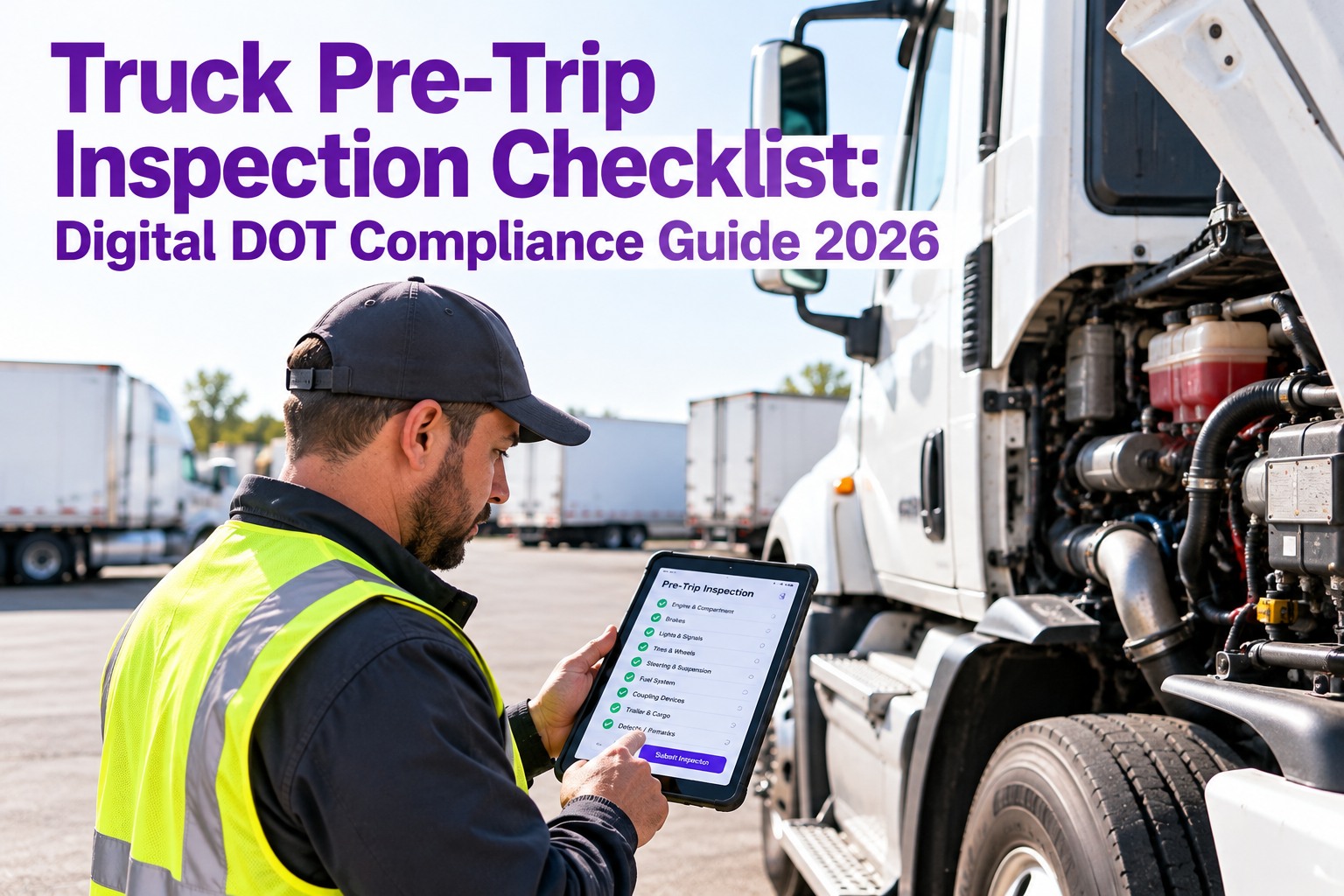
Pre-TripBefore the vehicle rolls, the driver confirms the key safety systems are in working order — brakes, tires, lights, steering, coupling.
DAILY§396.11
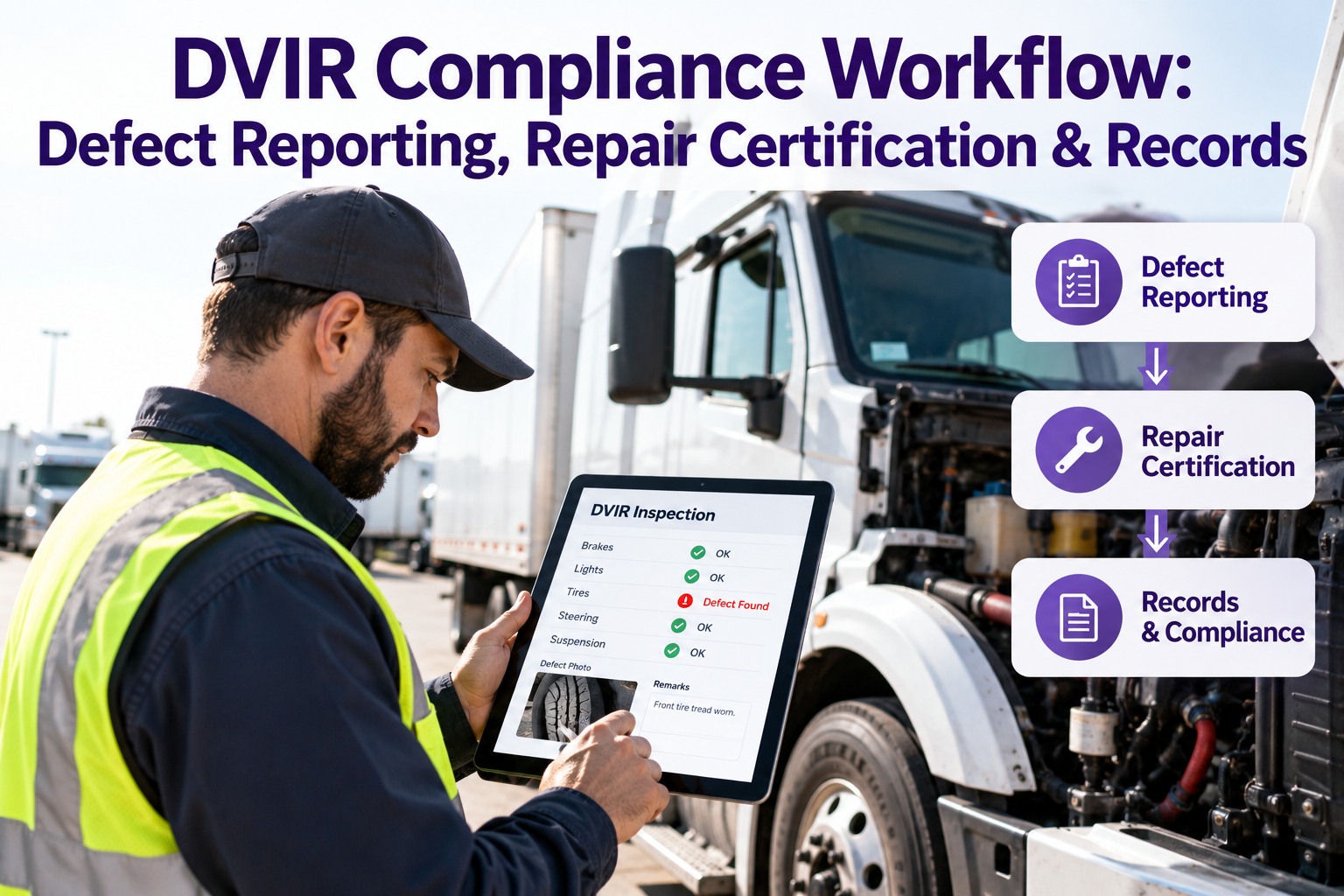
Post-Trip (DVIR)At the end of the day the driver records any defect found, and the carrier certifies the repair before the truck runs again.
RANDOMCVSA
RoadsideAn officer can inspect at any time against the North American Standard — the one you don't schedule, so the first three have to be right.
YEARLY§396.17
Periodic (Annual)A qualified inspector examines every component to the federal standard once every 12 months, with the record retained.
Whatever the moment, the walk-around covers the same safety-critical systems. Tap each box as you clear it — this is the condensed core every pre-trip and post-trip should hit, and the systems a roadside officer weighs most.
4 checks01 · Brakes & Air System#1 OOS
4 checks02 · Tires, Wheels & Steering#2 OOS
4 checks03 · Lights, Coupling & Loadvisibility
4 checks04 · Engine, Fluids & Cabunder hood
A Checklist Is Only Half the Workflow
The 16 checks above find the defect — the workflow is what happens next. TIM takes each flagged item from the inspection straight into a graded work order, tracks the repair to a verified close, and keeps every DVIR and record on one timeline, so the inspection half and the maintenance half are never disconnected.
The difference between a fleet that passes and one that scrambles isn't the checklist — both have one. It's what happens to a defect after it's written down.
PAPER / DISCONNECTED
Defect written on a form that sits in a tray
Someone re-types it into a work-order system by hand
No proof the repair was verified before dispatch
Records scattered when an auditor asks
PM runs on a guess, not on what inspections reveal
Run the loop well and compliance mostly takes care of itself — each stage lines up with a federal expectation. Here's how the workflow maps to the rules it answers.
§396.3A systematic inspection, repair, and maintenance program with records — the PM stage of the loop.
§396.11Driver vehicle inspection reports listing defects — the detect-and-report stage.
§396.13Review and certify repairs before operating — the repair-and-verify stage.
§396.17The annual periodic inspection, retained — the yearly turn of the loop.
Truck Inspection & Maintenance Management Software (TIM) is built around the loop, not around a single form — so the inspection, the defect, the work order, the verified repair, and the PM schedule all live on one record per truck.
Digital inspections & DVIRPre-trip, post-trip, and periodic checks run from the cab on a phone, with photos.
Defect becomes a work orderA failed item turns into a graded, assigned repair the moment it's filed.
Repair tracked to verified closeEach defect is followed to a signed-off fix — the loop actually closes.
Nothing dispatches openA unit with an open critical defect is flagged until it's fixed and verified.
PM driven by the dataSchedule service on mileage, hours, or date, informed by real defect patterns.
Audit-ready recordsEvery inspection, defect, and repair retained per truck, ready on request.
What's the difference between a truck inspection and a maintenance workflow?
An inspection is the check that finds a problem; the maintenance workflow is everything that happens to that problem afterward — reporting it, turning it into a work order, repairing it, verifying the fix, and feeding the pattern into preventive maintenance. A checklist on its own only identifies defects; it doesn't fix anything. The value is in connecting the two so a flagged item can't fall through the gap between the driver who found it and the shop that fixes it. Treat them as one loop, not two separate tasks.
What are the main types of truck inspection?
Four. The pre-trip, done by the driver before the vehicle rolls, confirming the key safety systems. The post-trip, recorded as a driver vehicle inspection report at the end of the day, listing any defects. The roadside inspection, which an officer can perform at any time against the North American Standard. And the periodic (annual) inspection, a full examination of every component by a qualified inspector once every 12 months. The first two are daily and within your control; the roadside one is unscheduled; the annual is the yearly deep check. A complete program runs all four.
How does digital inspection software improve the workflow?
By removing the gaps where defects get lost. Digital inspection lets a driver file a defect from the cab with a photo, turns it into a graded work order automatically instead of someone re-typing it, blocks a truck with an open critical defect from being dispatched, and keeps every inspection, repair, and record on one timeline that's ready when an auditor asks. It also lets preventive maintenance be driven by the defect patterns the inspections reveal, rather than a fixed guess. The checklist is the same; what changes is that nothing falls between the stages.
What does a basic truck inspection checklist cover?
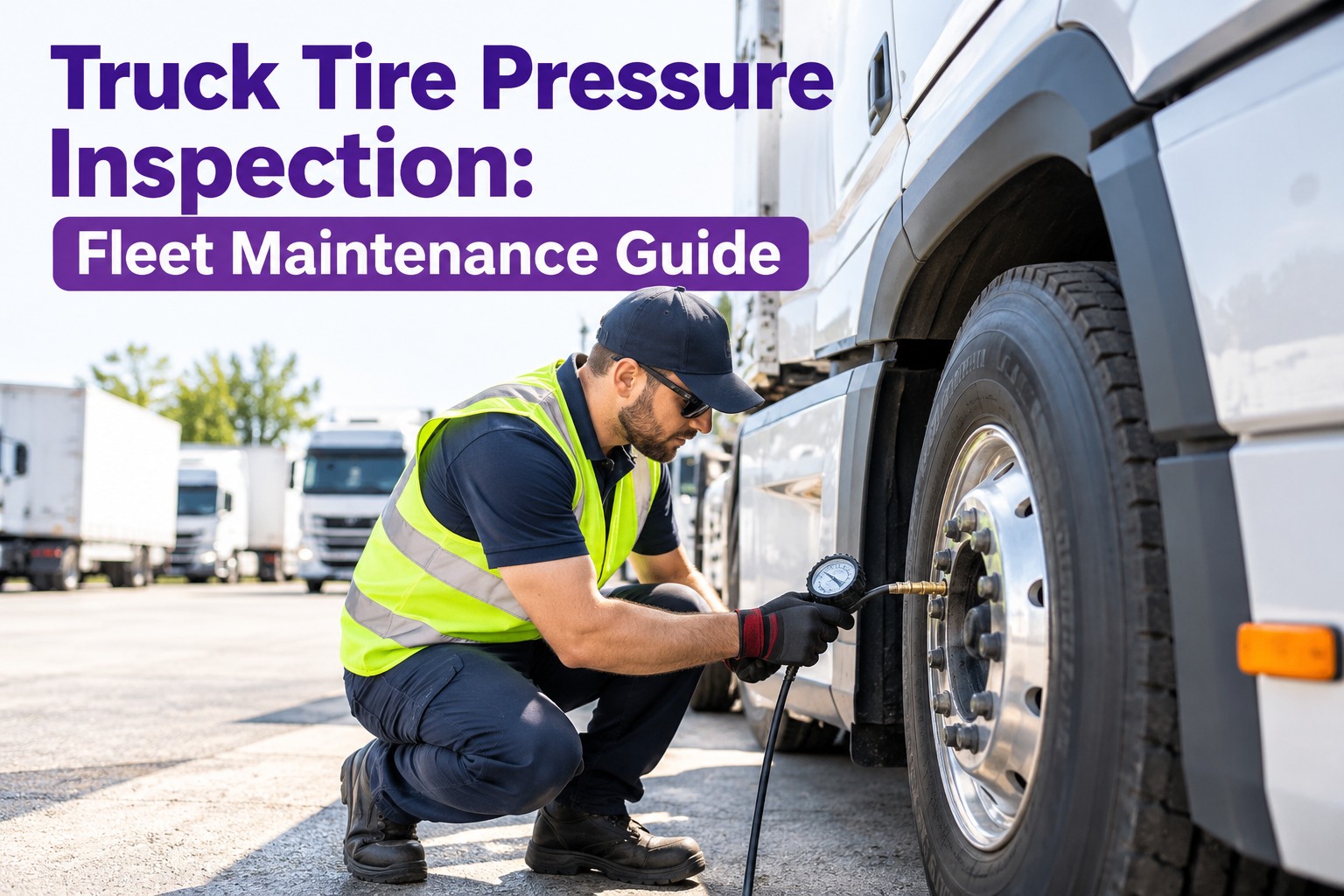
The safety-critical systems, in roughly the order a roadside officer weighs them: brakes and the air system, tires and wheels, steering and suspension, lights and reflectors, coupling devices and load securement, and the engine, fluids, and cab. Brakes and tires are the two most common out-of-service findings, so they get the closest look. The same core systems appear whether it's a pre-trip, a post-trip, or the annual — the annual just goes deeper, measuring and examining components a daily walk-around only eyeballs.
How does the workflow keep me DOT compliant?
Each stage of the loop lines up with a federal requirement. The preventive-maintenance program answers the systematic maintenance-and-records expectation, the driver vehicle inspection report answers the defect-reporting rule, the verified repair answers the review-and-certify-before-operating rule, and the annual inspection answers the periodic-inspection rule — all with records retained. Running the loop also keeps your CSA Vehicle Maintenance score low, because a defect caught and fixed in the yard never becomes a roadside violation on your record. Compliance becomes a by-product of the workflow rather than a separate scramble. Start free and build a compliant workflow with TIM.
Inspect · Detect · Work Order · Verify · Prevent
Close the Loop Between Finding It and Fixing It
A checklist finds the defect; the workflow is what turns it into a fixed, verified, documented truck. Run all four inspection types, connect every finding to a tracked repair, and let the pattern drive preventive maintenance — all on one record per truck. TIM runs the whole loop, free to start on your first three trucks.