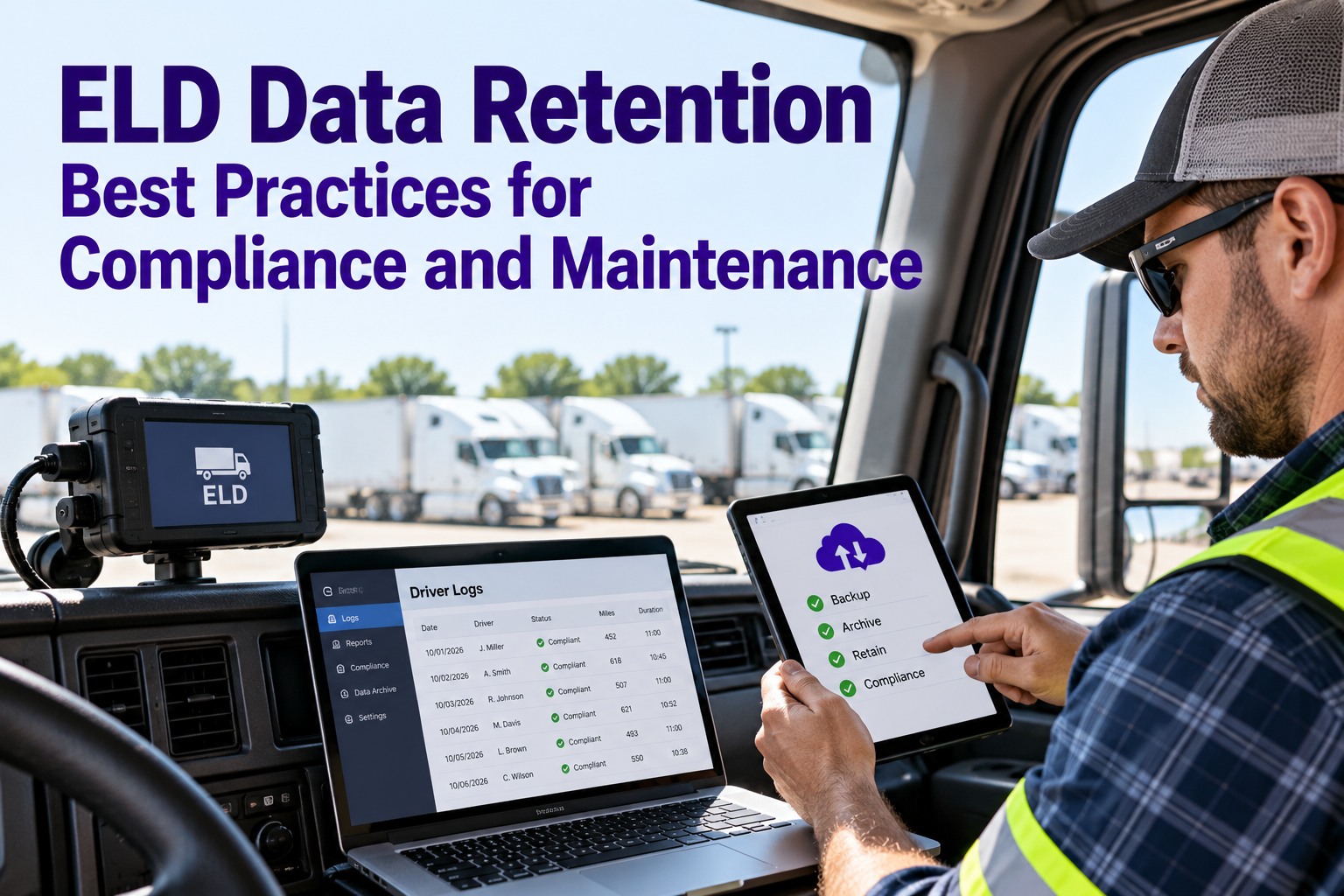
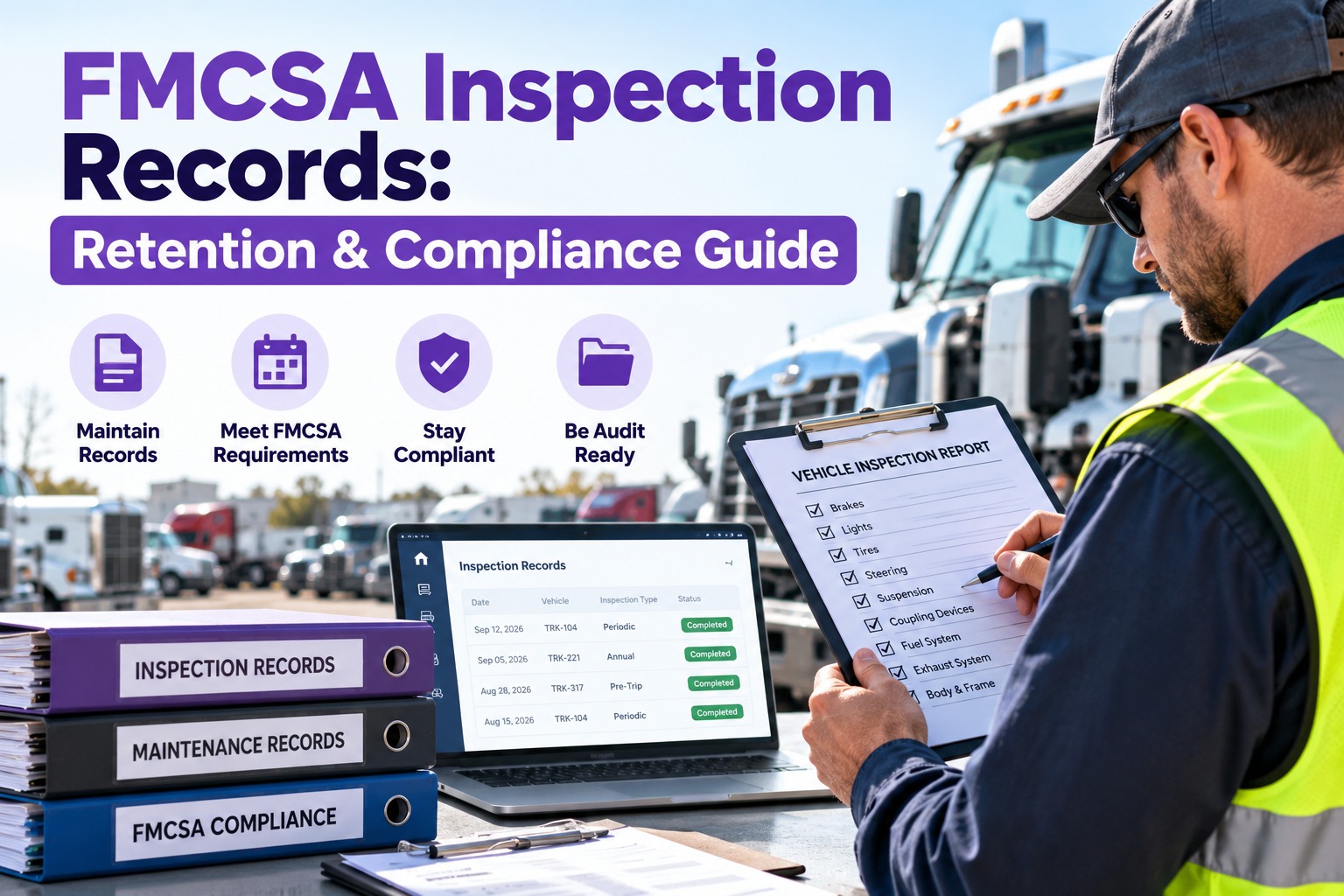
Most fleets treat ELD data as a compliance chore — keep it six months, hope an auditor never asks, move on. That's half the picture. The same stream that proves your hours-of-service also records exactly how hard each truck worked: engine hours, mileage, idle time, the real usage that should be driving your PM schedule. Keep it right and it protects you twice — once at audit, once on the shop floor. Here are the retention rules you have to meet, and the workflow that turns that archive into something useful. Start free and turn ELD usage data into PM that's scheduled on real engine hours.
Compliance Clock + Maintenance Value
Your ELD Data Has Two Jobs. Most Fleets Only Use One.
The FMCSA says keep it six months. Your shop says use it to schedule maintenance before things break. Both are right — and the same engine-hour and mileage data serves both. Truck Inspection & Maintenance Management Software takes the usage side of that stream and runs your PM on it: service scheduled on how each truck actually ran, with every inspection and repair kept on one record, retained and ready when an auditor asks.
6 monthsRODS & supporting docs retention — 395.8(k)(1)
Backup copyon a separate device, same 6 months
Privacy keptrecords stored to protect drivers — 395.22(i)
What the FMCSA Actually Requires
Before the maintenance upside, get the floor right — these are the rules that keep you compliant, and missing any one is its own finding at audit regardless of how clean your logs are.
6mo
Retain the records for six months
Motor carriers must keep ELD records of duty status (RODS) and the supporting documents for six months — 49 CFR 395.8(k)(1). The clock runs from the date of each record.
×2
Keep a backup on a separate device
A backup copy of the ELD data must live on a device separate from where the original is stored — and for the same six-month period. One drive failure shouldn't erase your compliance.
PRV
Store it to protect driver privacy
Records must be retained in a manner that protects driver privacy — 49 CFR 395.22(i). Access and handling matter, not just whether the data exists.
GET
Produce it on demand
When a safety official or auditor asks, the records have to be available and transferable. Six months of data you can't actually retrieve is the same as no data.
The Six-Month Floor Isn't the Whole Story
Six months satisfies the hours-of-service rule — but it's a floor, not a ceiling, and it's often the wrong number for everything else that touches the same data. Two other clocks usually run longer, and smart fleets keep the maintenance-relevant data well past six months on purpose.
6 months
The HOS compliance floor
RODS and supporting documents, per 395.8(k)(1). The legal minimum for the hours-of-service record itself.
Longer, often
Litigation & insurance
After an incident, ELD data becomes evidence. Many fleets and insurers keep it far longer than six months because a claim can surface well after the fact.
Years
Maintenance history
Engine hours and mileage trends are only useful over time. Keeping the usage data long-term is what lets you see wear curves and plan replacements.
The Half of the Data Nobody Mines
An ELD records far more than duty status. Buried in the same feed is the usage picture your maintenance program should run on — and most fleets let it expire at six months without ever touching it.
ComplianceDuty status & hoursThe RODS record itself — on, off, driving, sleeper. The part everyone keeps.
MaintenanceEngine hoursThe truest measure of wear on the engine and driveline — better than odometer miles for scheduling PM.
MaintenanceMileageDistance-based service intervals — oil, tires, brakes — triggered on real accumulated miles, not a guess.
MaintenanceIdle timeHours the engine ran without moving — hidden wear that odometer-based schedules miss entirely.
MaintenanceLocation & routesWhere and how trucks run — duty cycle that explains why some units wear faster than others.
MaintenanceEngine fault eventsDiagnostic signals alongside the log — early warning that a defect is forming between inspections.
Where the Maintenance Value Lands
Truck Inspection & Maintenance Management Software is the maintenance side of that data. It takes engine hours, mileage, and idle from your usage stream and schedules PM on how each truck actually ran — not a flat calendar — then keeps every inspection, defect, and repair on one record per unit, retained and export-ready when an auditor asks. The compliance archive and the maintenance program stop being two separate chores.
Retention Best Practices
Meeting the rule and getting value from the data come down to the same handful of habits. Run this as your retention standard and you're covered on both fronts.
1
Keep the full six months, alwaysNever let the archive fall short of the 395.8(k)(1) minimum. Set retention to the rule, not to whatever a device defaults to.
2
Back up to a separate locationOriginal and backup on the same drive is one failure from non-compliance. Keep the copy somewhere independent.
3
Control who can see itProtect driver privacy with real access limits — not a shared folder everyone can open. The rule is about handling, not just storage.
4
Keep maintenance data longerLet the HOS record expire at six months if you want, but hold engine hours and mileage for years — that's where the wear trends live.
5
Make it retrievable in minutesTest that you can actually pull and transfer records on demand. Stored-but-unreachable is a finding waiting to happen.
6
Tie usage to your PM scheduleDon't let engine hours sit in an archive. Feed them into maintenance scheduling so the data earns its keep.
How Truck Inspection & Maintenance Software Helps
The ELD captures the data; this is where the maintenance value of it actually gets used — and where your inspection and repair records stay on the right retention clock.
PM on real engine hoursService scheduled on accumulated hours and miles from the usage stream, so maintenance follows how each truck ran.
Usage-triggered remindersIntervals fire on actual wear, not a flat calendar — the idle-heavy truck gets serviced sooner, as it should.
Records on one unit historyEvery inspection, defect, and repair tied to the truck, so the maintenance record is complete and in one place.
Retained and export-readyInspection and maintenance records kept and produced on demand, so the audit ask is answered in seconds.
Fault signals into work ordersEngine fault events become graded work orders, catching a forming defect between scheduled inspections.
Trends over timeLong-held usage data shows wear curves per unit, turning the archive into replace-or-repair decisions.
Frequently Asked Questions
How long must a motor carrier retain ELD data?
Six months. Under 49 CFR 395.8(k)(1), motor carriers must retain ELD records of duty status (RODS) and the supporting documents for six months from the date of each record. A backup copy must be kept on a device separate from where the original is stored, for the same six-month period, and records must be held in a way that protects driver privacy under 395.22(i). Six months is the compliance minimum — many fleets keep the maintenance-relevant usage data much longer because engine hours and mileage trends are only useful over time.
Start free and keep your maintenance records on the right retention clock.
Do I need to keep a backup copy of ELD records?
Yes. The rule requires a backup copy of the ELD data on a device separate from where the original data is stored, maintained for the full six months. The point is resilience: if the primary device or system fails, your compliance record still exists somewhere independent. Keeping both copies on the same drive or system defeats the purpose and leaves you one hardware failure away from a gap in your records.
What ELD data is useful for maintenance, not just compliance?
The same feed that logs duty status also records engine hours, mileage, idle time, location and route patterns, and engine fault events. Engine hours are often a truer measure of wear than odometer miles, idle time captures hours of engine wear that distance-based schedules miss entirely, and fault events can flag a forming defect between inspections. Fed into a maintenance program, that data lets you schedule preventive service on how each truck actually ran rather than on a flat calendar — which is where most of the operational value of an ELD actually sits.
Can I erase ELD data after six months?
You can let the hours-of-service record itself expire at the six-month compliance minimum, but it's rarely wise to purge everything. ELD data can become evidence after an incident, so many fleets and their insurers retain it far longer for litigation and claims reasons. And the maintenance-relevant usage data — engine hours, mileage, wear trends — is only valuable accumulated over years. The safe approach is to meet the six-month floor for the compliance record and keep the maintenance data long-term on purpose.
How does ELD data improve preventive maintenance?
It replaces guesswork with actual usage. Instead of servicing every truck on the same calendar, you trigger intervals on real accumulated engine hours and miles, so a hard-run or idle-heavy unit gets attention sooner and a lightly used one isn't serviced before it needs to be. Over time, the trend data shows which units are wearing faster and informs replace-or-repair decisions. The result is fewer surprise breakdowns and less money spent servicing trucks that didn't need it yet — the data was already being collected for compliance, so this value comes at no extra capture cost.
Retain · Protect · Put It to Work
Meet the Six-Month Rule. Keep the Value for Years.
ELD data earns its keep twice — as the compliance record the FMCSA requires for six months, and as the usage stream that should be running your maintenance. Truck Inspection & Maintenance Management Software takes the maintenance half: PM scheduled on real engine hours, fault events routed to work orders, and every inspection and repair kept on one record, retained and export-ready when an auditor asks. Stop letting half your data expire unused.
Free to start. Retention guidance reflects 49 CFR Part 395 — not a substitute for legal advice.