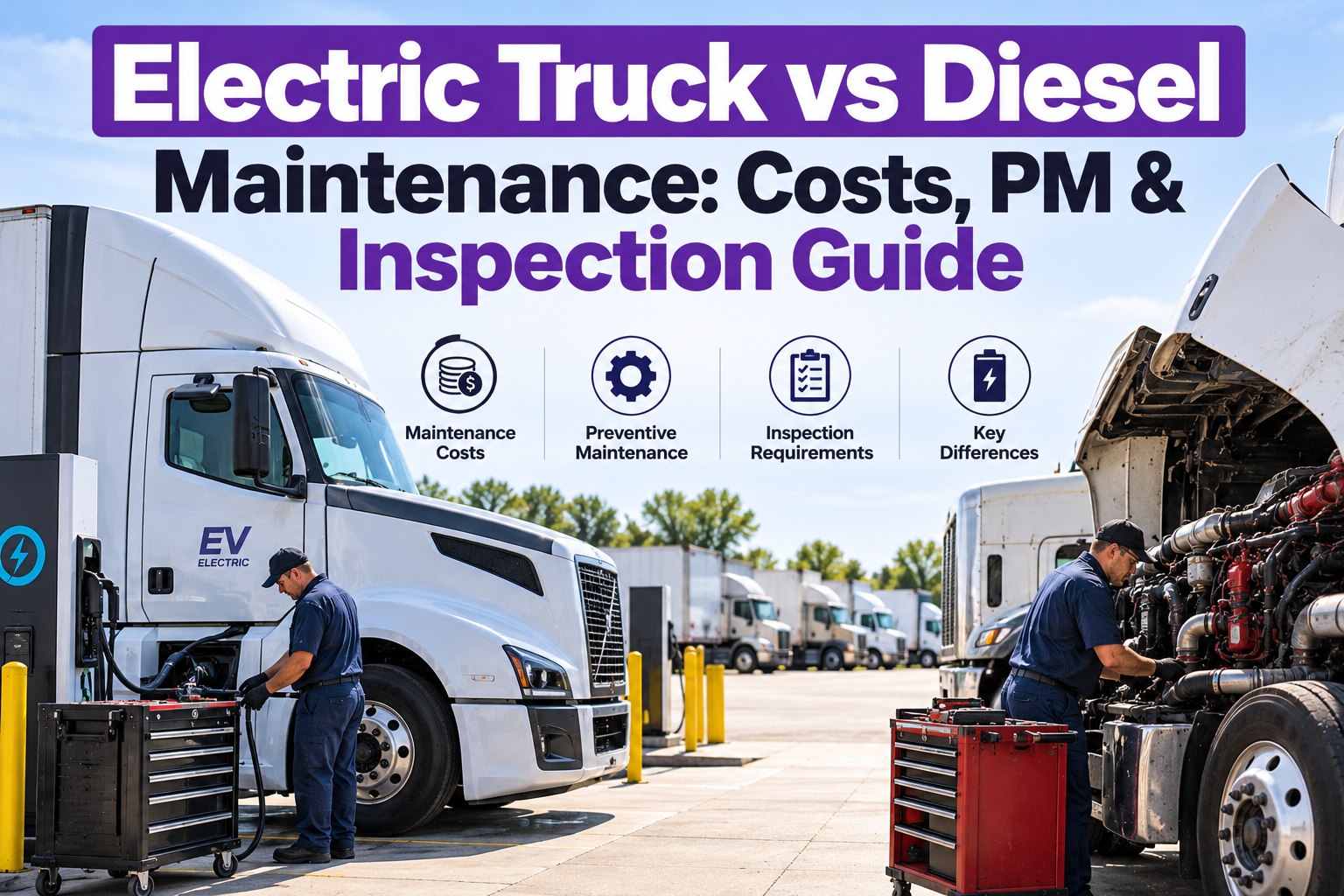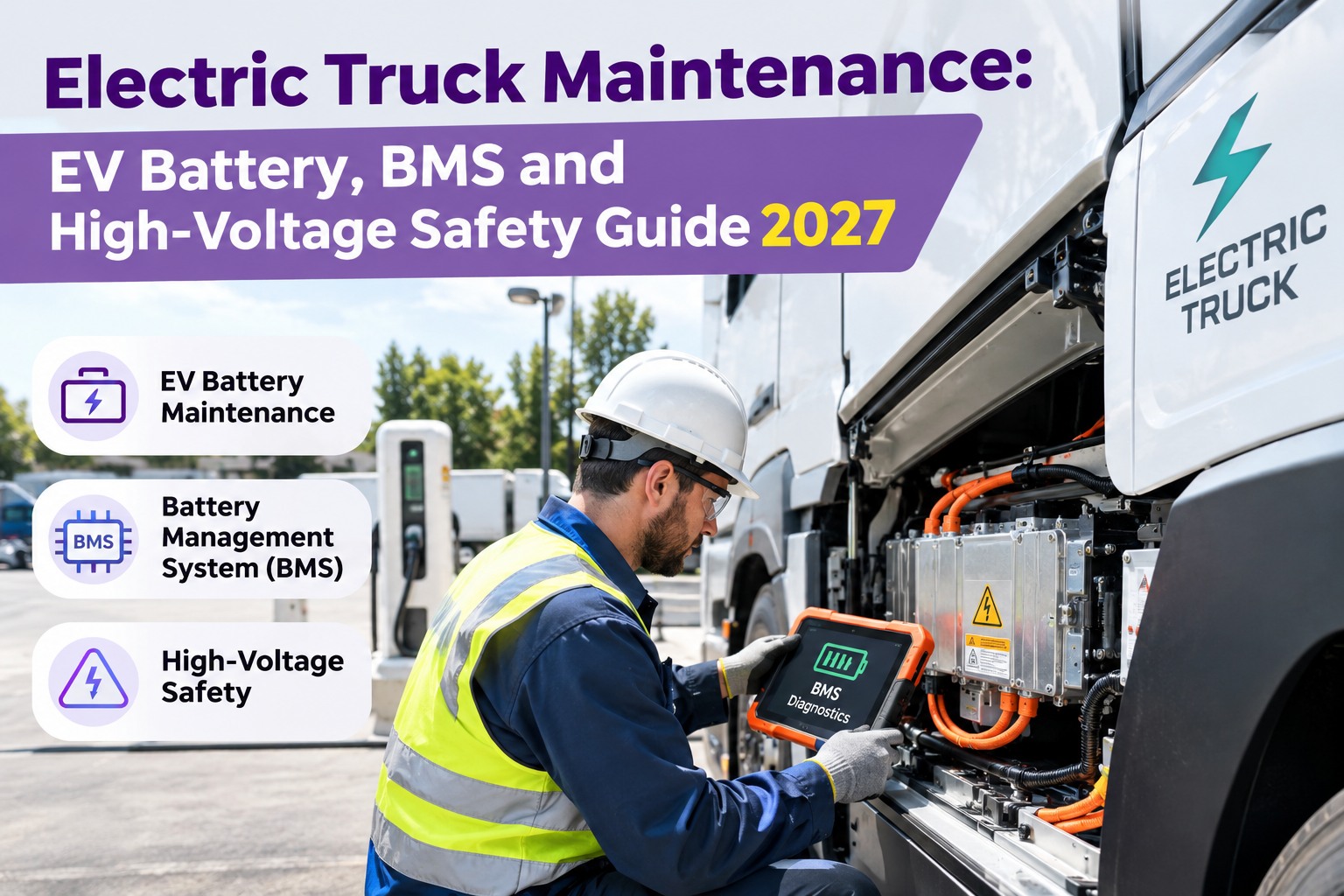
Electric trucks remove oil changes, exhaust systems, and DEF from the maintenance list, and that leads some fleets to assume there is less to look after. There is not less, there is different. The battery, the battery management system (BMS), the high-voltage components, and the thermal loops now decide whether a truck is available tomorrow, and some of the work can only be done by trained technicians. Electric truck maintenance in 2027 is about knowing who checks what, spotting battery and BMS warning signs early, and keeping every finding in one record. This guide covers the essentials for EV fleets: what changes from diesel, battery health, BMS alerts, high-voltage safety, cooling, regenerative braking, and a practical inspection rhythm. Start free and build an EV inspection checklist for your fleet.
Electric Truck Maintenance: EV Battery, BMS and High-Voltage Safety Guide 2027
EV downtime often starts with a small warning: a BMS alert, a damaged charge port, a cooling fault. Truck Inspection & Maintenance Management Software gives drivers a guided EV inspection, grades what they report, and sends the right defects to the right technician as a work order, with PMs scheduled around your OEM's plan.
What Changes From Diesel
Some familiar jobs disappear, some stay exactly the same, and a few are brand new.
- Engine oil and filter changes
- Exhaust, DPF, and DEF service
- Fuel filters and injectors
- Many belts and engine-driven parts
- Tires, wheels, and lug nuts
- Brakes, air system, and slack adjusters
- Suspension, steering, and lights
- DVIRs and DOT inspections
- Battery health and BMS alerts
- High-voltage cables and connectors
- Battery and power electronics cooling
- Charge port, cable, and charger checks
Three Zones: Who Checks What
The safest EV programs split the work by skill. Everyone knows where their job starts and stops.
- Dash warnings and charge status
- Charge port, cover, and cable condition
- Fluid leaks or damage under the truck
- Tires, brakes, lights, and standard DVIR items
- High-voltage inspection and isolation
- Battery, inverter, and charger diagnostics
- Cooling loop service per OEM procedure
- Brake service and software updates
- Battery health and fault trends by truck
- Charging patterns and downtime reasons
- PM schedule matched to OEM guidance
- Training records and repeat defects
Battery Health: What to Watch
Your OEM's telematics or diagnostic tool supplies most of these readings. Your job is to record them, compare them over time, and act on the trend.
BMS Alerts: A Simple Escalation Ladder
Exact fault codes and messages differ by manufacturer, so use your OEM's documentation. This ladder keeps the response consistent.
Keep Every Alert, Photo, and Fix on One Truck Record
Drivers report it, the defect is graded, a work order goes to the right technician, and your PMs follow the OEM schedule. Start free or book a demo.
Two Systems That Quietly Cause Trouble
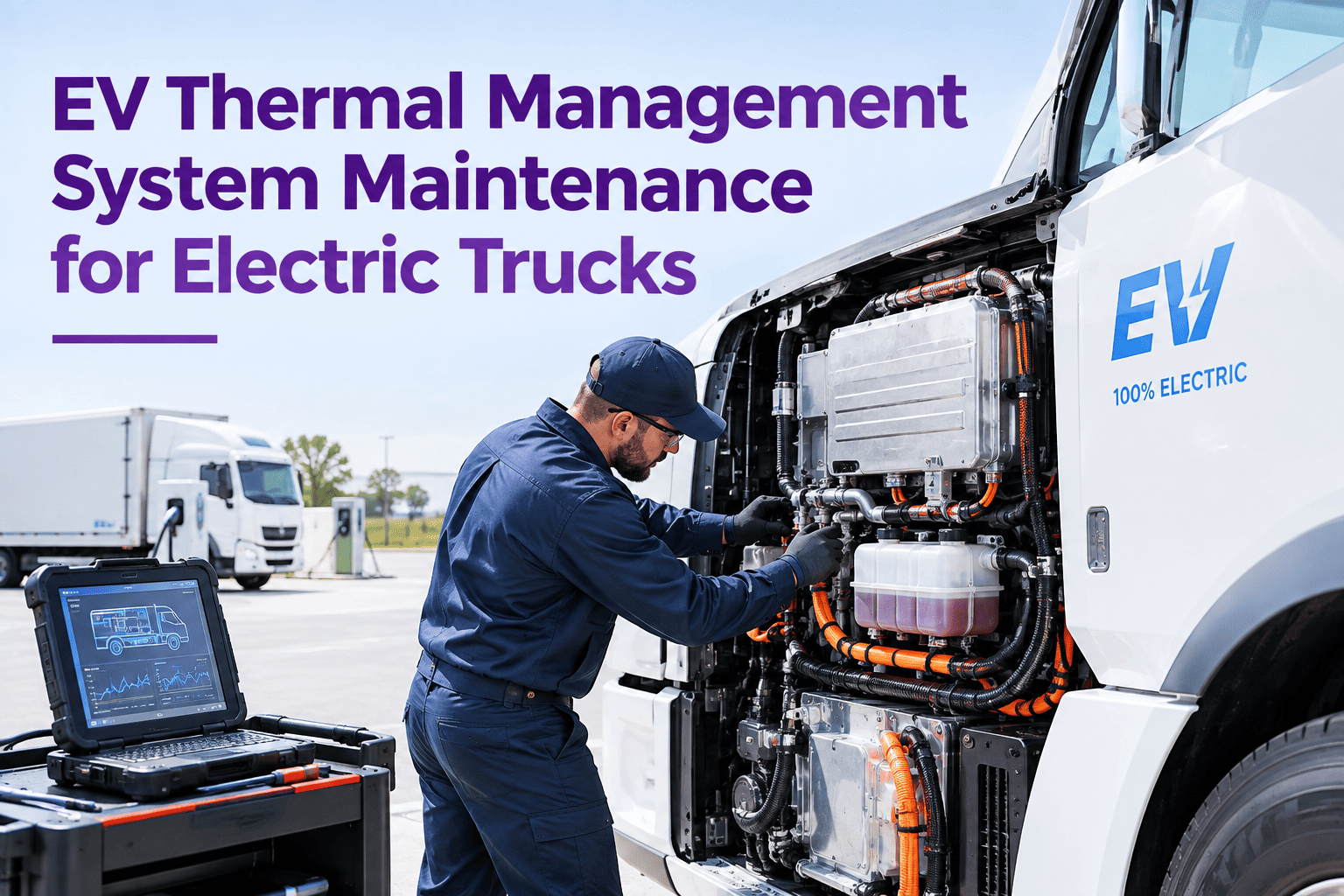
Batteries, inverters, and chargers work best within a temperature window, and liquid cooling loops keep them there. Cooling faults can lead to reduced power or charging limits.
- Check for coolant leaks, low level, and damaged lines
- Use only the coolant your OEM specifies
- Keep radiators and heat exchangers clear of debris
- Report pump, fan, or temperature warnings promptly
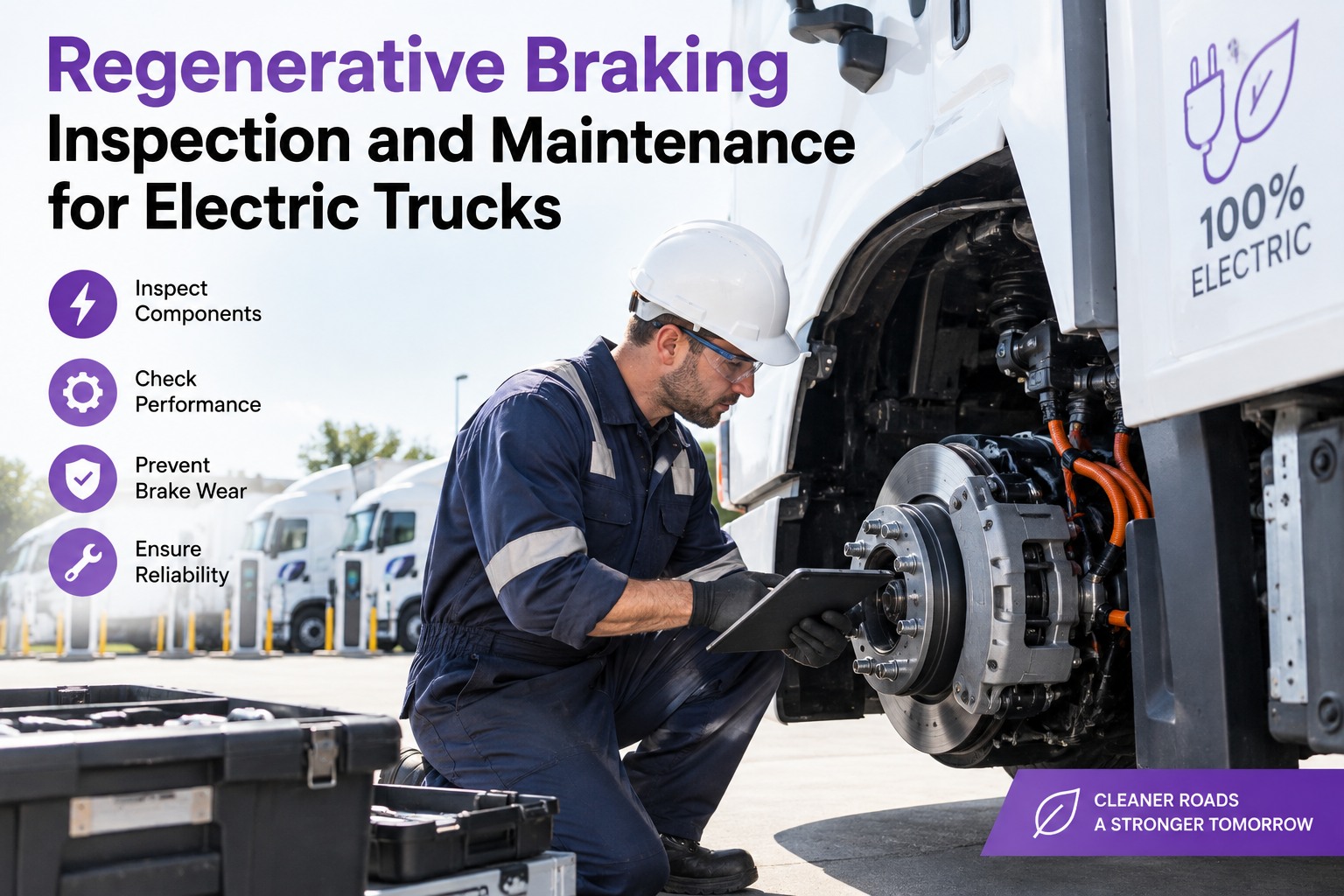
Regen does much of the slowing, so friction brakes are used less. That extends brake life, but seldom-used brakes can corrode, stick, or glaze, and they still have to work in an emergency.
- Inspect drums, rotors, pads, and calipers on schedule
- Watch for rust, uneven wear, or sticking components
- Keep air brake checks and adjustment on track
- Report pulling, noise, or weak braking at once
An EV Inspection Rhythm That Works
Use this as a starting point and align it with your manufacturer's maintenance schedule.
- Dash warnings and charge level
- Charge port, cable, and connector
- Tires, brakes, lights, and leaks
- Review repeat alerts by truck
- Check charger condition and cable wear
- Clear debris from cooling surfaces
- Technician HV system inspection
- Cooling loop service and software updates
- Brake and suspension service
- Collision, curb strike, or underbody hit
- Flooding or heavy water exposure
- Any HV warning or charging fault
Frequently Asked Questions
Run Your Electric Fleet on One Maintenance Workflow
Guided inspections, photo defects, traffic-light grading, work orders, and PM scheduling in one system built for trucking fleets. Start free to build your EV checklist, or book a demo and we will walk through it with your fleet in mind.