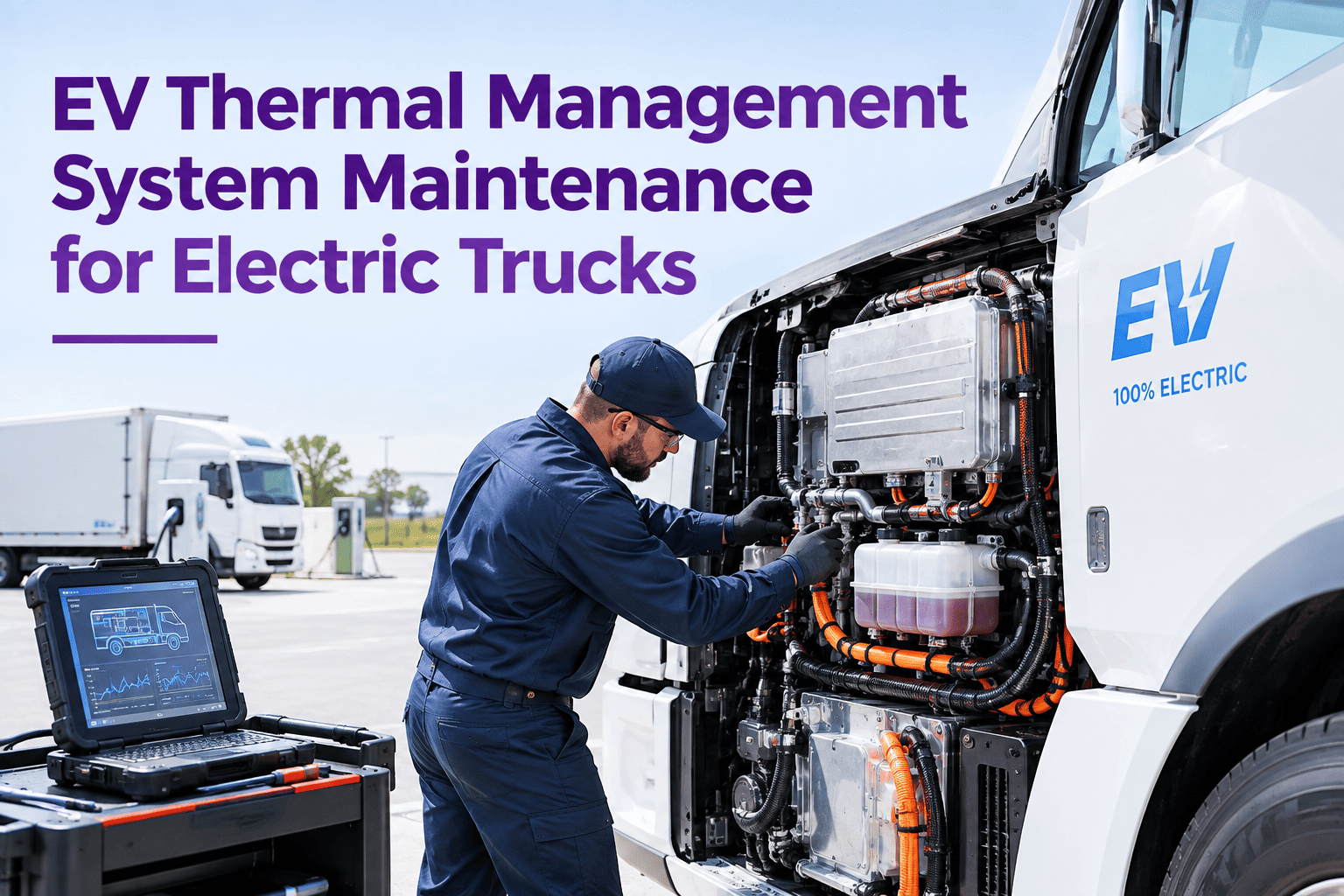
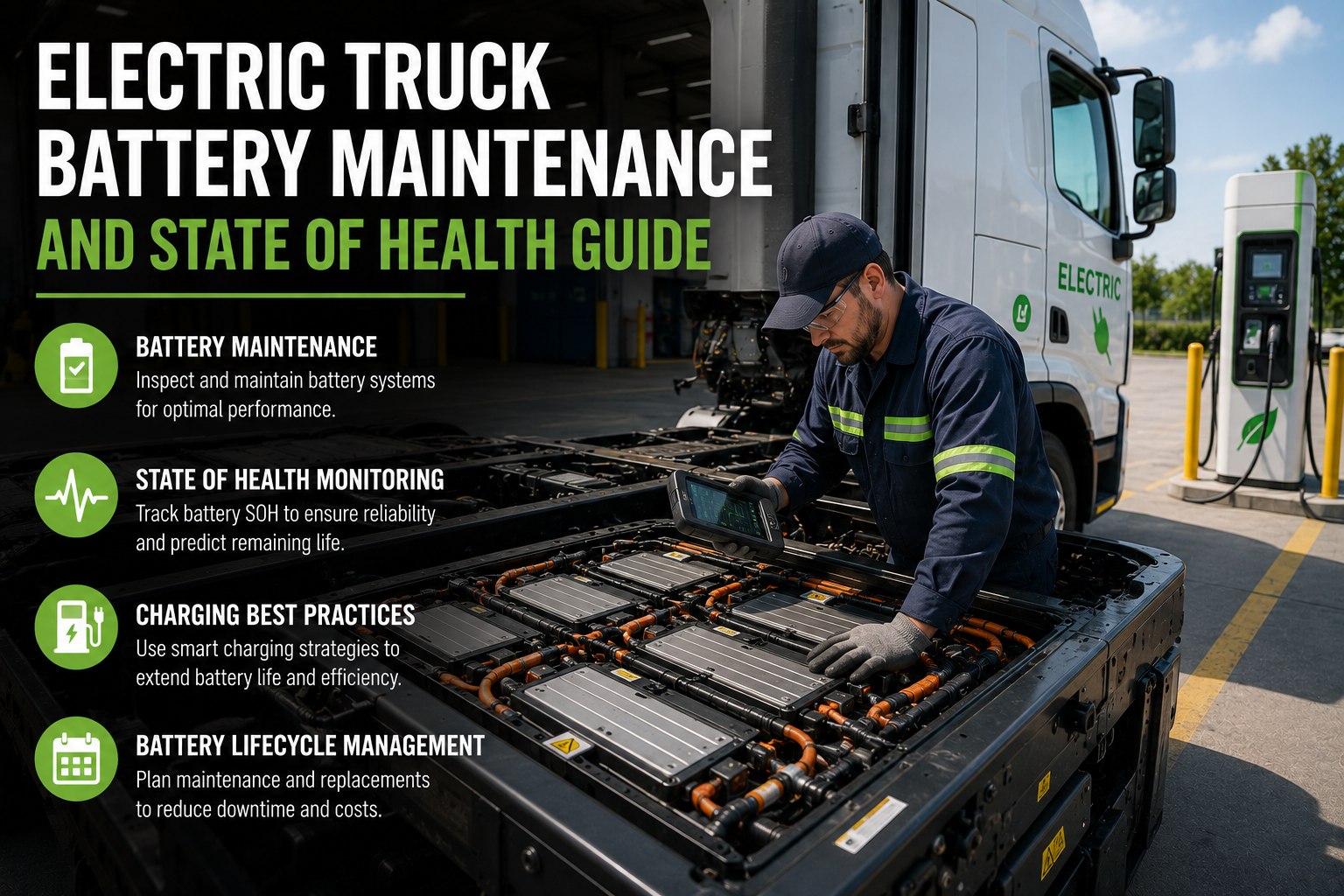
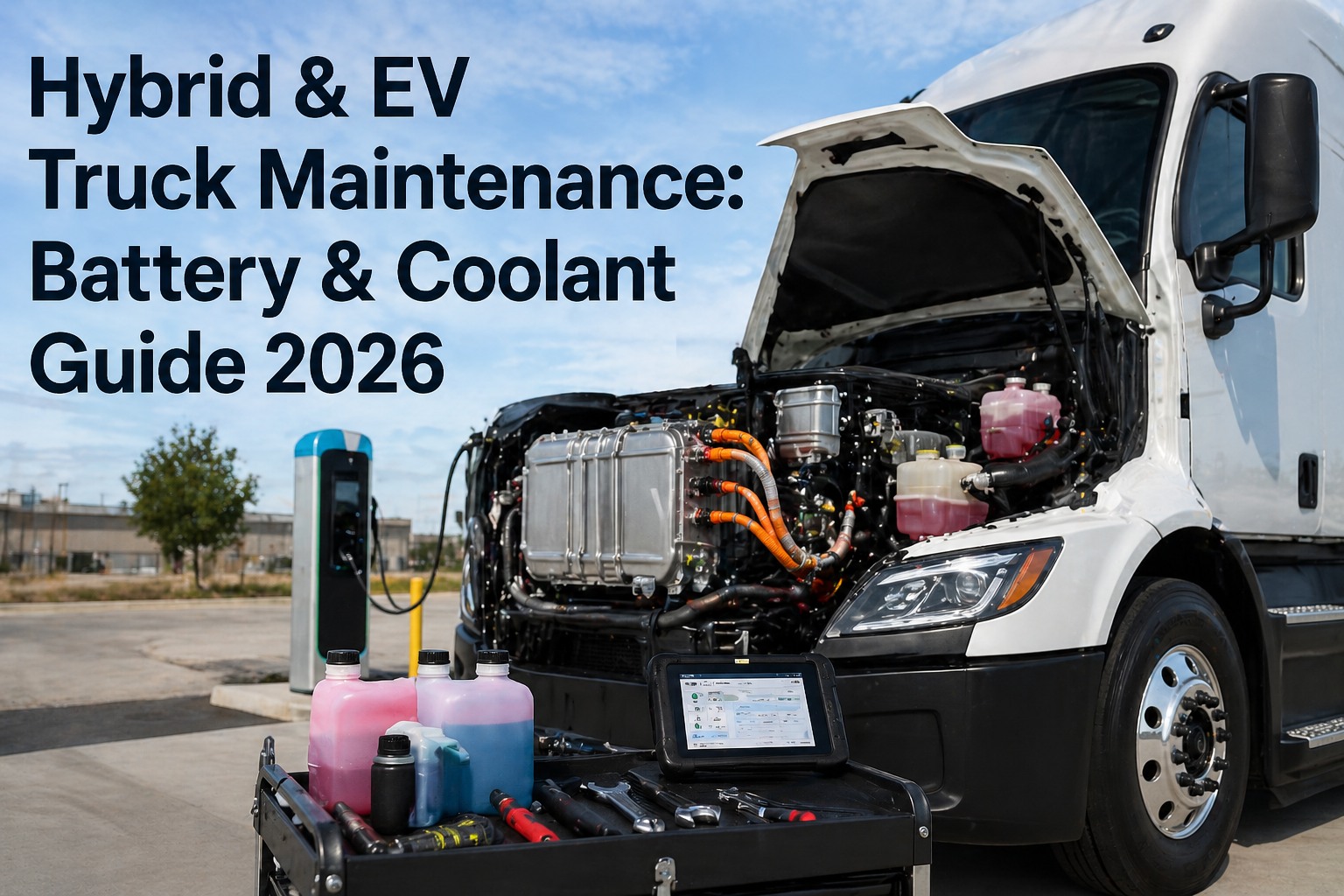
A diesel mechanic who opens the hood of an electric truck for the first time looks for a radiator and finds three. There is no engine block to cool — but there are a battery pack, a traction motor and a bank of power electronics, each wanting a different temperature, each on its own coolant loop. Treat an EV truck like a maintenance-free appliance and the first sign of trouble is a derated pack or a thermal fault, not a warning light you can ignore. This guide ranks the circuits by heat, spells out the fluid rules, and shows how to catch a cooling problem before it parks the truck. Start free and track every EV coolant service on one record.
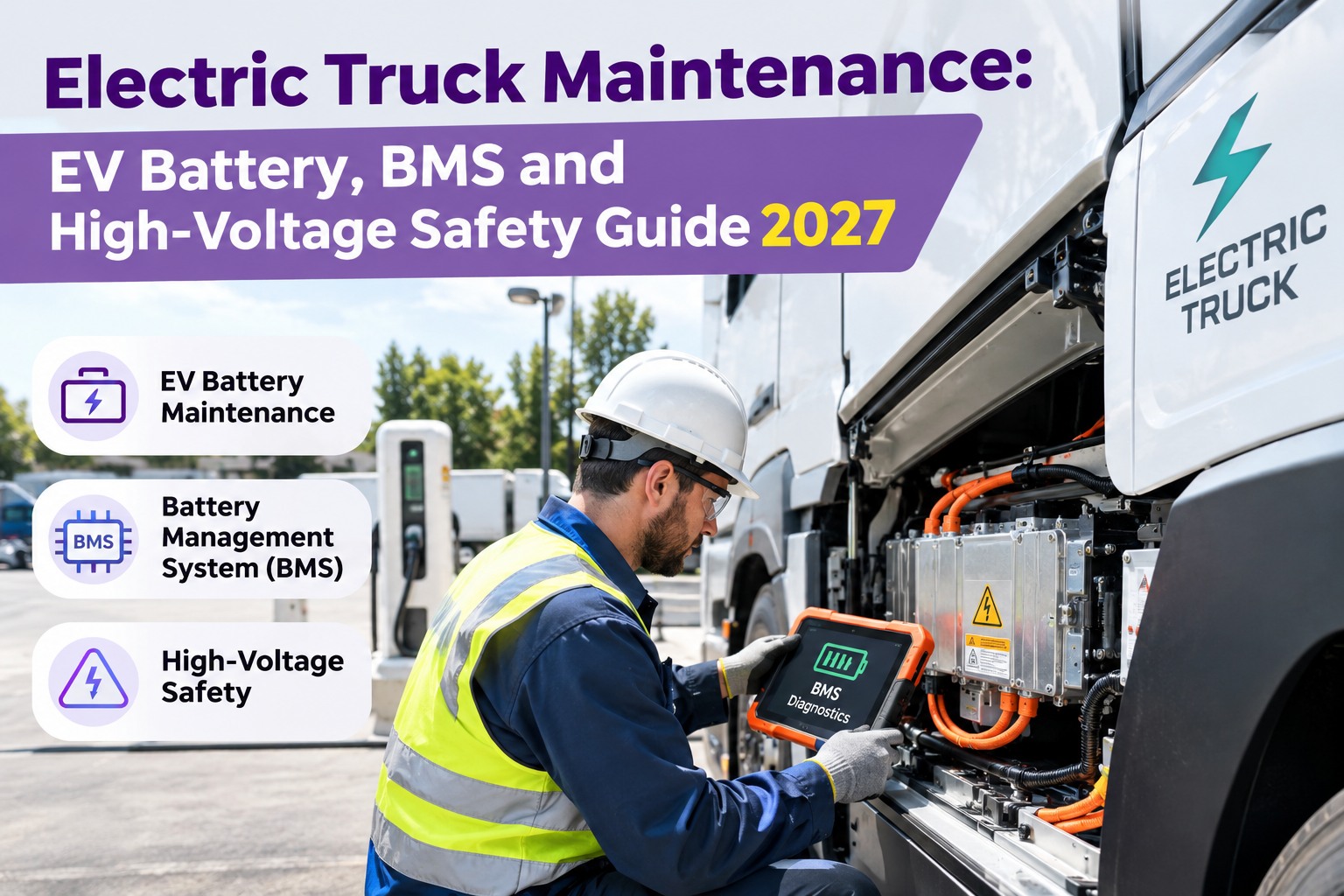
Electric Truck · Thermal Management
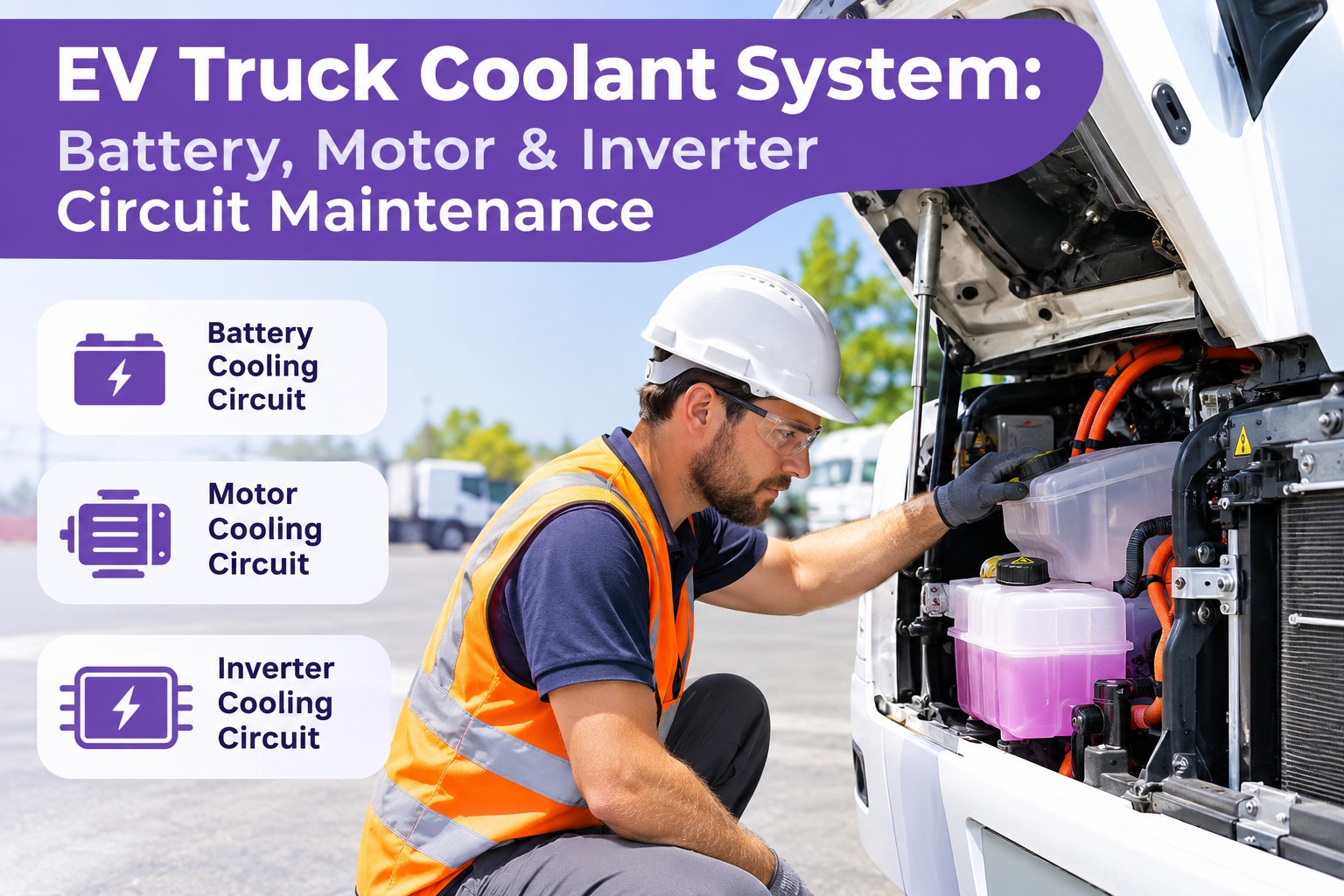
EV Truck Coolant System: Battery, Motor & Inverter Circuit Maintenance
A missed coolant flush or a slow leak on an EV truck does not trip a warning light — it quietly derates the pack and slows the charge until a tech finally looks. Truck Inspection & Maintenance Management Software runs the loop that catches it: a coolant-level and condition check on every digital inspection, any finding logged to the truck's DVIR, each defect turned into an assigned work order, and the next flush scheduled per circuit — so each EV stays in its temperature window with a full service record behind it.
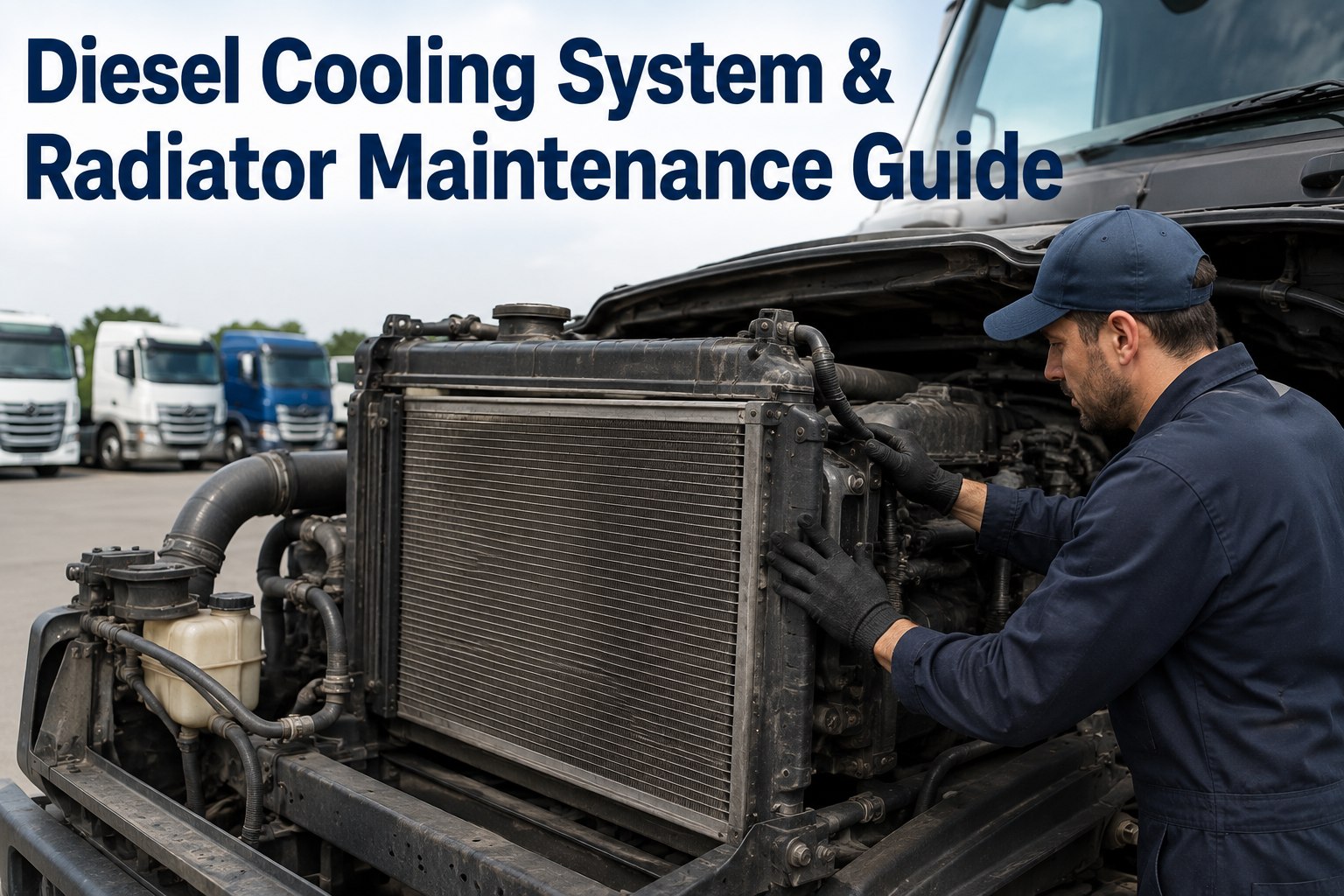
Diesel Cooling vs. EV Cooling: What Actually Changes
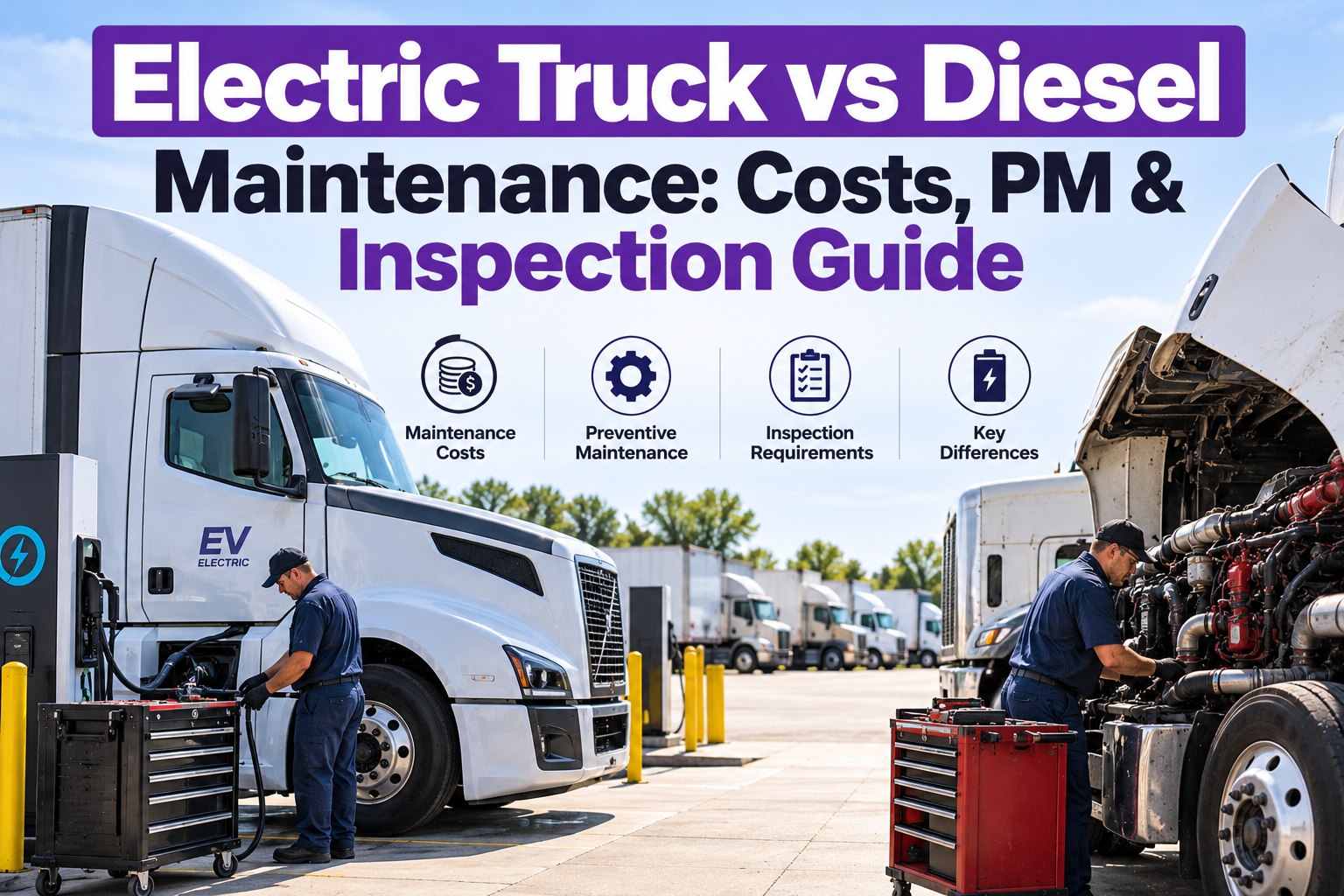
The quickest way to understand an EV truck's cooling is to line it up against the diesel system every fleet already knows.
Diesel truck
LoopsOne main engine circuit
FluidStandard engine antifreeze
Interval~3–5 yr / 60k–100k mi
Risk if ignoredOverheated engine
Electric truck
Loops2–3 parallel circuits
FluidLow-conductivity EV coolant
IntervalFar longer, varies widely
Risk if ignoredPack damage, derate, slow charge
The battery and the power electronics do not share the diesel engine's wide tolerance for heat — the pack in particular has a narrow happy range, which is why its loop is kept separate and cooler. Book a demo to manage diesel and EV cooling side by side.
The Three Thermal Zones, Explained
Each zone runs its own loop because each component tolerates a different temperature. A multi-way valve can link them — borrowing warm motor coolant to heat a cold battery — or isolate them the instant the pack risks overheating.
Zone 1Coolest
Battery coolant circuit
Glycol flows through plates or channels in the pack, holding the cells in the range that protects lifespan and fast-charging speed. The most range-critical loop — and the one where trapped air does the most harm.
Zone 2~80–85°C
Motor / drive-unit circuit
Carries off the heat the traction motor makes under load. It runs hotter than the battery loop because the motor tolerates it — the reason it stays on a separate circuit from the pack.
Zone 3Hottest
Inverter & power electronics
Cools the inverter, DC/DC converter and on-board charger. On integrated e-axles the inverter bolts to the motor and they share heat — "thermal crosstalk" — and usually one loop.
Which components share a loop differs by make, so confirm the layout on the specific truck before servicing. Start free and record each truck's circuit layout.
Coolant Rules: What Goes In, What Never Does
EV coolant is glycol-based like any antifreeze, but engineered to be low-conductivity — its inhibitors keep it from carrying electricity as it flows past live high-voltage cells. Here is the short version every tech needs.
Always
- Use the exact OEM-spec coolant, by part number
- Confirm it is a low-conductivity EV fluid
- Match the fluid to the correct circuit
- Bleed air with vacuum-fill equipment
Never
- Top off with generic green antifreeze
- Mix fluids between loops or brands
- Refill a battery loop without bleeding air
- Nurse home a truck with a coolant + isolation fault
Service Intervals, in Context
EV coolant is low-maintenance, not no-maintenance. Replacement points sit far beyond an engine's and vary by model and fluid — here is how the published owner figures stack up against a diesel baseline.
Illustrative owner-manual figures across different EVs — your truck's own schedule is the authority. Newer low-conductivity fluids push the interval furthest out.
Whatever the figure, condition beats the odometer — hot climates and heavy fast-charging age the fluid faster. Book a demo to set a coolant interval per truck.
Every Circuit, Every Truck, One Record
As a fleet mixes diesel and electric, coolant spec, circuit layout and flush date differ unit to unit. Truck Inspection & Maintenance Management Software stores the spec and interval per truck, fires each flush as a work order before it is due, and keeps the service history warranty and resale ask for.
Reading the Symptoms: Which Zone Is Talking?
A thermal problem rarely announces which loop it is in. These patterns point you to the likely zone before you pull a scan tool.
Fast-charging has slowed
→
Battery loop — pack can't shed heat fast enough
Power fades on long grades
→
Motor / inverter loop — drive unit running hot
Coolant level keeps falling
→
A leak in one circuit — find it before it reaches the pack
Coolant warning + isolation fault
→
Stop and tow — never drive it home
The flush itself is a trained-EV-tech job: a scan-tool routine drives the pumps and valves, and vacuum-fill bleeds every bubble, because trapped air becomes a hot spot inside the pack. Book a demo to flag thermal issues before they strand a truck.
Frequently Asked Questions
1Why does an EV truck need more than one coolant circuit?
Because the battery, motor and power electronics each tolerate a different temperature. The pack has a narrow, lower range that protects lifespan and charging; the motor and inverter run hotter. Putting them on one loop would compromise all three, so EV trucks split them — with valves that can link the loops to share heat or isolate the pack when it runs hot.
Book a demo to map each truck's circuits.
2Is EV coolant the same as diesel engine antifreeze?
No. Both are glycol-based, but EV coolant is a low-conductivity fluid with inhibitors chosen so it does not carry electricity near live high-voltage parts, and most makers specify a proprietary fluid by part number. Generic green antifreeze invites corrosion and conductivity faults — always match the exact OEM spec to the right circuit.
Book a demo to store each truck's fluid spec.
3How often should EV truck coolant be flushed?
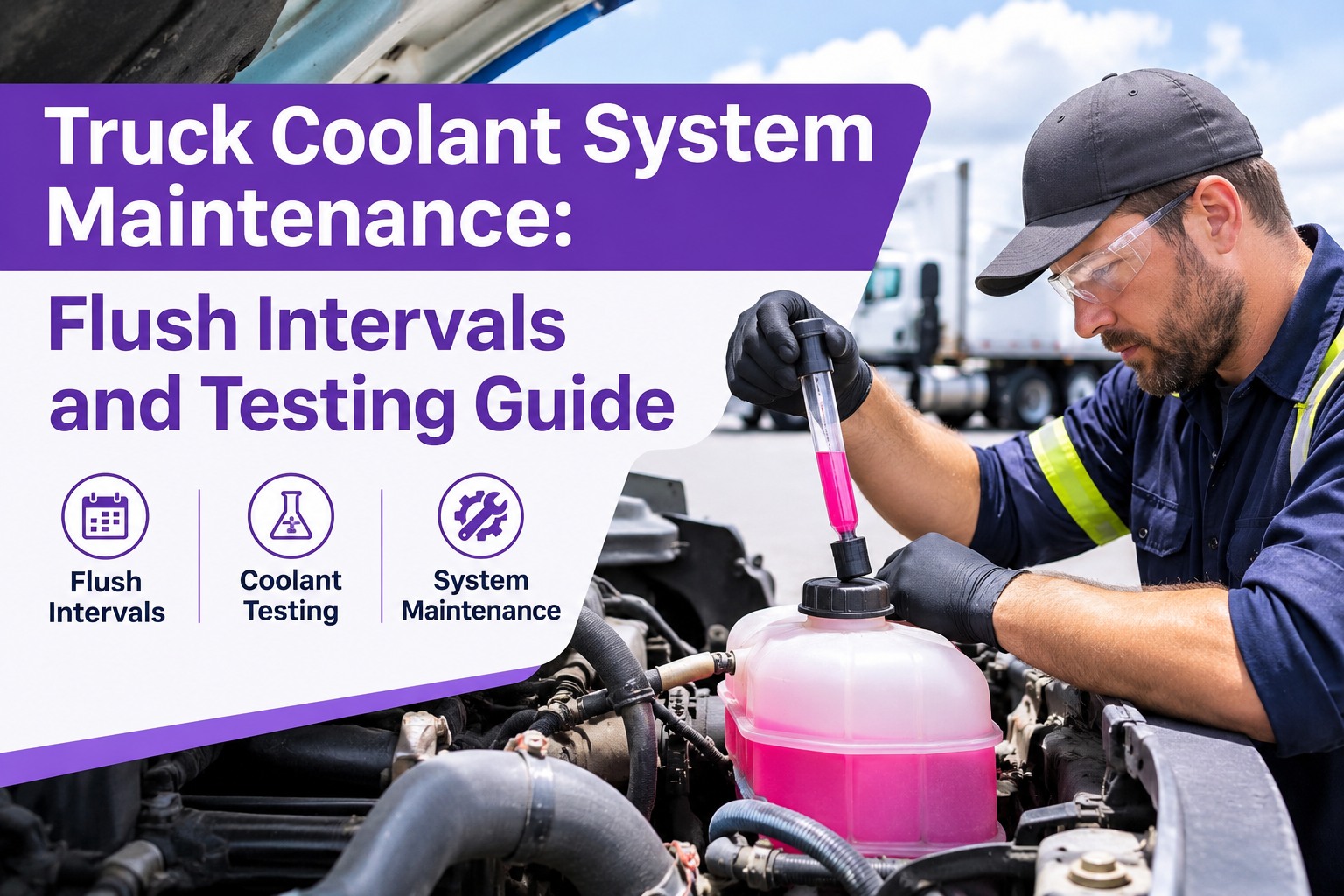
Far less often than an engine — published figures range from an early first flush near 37,500 miles to roughly 100,000–112,500 miles or several years, depending on model and fluid. Treat the truck's own schedule as the authority and watch condition, since heat and heavy fast-charging age the fluid sooner than mileage alone suggests.
Book a demo to track intervals per truck.
4Can a general shop service an EV cooling system?
It should be a trained EV technician. The loop is a maze of valves, solenoids and electric pumps, and it has to be bled with a scan tool and vacuum-fill equipment so no air is left behind — trapped air turns into hot spots inside the pack that shorten cell life. A "finished" flush done without those tools can leave silent damage.
Book a demo to log every flush correctly.
Right zone · Right fluid · No trapped air
Keep Every EV Truck in Its Temperature Window
Truck Inspection & Maintenance Management Software stores each truck's coolant spec and circuit layout, schedules every flush before it's due, and keeps the thermal-service record warranty and resale depend on — across a mixed diesel and electric fleet.
No credit card required. Free for up to 3 trucks. Built for mixed diesel and electric fleets.