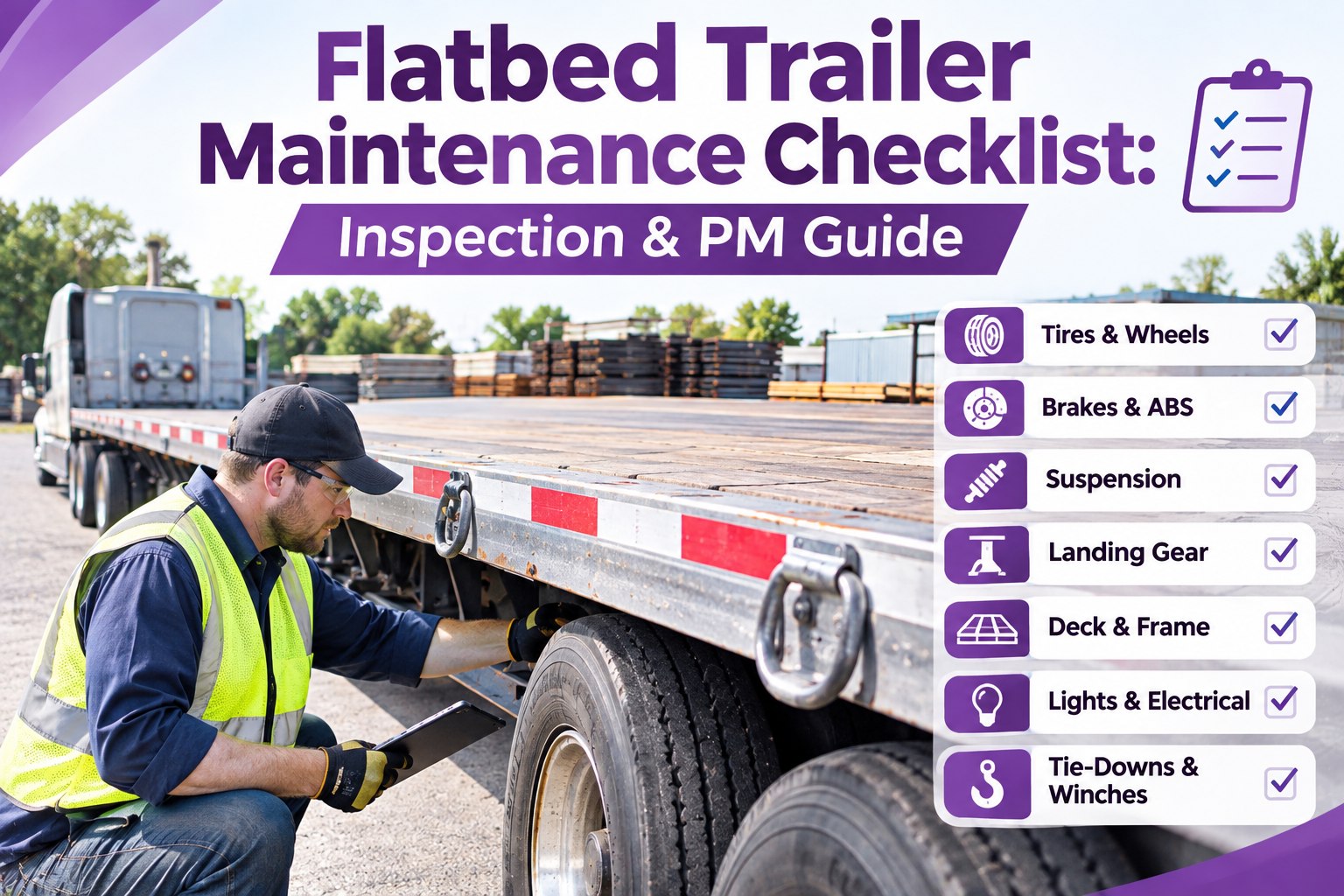
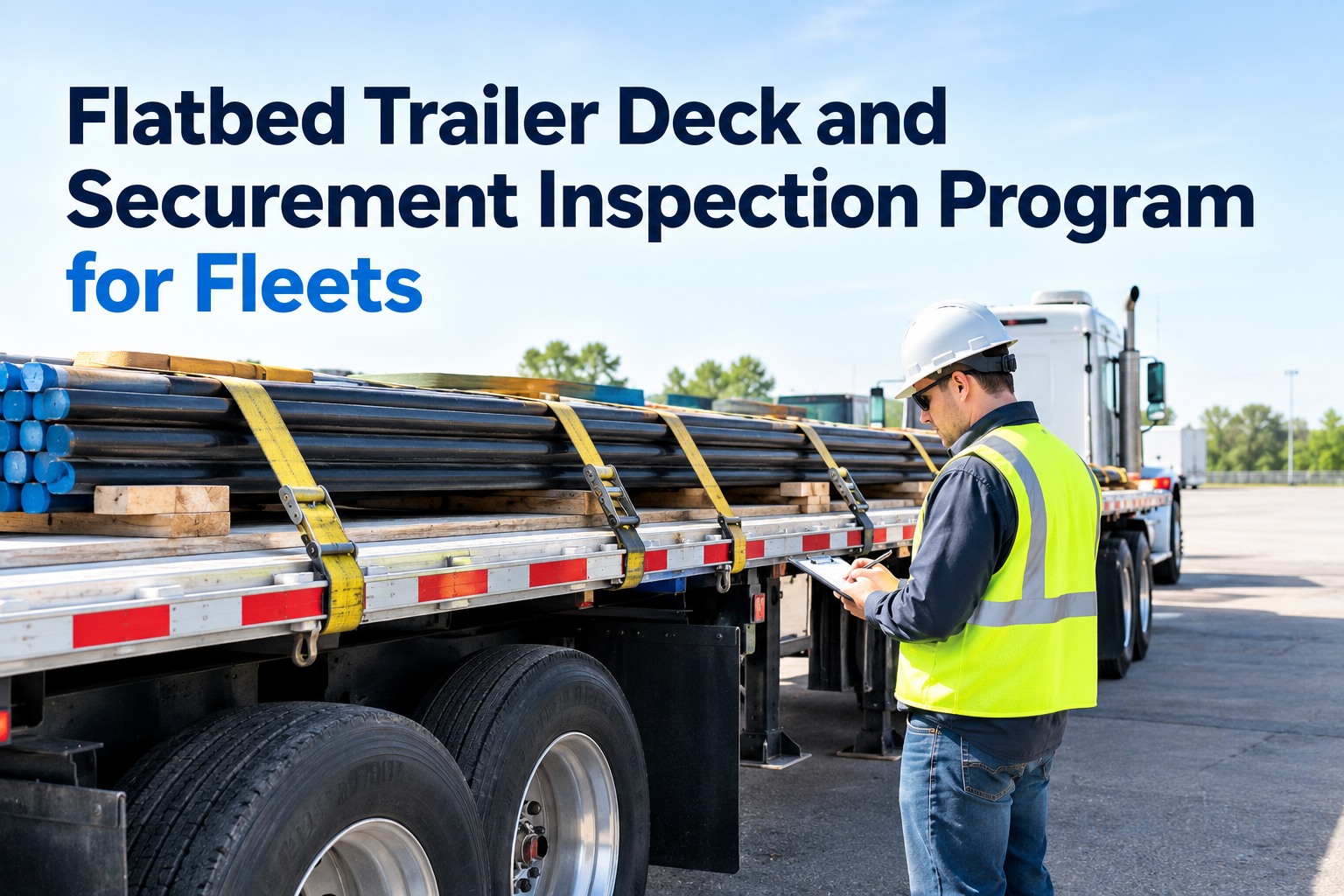
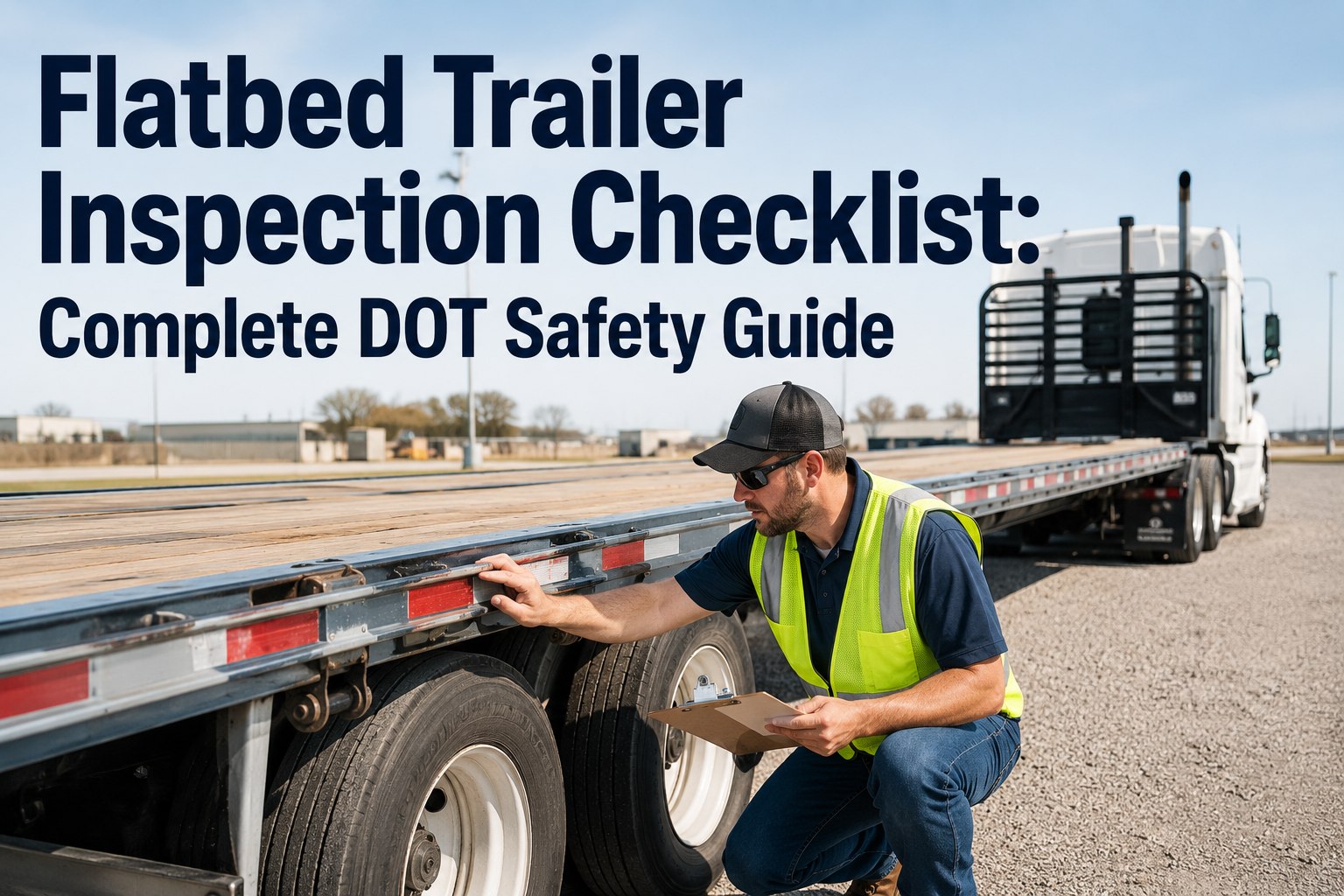
A ratchet strap that looked fine at the yard is frayed halfway through, sixty miles into a haul with 46,000 lbs of steel coil riding behind it. On a flatbed the load is only as secure as the winch holding the strap and the pawl, the mandrel, the slider and the stake pocket all wear in ways a glance misses. This checklist walks each piece of securement gear against its replace criterion, and shows how Truck Inspection & Maintenance Management Software logs every strap and winch as a serviceable item with its rating. Start free and inspect every piece of flatbed gear.

Flatbed Trailer PM · Winch & Securement Gear

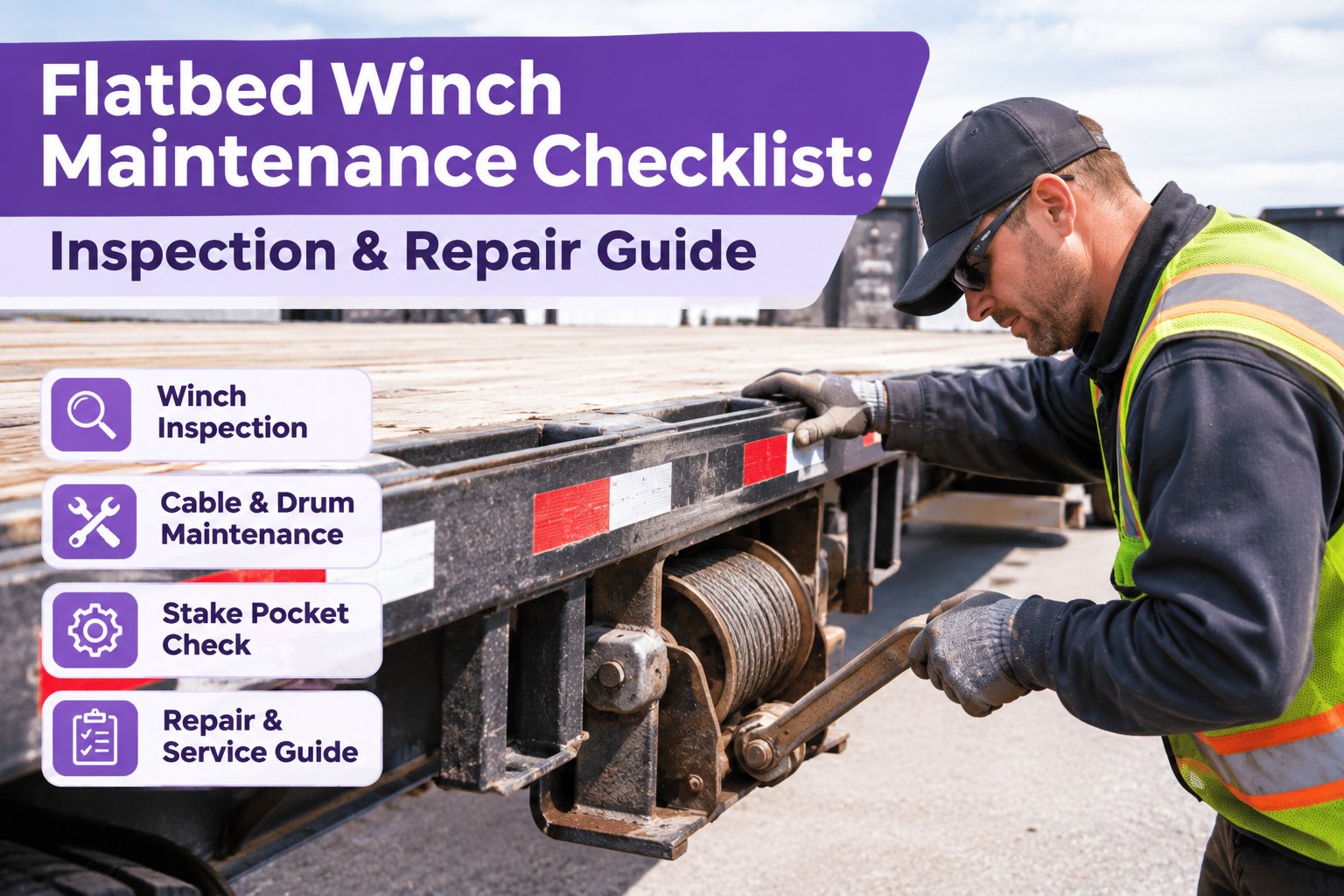
Flatbed Winch Maintenance Checklist: Inspection & Repair Guide

A cracked stake pocket or a worn pawl drops the whole securement system below the strap's rating — the weakest link governs. Our software runs the gear inspection as a guided check: each strap, winch, slider and stake pocket is logged by condition against its replace criterion, a failed one becomes a work order, and the gear is tracked per trailer with its working load limit. Your securement is inspection-ready, not just load-ready.
Sliding winch assembly · the parts that wear
1 2 3 4 5 6
1Drum / mandrel 2Ratchet & teeth 3Pawl 4Strap / webbing 5Winch track & slider 6Stake pocket
2026 RoadcheckCargo securement is the CVSA emphasis — every strap, winch and rub rail is fair game.
§393.104Any device with damage or defects that compromise the system is unserviceable.
Weakest linkA cracked pocket or worn pawl drops the whole system below the strap's WLL.

The Checklist, Part by Part

Walk the winch system component by component. Each card lists what to inspect and the condition that takes the part out of service.

AWinch Drum & Mandrel
Replace when: the mandrel won't rotate freely, a flange is cracked, or the frame is deformed by overload.
BPawl & Ratchet Mechanism
Replace when: the pawl won't seat by gravity, teeth are worn, or the frame is deformed.
CStraps & Webbing
Replace when: a cut reaches about 3/4", or any §393.104(d) condition shows — webbing is never repaired or spliced.
DWinch Track & Sliders
Repair when: an end weld is cracked or a slider is seized — free it, or the anchor isn't movable or rated.
EStake Pockets & D-Rings
Repair when: a weld is cracked or a hole is elongated — it will tear out under side load; weld repair by a qualified shop.
FTie Rails & Rub Rails
Remember: the rub rail protects the tie-down; it's not rated as an anchor, so straps and hooks never attach to it.

Log each strap, winch and anchor as its own serviceable item, so a worn pawl or a cracked pocket is a tracked defect, not a surprise at the scale. Start free and track every securement item by condition.

Every Strap and Winch on the Record

Gear logged by condition and working load limit, flagged before it ages out — so a frayed strap or a seized slider is caught at the yard, not sixty miles into the haul.

Repair, or Replace?

Some winch wear is a clean-and-grease job; some of it ends the part's service life. Know which is which before it's on the road.

ComponentKeep / repairReplace
Drum & mandrelClean, re-grease, free a sticky mandrelMandrel won't rotate; flange cracked
Pawl & ratchetClean, free the pawl, light lubeTeeth worn; frame deformed
Straps & webbingNever repaired or splicedCut ~3/4", burns, exposed yarns, UV fade
Track & sliderClean corrosion, free a sliderCracked end welds; slider seized
Stake pocketsWeld repair by a qualified shopCracked welds; elongated holes

A piece of webbing is the one thing you never fix — a cut strap is a replaced strap, full stop. Book a demo to flag aging straps before a haul.

Spread the Load at the Anchor

Half of anchor-point damage comes from how the chain is attached, not from a weak pocket. Three habits keep the welds intact.

Spread the loadLoop a chain around two spools or both sides of a stake pocket, not one.
Not the rub railNever hook to the rub rail — it protects the tie-down, it doesn't anchor it.
WLL isn't the widthA strap's width doesn't tell you its rating — go by the manufacturer's mark.

Lubrication: Keep It Moving, Keep It Off the Webbing

The cheapest winch maintenance is the grease that keeps the slider and pawl working — applied where it helps, not where it hurts.

Grease the track & slidersA free-moving slider keeps the anchor where you put it.
Free the pawl & mandrelA light lube at the pivot keeps the pawl seating by gravity.
Keep it off the strapGrease or oil on webbing attracts grit and weakens the fibres.

Why Fleets Run Securement PM in Software

A flatbed carries a dozen or more pieces of securement gear, each with its own rating and its own wear. Software keeps every one on the record.

Each item serviceableEvery strap, winch and anchor logged with its working load limit.
Replace criteria built inThe condemn condition on the inspection template.
Defect to work orderA worn pawl or cracked pocket routes to the shop.
Per-trailer gear historyWhat's on each deck and its condition over time.
Aging-strap flagsGear surfaced before it ages out on a haul.
Template per deck typeStandard, step-deck or RGN — the right gear list.

The result: the securement system passes a roadside look because it already passed yours. Start free and run flatbed gear PM across your fleet.

Frequently Asked Questions

1How often should flatbed winches be inspected?
A condition check before and after every use by the driver, plus a periodic detailed inspection — at least quarterly — of the pawl, ratchet, mandrel, track and anchors. Permanently mounted winches get missed, so schedule them. Book a demo to set the cadence.
2When should a winch strap be replaced?
When it shows a cut near 3/4", burns, holes, knots, exposed core yarns, missing stitching or full-width UV fade. Webbing is never repaired or spliced under §393.104(d) — when in doubt, toss it out. Book a demo to track strap condition.
3What makes a stake pocket unsafe?
Cracked welds at the attachment points or holes elongated from repeated bar insertion — both reduce the anchor's capacity below the tie-down's rating and can tear out under side load. Weld repair belongs to a qualified shop. Book a demo to log anchor condition.
4Can I hook a strap to the rub rail?
No. The rub rail protects the tie-downs from damage; it isn't a rated anchor point. Use stake pockets, D-rings, winch track or chain pockets — and spread the load across two where you can. Book a demo to see the gear template.
Drum · Pawl · Strap · Anchor

Inspect the Gear Before the Road Tests It

Truck Inspection & Maintenance Management Software inspects the winch, logs every strap and anchor by condition and rating, and routes a worn part to a work order — so the securement system holds the load, not just at the yard but all the way there.
No credit card required. Free for up to 3 trucks. Built for FMCSA-compliant fleets.