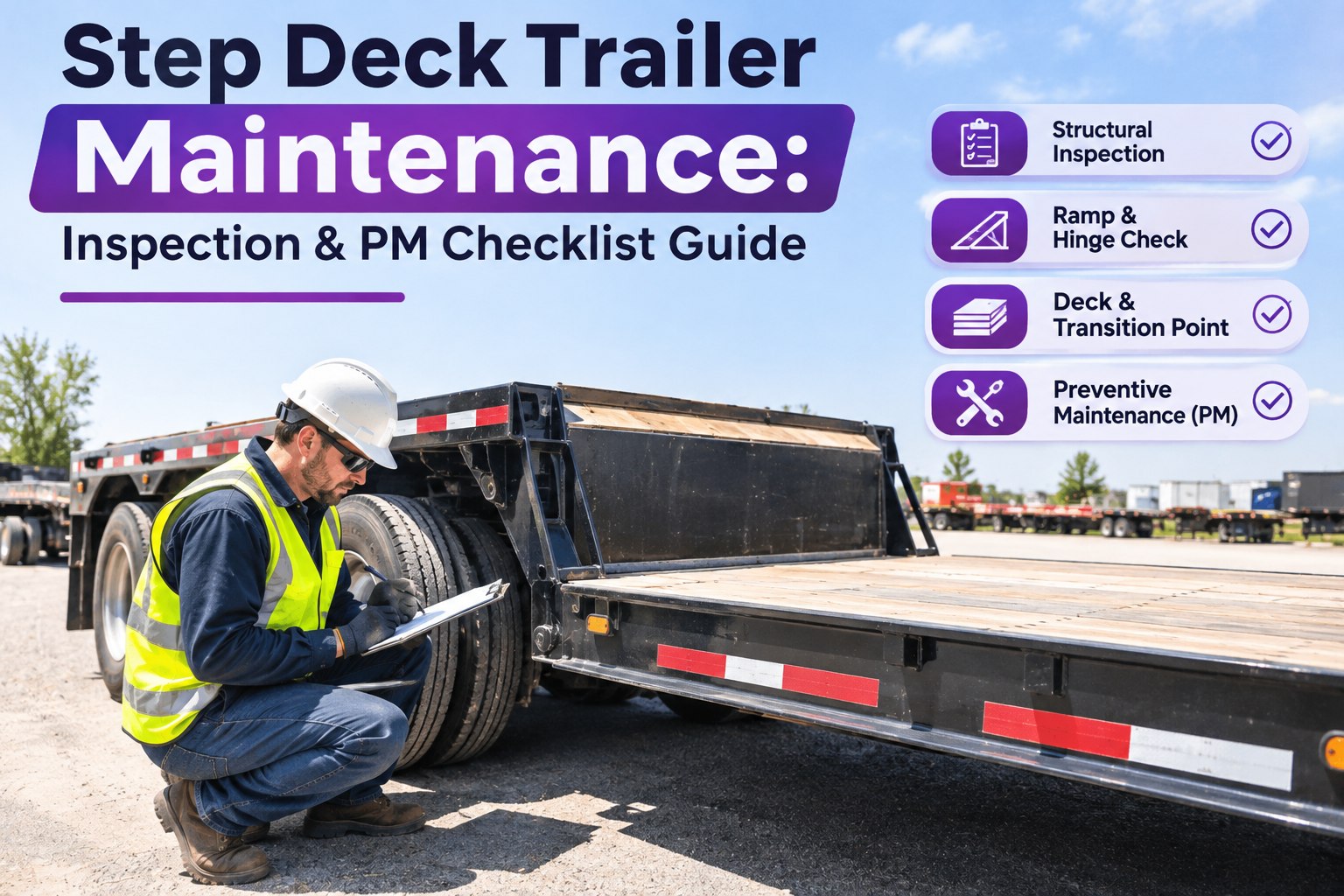
A step deck earns its keep by hauling taller loads that a standard flatbed can't. The same design adds stress points a flat deck doesn't have: the step between the decks, the ramps and their hinges, and two floors that flex differently under load. Those are also the spots where wear hides until a ramp won't lock or a weld cracks. This guide gives you a zone-by-zone inspection and PM checklist, shows how to rank what you find, and explains how Truck Inspection & Maintenance Management Software (TIM) schedules the checks and turns defects into work orders. Start free and build your step deck checklist.
Upper Deck · Transition · Ramps · Hinges · Structure
Step Deck Trailer Maintenance: Inspection & PM Checklist Guide
A step deck's worst wear sits at the step and the ramp hinges, exactly where a quick walk-around skips.
TIM puts those spots on every inspection, logs what the inspector finds, creates the work order and schedules the next PM, so nothing depends on memory.
1. InspectZone-by-zone checklist on a digital inspection.
2. Log the defectFinding recorded against the trailer and graded.
3. Work orderRepair queued and prioritized for the shop.
4. Repeat as PMRecurring inspections and service on schedule.
5 ZonesEvery step deck inspected the same way each time
3 LevelsWatch, schedule or stop, so every finding has a clear next step
1 RecordInspections, repairs and PMs kept in the trailer's history
Walk the Trailer: 5 Inspection Zones
Instead of one long list, inspect in zones, front to back. The same order every time makes gaps easy to spot.
Illustrative side view of a step deck. Ramps apply to models equipped with them.
1Upper deck & gooseneck
✓Deck boards or plating: soft spots, cracks, loose fasteners
✓Gooseneck welds and cross members: cracks, rust
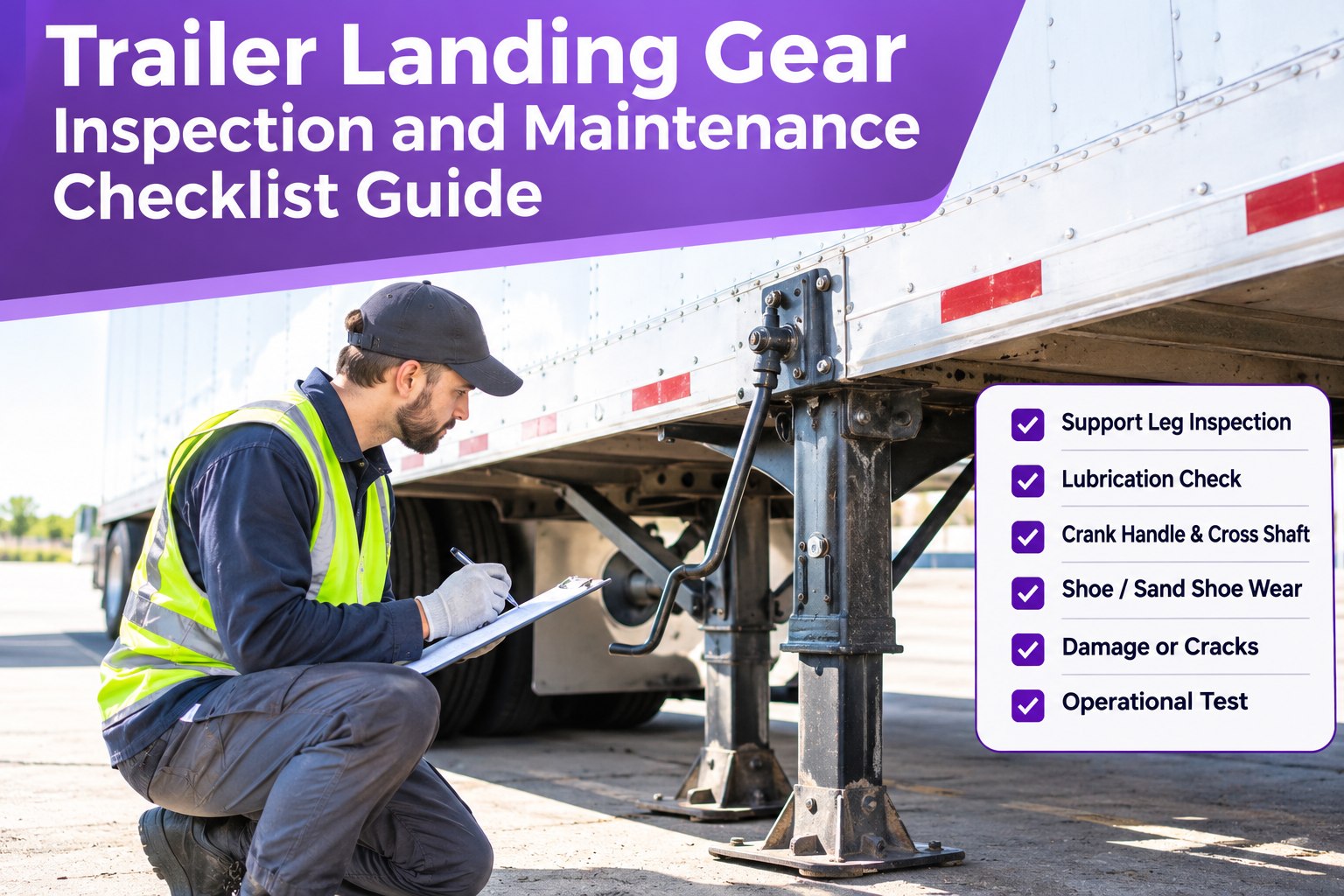
✓Landing gear: operation, damage, mounting
2Transition (the step)
✓Welds where upper deck meets the drop: cracks
✓Bends, buckling or distortion in beams
✓Rust or coating loss at joints and seams
3Lower deck & main beams
✓Floor condition and fasteners along the length
✓Main beams and cross members: cracks, sag, corrosion
✓Tie-down points, winches and rub rails: wear and damage
4Ramps & hinges
✓Hinge pins and bushings: play, wear, missing retainers
✓Hinge welds and mounting: cracks
✓Latches, locks and lift assist: secure and working
5Running gear
✓Brakes and air lines: leaks, wear, adjustment
✓Tires and wheels: tread, inflation, damage; clearance to the lower deck
✓Suspension and axle connections; lights, reflectors and wiring
In TIM, each zone is an inspection item, and any "defect" selection starts a work order. Book a demo to see zone-based trailer inspections.
Why the Step and the Hinges Wear First
Weight doesn't travel evenly through a step deck. It moves from the upper deck, through the transition, into the lower deck, so the step takes repeated bending and shock. Ramp hinges swing under load, collect dirt and moisture, and often go without grease. Heavy equipment loading adds impact to both. That's why they deserve more attention than a plain deck surface.
1Load arrivesWeight sits on both decks and the step between.
2Stress concentratesBending and shock load welds and joints at the transition.
3Wear developsHinge pins loosen, coatings crack and water gets in.
4Inspection catches itA zone check finds it while it is still a small repair.
Load Height and Clearance: Record It, Don't Guess
The lower deck lets you carry taller loads, but legal height and bridge limits vary by route and jurisdiction. Know your trailer's deck height, measure the loaded height, and check your route's limits before dispatch. Also look for damage that clearance problems cause: scraped crossbeams, bent ramps and marks on the underside of the step. Log those as defects so a repeat pattern shows up in the trailer's history.
Three PM Tiers
Match the depth of the check to the interval. Set each tier as a recurring task in TIM, using your own fleet's intervals and your manufacturer's guidance.
Every tripDriver walk-aroundTires, lights, brakes and air lines, deck condition, ramp latches, tie-downs. Report any change the same day.
Scheduled PMTechnician inspectionHinge pins and bushings, lubrication, transition welds, floor fasteners, landing gear, brake adjustment and wear.
AnnualFull inspectionComplete structural and running gear review, with the required annual inspection documented on the record.
What You Find and What to Do: Watch, Schedule or Stop
Giving every finding one of three outcomes keeps decisions fast and consistent across drivers and technicians.
Watch Log it
- Light surface rust on a frame rail
- Minor floor wear with no soft spots
- Scuffed coating away from welds
TIM: log defect, re-check at next PM
Schedule Work order
- Hinge pin play or a dry hinge
- Cracked or loose deck board
- Coating loss near welds or joints
TIM: work order, next open bay
Stop Pull from service
- Crack in a main beam or transition weld
- Broken ramp hinge or unlocked ramp
- Failed brake, tire or soft, collapsing floor
TIM: top-priority work order
When unsure whether a crack or bend is structural, take the trailer out of service and have a qualified technician assess it.
What the TIM Inspection Record Looks Like
A good record shows exactly what was checked, what failed and what happened next. This is a simplified example.
How TIM Runs the Step Deck Loop
Inspect, log, repair, repeat. A hinge finding on Monday becomes a scheduled job the same day.
1Defect loggedA driver or inspector records it on a digital inspection.
2Severity gradedIt is placed in a priority lane, so safety items rise first.
3Work order createdParts are checked so the shop knows if the fix can start.
4Closed on recordThe repair closes against the trailer's history and the next PM is due.
Give Every Step Deck the Same Thorough Check
TIM connects inspections, defects, work orders and PM schedules, so ramps, hinges and transitions are checked on time and documented on every trailer.
Frequently Asked Questions
What should a step deck trailer inspection include?
Check the upper deck and gooseneck, the transition between decks, the lower deck and main beams, ramps and hinges if equipped, and the running gear: brakes, tires, suspension and lights. Inspect in zones so nothing is skipped.
Start free and use a ready zone checklist.
How often should ramp hinges be inspected?
Look at them on every walk-around for visible damage, and inspect pins, bushings and lubrication at each scheduled PM. Increase the frequency if the trailer loads heavy equipment often or works in dirty, wet conditions.
Why is the transition point so important?
It is where load moves from the upper deck into the lower deck, so welds and beams there see repeated bending and shock. Cracks, bends or rust at the transition should be taken seriously.
What is the difference between a step deck and a drop deck?
The terms are often used interchangeably for a trailer with a raised front deck and a lower main deck. Some people use "drop deck" for particular configurations, so check with your trailer maker. The inspection zones are the same.
How does TIM help with step deck maintenance?
It schedules recurring inspections and PMs, captures defects by zone, grades them into priority lanes, creates work orders and keeps every repair on the trailer's history.
Book a demo to see it in action.
Inspect · Log · Repair · Repeat
Catch Hinge and Transition Wear While It's Small
Start a free trial and set up your first step deck inspection, or book a demo and we'll walk through the loop with your trailers in mind.
No credit card required. Free for up to 3 trucks.