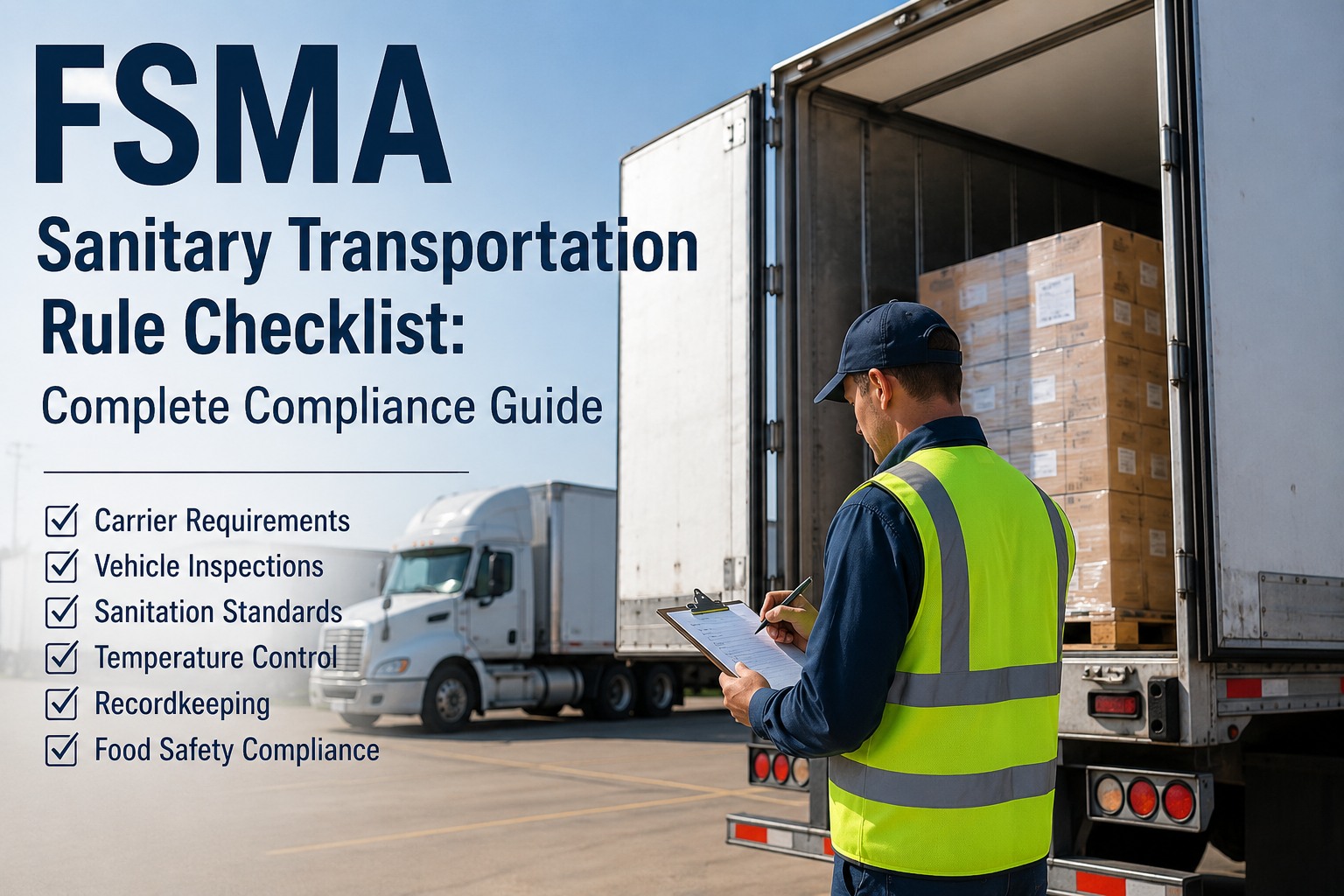
A food-grade tanker can look spotless and still fail. A trace of last week's cargo, a damp gasket, or a missing wash record is enough for a receiver to reject the load. Since the FDA's Sanitary Transportation of Human and Animal Food rule (21 CFR Part 1, Subpart O) took effect, shippers, loaders, carriers and receivers each have defined duties, and the paperwork has to prove them. This guide explains who owns what, what to check before every load, and which records to keep, then shows how Truck Inspection & Maintenance Management Software (TIM) keeps it all in one place. Start free and build your food tanker inspection checklist.
Food Grade Tanker Inspection · FDA · FSMA · Sanitation
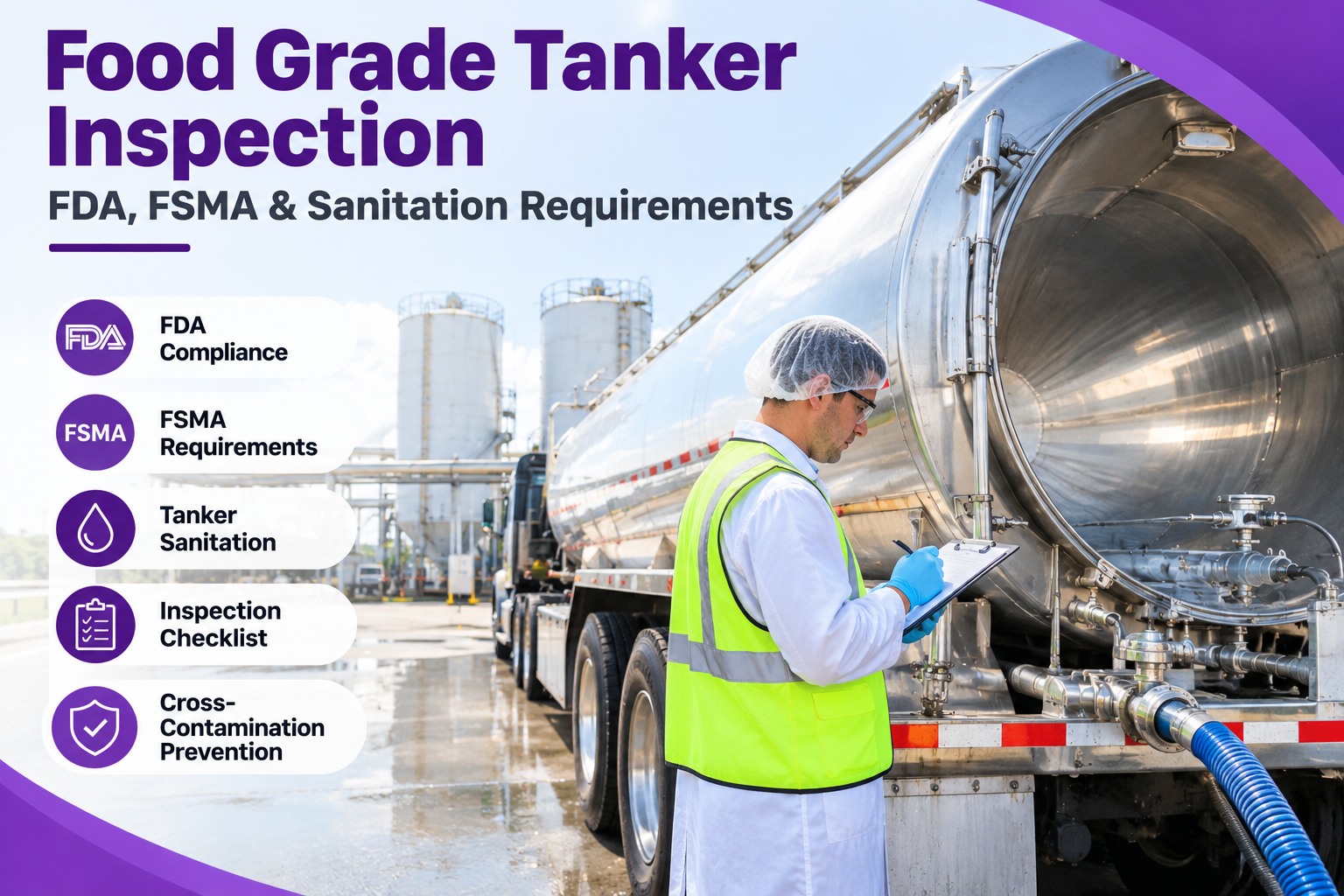
Food Grade Tanker Inspection: FDA, FSMA & Sanitation Requirements
For bulk food, a carrier may be asked to show the most recent cleaning and the previous three cargoes. If that answer lives in a driver's glovebox or a shop folder, you are one phone call from a delay. TIM gives every tanker a guided sanitary inspection, photos at each checkpoint, defects that become work orders, and one record per trailer, so the answer is a few taps away.
InspectSanitary checklist on the phone
ProvePhotos and records per tank
FixDefects routed to the shop
SchedulePM and inspection due dates
Four Parties, One Chain: Who Owns What Under FSMA
The rule covers anyone moving food by motor or rail vehicle in commerce, and each party has a different job. Some exemptions exist, so confirm how the rule applies to your operation with the FDA's guidance. For bulk tankers, the responsibilities generally break down like this.
1ShipperSpecifies sanitary requirements to the carrier in writing, including cleaning and any limits on previous cargo.
2LoaderConfirms the vehicle is in sanitary condition before food goes in.
3CarrierKeeps the tank clean and inspected. For bulk loads, gives the shipper the most recent cleaning details and the last three cargoes on request.
4ReceiverLooks over the shipment on arrival for signs of contamination or temperature abuse.
Why carriers feel it most The tank is the carrier's equipment, so the proof of its condition has to come from the carrier. When a shipper delegates sanitary duties in a written agreement, the carrier is also responsible for documented driver training.
The Dock Gate: Go or No-Go Before Loading
A tank that doesn't pass this check should not be loaded, no matter how late the pickup is. Run it the same way every time.
✔ Go: all of these are true
- Interior is clean, dry and free of odor
- Last cargo is on record and acceptable to the shipper
- Wash record or certificate is current and matches the tank
- Manway, outlet valve and gaskets are intact and food-grade
- Hoses, caps and fittings are clean, capped and stored off the ground
- No leaks, pests, standing water or foreign material
✖ No-Go: any one of these
- Odor, film, residue or moisture inside the tank
- Previous cargo is unknown or not allowed by the shipper
- Missing or mismatched wash record
- Torn, swollen or stained gaskets and seals
- Uncapped outlets or hoses that touched the ground
- Any sign of a leak, pest or contaminant
Your Sanitation File: What an Auditor or Shipper Expects to See
The rule requires records of written procedures, agreements and training, kept for a defined period that never exceeds 12 months. For a food tanker, a practical file also includes the items below. The rule doesn't prescribe one wash certificate format, so use whatever your shipper specifies.
Written proceduresHow you clean, sanitize and inspect tanks and equipment.
Shipper agreementsThe written requirements you agreed to, including who handles what.
Driver training recordsDate, type of training and the people trained.
Wash recordsDate, location, method and result for each tank cleaning.
Previous-cargo logThe last three cargoes for each bulk tank.
Inspection and repair historySanitary inspections, defects found and work completed.
Up to 12 months
How long the rule's records are retainedRetention depends on the record type and when the activity occurred, and never exceeds 12 months. Training records are kept for 12 months after the person stops doing the work they were trained for. Many shippers ask for longer, so check your contracts.
From Wash Bay to Receiver: The Life of a Clean Load
1WashClean and sanitize to the shipper's standard
2Dry & sealDry, close and protect the tank
3InspectSanitary checklist with photos
4LoadLoader confirms condition
5DeliverReceiver checks the load
Allergens and dairy Cross-contact is the risk that gets the most attention. A tank that last held milk, soy or egg product can carry allergen residue into a product that should be free of it. Milk haulers also work under state dairy rules, which typically involve their own wash and sanitize tags, so follow those in addition to the federal rule.
One Record for Each Tank, Ready When You Are Asked
Replace wash tickets in folders, checklists on clipboards and repairs tracked in someone's head with one history for every tractor and tanker.
Paper vs. TIM: What Changes on a Food Tanker
With paper and spreadsheets
- Checklists differ driver to driver
- Wash tickets live in cabs and folders
- A found defect depends on someone remembering to tell the shop
- Last-three-cargoes answers take a search
- Due dates sit on a calendar nobody owns
With TIM
- One guided sanitary inspection for every tank
- Photos and notes saved to the tank's record
- Failed items become work orders with an owner
- Each trailer has its own inspection and repair history
- PM and inspection due dates scheduled per asset
Frequently Asked Questions
Does the FDA require a washout certificate?
The rule doesn't prescribe a specific certificate form. It does require that a carrier hauling bulk food provide the shipper, on request, information about the most recent cleaning and the previous three cargoes. In practice most shippers and receivers ask for a wash record, so keep one for every tank and match it to the shipper's requirements.
Book a demo to see how tank records are kept in TIM.
What counts as a bulk vehicle?
The rule defines a bulk vehicle as one where food is shipped in bulk and touches the vehicle directly. That includes tank trucks, cargo tanks, hopper trucks and similar equipment, so a food-grade liquid tanker is squarely covered.
Do my drivers need FSMA training?
When the carrier and shipper agree in writing that the carrier is responsible for sanitary conditions, the carrier must train the personnel involved and keep training records showing the date, the type of training and the people trained. The rule sets no required length or syllabus. Confirm the details in 21 CFR 1.910.
Is a daily pre-trip still required on a food tanker?
Yes. Sanitary checks don't replace the driver's duty to confirm the vehicle is safe to operate before each trip. A guided digital walkaround covers both in one pass and keeps a record.
Start free with guided inspections.
Inspect · Prove · Fix · Schedule
Show Every Shipper a Clean, Documented Tank
Put sanitary inspections, defects, work orders and PM in one system, and every tanker's status is a tap away instead of a search through folders.
No credit card required. Free for up to 3 trucks. Built for FMCSA-compliant fleets.