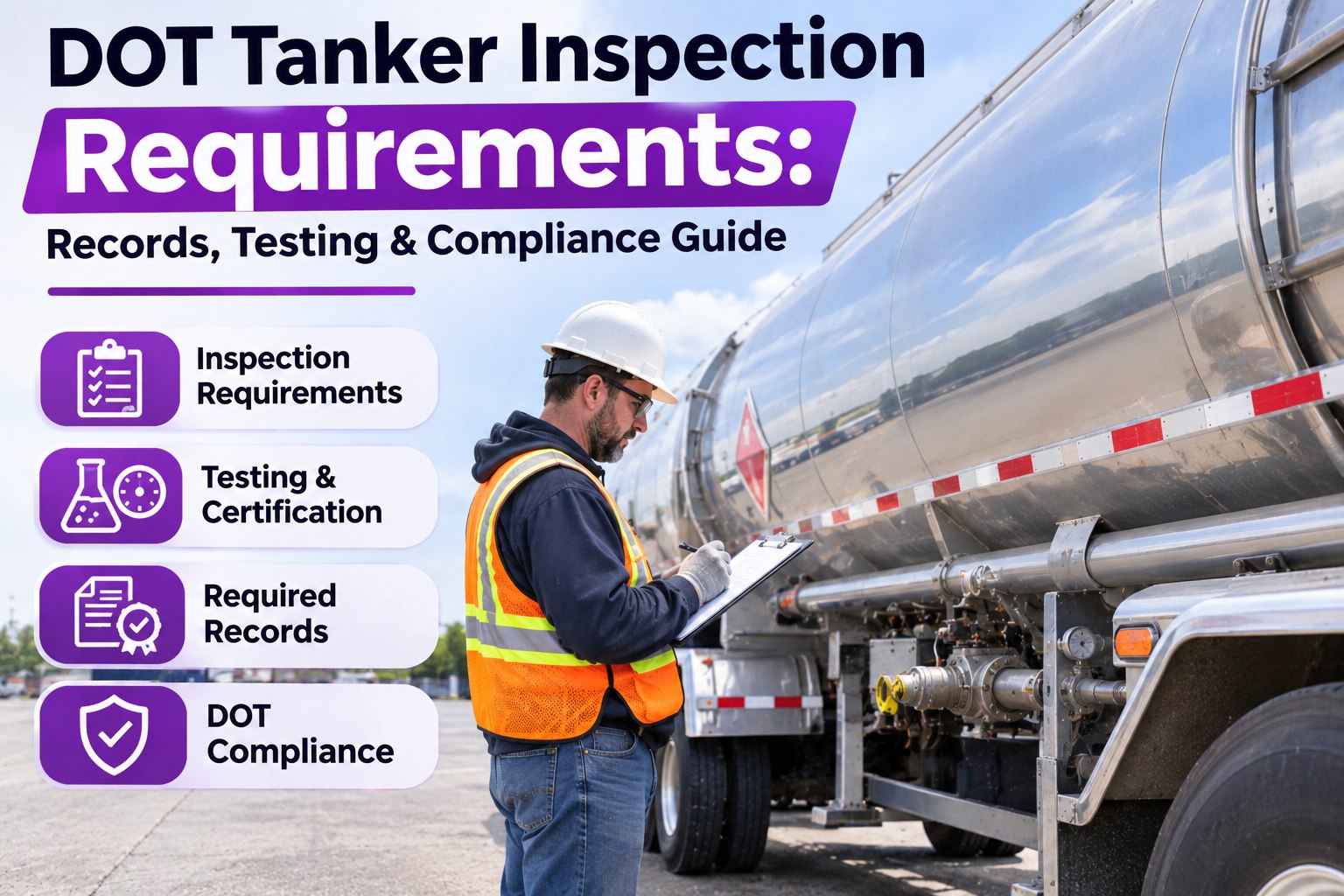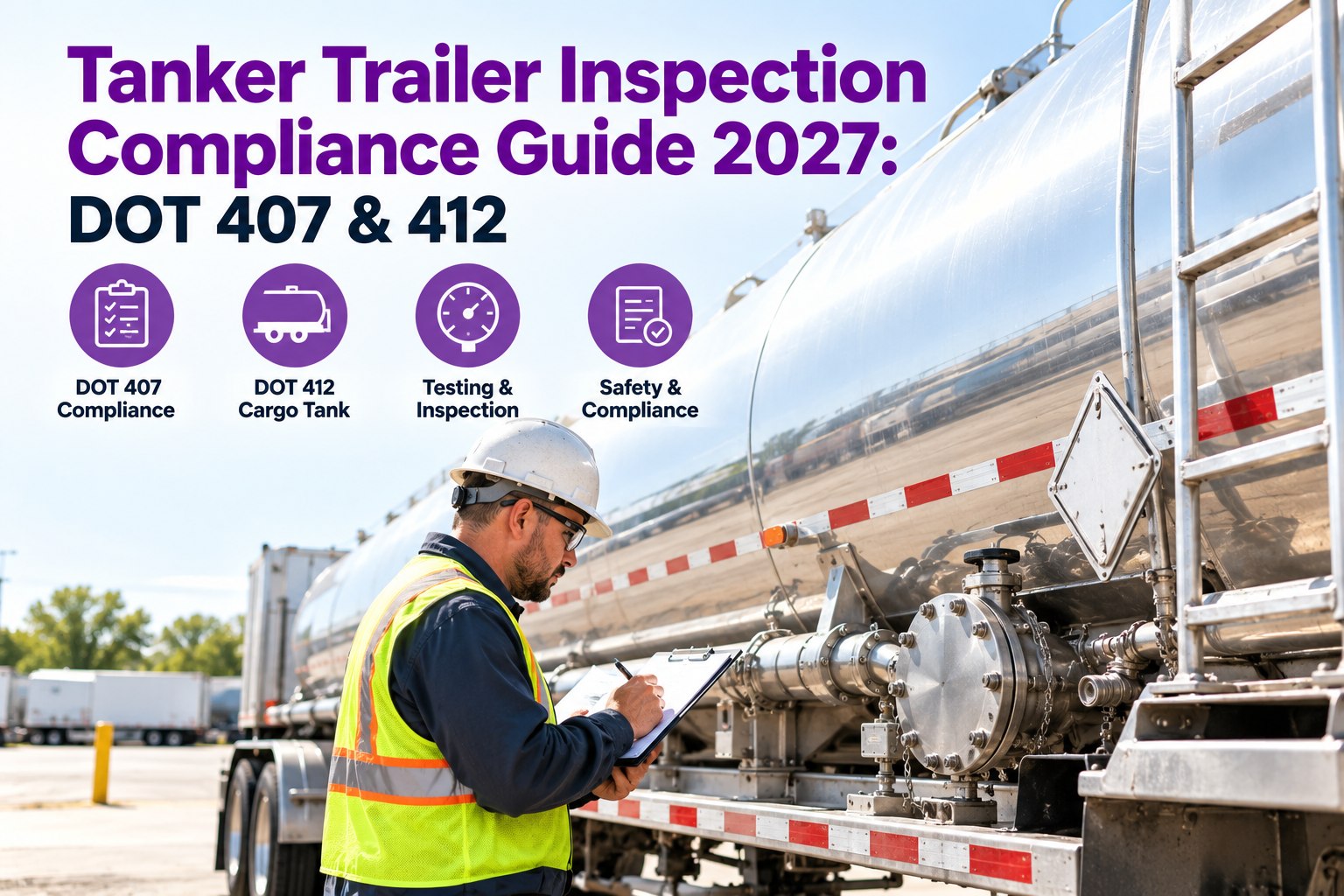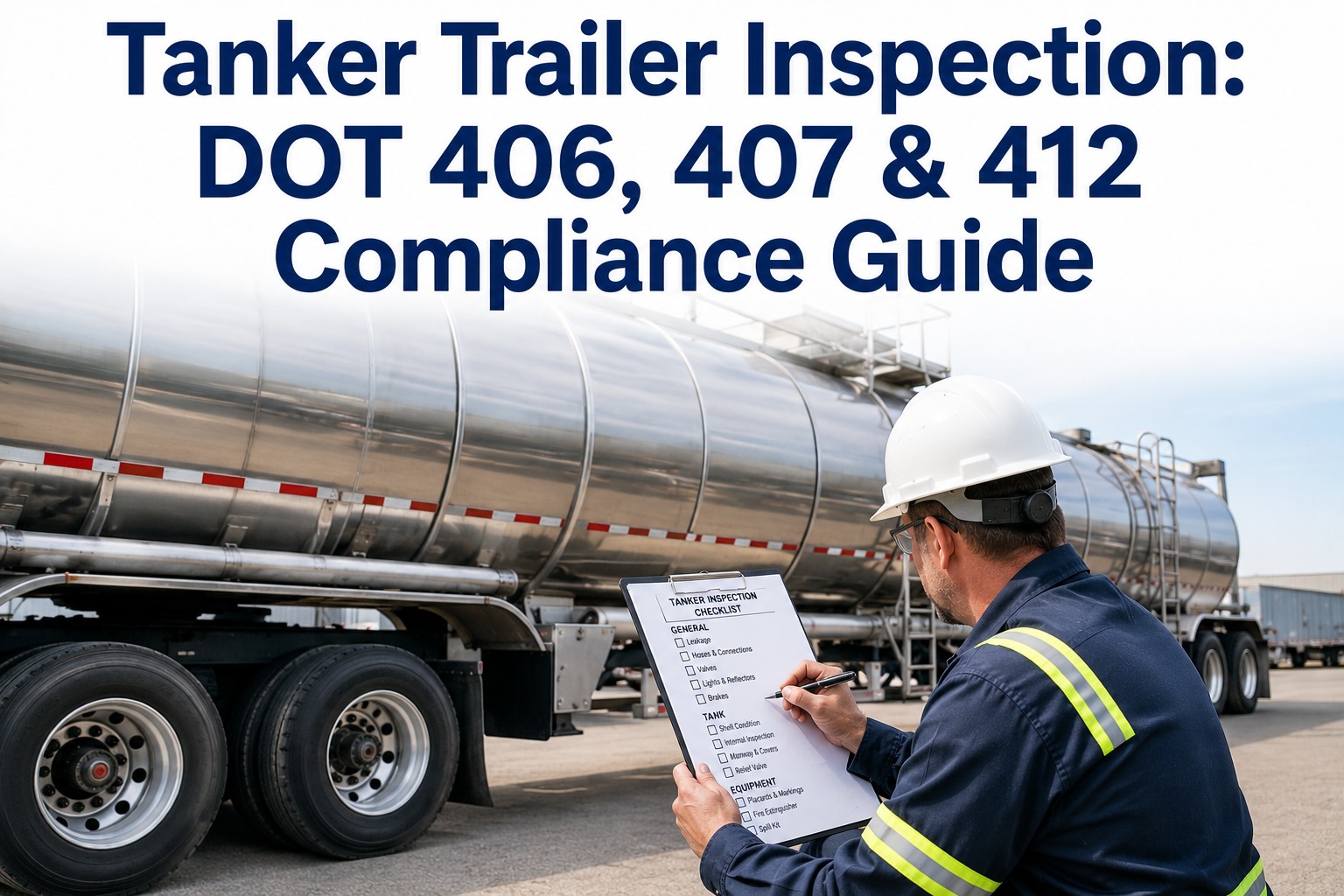
A tanker that looks fine can still be illegal to load. Under 49 CFR 180.407, a cargo tank with an overdue test or inspection can't be filled and offered for hazmat transport until it's done. A DOT 406, 407 or 412 carries six separate tests (V, K, I, P, T, L), each on its own clock and each stamped on the tank. Most fleets don't miss a date because they don't care. They miss it because the dates live in a binder, a shop invoice or someone's memory. This guide gives you the intervals, the test details and the out-of-cycle triggers. It also shows how Truck Inspection & Maintenance Management Software ties inspections, defects, work orders and test due dates into one loop, so the next-due date is never a surprise. Start free and put every tank's test dates on one calendar.
Tanker Trailer Inspection Requirements: DOT Testing 2027
An overdue leakage or pressure test means a loaded-ready tanker that can't legally haul. You usually find out when the dispatch board is full. TIM puts each tank's V, K, I, P, T and L dates on a PM schedule, sends every inspection defect to a work order, and keeps the whole history on one unit record.
The Six Letters Stamped on Your Tank
After a successful test, the facility marks the tank with the test letter and the month and year it was done (§180.415). The letters must be at least 1¼ inches high and sit near the specification plate. Read the plate and you can see which clocks are running. These are baseline intervals from the §180.407(c) table. Insulated, lined and corrosive-service tanks can differ, so confirm yours against the current table.
The Loop That Keeps a Tank Compliant
Test dates are only half of tanker compliance. The other half is what you find between tests: a weeping fitting on a pre-trip, a dent after a tight yard, a gasket that's gone soft. TIM runs both halves as one connected loop, so a finding doesn't sit on a clipboard while the due date approaches.
DOT 406 vs 407 vs 412: What You're Actually Hauling
The three specifications cover different products and pressures, so each has different failure points. Older MC-series tanks (MC 306, 307, 312) are the legacy equivalents, and many are still in service. Each is held to the §180.407 test and inspection requirements.
Low-pressure fuel haulers. Gasoline, diesel and fuel oil. Typically aluminum and compartmented, with MAWP between 2.65 and 4 psig.
- Leakage test is the annual make-or-break item
- Check bottom-loading valves, vapor-recovery fittings and emergency vents
- Rollover protection and shell dents get close attention
Chemical and hazmat liquids. Steel or stainless, often insulated, with MAWP of at least 25 psig.
- Insulation can block a full external look, so an internal visual or pressure test may be needed
- Lined tanks add the annual lining inspection
- Pressure relief devices need careful checking
Corrosives. Acids and caustics in stainless or lined steel, often with visible reinforcing rings.
- Wall thinning is the main risk, so thickness and lining records matter most
- Gasket and fitting wear shows up early in leakage tests
- Corrosion can hide under coatings, so a clean paint job is no guarantee
Your Five-Year Test Calendar at a Glance
The clocks don't all reset together, so tanks drift out of sync once a few have been retested at different shops. This is the typical rhythm for a tank on baseline intervals. Your real dates come from the markings on the tank and the last test report.
* Thickness testing applies to unlined tanks in service corrosive to the tank. Lined tanks add L every year. Year 5 is the heavy one: the tank is emptied, cleaned, opened and pressure tested, so book that downtime early.
Leakage Test vs Pressure Test: Not the Same Thing
These two get mixed up often. The leakage test is the quick annual check. The pressure test is the deep structural check done every five years.
- Tank is pressurized to at least 80% of its MAWP (see §180.407(h))
- Pressure is held while every valve, fitting, gasket and piping joint is checked for leaks
- Catches worn gaskets, loose fittings and weeping closures
- Fastest test, and the one most often found overdue
- Hydrostatic or pneumatic test at 1.5× the tank's MAWP
- Proves the shell and heads can still hold pressure
- Done together with the internal visual inspection
- Requires an empty, cleaned tank and planned downtime
When the Calendar Doesn't Matter: Out-of-Cycle Triggers
Under §180.407(b), a tank must be tested and inspected before further use if any of these happen, even in the middle of a clean test cycle.
What Happens When a Test Is Missed or Failed
| Situation | What the rule requires | Status |
|---|---|---|
| A test comes due and isn't done | Tank may not be filled and offered for transport until it is completed | Stop |
| Tank fails a test or inspection | Out of hazmat service until repaired and retested | Stop |
| Accident damage or major modification | Test and inspect before the next use | Test first |
| Test passed | Tank is marked with the letter and month/year (§180.415) | Go |
| Report on file | Keep the test report until the next successful test (§180.417) | Go |
One Record per Tank, From Walkaround to Test Date
Truck Inspection & Maintenance Management Software gives every tanker its own unit record: guided inspections with photos, DVIRs, defects, work orders and recurring PM for each test. When someone asks when a tank was last tested or what was repaired, the answer is one screen away.
Who Can Test, and What's New in 2026
Frequently Asked Questions
Stop Finding Out About Overdue Tank Tests on Dispatch Day
Put every tanker's walkaround, defects, work orders and test dates in one system. Start free to get each tank's next-due dates on a calendar, or book a demo and we'll walk through your own tank fleet.