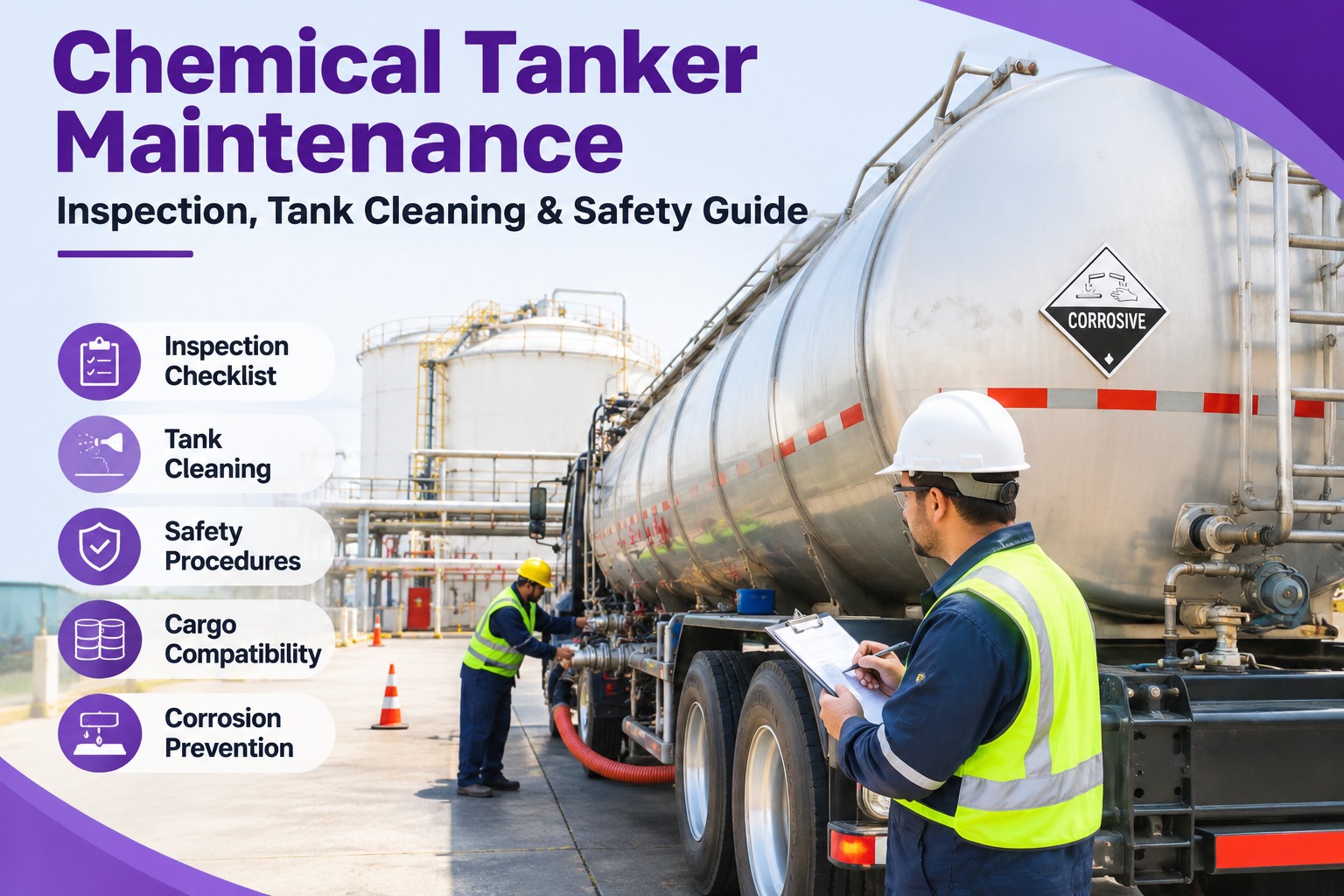
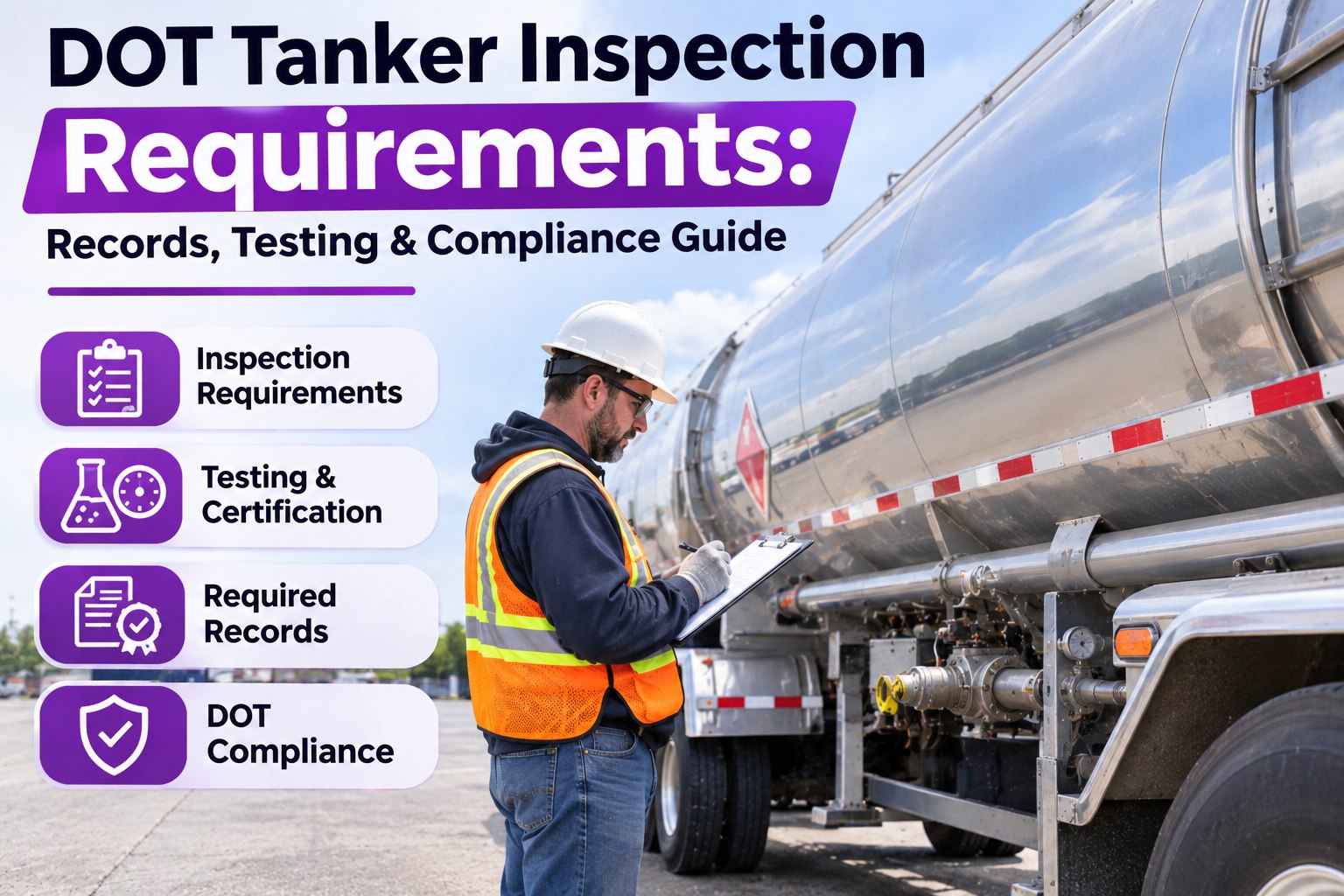
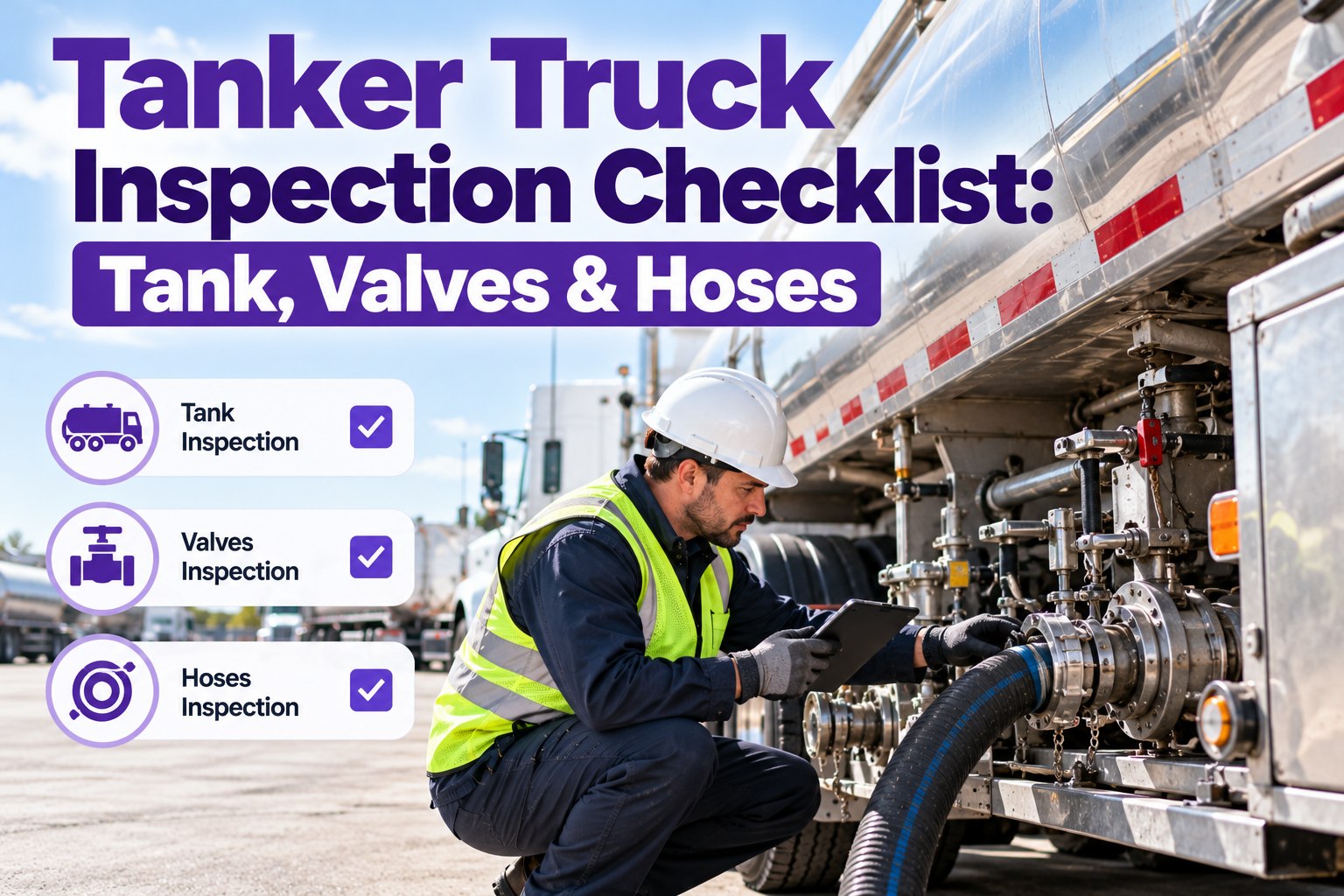
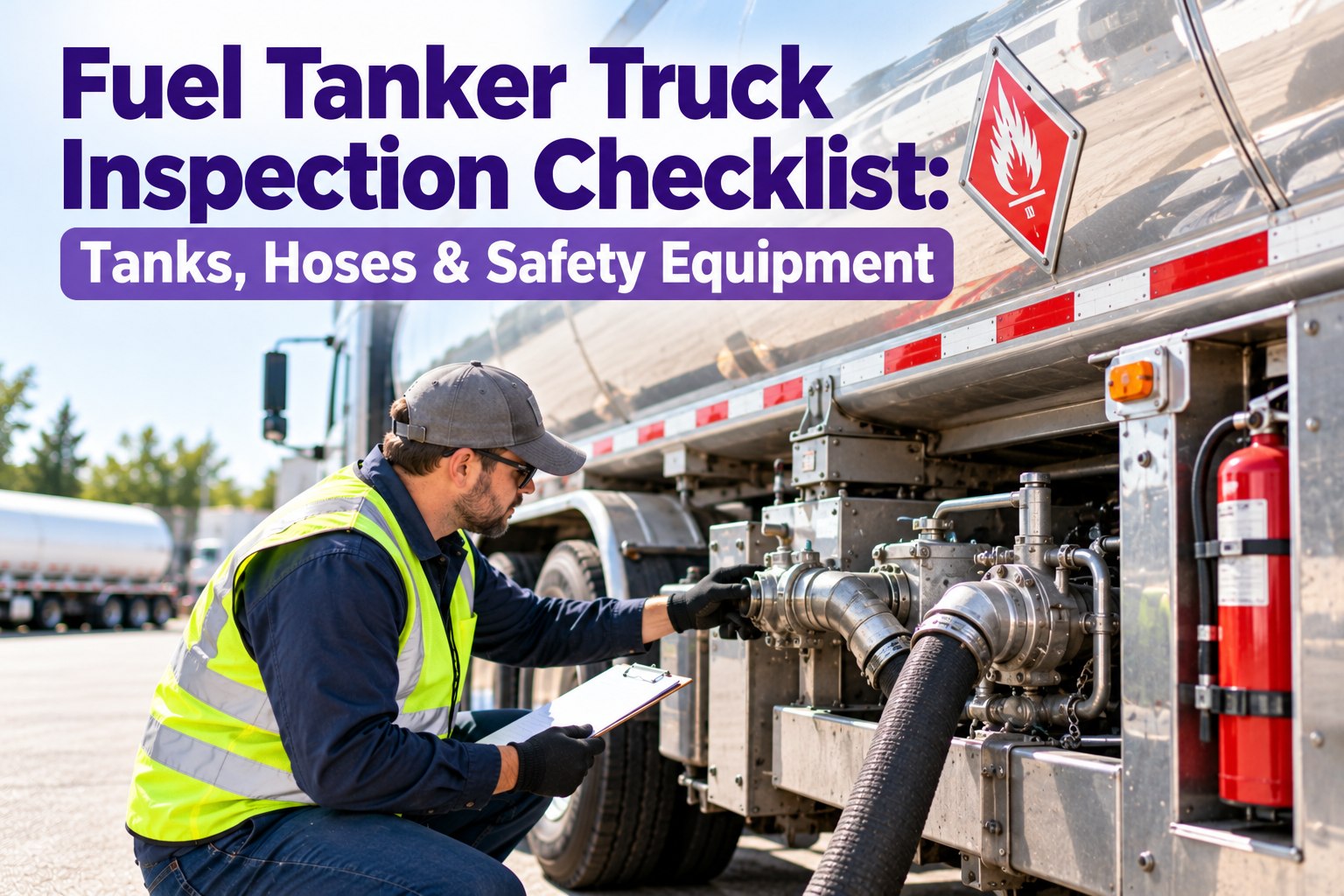
A chemical tanker rarely fails because of one dramatic event. It fails because last Tuesday's caustic left a film, a gasket quietly swelled, or a thinning wall went unmeasured past its due date. Chemical tanker maintenance comes down to four habits: inspecting on schedule under 49 CFR 180.407, matching every cargo to the right tank material, cleaning to a verified standard, and keeping records you can produce on request. This guide covers all four, and shows how Truck Inspection & Maintenance Management Software (TIM) runs each one as a single loop. Start free and set up your first tank inspection.
Chemical Tanker Maintenance · Inspect → Defect → Work Order → PM
Chemical Tanker Maintenance: Inspection, Tank Cleaning & Safety Guide
Most chemical-fleet problems start the same way: a due date nobody tracked, a defect nobody logged, or a wash nobody can prove. TIM runs the full loop: a guided inspection on the driver's phone, any failed item logged with photos and routed to a work order, and tank tests and PM services scheduled by due date. Your tankers stay inspection-ready, and your records are in one place when a shipper or inspector asks.
InspectGuided walkaround and DVIR on the phone
LogDefects with photos and notes
FixWork orders assigned to the shop
SchedulePM and tank test due dates
The Tank Test Calendar Every Chemical Fleet Lives By
Specification cargo tanks must be tested and inspected on fixed cycles, and each completed test is marked on the tank. Missing a due date means the tank can no longer legally haul hazmat, so these dates deserve the same attention as a PM service. In TIM, each test can be set up as a recurring service on the tank's asset record, so the next due date is always visible to dispatch and the shop.
VExternal VisualEvery year
KLeakage TestEvery year
IInternal VisualEvery 5 years*
PPressure TestEvery 5 years*
TThickness TestEvery 2 years, unlined tanks hauling cargo corrosive to the tank
LLining InspectionEvery year, lined tanks hauling cargo corrosive to the tank
*Typical for most specification tanks. Intervals vary by tank specification and service, so always confirm yours in §180.407(c).
Match the Cargo to the Metal: A Quick Compatibility Guide
Corrosion prevention starts before the first load. Every tank material and every seal has cargo it tolerates and cargo it quietly destroys. Use this as a conversation starter, then confirm with the shipper's SDS and the tank manufacturer.
| Material | Generally suited to | Watch out for |
|---|
| Carbon steel | Many solvents, fuels, concentrated sulfuric acid | Dilute acids and moisture, which cause rust and wall loss |
| Stainless steel (304/316) | A wide range of acids, solvents and food-grade chemicals | Chlorides, which can cause pitting and stress cracking |
| Aluminum | Fuels and many petroleum products | Strong caustics and strong acids, which attack it quickly |
| Rubber or polymer-lined steel | Hydrochloric acid and other aggressive acids | Lining cracks, blisters and pinholes (the reason for the annual lining inspection) |
| EPDM seals and gaskets | Many acids, alkalis and water-based cargo | Hydrocarbons, which make EPDM swell |
| Viton (FKM) seals and gaskets | Fuels, oils and many solvents | Ketones and some amines, which degrade it |
Where TIM helps Tanks usually fail where nobody looks: gaskets, valve seats and dome seals. Add them as named checkpoints in your TIM inspection template, and a swollen gasket becomes a logged defect with a photo instead of a comment someone forgot to pass on.
The 6-Step Tank Cleaning Sequence
A tank is only clean when the next shipper would accept it, not when it looks clean. Follow the same order every time, and write down each step. Run it as a checklist in TIM and the wash record builds itself as the work gets done.
1Identify the previous cargoCheck the SDS and the last load record. The cleaning method depends on what was in the tank, so never guess.
2Drain and pre-rinseRemove free residue and heels, and route all rinse water to approved disposal.
3Wash with the right chemistryHot water, detergent, or an acid or alkaline wash chosen for the residue. Never mix incompatible cleaners.
4Rinse until the effluent is cleanRinse until the discharge runs clear and its pH is where it should be.
5Dry and ventilateLeftover water can contaminate the next cargo and promote corrosion.
6Inspect, test and documentCheck by sight, smell and residue or wipe test. Record the result with a photo and attach it to the tank's history.
Safety first Entering a cargo tank is a permit-required confined space under OSHA 29 CFR 1910.146. Atmospheric testing, ventilation, a trained attendant and a rescue plan are required before anyone goes in.
Four Ways Contamination Sneaks In, and How a Record Stops Each One
Residue in the heelA few gallons in the sump or piping can ruin a high-purity load. Make the heel check a required checklist item.
Dirty hoses and fittingsTransfer hoses and caps carry the last product into the next one. Track them as inspected equipment.
Absorbed odorsGaskets and linings can hold onto solvents. Log the finding and schedule the replacement.
Rushed wash recordsIf no one can prove what was done, the load can be rejected. Keep one dated record per tank.
How TIM Runs the Loop on a Chemical Tanker
The tests, washes and walkarounds above only protect you if they connect. This is the loop TIM runs for every tanker in the fleet.
1Guided inspection or DVIRThe driver walks the tractor and tank in a fixed order, with photo capture at each checkpoint.
2Defect loggedA failed item is recorded with notes and photos. A leak, a bad gasket or a damaged placard is documented on the spot.
3Work order createdThe defect goes to the shop as a work order, with a clear owner and status until it is closed.
4PM and test due datesAnnual and multi-year tank tests and routine PM services are scheduled, so nothing depends on memory.
One System From Walkaround to Work Order
Replace clipboards, spreadsheets and sticky notes with one record for each tractor and tank: inspections, defects, work orders, service history and due dates.
Walkaround Red Flags on a Chemical Tanker
Whatever the schedule says, drivers are your daily early warning system. Each of these should be logged in the inspection and routed to a work order before the truck rolls.
⚠Weeping at manway or valve seats
⚠Bubbled, stained or flaking paint on the shell
⚠Swollen, sticky or cracked gaskets
⚠Dents, gouges or damaged rollover protection
⚠Missing, illegible or wrong placards and markings
⚠Relief valve that is damaged, corroded or overdue
Frequently Asked Questions
How often must a chemical cargo tank be inspected?
Under 49 CFR 180.407, specification cargo tanks need an annual external visual inspection and leakage test. Most also need an internal visual inspection and pressure test every five years. Tanks carrying cargo corrosive to the tank have shorter cycles: a yearly lining inspection for lined tanks and a thickness test every two years for unlined tanks. Check the table in §180.407(c) for your specification.
Book a demo to see how recurring tests are scheduled in TIM.
How often should a chemical tanker be cleaned?
No single schedule fits every operation. Clean whenever the next cargo is incompatible with the last, whenever the shipper's requirements call for it, and whenever a tank has been out of service or contaminated. Always keep the wash record, and keep it attached to the tank's history.
What does a thickness test tell you?
It measures the remaining wall thickness of the tank, usually with ultrasonic equipment, so corrosion is caught before it weakens the shell. Walls that have thinned past the allowable limit must be taken out of service.
Do drivers still need a daily pre-trip on a tanker?
Yes. The periodic tests do not replace the driver's responsibility to confirm the vehicle is in safe operating condition before each trip. A guided digital walkaround makes that check consistent and leaves a record.
Start free with guided pre-trips.
Inspect · Fix · Schedule · Document
Know Which Tank Is Due, Which Defect Is Open, and Who Owns It
Put inspections, DVIRs, defects, work orders and PM in one system, and every tanker's status is a tap away instead of a search through folders.
No credit card required. Free for up to 3 trucks. Built for FMCSA-compliant fleets.