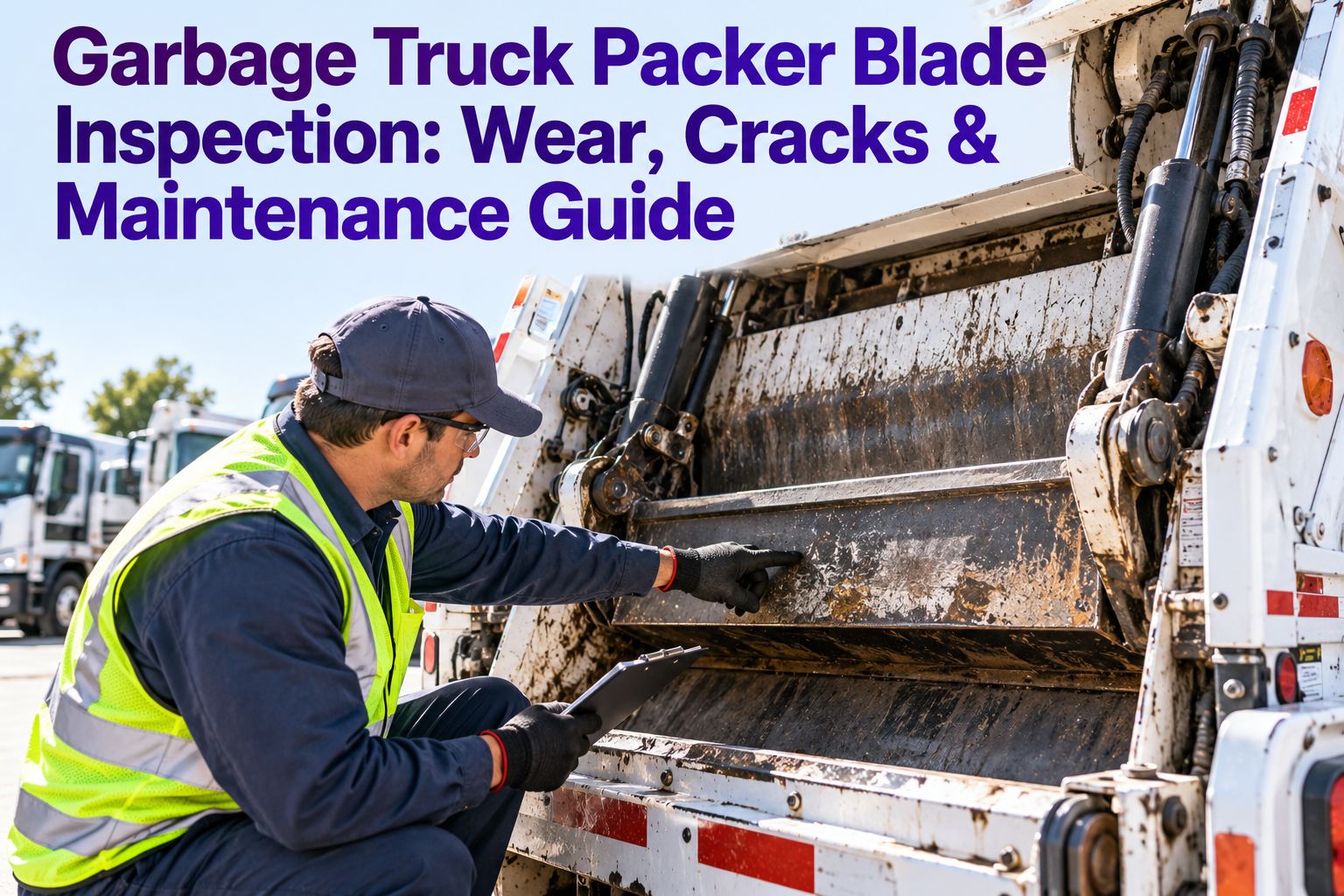
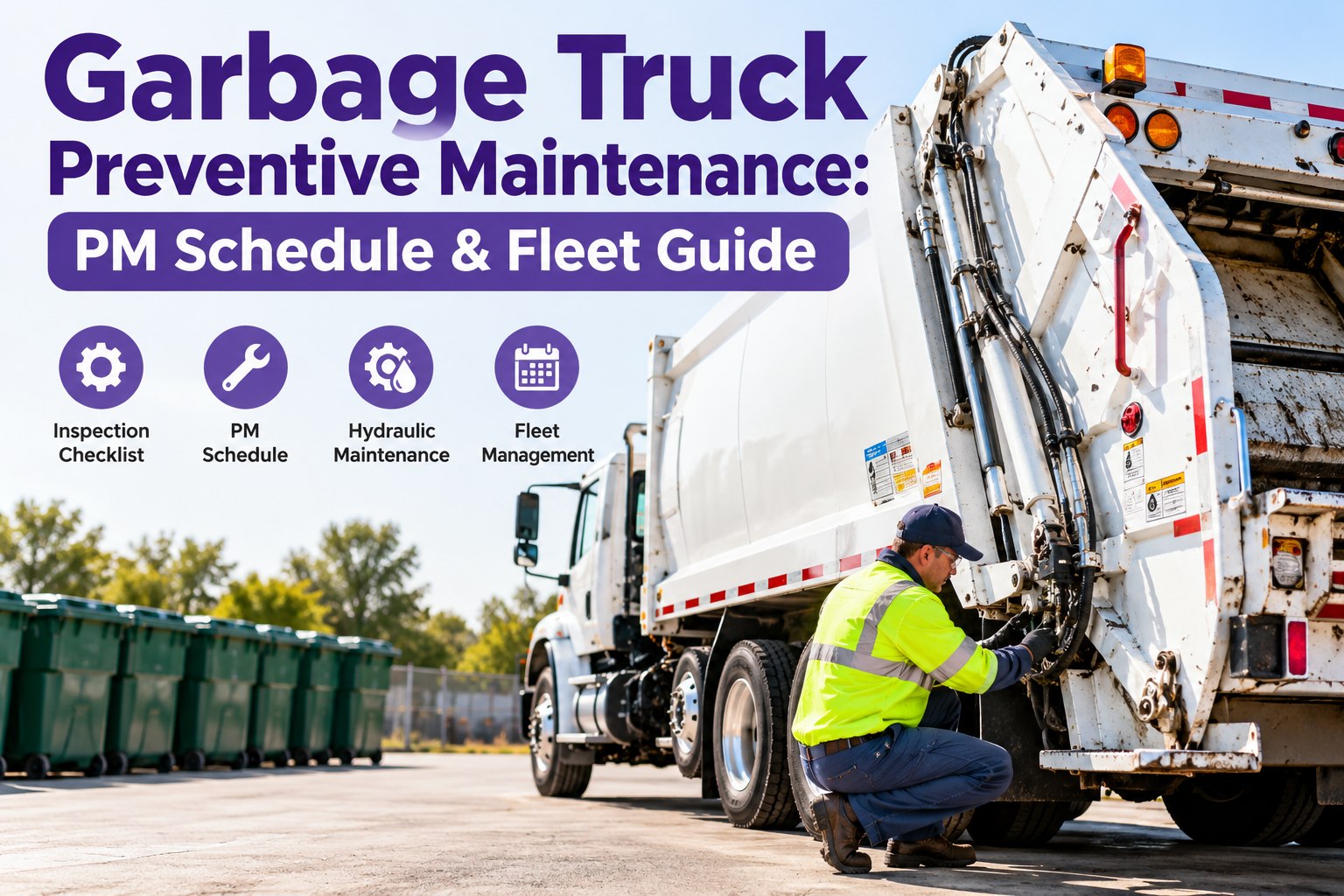
The packer blade is the hardest-working part of a refuse truck — it compresses more than half a ton of trash per cubic yard, stroke after stroke, all day. It's also the part most likely to be ignored until it fails: a hairline crack, a worn edge, or a clearance gap that lets debris jam the mechanism will quietly get worse for weeks, then strand the truck mid-route with a body full of garbage. Catching that wear early is a few minutes of looking in the right places on the right schedule. This guide covers the five defects that take a packer blade down, the daily-weekly-monthly inspection cadence, and how to read a failing packer before it quits — with Truck Inspection & Maintenance Management Software (TIM) turning every finding into a tracked repair. Start free and put your packer inspections on one system with TIM.
TIM · Packer Blade Inspection
A Cracked Packer Blade Doesn't Warn You — It Strands You
The packer blade compacts over a thousand pounds of refuse per cubic yard, every cycle — and when a crack, a worn edge, or an opened-up clearance gap goes unchecked, the packer jams or seizes with a full body mid-route. The defects are visible weeks ahead if someone inspects the right spots on schedule. TIM keeps the packer inspection on a cadence, and turns a flagged crack or clearance gap into a graded work order before it becomes a dead truck.
The pack cycle · where the blade takes the load
1Hopper loads
→
2Blade sweeps
→
3Compacts to wall
→
4Resets
Every cycle loads the blade, the welds, and the clearances — all day, every route.
The Five Defects That Take a Packer Blade Down
A packer blade doesn't fail in one way — it fails in five, and each shows up in a different spot. Know what you're looking for and a walk-around catches the problem while it's still a repair, not a breakdown.
01
Edge wear
The leading edge dulls and rounds from constant contact. A worn edge compacts poorly, jams on debris it used to sweep, and loads the hydraulics harder to do the same work.
Look at: the blade's leading edge and corners
02
Cracks
Hairline cracks start at welds and stress points and grow with every stroke. Caught early they're a weld repair; ignored they split the blade under load — a sudden, total failure.
Look at: welds, corners, reinforcement points
03
Bending & warping
A blade that's hit a dense or solid object can bow or twist. A bent blade no longer sweeps flush, leaves refuse behind, and drives uneven wear and clearance problems everywhere else.
Look at: blade flatness across its width
04
Excessive clearance
The gap between the blade and the body walls and floor should be tight. As wear opens it up, trash wedges into the gap, jams the stroke, and accelerates damage to both blade and body.
Look at: blade-to-wall and blade-to-floor gaps
05
Worn wear shoes & slides
The shoes and slides the blade rides on wear down and are what keep clearance tight. Worn shoes are usually the real cause behind an opened-up clearance gap — fix them and the gap closes.
Look at: wear shoes, guide rails, slide surfaces
Four of the five are visible to the eye; the fifth is why the others appear. Contact our team to build a packer-specific checklist in TIM.
Inspect on the Right Clock — Daily, Weekly, Monthly
A packer blade doesn't need the same check every day — it needs the right check at the right interval. Each cadence catches a different stage of wear, from debris that jams today to structural fatigue that fails next month.
DAILY
Clear & confirm
- Clear debris from the blade and packer body
- Confirm the compaction cycle runs smoothly
- Check hydraulic fluid level
- Watch for leaks near cylinders and fittings
WEEKLY
Wear & fasteners
- Check blade edges for uneven wear or cracks
- Inspect bolts and pins for tightness
- Inspect hydraulic hoses for chafing or bulging
- Check blade-to-body clearance by eye
MONTHLY
Structure & alignment
- Inspect welds and blade alignment
- Assess overall structural integrity
- Inspect wear shoes and slide surfaces
- Pressure-test the packer hydraulic system
A Finding on a Walk-Around Only Helps If It Becomes a Repair
A technician can spot a cracked weld or an opened clearance gap on a Monday inspection — but if it's a note on a clipboard, it's gone by Tuesday. TIM keeps the packer inspection on its daily, weekly, and monthly cadence, and the moment a blade crack, worn shoe, or hydraulic leak is flagged, it becomes a graded work order on that truck's record. The critical find pulls the unit; the wear item schedules into PM. Nothing a tech saw on the blade gets lost before it's fixed.
Read the Symptom, Find the Cause
A failing packer tells you it's in trouble before it quits — if you know what the symptoms mean. Here's how the common warning signs map to what's actually wrong and what to check.
| What you notice | Likely cause | What to check |
| Slow packer movement |
Low hydraulic pressure or clogged filter |
Fluid level, filter, system pressure |
| Incomplete compaction |
Low pressure, worn blade edge, or jam |
Blade edge, pressure, hopper for objects |
| Frequent jams |
Dulled edge or opened-up clearance |
Edge wear, blade-to-body clearance, wear shoes |
| Fluid leak near cylinders |
Failing seal, hose, or fitting |
Cylinders, hose fittings, connections |
| Burnt smell or discolored fluid |
Hydraulic overheating |
Fluid condition, cooler, system load |
| Jerky arm or tailgate motion |
Air in system, worn component, or low fluid |
Fluid level, cylinders, valves |
Symptoms and causes summarized for general guidance; always diagnose against the body manufacturer's service information and confirm the specific fault before repair.
Why the Packer Is Its Own Maintenance Job
Standard truck PM covers the chassis — engine, brakes, tires. The refuse body and its packer are a second machine bolted on top, with their own wear, their own hydraulics, and their own failure modes. Treating them as one checklist is how the packer gets missed.
◉
Its own hydraulics
The packer runs its own high-pressure circuit — pump, valves, cylinders, hoses, filters — separate from the chassis, with its own fluid and pressure to check.
◆
Cycle-driven wear
The blade wears by pack cycles, not road miles. A low-mileage truck on a dense route can wear a blade fast — mileage-based PM misses it entirely.
▲
Safety-critical force
The packer generates enormous compaction force. A blade or cylinder that fails under load is a safety event, not just a downtime one.
How TIM Runs It
Packer Inspection to Work Order, on One Record
TIM runs the refuse body and its packer as a tracked system of their own — inspected on cadence, with every finding routed to a repair instead of a clipboard.
Packer-specific checklistsDaily, weekly, and monthly packer checks built in — blade, clearance, wear shoes, hydraulics — not buried in the chassis PM.
Finding to work orderA flagged crack, worn edge, or leak becomes a graded, assigned repair the moment it's logged.
Severity routingA cracked blade pulls the truck now; a wearing edge schedules into planned work.
Cycle-based PMSchedule packer service on pack cycles and time, not just road miles, so blade wear is caught on its real clock.
Photo on the defectA photo of the crack or clearance gap rides with the work order, so the shop sees exactly what the driver saw.
Per-unit body historyEvery packer inspection and repair kept per truck — blade replacements, weld repairs, and wear trends in one place.
Frequently Asked Questions
How often should a packer blade be inspected?
On three clocks at once. Daily, clear debris from the blade and packer body, confirm the compaction cycle runs smoothly, check the hydraulic fluid level, and watch for leaks. Weekly, check the blade edges for uneven wear or cracks, make sure bolts and pins are tight, inspect the hoses, and eyeball the blade-to-body clearance. Monthly, inspect the welds and blade alignment, assess structural integrity, check the wear shoes and slides, and pressure-test the hydraulic system. Each interval catches a different stage of wear — daily catches today's jam risk, monthly catches the structural fatigue that fails later.
Start free and run all three packer cadences with TIM.
What are the signs a packer blade is wearing out?
The clearest ones are a dulled or rounded leading edge, hairline cracks starting at welds or corners, a blade that's bowed or twisted so it no longer sweeps flush, and an opened-up clearance gap between the blade and the body walls or floor that lets trash wedge in. In operation, you'll notice it as incomplete compaction, frequent jams on debris the blade used to handle, and the hydraulics working harder to do the same job. Worn wear shoes are often the hidden cause behind a clearance problem, so if the gap has opened up, check the shoes the blade rides on.
Why does blade-to-body clearance matter so much?
Because the gap is what keeps refuse in front of the blade instead of jammed beside it. When clearance is tight, the blade sweeps and compacts cleanly; as wear opens the gap, trash wedges between the blade and the body walls or floor, which jams the packing stroke, strains the hydraulics, and grinds away at both the blade and the body. An opened-up clearance also tends to be self-worsening — the jamming accelerates the wear that caused it. It's usually traced back to worn wear shoes or slides, so closing the gap means replacing those, not just the blade.
Can a cracked packer blade be repaired, or does it need replacing?
It depends entirely on when it's caught, which is the argument for frequent inspection. A hairline crack found early at a weld or stress point can often be repaired by a qualified welder before it propagates. A crack that's allowed to grow through repeated pack cycles can split the blade under load — a sudden, total failure that takes the truck out mid-route and usually means full replacement, not a repair. That gap between a cheap weld fix and a blade replacement plus a stranded truck is exactly why the weekly crack check earns its place. Always follow the body manufacturer's guidance on what's repairable.
Why inspect the packer separately from the rest of the truck?
Because the refuse body is effectively a second machine on top of the chassis, with wear and failure modes the standard truck PM doesn't cover. It runs its own high-pressure hydraulic circuit separate from the chassis, its blade wears by pack cycles rather than road miles — so a low-mileage truck on a dense route can wear a blade fast while a mileage-based schedule shows nothing due — and the compaction force involved makes a blade or cylinder failure a safety matter, not just downtime. Folding the packer into the chassis checklist is how it gets skipped; giving it its own inspection on its own cadence is how it gets caught.
Wear · Cracks · Bending · Clearance · Wear Shoes
Catch the Blade Before It Catches You Out
A packer blade gives weeks of warning before it fails — a dulling edge, a hairline crack, a clearance gap opening up — but only if someone inspects the right spots on the right schedule and the finding turns into a fix. Daily to clear and confirm, weekly for wear and cracks, monthly for structure and alignment. TIM keeps the packer on its own cadence and routes every flagged defect to a work order, so a crack becomes a weld repair in the yard instead of a split blade on the route.
No credit card required · Free for up to 3 trucks · Packer-specific checklists, cycle-based PM, and inspection-to-work-order built in