A plant runs a yard spotter shuttling trailers, forklifts feeding the line, loaders moving material, and over-the-road trucks hauling goods out — and they share a gate and nothing else. Each wears on its own clock, and when the wrong one goes down it backs up the yard and can starve the line. Maintaining a plant fleet means matching the maintenance to the asset, not one shared calendar. Start free and schedule each plant asset on its own clock.
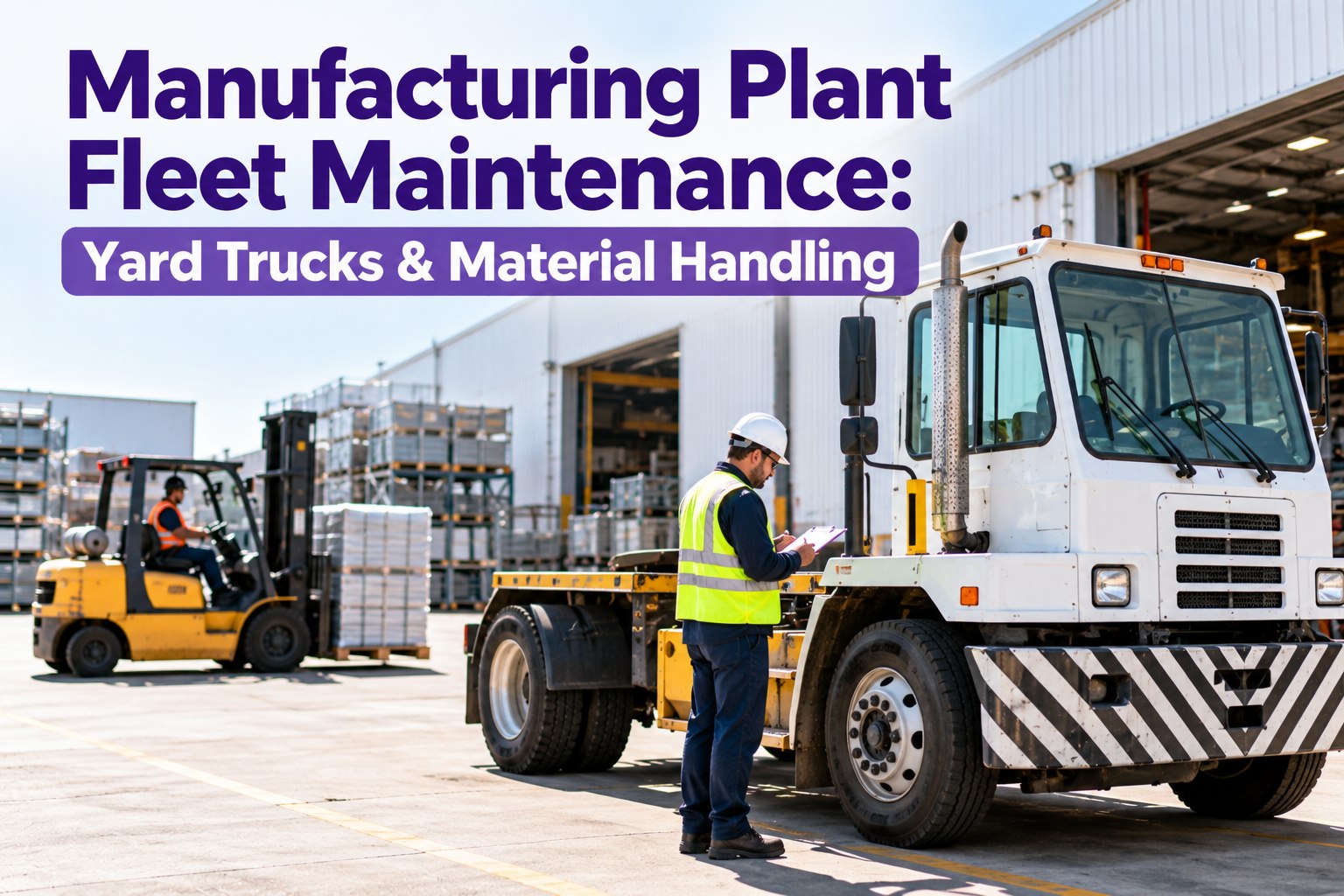
Manufacturing Plant Fleet Maintenance: Yard Trucks & Material Handling
A plant fleet wears by hours and cycles, not miles — so a yard spotter and a delivery truck need completely different maintenance clocks. Truck Inspection & Maintenance Management Software tracks each asset by engine hours or mileage as it should be, puts a per-shift check on every operator, and turns a failing fifth wheel or a worn brake into a work order before a down unit backs up the yard.
One Yard, Four Different Clocks
The first mistake is treating every vehicle the same. These four asset types wear in completely different ways — match the PM trigger to each.
Shuttles trailers all shift on a hydraulic lifting fifth wheel. Low miles, huge cycle count — wears by engine hours and hitch cycles.
Feed the line continuously — mast, hydraulics, and tyres under constant load. Wears by hours and lift cycles, not distance.
Move raw material and waste around the site in heavy, intermittent duty. Hours-based, with hard hydraulic and driveline loads.
Haul finished goods out and raw material in. These run real miles and, on public roads, carry the full DOT/DVIR obligations.
Why Yard Trucks Wear on a Clock of Their Own
A yard spotter might cover 15 miles in a shift but run 400-plus hitch, lift, and dump cycles across 10 engine hours — so the odometer tells you almost nothing. Schedule it by hours and cycles, not miles, and it stays cheap and reliable.
The Yard Truck's Signature Wear Point — the Fifth Wheel
The hydraulic lifting fifth wheel is cycled under load on every single hitch, which makes it the first thing to wear and the first thing to check. Walk it every service.
Schedule by Engine Hours — the Yard PM Layers
Run the yard fleet off actual engine hours, not a wall calendar, and layer the checks so the quick ones happen every shift and the deep service lands on the hour meter.
Each operator inspects the unit before taking control — fluids, leaks, fifth-wheel engagement, brakes, lights, and anything that developed last shift.
Engine oil and filters, steering and fifth-wheel lubrication, hydraulic checks, brake and air-system inspection, and a fifth-wheel and boom wear check.
Transmission and axle fluids, hydraulic oil and filter change, a fuller brake check, and cooling-system service — on the maker's hour interval, tightened for multi-shift duty.
Software That Runs Each Asset on the Right Clock
Helping with exactly this is the job. Truck Inspection & Maintenance Management Software schedules every plant asset the way it wears — yard spotters and forklifts by engine hours, on-road trucks by mileage and DVIR — and fires each PM before it comes due. The per-shift operator check lives on a tablet, so a worn fifth-wheel lock or a brake at its limit becomes a dated work order the moment it's spotted — catching a down spotter before it backs up the whole yard.
When a Yard Unit Goes Down, the Plant Feels It
Plant fleet downtime isn't a missed delivery — it's a backed-up yard and a line short of material. That's why the cheap, hard-working units deserve the tightest schedule.
Frequently Asked Questions
Maintain Each Plant Asset the Way It Actually Wears
Truck Inspection & Maintenance Management Software schedules yard trucks by engine hours, on-road trucks by mileage, puts a check on every operator, and turns a worn fifth wheel or a failing brake into a work order before it stops the yard. Fleets run it to keep trailers moving and the whole plant fleet on one system.