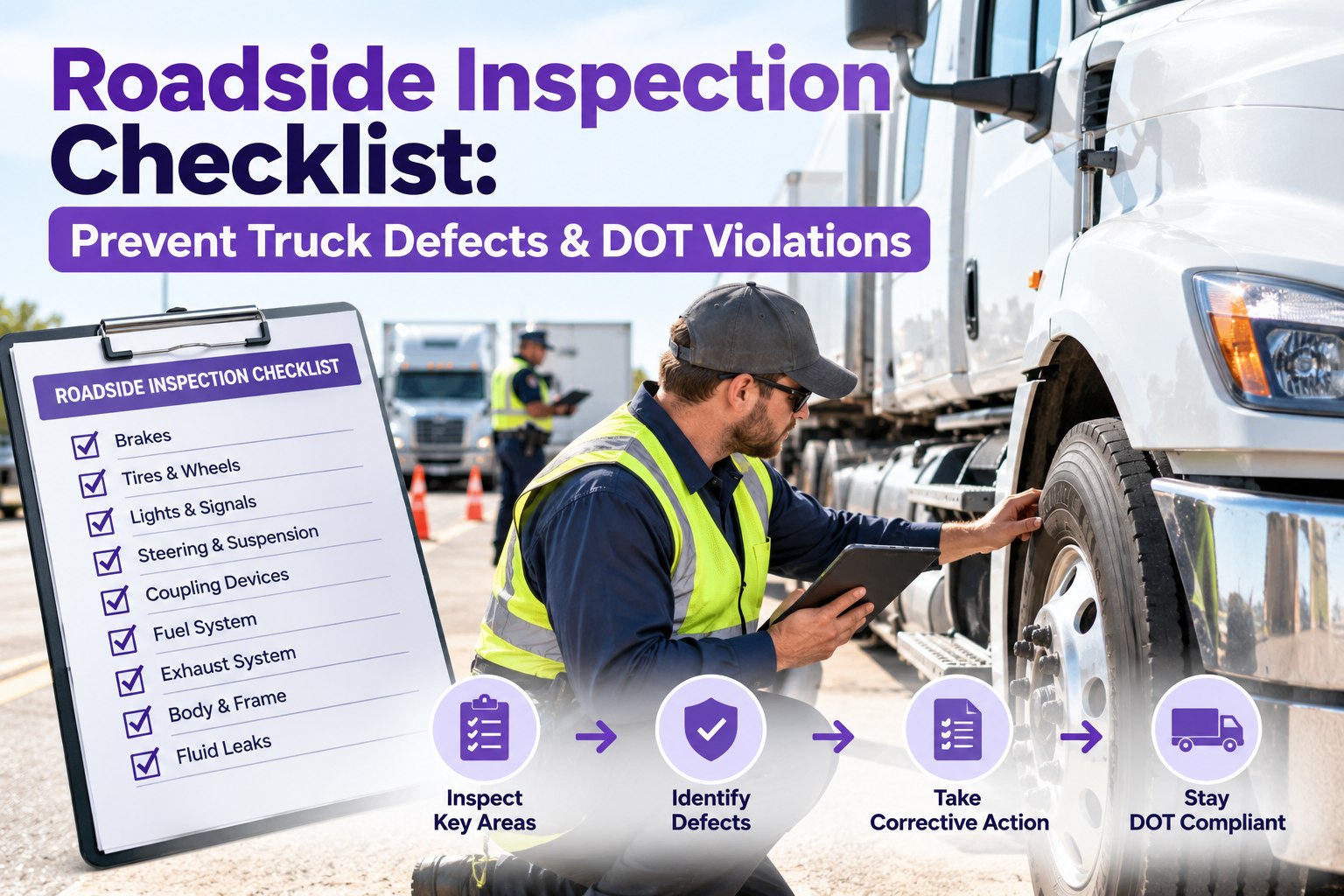
A roadside inspector walks around your truck, finishes the checklist, and hands the driver an out-of-service order. In that moment the load stops, the customer starts calling, and a tow or mobile repair has to be arranged. An out-of-service (OOS) violation is the most disruptive result a roadside inspection can produce, and under 49 CFR 396.9 a vehicle placed out of service cannot legally move until the required repairs are done. This guide explains what OOS orders are, what to do in the first hours and days, how repair certification works, and how to stop the same violations from coming back. Start free and catch defects before an inspector does.
OOS Violations · Recovery · Prevention
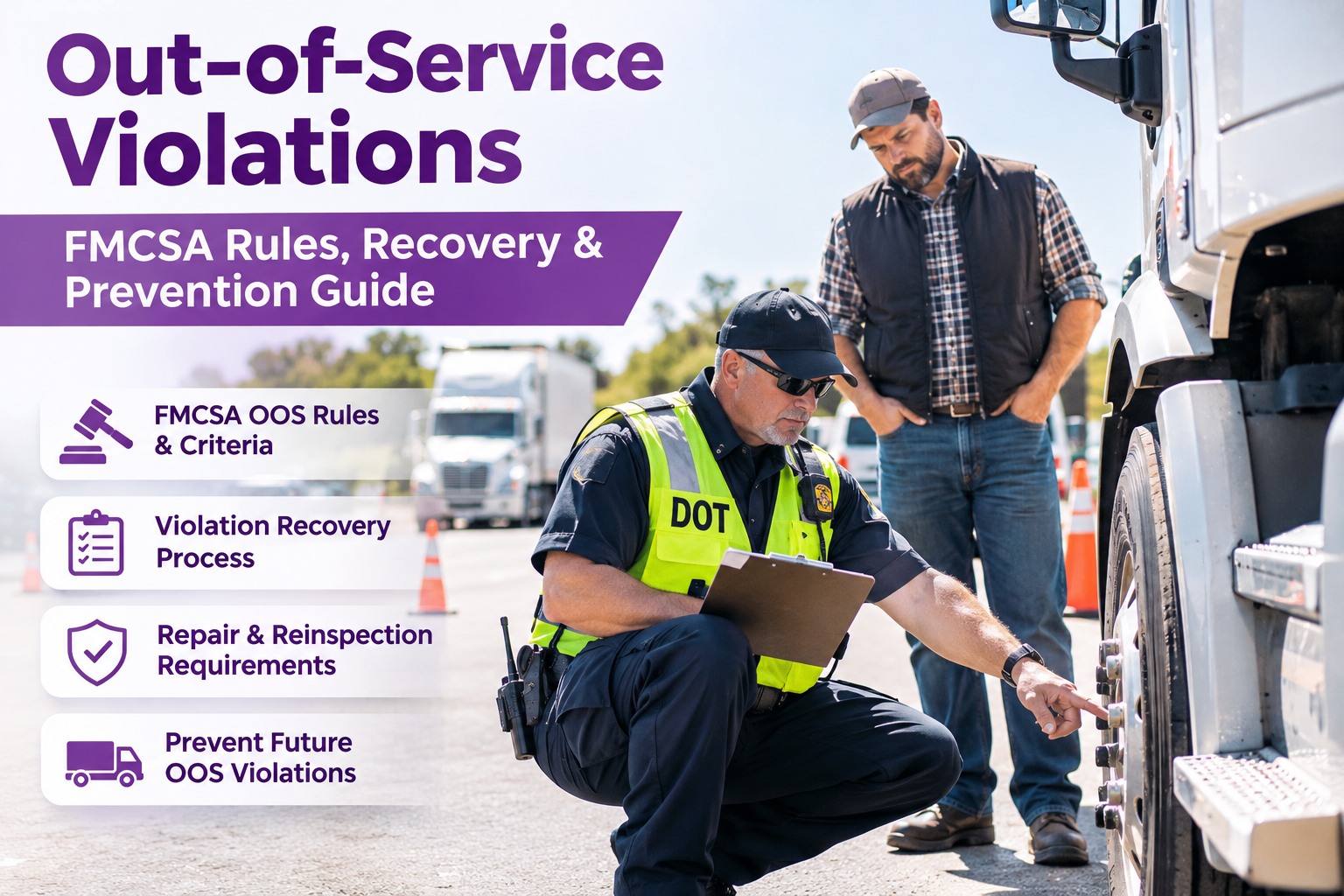
Out-of-Service Violations: FMCSA Rules, Recovery & Prevention Guide.
Know exactly what to do from the moment the order is issued, and build the habits that keep it from happening again. Truck Inspection & Maintenance Management Software gives you daily inspections, defect tracking, and repair records in one place.
~1 in 5vehicles inspected at roadside are typically placed out of service in recent CVSA data
#1brake defects are consistently the leading vehicle OOS category
15 daysto certify repairs to the issuing agency under 396.9(d)
Two Kinds of OOS Orders: Which One Did You Get?
Not every out-of-service order is about the truck. Inspectors can ground the driver, the vehicle, or both, and the fix is different for each. The criteria come from the CVSA North American Standard Out-of-Service Criteria, which FMCSA and state enforcement agencies use at roadside.
Vehicle OOS
A condition that makes the unit unsafe to operate.
- Brakes: 20% or more of the service brakes defective
- Tires: flat, exposed body cord, or tread below the legal minimum
- Steering, suspension, or wheel-end failures
- Coupling and frame defects
- Inoperative required lights or missing emergency equipment
The fix: complete the repair, then certify it.
Driver OOS
A condition that makes the driver unfit or ineligible to drive.
- Hours-of-service limits exceeded
- No valid CDL or the wrong class or endorsement
- Medical certification problems
- Drug or alcohol violations
- Driver impaired or fatigued
The fix: resolve the condition, such as completing the required off-duty rest, or replace the driver.
The Recovery Timeline: What Happens After the Order
The first few hours matter most, but the paperwork runs for weeks. Here is the sequence most carriers follow.
Hour 0
Stop, read the report, do not move the truckThe driver should keep the roadside inspection report and ask the officer what is allowed, including any approved move to a repair location. Driving an OOS unit is a separate and serious violation.
Hour 1
Notify dispatch and safetyShare the report details so someone can reassign the load, call the customer, and line up roadside repair or a tow.
Hours 2–24
Repair the cited defectsFix every item listed on the OOS order and keep the invoice, parts list, and technician name with the unit's file.
Before moving
Confirm the repair is completeThe vehicle may not operate until required repairs are done. Some agencies require a re-inspection, so ask the issuing officer or agency what applies.
Within 15 days
Certify and return the reportUnder 396.9(d), the carrier certifies that the violations were corrected and returns the report to the issuing agency within 15 days of the inspection.
After
Review the violations in your safety dataIf a violation was cited in error, the FMCSA DataQs system lets carriers request a review.
Important Procedures for clearance and re-inspection vary by state and agency. Always follow the instructions written on your inspection report and confirm with the issuing agency.
Why One OOS Order Costs More Than the Repair
The repair bill is often the smallest part. The real cost builds up in several places at once.
DowntimeA truck and driver sit idle while the repair and paperwork get done.
Missed deliveryLate loads strain customer relationships and can trigger penalties.
Safety score impactOOS violations are weighted more heavily in FMCSA's CSA scoring than non-OOS ones.
More inspectionsPoor scores can raise the odds of being selected for inspection again.
See Defects Before the Inspector Does
Guided driver inspections, defect logging with photos, and automatic repair work orders help you fix problems while the truck is still in your yard. Start free or book a quick demo.
The Usual Suspects: Where OOS Violations Come From
Roadside OOS orders tend to cluster in the same few systems year after year. If you only improve a handful of things, improve these.
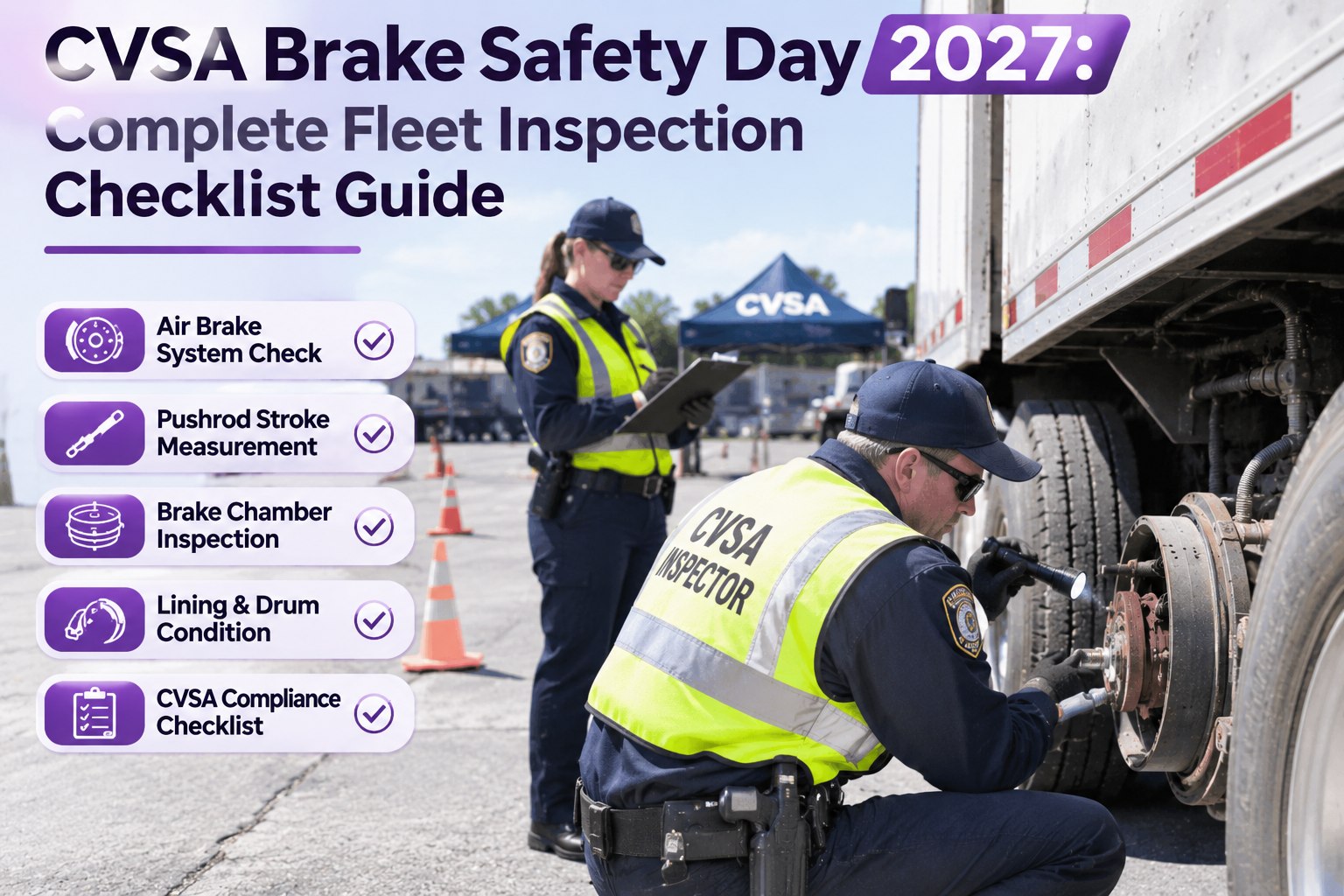
BrakesOut-of-adjustment pushrod stroke, worn linings, air leaks, cracked drums
Tires and wheelsLow tread, sidewall damage, flat or underinflated tires, missing lug nuts
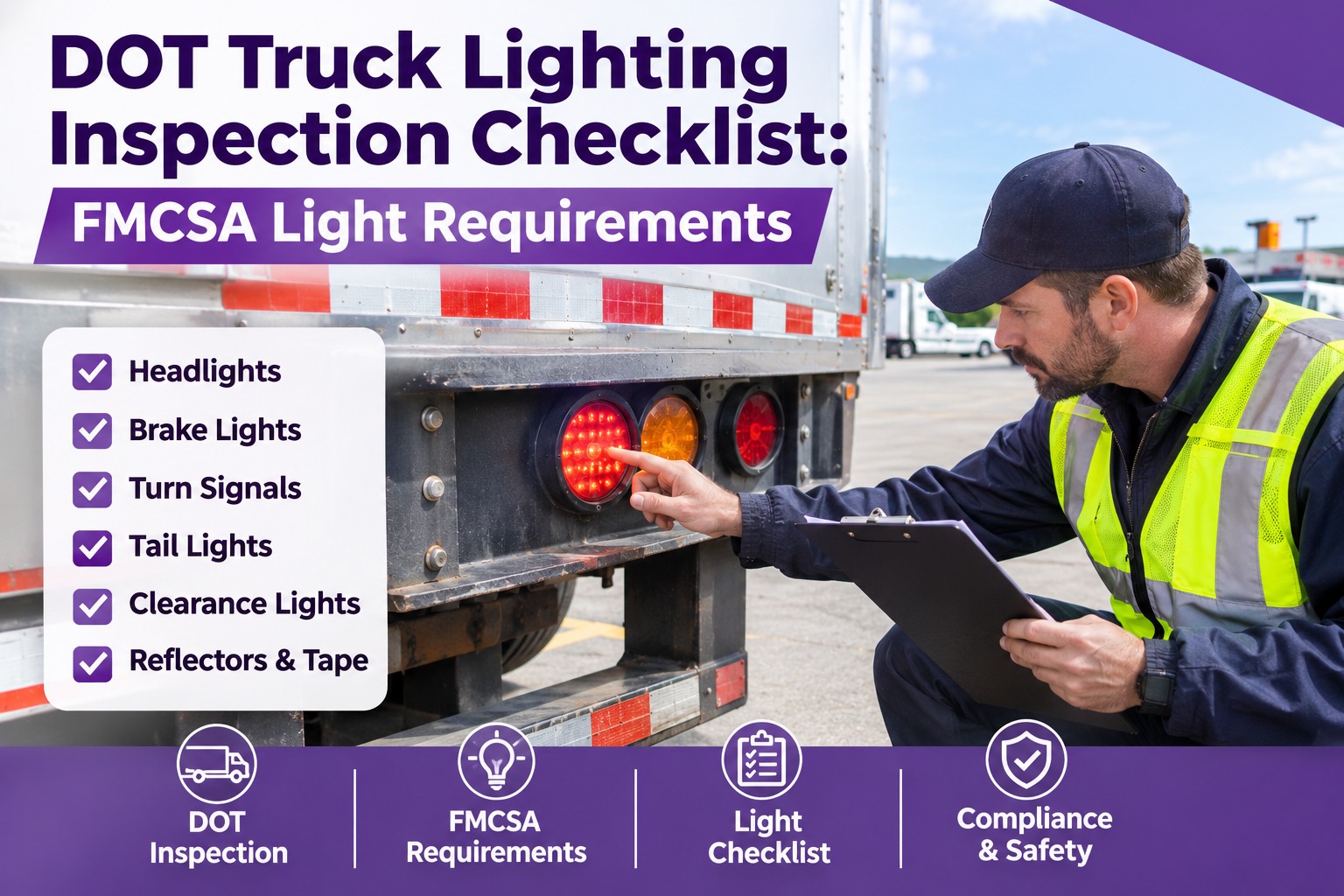
Lighting and reflectorsInoperative lamps, damaged wiring, missing conspicuity tape
Cargo securementInsufficient tiedowns, damaged straps, unsecured loads
Steering, suspension, frameWorn components, cracks, loose or missing fasteners
The bars show relative emphasis based on what enforcement most often cites. They are illustrative, not exact percentages.
The Prevention Playbook: Five Habits That Cut Repeat Violations
1Do the walkaround every timeA real pre-trip under 49 CFR 392.7 catches most roadside defects before they leave your lot.
2Measure, do not guessRecord tread depth and brake stroke per wheel so wear is visible weeks before it fails.
3Turn defects into work orders fastA defect that sits in a notebook is a future violation. Route it to the shop the same day.
4Keep PM on schedulePreventive maintenance on time is the cheapest way to avoid brake, tire, and lighting failures.
5Keep proof of everythingInspection records, DVIRs, and repair history help in audits and when challenging a citation.
Myth vs. Fact
Myth"If it only needs a quick fix, I can drive it to the shop."
FactAn OOS vehicle cannot be operated until required repairs are complete, unless the issuing officer allows a specific move. Ask first.
Myth"Once it's repaired, the violation goes away."
FactRepair clears the order, but the violation still appears in your inspection history unless it is successfully challenged.
Myth"OOS orders only hurt the driver."
FactVehicle violations count against the carrier, and driver violations can follow the driver as well.
Frequently Asked Questions
What does "out of service" mean for a truck?
It means an enforcement officer found a condition serious enough that the vehicle or driver may not continue operating until it is corrected. For a vehicle, that means completing the required repairs. For a driver, it means resolving the issue, such as rest time or missing credentials.
Start free and track every defect to completion.
How do I clear an OOS violation?
What is the 20% brake rule?
Under CVSA criteria, a vehicle is generally placed out of service when 20% or more of its service brakes are defective. On a combination vehicle with ten brakes, that means two defective brakes can ground the unit.
Can I contest an OOS violation I believe is wrong?
Yes. FMCSA's DataQs system lets carriers and drivers request a review of violation data. Supporting documents such as photos, repair records, and inspection logs make a stronger case.
Fewer Violations · Faster Recovery
Make Your Next Roadside Inspection Uneventful
Guided inspections, per-wheel measurements, instant defect-to-work-order routing, and complete repair history, all in one place built for trucking fleets. Start free or book a demo with our team.
No credit card required. Free for up to 3 trucks.