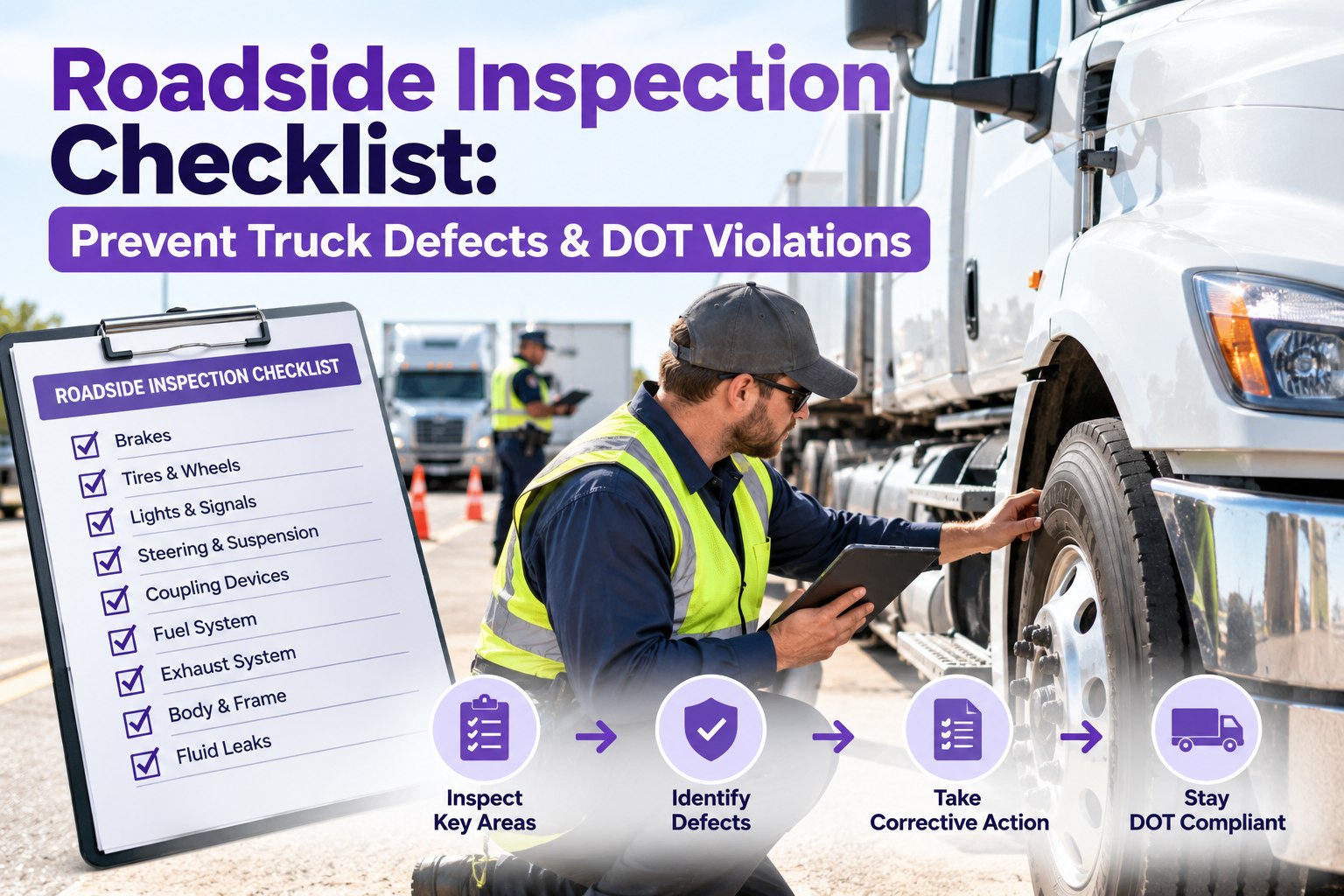
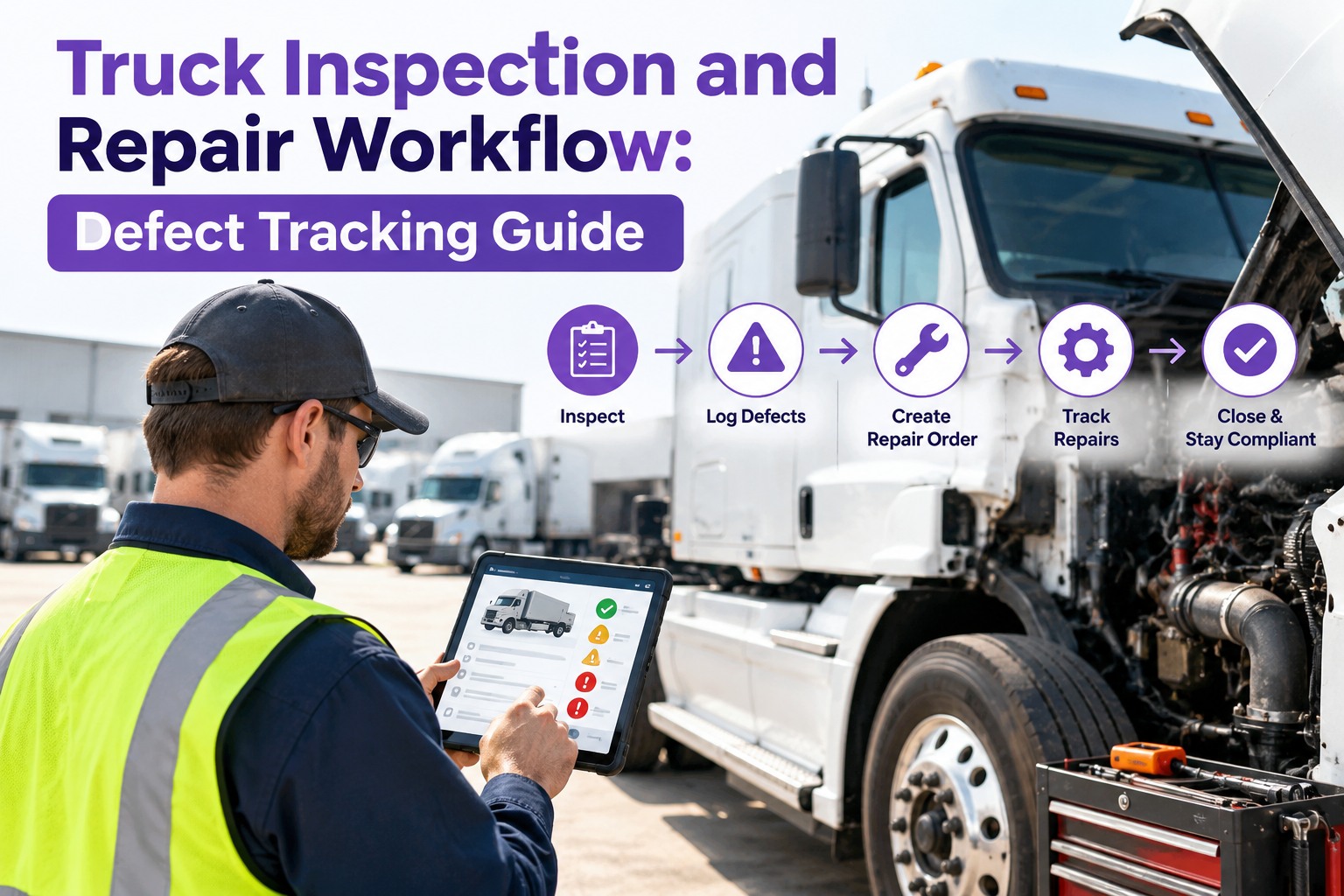
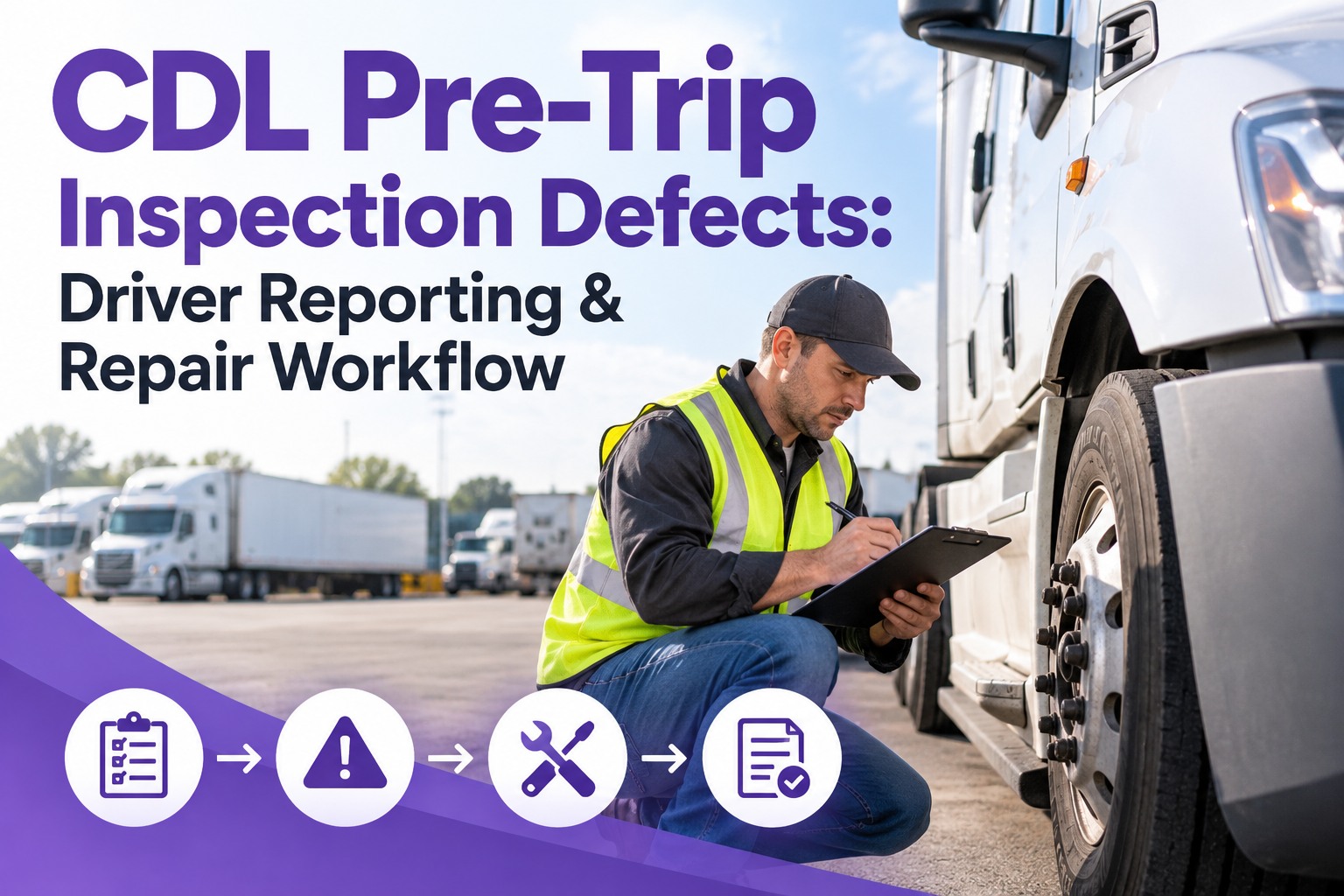
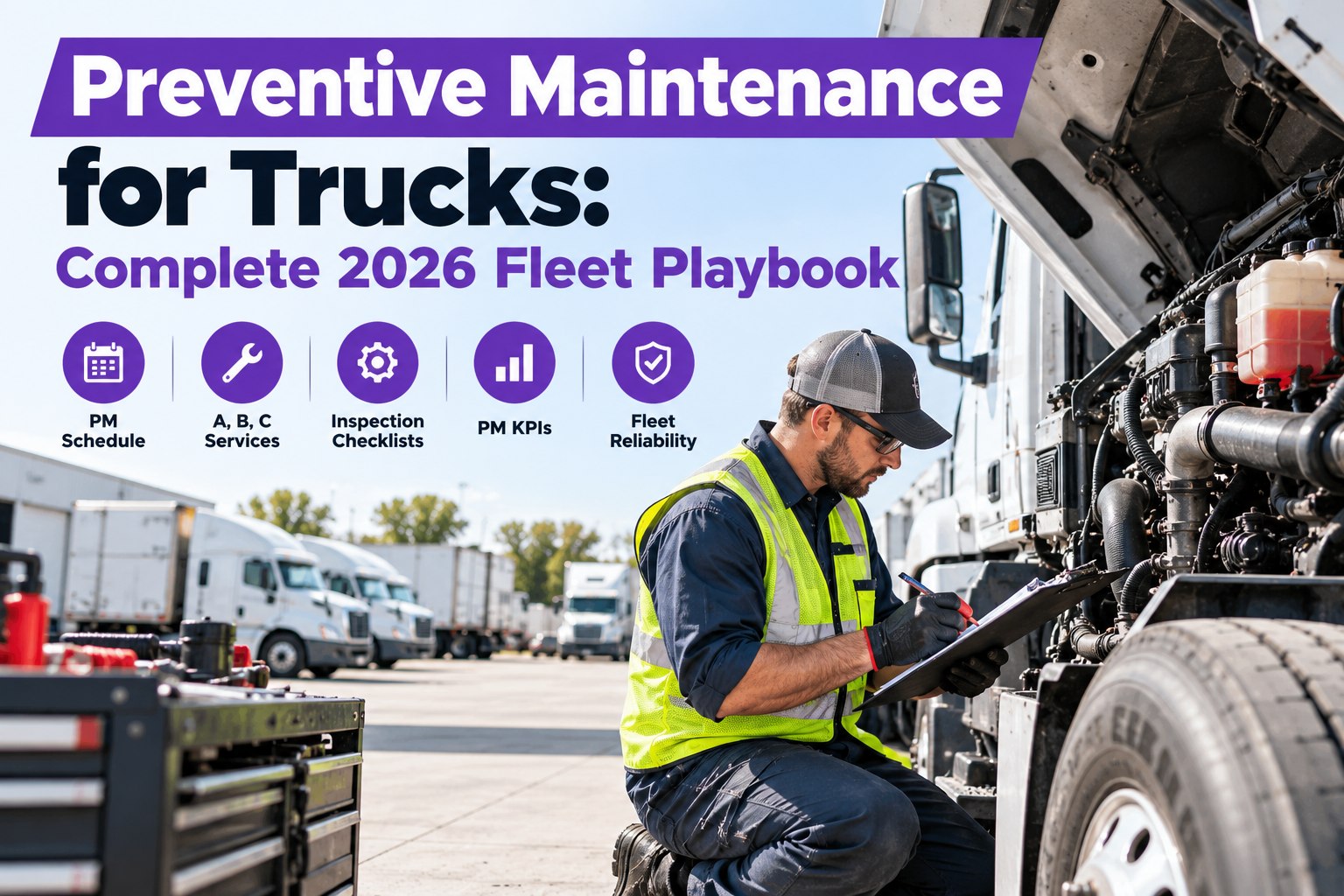
A roadside inspection is won or lost before the truck ever reaches the scale. The officer runs a fixed list — brakes, steering, lights, tires, load — and every item they check is one a driver could have caught that morning with a flashlight and five minutes. In the 2026 International Roadcheck, inspectors pulled 10,350 trucks out of service in three days, and nearly 4 in 10 of those orders were brakes. This checklist maps what the inspector looks at to what you look at first, so the defect is found in your yard, not on the shoulder. Start free and run these checks before every dispatch with TIM.
TIM · Roadside Inspection Defect Prevention
Pass the Roadside Inspection by Catching the Defect First
An out-of-service order doesn't just cost you the load — it dents your CSA score, raises your insurance, and parks the truck until the fix is made and verified. The fix costs almost nothing in the yard and a fortune on the roadside. This checklist walks the same systems a North American Standard inspection covers, flags the violations that sideline the most trucks, and shows how TIM keeps the defect-to-repair loop closed so nothing rolls out broken.
Every May, inspectors across North America run a 72-hour blitz. The 2026 numbers are the clearest map there is of what sidelines a truck — and almost all of it is preventable with a pre-trip look.
54,575
Roadside inspections across North America in the 2026 three-day Roadcheck
10,350
Commercial vehicles placed out of service — roughly 1 in 5 of those inspected
39.1%
Of all vehicle out-of-service orders were brakes — the number-one defect, year after year
3,184
Drivers also placed out of service — most for an expired medical card or hours-of-service problems
Where the Out-of-Service Orders Come From
Four systems account for the overwhelming majority of vehicle out-of-service orders. Know where the risk concentrates and you know where to spend your two minutes before roll-out.
Brakes39.1%
Out-of-adjustment and defective brake components combined — the single biggest sidelining defect
Tires20.9%
Tread below the limit, flats, exposed cord, and sidewall damage
Cargo securement12.4%
Loose, insufficient, or damaged tie-downs and blocking
Lighting11.9%
Inoperative required lamps front and rear — the easiest defect of all to catch
The Roadside Inspection Defect-Prevention Checklist
These are the systems a North American Standard inspection covers, grouped the way an officer walks the truck. Tap each box as you clear it. Anything you can't clear is a defect — log it, fix it, and verify it before dispatch, not after the blue lights.
7 checks01 · Brakes#1 OOS · 39.1%
5 checks02 · Tires & Wheels#2 OOS · 20.9%
4 checks03 · Lights & Reflectors11.9% OOS
4 checks04 · Steering & SuspensionLevel I
4 checks05 · Cargo Securement12.4% OOS
5 checks06 · Driver & Paperworkdriver OOS
29 Checks Between You and an Out-of-Service Order
The officer's list is fixed and public — there's no reason to be surprised by what they check. The hard part is running the same list every day, on every truck, and keeping proof you did. TIM turns it into a tap-through on the driver's phone, logs who cleared it, and turns any failed item into a work order before the truck leaves the yard.
The same defect carries a wildly different price depending on where it's found. A worn brake caught in the yard is a scheduled repair. The same brake caught at the scale is a stopped truck, a missed delivery, and a mark on your record.
A roadside violation is almost always a defect that was reported, or should have been, and never got fixed or verified. TIM is built to close that gap — the inspection, the defect, the repair, and the sign-off all live on one record.
Pre-trip on the phoneThe driver runs the full roadside list from the cab, with photos, before roll-out.
Defect becomes a work orderA failed item turns into a repair job instantly — no slip to lose, no defect forgotten.
Nothing rolls out brokenAn open critical defect flags the unit so it isn't dispatched until the fix is verified.
PM on the brake calendarSchedule brake, tire, and light service before wear becomes a violation.
Audit-ready historyEvery DVIR, defect, and repair per truck, ready if an inspector or auditor asks.
Repair tracking that closesEach defect is tracked to a verified, signed-off repair — the loop actually closes.
What is the most common roadside inspection violation?
Brakes, consistently. In the 2026 International Roadcheck, brake-related problems — out-of-adjustment brakes and defective brake components combined — accounted for about 39.1% of all vehicle out-of-service orders, the single largest category. Tires were next at 20.9%, followed by cargo securement at 12.4% and lighting at 11.9%. Together those four systems make up more than 80% of vehicle out-of-service orders, which is why a pre-trip that covers them well prevents the overwhelming majority of violations.
What does a Level I roadside inspection cover?
A North American Standard Level I is the most thorough inspection — a full examination of both the driver and the vehicle. On the driver side the officer checks the license, medical certificate, hours-of-service record, and seatbelt use. On the vehicle side they go through brakes, steering, suspension, tires and wheels, lights, the frame, the exhaust and fuel systems, coupling devices, and cargo securement. The checklist on this page is organized around those same systems so your pre-trip mirrors what the inspector will actually look at.
How can I prevent out-of-service violations?
Catch the defect before the truck leaves the yard. Almost every out-of-service order traces to something a thorough pre-trip would have found — a brake out of adjustment, a tire below tread, a dead lamp. The method is simple but has to be consistent: run the same inspection on every truck every day, turn any failed item into a repair instead of letting it roll, and keep proof it was done. Software helps by making the check a quick tap-through and by stopping a unit with an open critical defect from being dispatched.
Why do driver-reported defects matter for inspections?
Because a reported defect that was never repaired is one of the worst things an inspector can find — it shows the carrier knew and didn't act. The driver vehicle inspection report is the paper trail: a defect gets written up, repaired, and signed off before the vehicle returns to service. When that loop is broken — the defect logged but the repair skipped — it becomes a violation and a red flag on your maintenance record. Keeping the report, the repair, and the sign-off connected is what turns a reported defect from a liability into proof you're running a tight program.
Does a clean inspection record reduce how often I'm stopped?
Yes. The federal safety measurement system weighs a carrier's inspection and violation history, and carriers with worse records draw more scrutiny — more inspections, more often. A clean, well-documented maintenance and inspection history does the opposite: it keeps your scores low and your selection odds down, so prevention pays twice, once in the violation you avoided and again in the inspections you never trigger. Start free and build a clean inspection record with TIM.
Every item an officer checks at the roadside is one you can check in your own yard, for the price of a flashlight and a few minutes. Run the 29 checks, turn every failed item into a repair before dispatch, and let TIM keep the record and close the loop. It's free to start on your first three trucks — and the first out-of-service order it prevents pays for it many times over.