Tow Truck Inspection Checklist: Winch, Boom, Wheel-Lift & Safety
By William Jerry on October 8, 2026
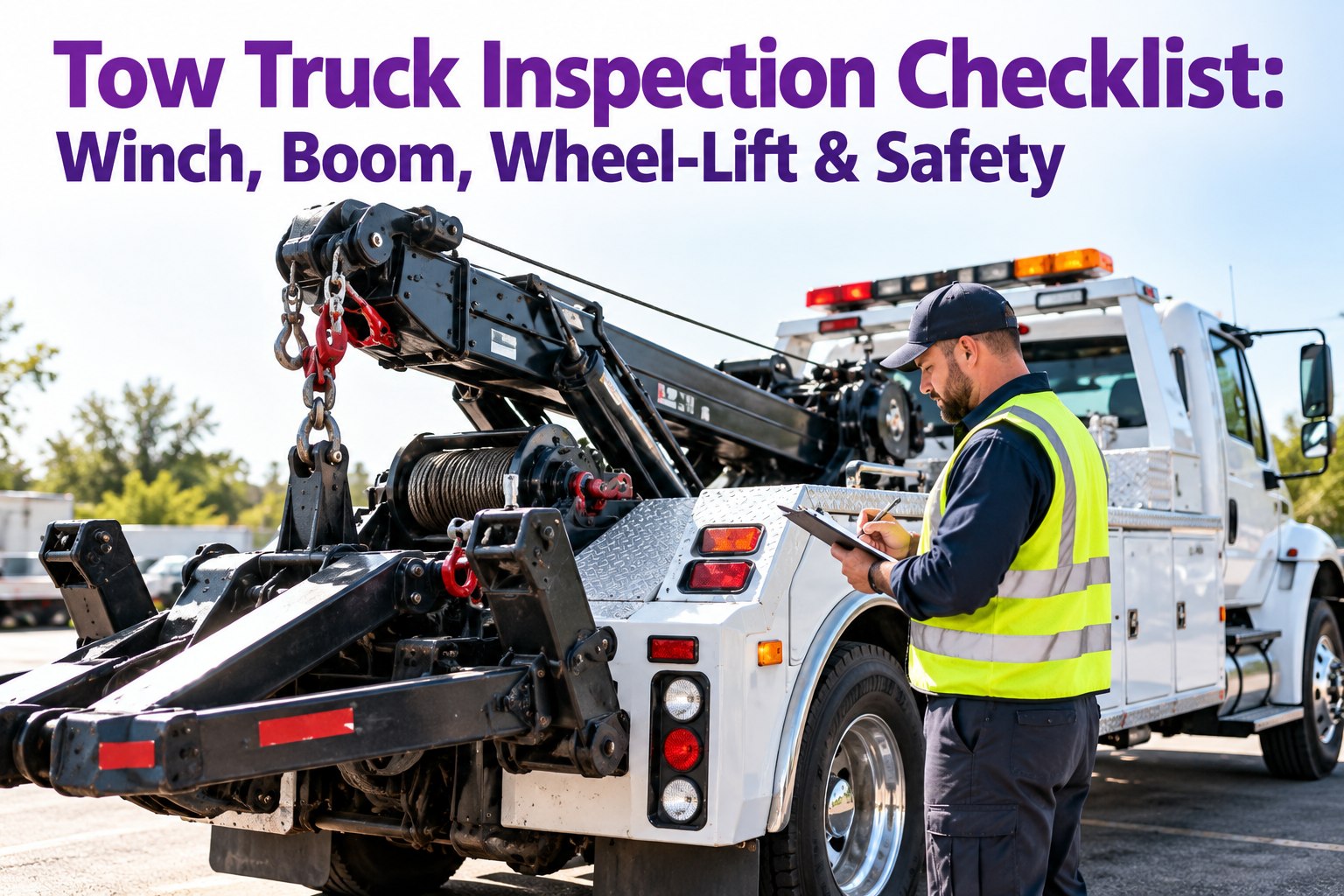
A tow truck isn't just a vehicle — it's a mobile winch, boom, and lift that hoists loads overhead and pulls them off a live highway shoulder. A frayed cable or a worn hook isn't a breakdown; it's a falling vehicle or a line that lets go at head height. That's why a tow truck inspection has to cover the lifting gear as carefully as the chassis. Use the checklist below before every shift, and let Truck Inspection & Maintenance Management Software (TIM) turn any defect it finds into a tracked repair. Start free and run tow truck inspections on one record with TIM.
TIM · Tow Truck Inspection Checklist
Tow Truck Inspection Checklist: Winch, Boom, Wheel-Lift & Safety.
The winch, boom, and wheel-lift carry loads over people and property, so their defects are in a different class than a flat tire. This checklist walks the lifting gear, the hydraulics that drive it, the chassis, and the safety equipment — and TIM turns every failed item into a graded work order so a critical defect is fixed before the truck tows again.
Our promise: every flagged defect gets a 4-hour first response — acknowledged, graded, and assigned.
Most pre-trips confirm a truck is safe to drive. A tow truck inspection has to confirm something more — that it's safe to lift. Three things raise the stakes.
⚠
Loads travel overheadThe winch and boom carry weight above and behind the truck, so a cable or hook failure is a falling-load hazard, not just downtime.
🛣
Work on a live shoulderHookups happen feet from passing traffic — warning lights, cones, and PPE aren't optional extras, they're survival gear.
⬓
A truck and a crane in oneChassis, hydraulics, and rigging each wear differently and each has to pass before the truck works a call.
Walk these five systems before every shift. Items marked CRITICAL are falling-load or life-safety checks — a fail here takes the truck out of service until it's corrected. Treat wear limits as a starting point and follow your truck and equipment maker's specs.
A critical item fails, the truck doesn't tow. A frayed cable, a cracked hook, a leaking cylinder, or a dead light bar isn't a "fix it later" defect — it's the difference between a routine recovery and a falling vehicle or an operator struck on the shoulder. If any CRITICAL item fails, the truck is out of service until it's corrected and signed off. No exceptions, no "just this one call."
How Often to Check Each System
Not everything needs the same cadence. Match the check to how fast the risk builds.
EACH SHIFT
Cable, hooks, straps, fluids, brakes, lights, and the light bar — the fast-wearing, high-stakes items.
WEEKLY
Full winch and rigging inspection, hydraulic hoses and fittings, boom and wheel-lift operation under load.
PER MAKER
Hydraulic fluid and filter service, cylinder seals, PTO, and brake service on the manufacturer's schedule.
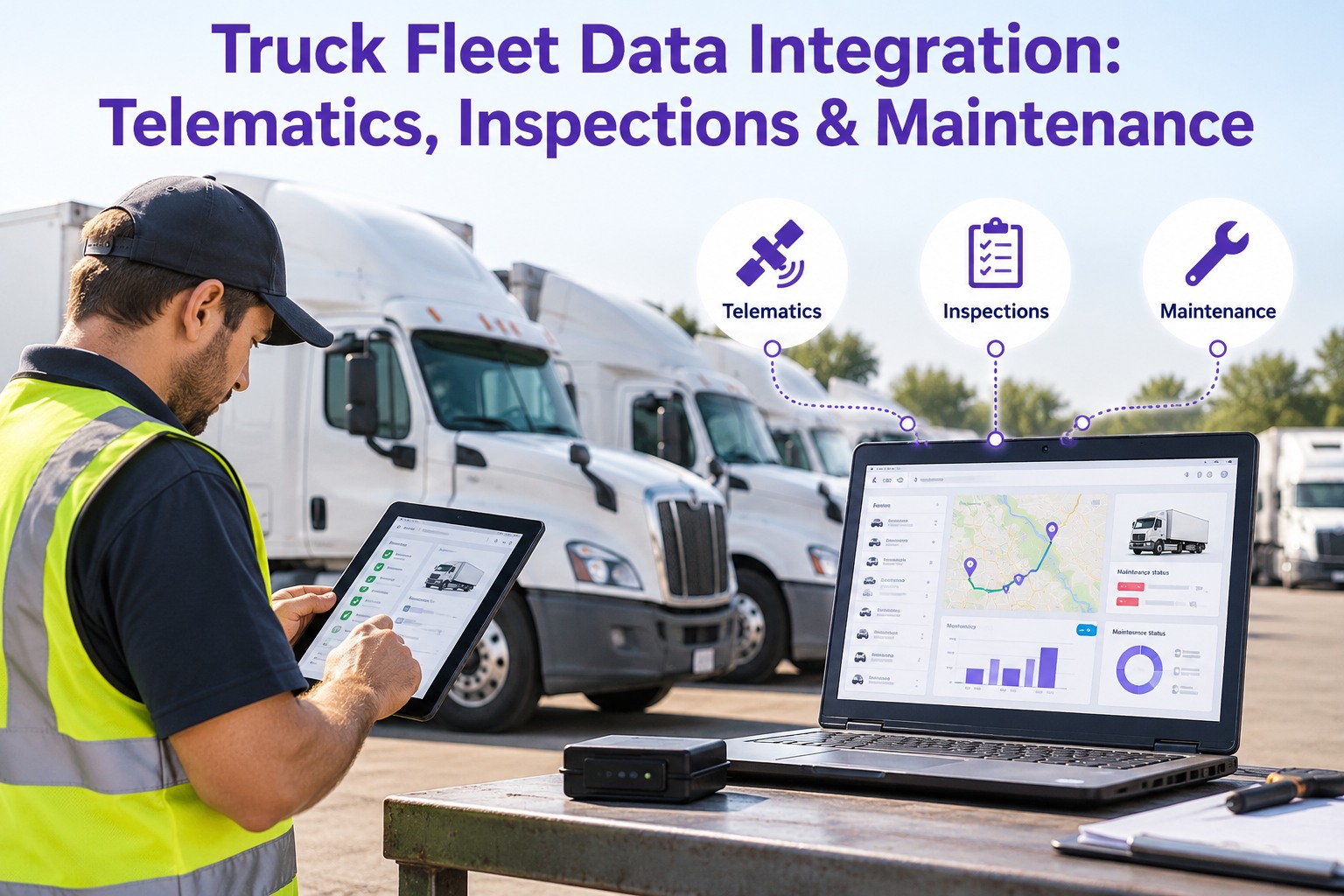
A checklist on paper only works if the defect it catches reaches the shop. TIM makes the inspection digital and the follow-through automatic — a failed item becomes a graded work order on one record, so a critical defect is fixed and signed off before the truck works another call.
1Walk the checklist
→
2Defect graded
→
3Work order routed
→
4Repair certified
Tow-specific checklistBuild the winch, boom, lift, and safety items into a guided mobile inspection.
Critical-item flagsA failed critical item marks the truck out of service until it's corrected.
Defect becomes a work orderA flagged item routes to the shop the moment it's filed — no re-keying.
Photo on every defectA frayed cable or cracked hook is documented with a photo for the technician.
PM on the right clockHydraulic service, cylinder seals, and brakes scheduled by use, not a blanket date.
Per-unit historyEvery inspection and repair kept against that truck — searchable and audit-ready.
What are the most important items on a tow truck inspection?
The lifting gear and the safety equipment. The winch cable and hooks, the boom and wheel-lift cylinders and pins, and the hydraulic hoses that drive them are falling-load hazards if they fail, and the amber light bar is what keeps the operator visible on a live shoulder. Those are the critical items — a failure there takes the truck out of service, where a cosmetic issue wouldn't. The chassis, brakes, and tires still matter, but the rigging is what makes a tow truck inspection different. Start free and flag critical items automatically with TIM.
How often should a tow truck be inspected?
The high-stakes, fast-wearing items — cable, hooks, straps, fluids, brakes, and the light bar — should be checked every shift before the truck works a call. A fuller winch and rigging inspection plus hydraulic hoses and lift operation fit a weekly cadence, and fluid service, cylinder seals, PTO, and brake service follow the manufacturer's schedule. The exact intervals depend on your equipment and how hard the truck runs.
When should a winch cable be replaced?
When it shows the wear signs your equipment maker calls out — broken wires, fraying, kinks, birdcaging, flat spots, or reduced diameter. A cable is the single highest-consequence part on the truck, so the rule is conservative: if it's questionable, it comes off. Always use the specific replacement criteria in your winch and wire-rope manufacturer's specifications rather than a general rule of thumb.
What safety equipment does a tow truck need on board?
At minimum, a working amber warning light bar and beacons, cones, flares or reflective triangles, a charged fire extinguisher within its inspection date, and high-visibility PPE for every operator. Because so much tow work happens feet from moving traffic, this gear is as critical as the rigging — which is why it's a flagged section on the checklist, not an afterthought.
Why use a digital checklist instead of paper?
Because a paper checklist catches a defect but doesn't do anything with it. A digital inspection sends the failed item straight to the shop as a work order with a photo, flags a critical item as out-of-service on the spot, and keeps the whole record per truck for audits. On gear where a missed defect can let a load fall, closing the gap between finding it and fixing it is the entire point.
Winch · Boom · Wheel-Lift · Safety
Check the Rigging Like Lives Depend on It — Because They Do
A tow truck earns its keep lifting and hauling loads that can't be allowed to fall. The winch, the boom, the hydraulics, and the safety gear have to pass before every shift, and a critical defect can't be allowed to ride. A guided checklist catches it; TIM turns it into a tracked, certified repair on one record — so the truck that rolls out is safe to lift, not just safe to drive.