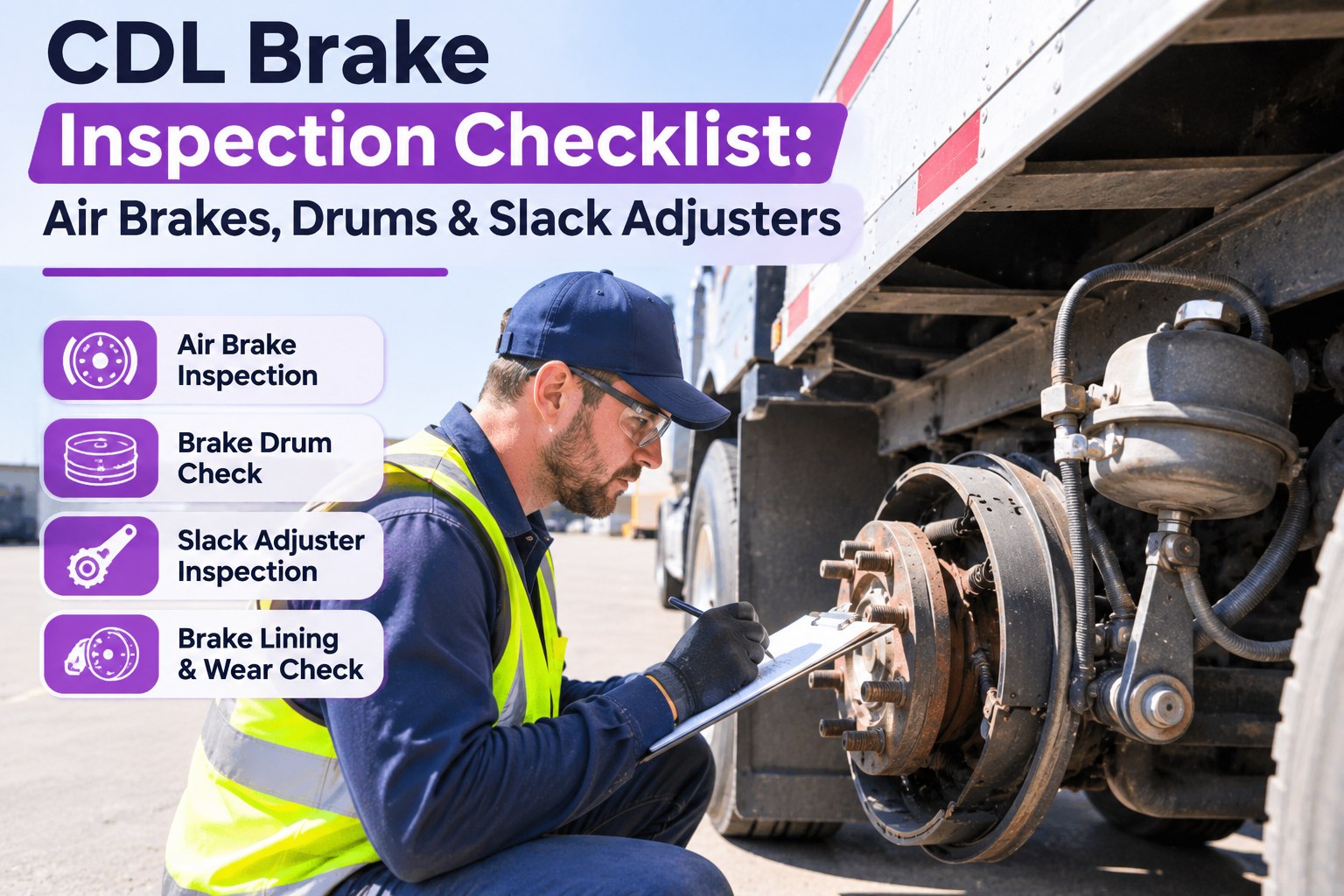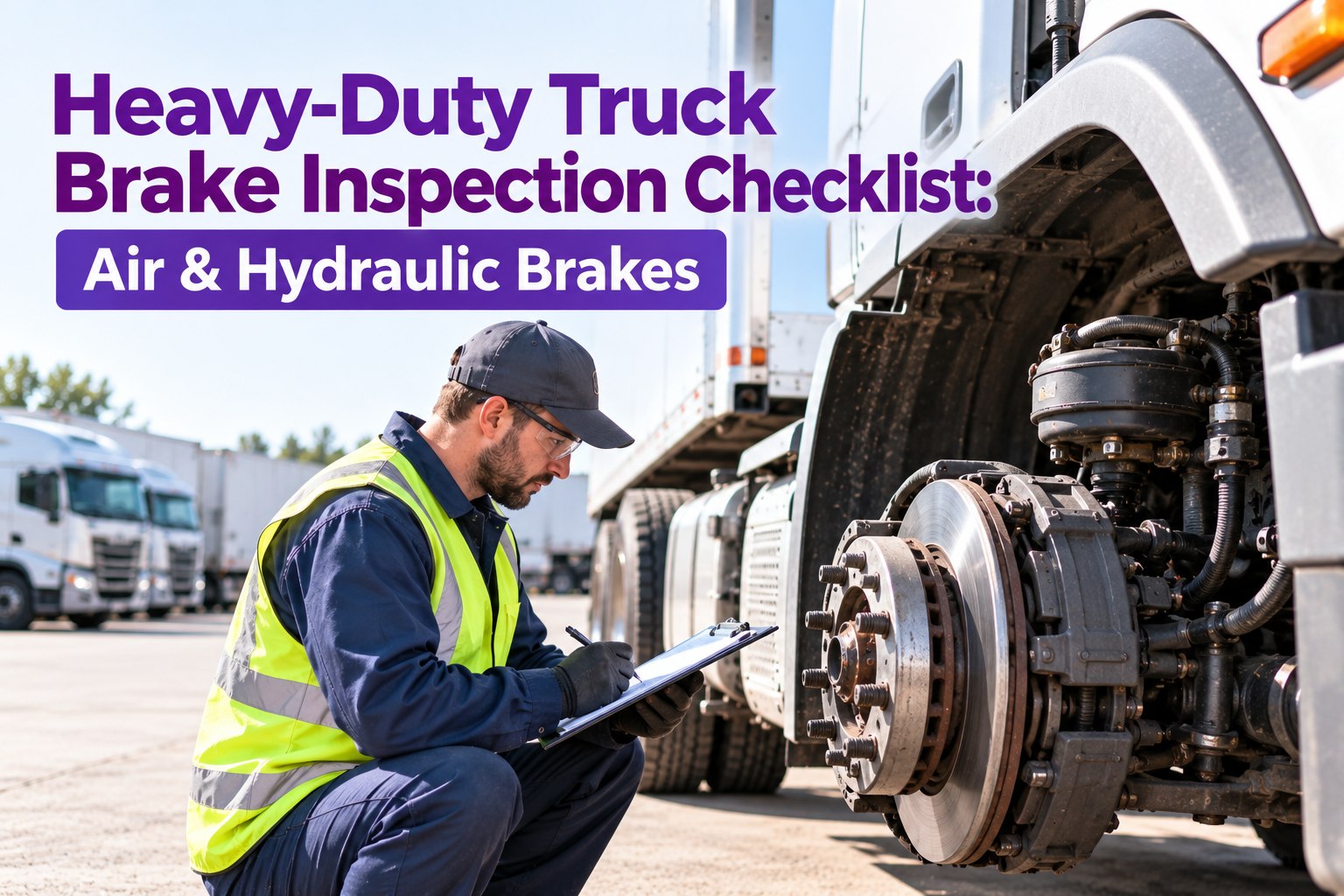
Brakes are the single biggest reason trucks get pulled off the road — they drove 39.1% of all vehicle out-of-service violations at the 2026 International Roadcheck, more than tires and cargo combined. The hard part is that an air system and a hydraulic system fail in completely different ways and get inspected against completely different numbers. This checklist walks both, component by component, with the measured thresholds an inspector actually uses. Start free and run every brake check against its own pass/fail limit.
Heavy-Duty Truck Brake Inspection Checklist: Air & Hydraulic Brakes
A brake check isn't "looks fine" — it's a stroke measured against a chamber size, a lining measured against a limit, a leak-down rate timed against the clock. Truck Inspection & Maintenance Management Software gives each check its own threshold, flags the ones that fail, and opens a work order the moment a measurement crosses the line.
First, Know Which System You're Inspecting
Nearly every heavy-duty tractor and large straight truck runs air brakes; medium-duty trucks and many vocational chassis run hydraulic. They share a goal and almost nothing else — the checks, the tools, and the failure signs all differ. Match your inspection to the system before you start.
Compressed air applies the brakes. Found on most Class 7–8 tractors, trailers, and heavy straight trucks. Fails through leaks, out-of-stroke chambers, and adjustment drift.
Brake fluid under pressure applies the brakes. Common on medium-duty and vocational trucks. Fails through fluid leaks, pad/rotor wear, and a soft or sinking pedal.
On either system, if 20% or more of a vehicle's service brakes have an out-of-service condition, the whole vehicle is placed out of service — that's 1 of 4 brakes on a straight truck, or 2 of 10 on a tractor-trailer. Any steering-axle brake defect counts on its own. A driver can't correct a brake OOS at roadside; a qualified mechanic has to make the repair and sign off.
Checklist 1 — Air Brake System
Work the air system in the order the air travels: make it, store it, warn on it, then apply it. Charge to governor cut-out, shut the engine off, and measure — never eyeball — stroke and leak-down.
Checklist 2 — Hydraulic Brake System
Hydraulic systems tell you most of what's wrong through the pedal and the fluid. A pedal that sinks, fluid that falls, or a warning lamp that stays lit each points at a specific failure — check them in that order.
Software Built to Run This Checklist for You
Helping with exactly this is the job. Truck Inspection & Maintenance Management Software puts each item above on the driver's or tech's device with its own pass/fail limit attached — stroke by chamber size, leak-down by the clock, lining by the minimum. A reading that fails flags the brake, and a brake that fails opens a dated work order routed straight to the shop, with the measurement and a photo on it. Nothing that crosses a line gets filed away and forgotten.
The Five Brake Findings That Ground Trucks Most
If you only tighten five checks on this list, make them these — they're where roadside inspectors find the most out-of-service brake conditions, year after year.
Frequently Asked Questions
Give Every Brake Check a Number, Not a Guess
Truck Inspection & Maintenance Management Software turns this checklist into a live inspection on the device in your tech's hand — each air and hydraulic item carrying its own pass/fail limit, each failed reading opening a tracked work order with a photo attached. Fleets run it to keep brakes off the out-of-service list and their trucks on the road.