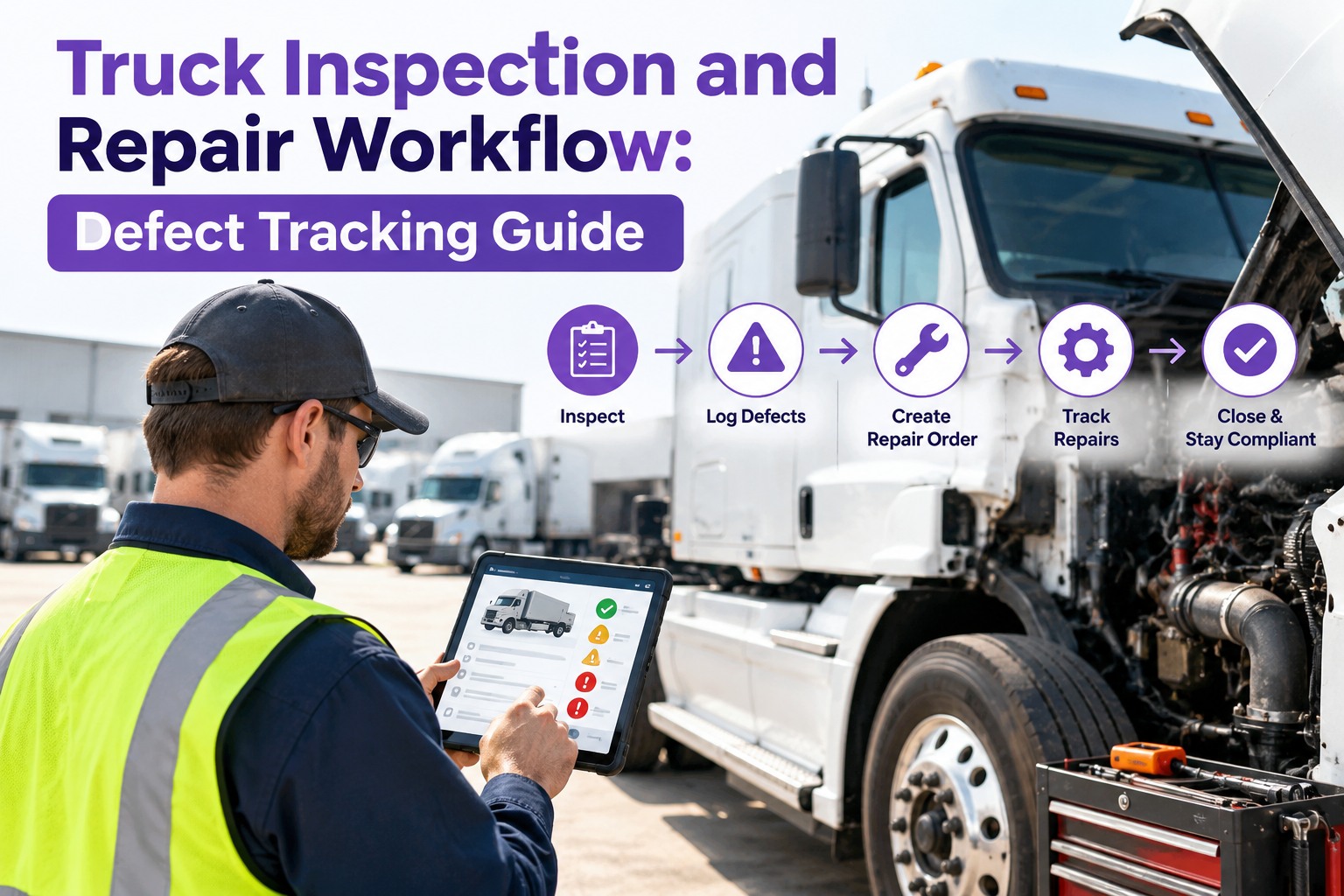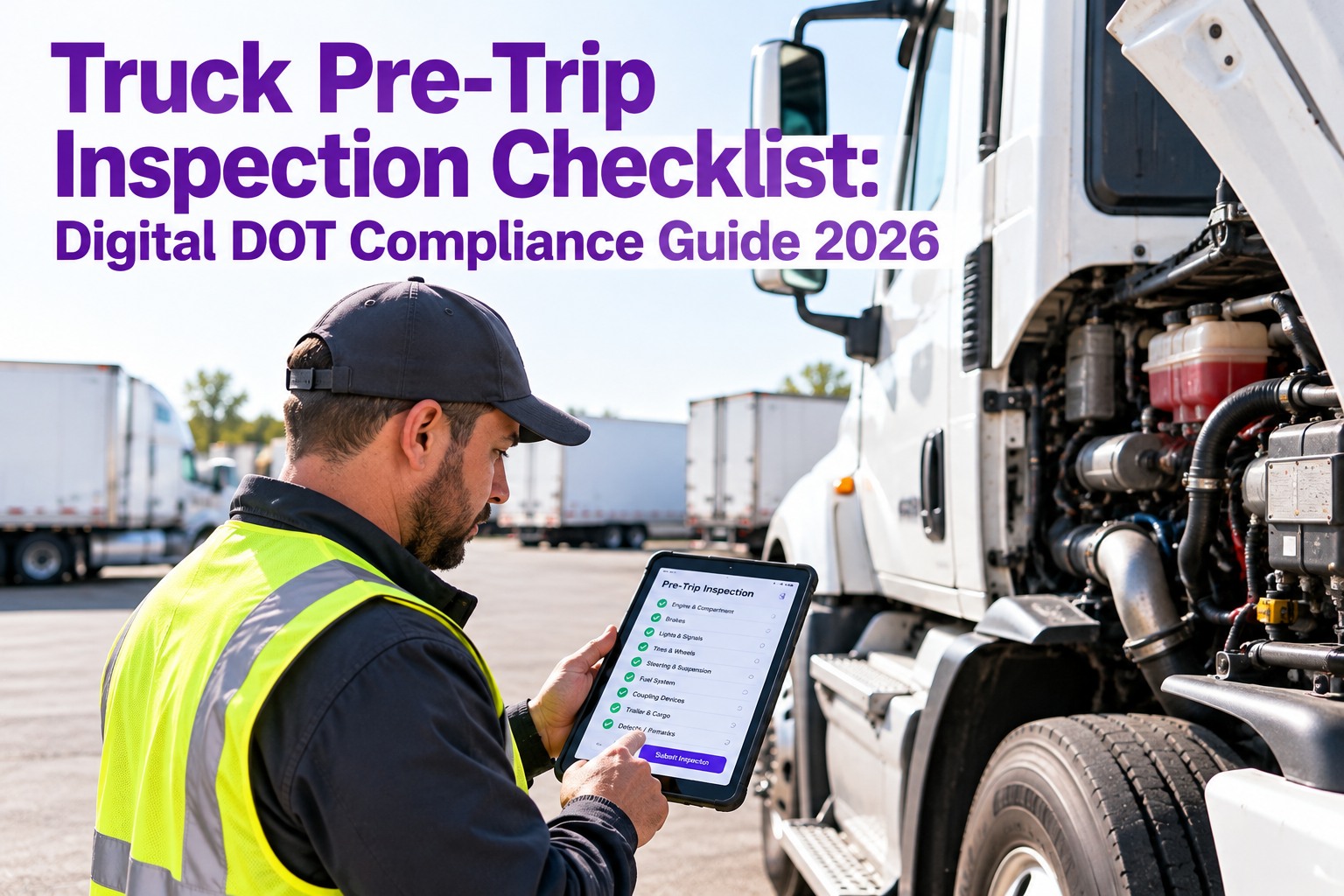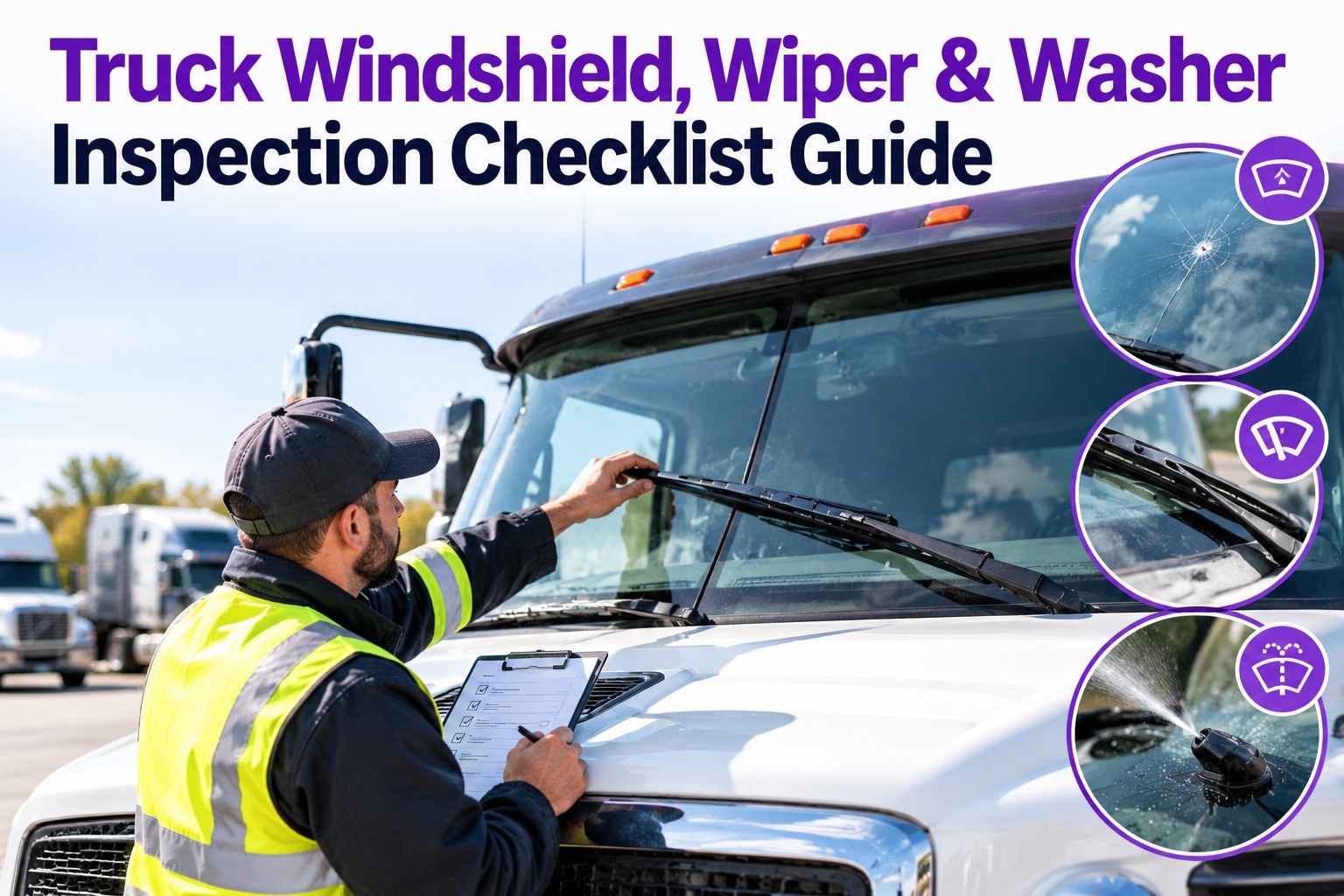
A driver can't avoid what they can't see. A cracked windshield, streaking wipers or an empty washer reservoir cut visibility at the exact moment a driver needs it most: rain, road spray, bugs, glare or a winter morning. Because they take seconds to check and are easy to postpone, these items often get logged late, repaired late, or not tracked at all. Wipers are among the items drivers must be satisfied with under the DVIR rules in 49 CFR 396.11 and 396.13, and windshield glass and wiper condition are part of the periodic inspection standards in Appendix G. This guide gives drivers a quick visibility check, shows how to prioritize windshield damage, lists wiper and washer tests, and explains how Truck Inspection & Maintenance Management Software turns a spotted defect into a tracked repair. Start free and put the visibility checklist on every driver's phone.
A Windshield Defect Reported Today Shouldn't Wait Until Next Week
Drivers see the crack or the worn blade first, but the report often stalls in a folder or a text thread. Truck Inspection & Maintenance Management Software lets drivers log it with a photo during the inspection, and every reported windshield, wiper or washer defect gets a guaranteed 4-hour first response: acknowledged, graded and assigned.
The 30-Second Driver Visibility Check
Before the truck moves, a driver can cover every visibility item in half a minute:
Where on the Glass Is the Damage?
Location matters as much as size. Damage in the driver's line of sight is the most serious. Use this map as a starting point, then follow your carrier's repair policy and the current out-of-service criteria.
Damage Type → What to Do
| What the driver sees | Why it matters | Typical action |
|---|---|---|
| Small chip or pit | Can turn into a crack | Photo, log, repair if the shop offers it |
| Star break or bullseye | Weakens the glass around it | Prompt repair or replacement |
| Crack in the driver's view | Obstructs the sightline, can fail inspection | Treat as urgent, schedule replacement |
| Long or spreading crack | Structural weakness, grows fast | Replace, don't wait for the next PM |
| Haze, pitting or scratches | Glare at night or in low sun | Evaluate for replacement, test in glare |
| Stickers or devices blocking view | Obstruction rules apply to the windshield | Move or remove, check the regulation |
Turn "I Saw a Crack" Into a Tracked Repair
Drivers attach a photo, the defect is graded, and a work order is assigned. The truck's record shows when the damage was reported and when it was fixed, so a chip doesn't get forgotten until it becomes a cracked windshield. Free for up to 3 trucks.
Wiper & Washer Checklist
- Rubber intact, no splits or tears
- Clean contact with glass
- No streaking or skipping
- Frame not bent or corroded
- Arm spring tension holds blade down
- All speeds and intermittent work
- Park position returns correctly
- No odd noise or slow movement
- Reservoir filled with correct fluid
- Nozzles clear and aimed at the glass
- Pump runs, no leaks in lines
- Winter-rated fluid in cold months
A Year of Visibility Maintenance
Many fleets replace blades on a seasonal or condition basis rather than a fixed date. Set your own schedule from defect history and local weather.
Frequently Asked Questions
Give Every Driver a Clear View and Every Defect an Owner
Visibility checks on the driver's phone, photo-backed defects, a guaranteed 4-hour first response and a repair history per truck. Start free to run your first inspection, or contact us and we'll help set up your checklist.