Two of the most-cited compliance failures in 2026 FMCSA audits trace back to the same root cause: fleet managers who didn't fully understand the difference between a Driver Vehicle Inspection Report (DVIR) and an Annual DOT Vehicle Inspection. They sound similar. They both involve "inspection." They both fall under 49 CFR Part 396. But they're separated by their authority, frequency, depth, retention period, who performs them, and what happens when they fail. Confusing the two doesn't just create paperwork problems — it triggers $16,000 violation penalties, immediate Out-of-Service findings, and CSA score damage that affects insurance premiums and shipper qualification for years.
The DVIR is your daily safety net — the driver's hands-on walk-around at every shift catching defects before they become breakdowns. The Annual DOT Inspection is your yearly federal certification — a qualified inspector measuring every safety-critical system against Appendix A acceptance criteria, issuing a certificate, and stamping a sticker that proves the truck is legally operable for another 12 months. You need both, every truck, every year, every shift — and the documentation for both must be retrievable in seconds during any audit. Confusing the two, or running one without the other, is one of the fastest ways to fail a compliance review.
This guide explains exactly what separates the two inspections, what each covers, who's qualified to perform them, the retention rules, and how to run both without lost paperwork or missed deadlines. Start your free trial to digitize both DVIRs and annual inspection records on the same platform — and stop choosing between compliance and complexity.
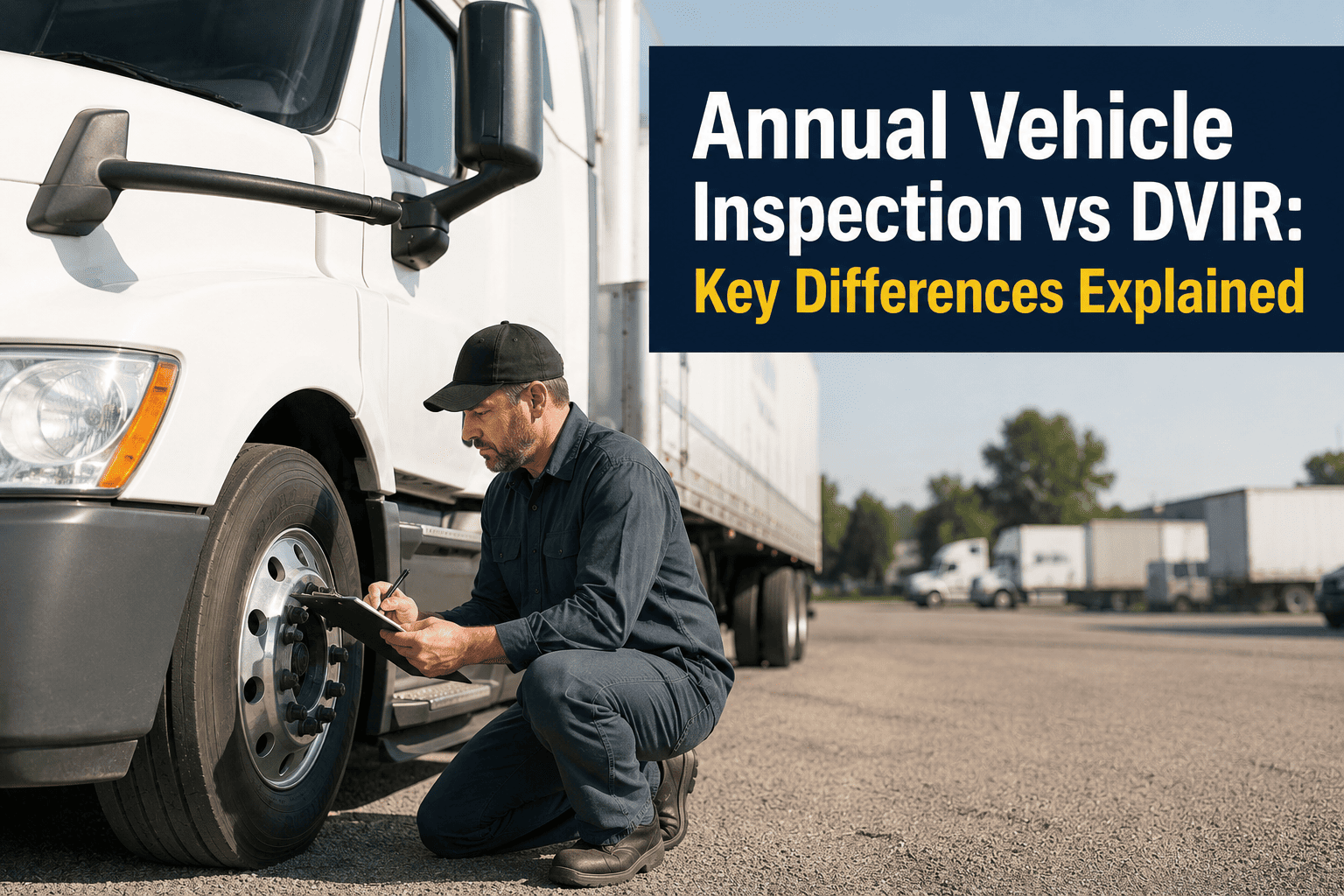
Annual Vehicle Inspection vs DVIR: Key Differences Explained
Two inspections. Two regulations. Two retention periods. The complete 2026 breakdown of how DVIRs (§396.11) and Annual DOT Inspections (§396.17) work together — and how to never confuse them again.
Quick Answer: DVIR vs Annual Inspection
A Driver Vehicle Inspection Report (DVIR) under 49 CFR §396.11 is a driver-performed inspection at the end of every shift, identifying any safety-affecting defects on the truck and trailer. The carrier must certify all defects are repaired before the next dispatch. DVIRs are retained for 3 months. An Annual DOT Vehicle Inspection under 49 CFR §396.17 (with Appendix A acceptance criteria) is a once-per-year certification by a qualified inspector — verifying all 13 prescribed categories meet federal acceptance standards and issuing an annual inspection certificate. Annual inspection records are retained for 14 months, the certificate must be carried on the vehicle, and a failure removes the truck from service until corrected. Both are mandatory; one is daily safety, the other is yearly certification.
Side-by-Side: 10 Differences That Matter
The two inspections differ on every dimension — frequency, who performs them, what gets covered, how they're documented, and the consequences of getting them wrong. Here's the full comparison fleet managers actually need. Contact our sales team to map both inspection types against your specific fleet.
| Dimension | DVIR (§396.11) | Annual DOT Inspection (§396.17) |
|---|---|---|
| Frequency | Every shift (post-trip mandatory) | Once per year, no later than anniversary |
| Performed by | Driver (no special qualification) | Qualified inspector per §396.19 |
| Depth | Walk-around, hands-on, visual | Measured against Appendix A criteria |
| Categories covered | Safety-affecting defects (driver-visible) | 13 prescribed categories, all systems |
| Output document | DVIR form (paper or digital) | Annual Inspection Report + Certificate |
| Vehicle marker | None required | Sticker on vehicle (or document in cab) |
| Retention | 3 months minimum | 14 months minimum |
| Failure result | Defect must be certified repaired | OOS until corrected & re-inspected |
| Penalty for non-compliance | Up to $16K + CSA impact | Up to $16K + CSA impact + OOS |
| Roadside substitution | N/A | §396.23(b) — qualifying roadside inspection counts |
The DVIR: Daily Safety Net
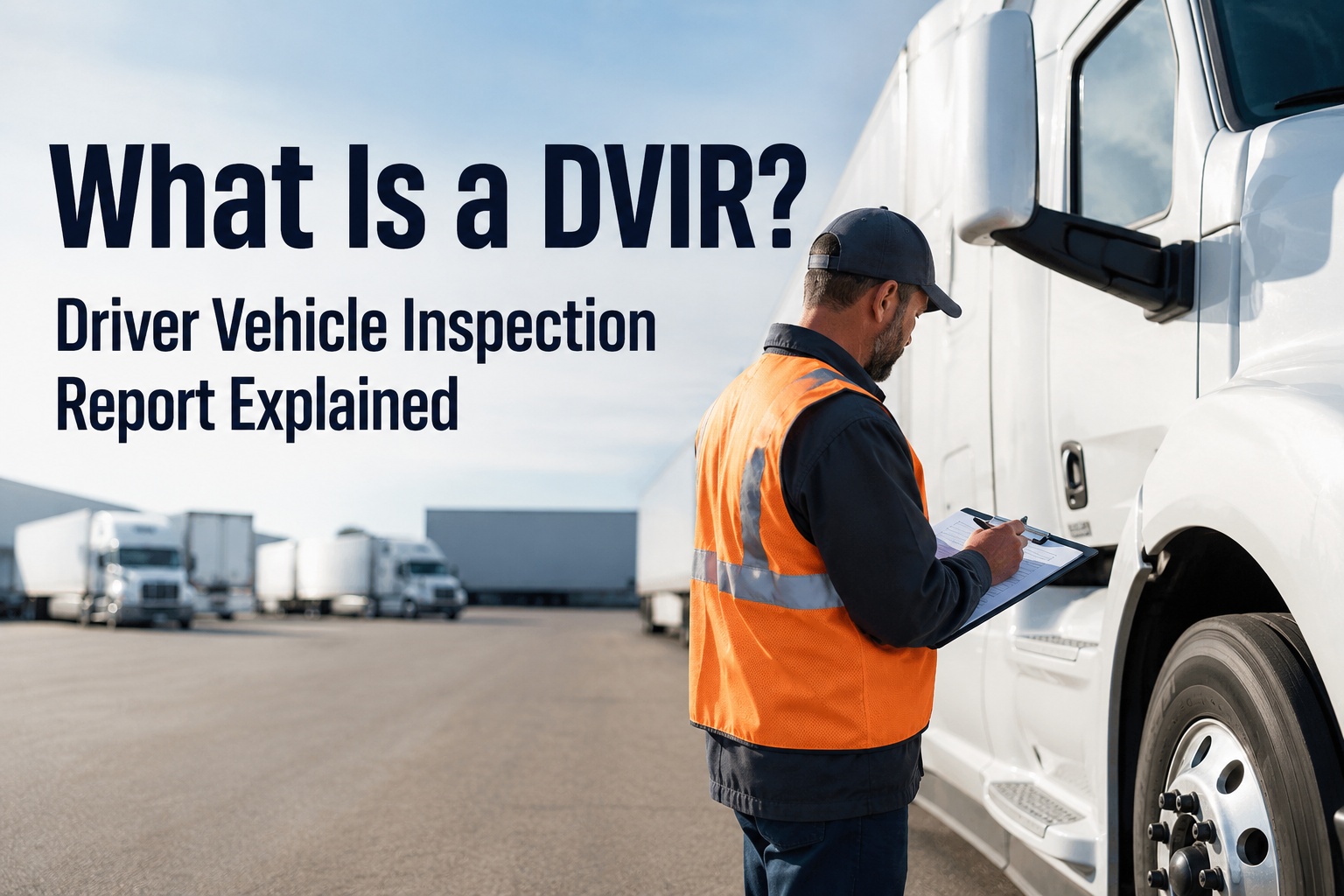
The DVIR is your most frequent compliance touchpoint — and the most-skipped because of how routine it feels. Drivers complete it at the end of every shift; the carrier certifies any defects are repaired before next dispatch; the loop closes with the next driver verifying the truck's condition before pre-trip.
The Annual DOT Inspection: Yearly Federal Certification
Where the DVIR is daily and driver-led, the Annual Inspection is yearly and inspector-led — measured, documented, and certified. A qualified inspector goes through 13 prescribed categories with measurement tools (not just visual checks), evaluates each component against Appendix A acceptance criteria, and either certifies the vehicle for another year of service or fails the inspection.
The 13 Appendix A Categories
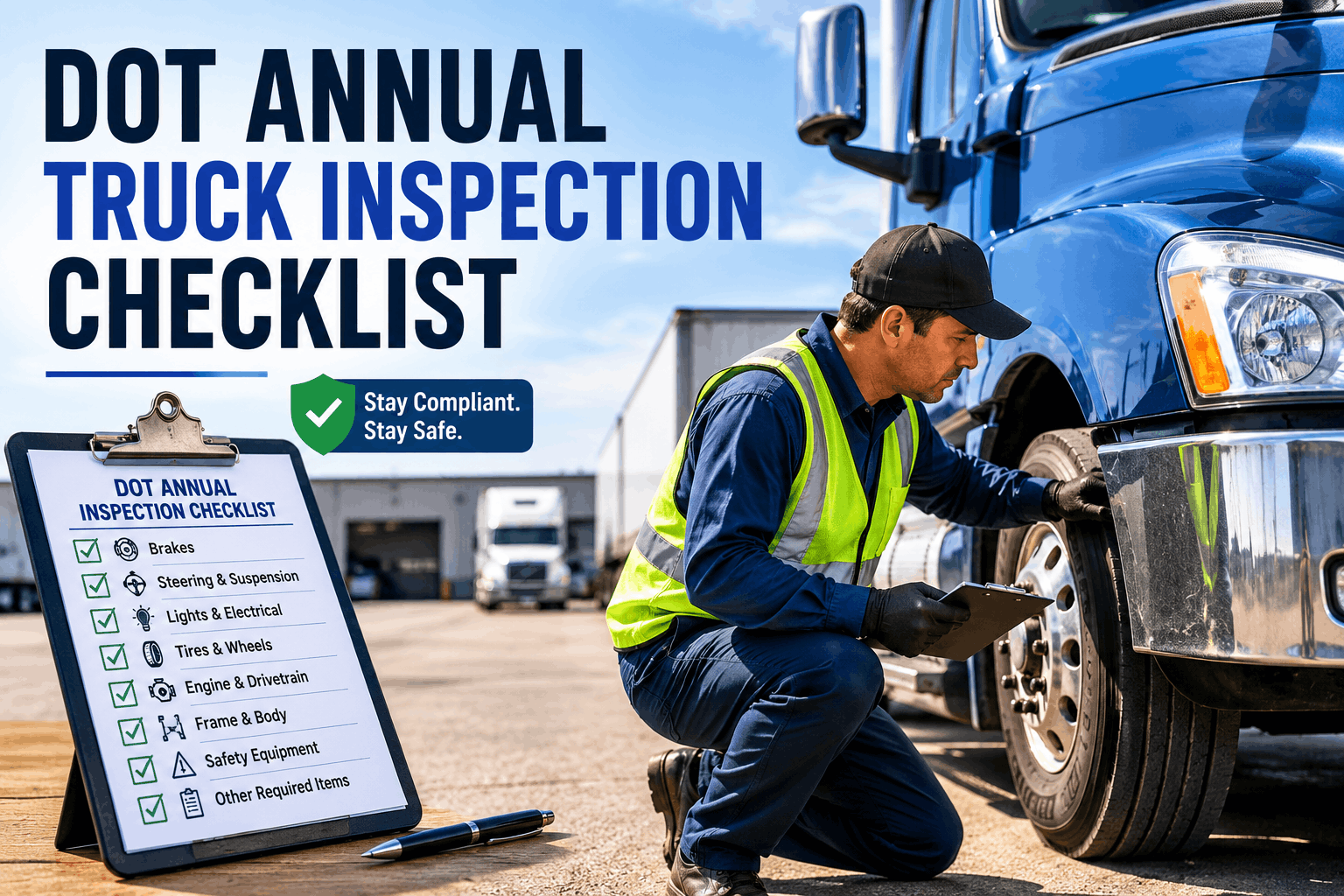
The annual inspection covers exactly these 13 component categories, each with measured acceptance criteria. A single OOS finding in any category fails the entire inspection and parks the truck. Sign up free to deploy digital Appendix A inspection workflows pre-loaded for every category.
How They Work Together: The Compliance Loop
DVIRs and the Annual Inspection aren't separate compliance silos — they connect into one continuous loop. Daily DVIRs surface defects between annual inspections, and the annual inspection validates every safety-critical system on a fixed yearly cadence. Patterns in DVIR defects often predict where the next annual inspection will find problems. Talk to our sales team to see DVIR defects auto-flagged against upcoming annual inspection categories.
Compliance Penalties: Why Both Matter
Violations of either inspection requirement carry real cost. The 2026 FMCSA SMS update split Vehicle Maintenance into TWO compliance categories — meaning maintenance failures now show up doubled in your CSA scores. Recent six-month violations carry heavier weight than older ones.
The Roadside Inspection Substitution Rule
One regulatory shortcut every fleet manager should know: under 49 CFR §396.23(b), a roadside inspection that meets Appendix A criteria and produces an inspection report can satisfy the annual inspection requirement. If your truck passes a Level 1 or Level 5 CVSA roadside inspection, the report can substitute for the annual — saving you the time and cost of a separate annual inspection appointment that year.
Frequently Asked Questions
Yes — both are mandatory under FMCSA regulations for commercial motor vehicles in interstate commerce. DVIRs are required after every shift under 49 CFR §396.11; the annual inspection is required at least once per year under 49 CFR §396.17 with criteria specified in Appendix A. Skipping either creates direct compliance violations with civil penalties up to $16,000 per occurrence plus CSA score impact. Start your free trial to digitize both in one platform.
Only if the driver also meets the qualified inspector criteria under §396.19 — meaning documented training, one year of mechanic/inspector experience, completion of an approved training program, or equivalent qualifications. A standard CDL alone does not qualify a driver to perform an annual inspection. Most fleets use third-party inspection facilities, in-house certified mechanics, or state-run inspection programs to satisfy the annual requirement.
Appendix A defines the minimum federal standards every annual inspection must meet — the 13 component categories and their acceptance criteria. Appendix G is the standard inspection report form referenced in §396.21 — the documentation format. In practice, most fleets use J.J. Keller-style Annual Vehicle Inspection Report forms based on Appendix G, completing all Appendix A categories. Contact our sales team for digital Appendix G-aligned templates pre-loaded in our platform.
The annual inspection certificate (sticker or document) must be carried on or in the vehicle at all times. Digital certificates stored on a mobile device are now accepted at roadside inspections, provided they're immediately retrievable when an officer requests them. The carrier must also retain the underlying inspection report for 14 months — separate from the certificate that travels with the truck.
Yes, under §396.23(b) — but only if the roadside inspection covers the full Appendix A scope (Level 1 or Level 5 inspections typically qualify; Level 2 driver-only inspections do not). The carrier must retain the roadside inspection report as proof. Many OTR fleets use this substitution rule to satisfy multiple annual deadlines without separate inspection appointments. Sign up free to track roadside-substitution eligibility per truck.
Auditors expect to see: 14 months of annual inspection reports for every CMV, 3 months of DVIRs for every shift, repair certifications for every flagged defect, and inspector qualification documentation for every annual inspection performed. Paper-based fleets routinely fail audits over lost or incomplete records. Digital platforms produce audit packets in seconds with timestamps, signatures, and photo evidence intact. Book a demo to see audit-ready packet generation in action.
Run §396.11 and §396.17 in One Platform — Free for 3 Trucks
500+ fleets digitize DVIRs from drivers' phones, manage annual inspection deadlines automatically, and produce audit-ready packets in seconds. Both inspections, one workflow, zero lost paperwork. The 2026 standard for fleet compliance — without the spreadsheet maze or paper file cabinets.