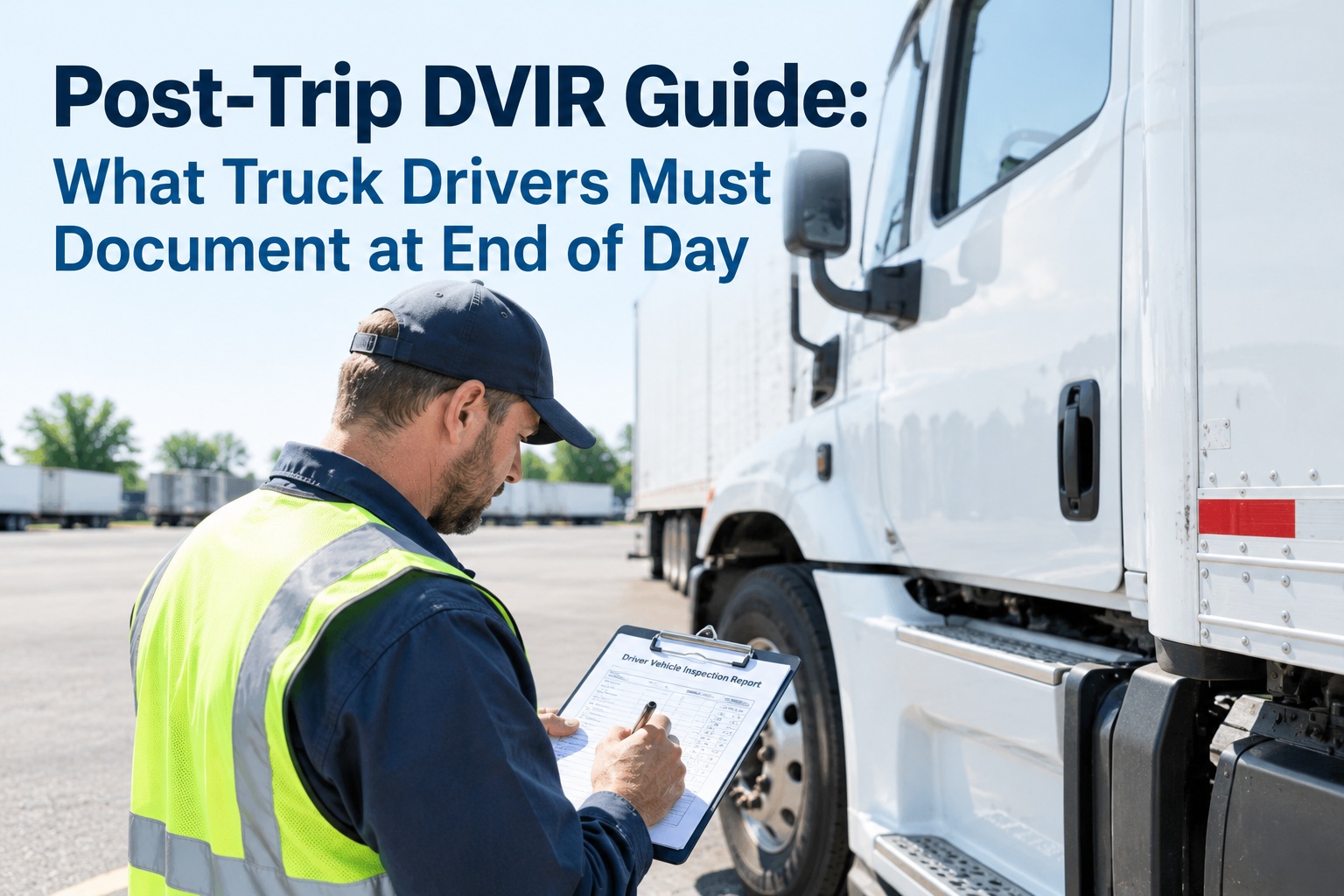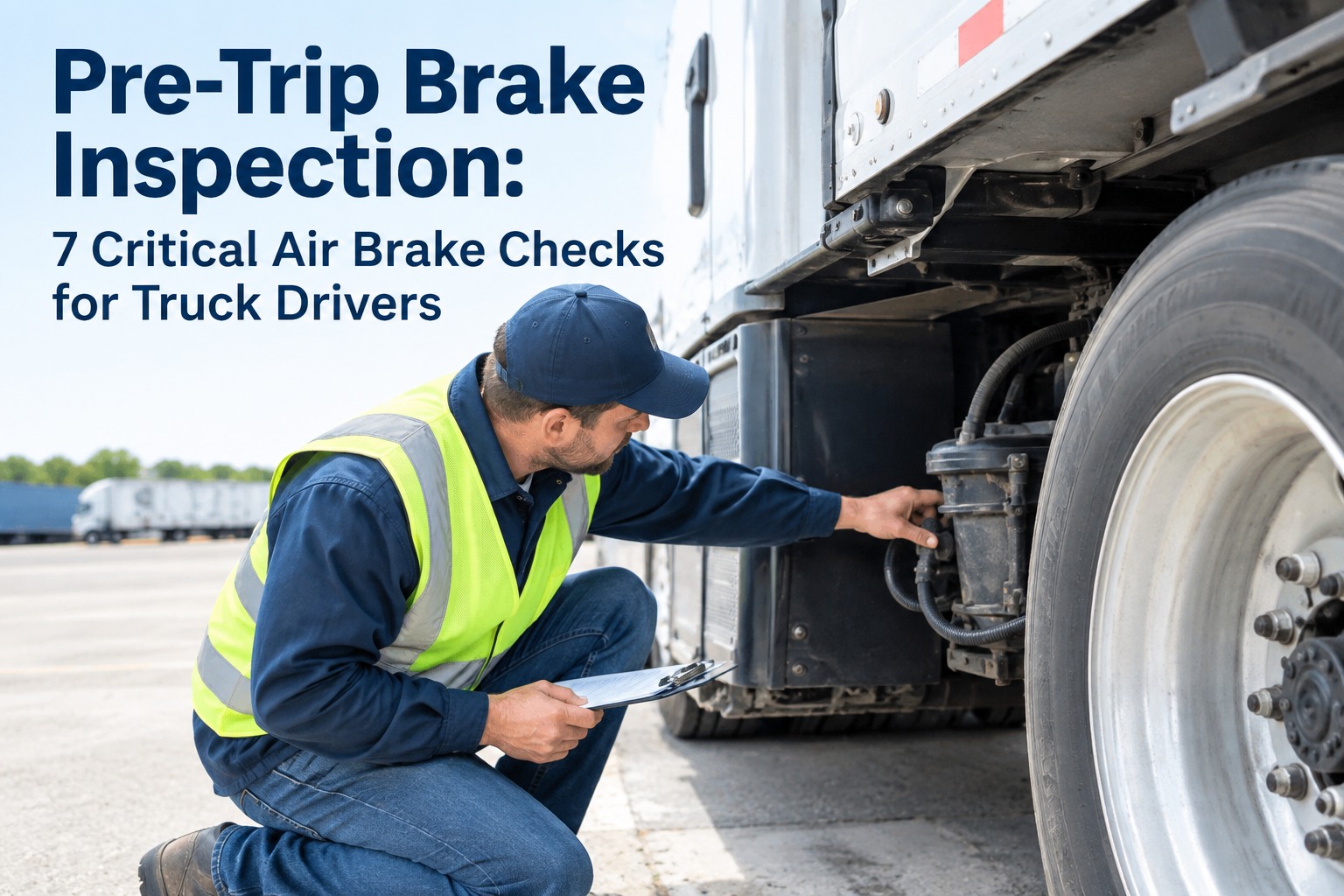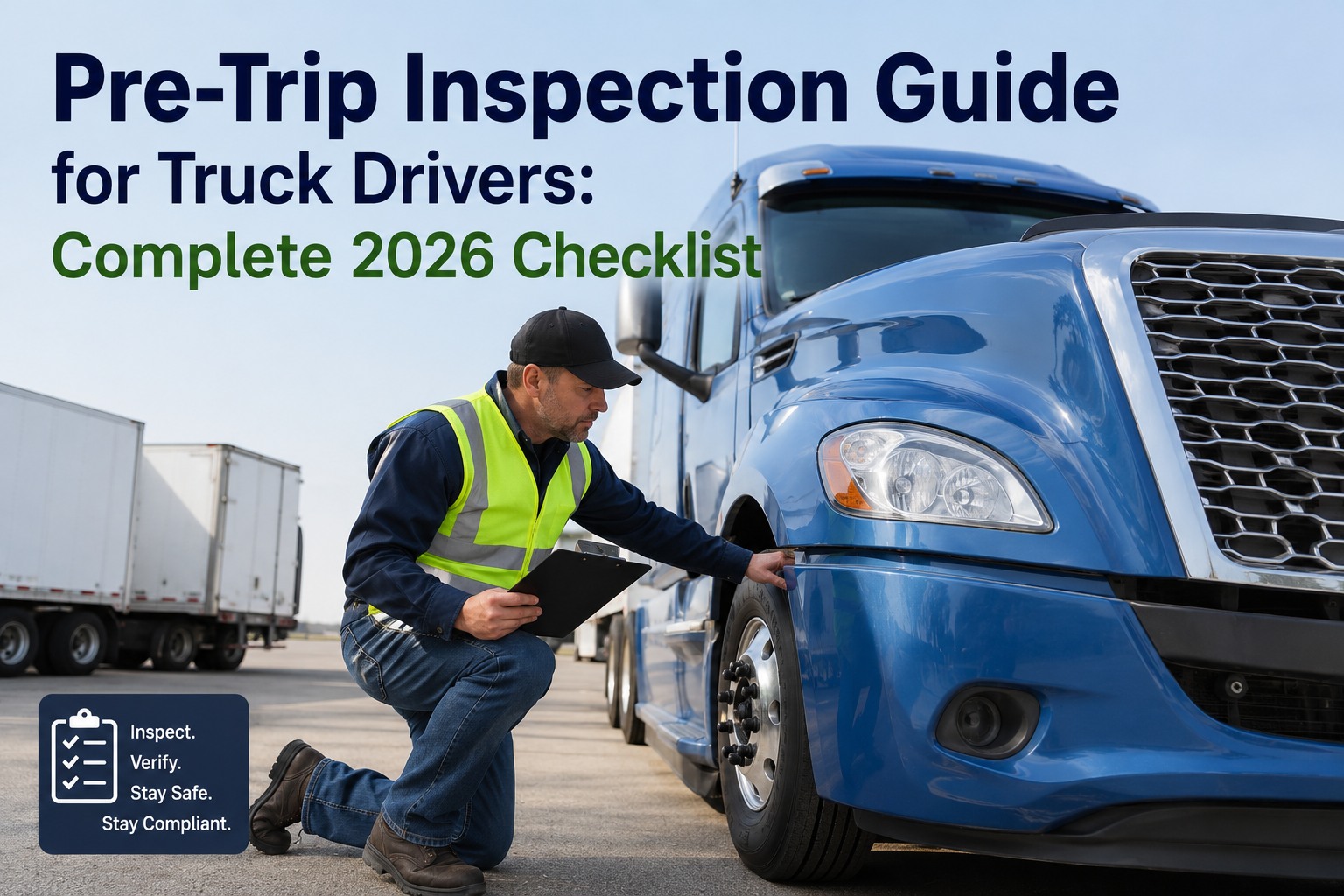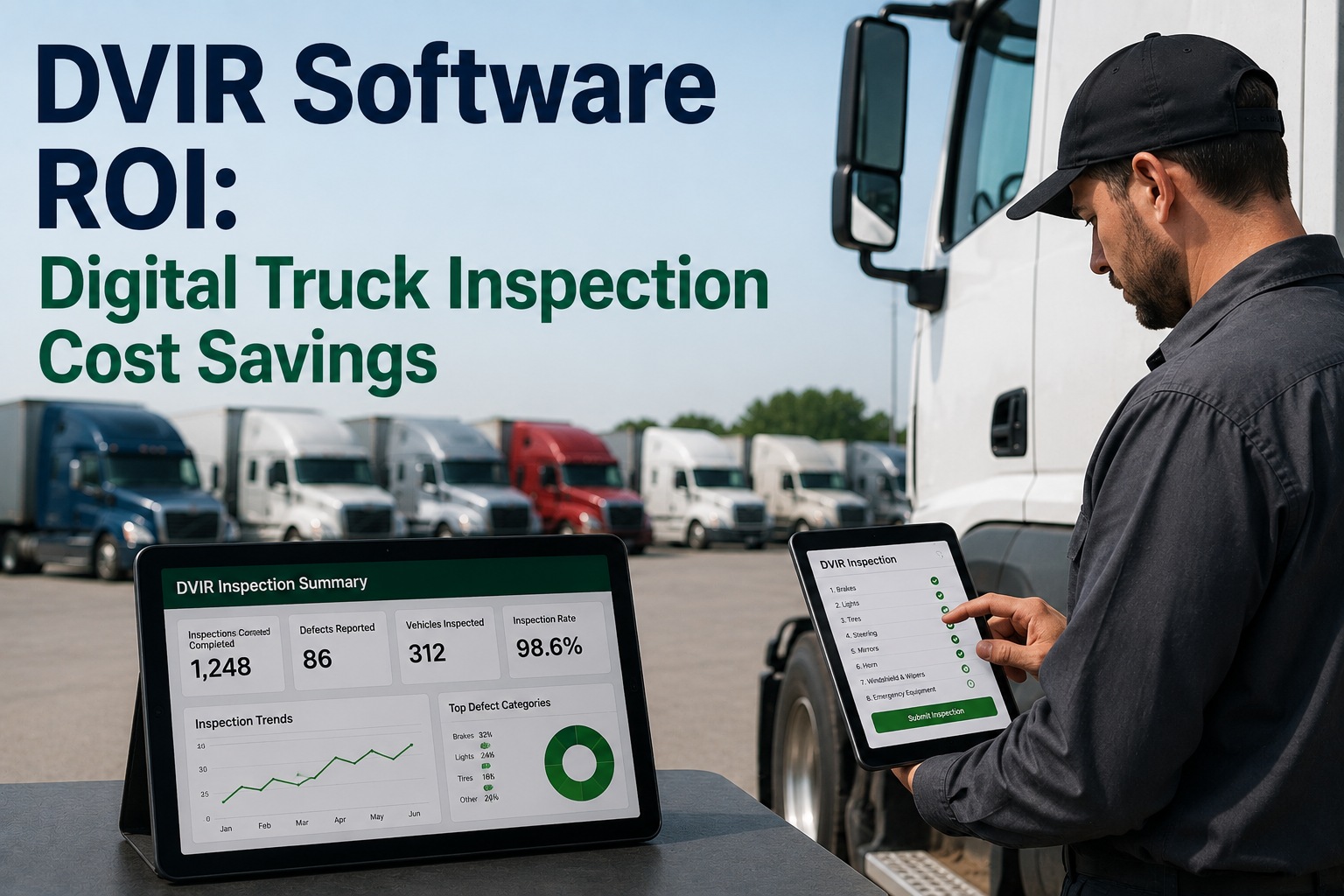
A DVIR is short for Driver Vehicle Inspection Report — a written or digital report that commercial drivers must complete at the end of their workday under 49 CFR §396.11, documenting the condition of their vehicle and any defects that affect safe operation. Sounds simple. But in 2026, the DVIR is one of the most-audited compliance documents in commercial trucking, the difference between a clean FMCSA review and stacking penalties up to $23,048 per event, and the single most-overlooked piece of paper in fleet operations. Fewer than 7% of motor carriers pass a focused compliance review without at least one DVIR violation — usually because someone never explained what a DVIR actually is, why it exists, who needs to complete one, and what happens when it goes missing.
This guide is the plain-English explainer. No jargon. No assumptions. We'll cover what a DVIR is in everyday terms, who has to complete one and when, what the 11 mandatory inspection categories actually look like, the difference between pre-trip and post-trip inspections, why FMCSA started requiring DVIRs in the first place, how digital DVIRs replaced paper forms, the eDVIR final rule that took effect March 23, 2026, and what fleets should actually do to stay compliant without burning two hours of paperwork per driver per day.
Whether you're a new fleet manager getting onboarded, a driver who's heard the term thrown around without explanation, an owner-operator wondering if you actually need to file one, or a compliance officer auditing your current process — this is the starting point. Start your free trial to see how a digital DVIR works from a driver's phone in under 90 seconds.
What Is a DVIR? Driver Vehicle Inspection Report Explained
The plain-English guide to Driver Vehicle Inspection Reports — what they are, who needs one, when to complete one, why FMCSA requires them, and how digital DVIRs replaced paper forms in 2026. No jargon, no assumptions.
Quick Answer: What Is a DVIR?
A DVIR (Driver Vehicle Inspection Report) is a written or digital document required by 49 CFR §396.11 that commercial drivers complete at the end of each workday to document the condition of their vehicle. The driver inspects 11 mandatory component categories — service brakes, parking brake, steering, lighting, tires, horn, wipers, mirrors, coupling devices, wheels, and emergency equipment — and reports any defects affecting safe operation. The motor carrier must repair reported defects before re-dispatching the vehicle. The next driver reviews and acknowledges the report before operating under §396.13. Records are retained for at least 3 months. DVIRs apply to commercial motor vehicles weighing ≥10,001 lbs, passenger-carrying CMVs designed for ≥9 passengers, and hazmat-placarded vehicles. As of March 23, 2026, FMCSA's final rule (FMCSA-2025-0115) explicitly authorizes fully electronic DVIRs.
Breaking Down the Letters: D-V-I-R
Most people hear "DVIR" thrown around without anyone breaking down what each letter actually means. Here's the simple breakdown — and what each piece tells you about the regulation.
Why DVIRs Exist — A Short History
FMCSA didn't invent DVIRs to create paperwork. They exist because mechanical defects on commercial vehicles kill people. Here's the regulatory backstory in three milestones.
The 11 Things a DVIR Covers
FMCSA specifies exactly 11 component categories every DVIR must address. Any defect affecting safe operation in any of these areas must be documented. Contact our sales team for help configuring all 11 categories as a digital workflow.
Pre-Trip vs Post-Trip: The Confusion Clarified
One of the most common DVIR mix-ups: drivers think the pre-trip inspection IS the DVIR. It's not. Here's the clean distinction.
Both inspections cover the same 11 component categories. The pre-trip is a physical safety check; the DVIR is the written report. They work together — the previous driver's DVIR feeds into the next driver's pre-trip under §396.13.
Who Needs to File a DVIR?
DVIR requirements apply to specific vehicle types and operations. Use this quick check to find out if your fleet falls under §396.11. Sign up free to verify your fleet's specific requirements automatically.
The DVIR Process — Step by Step
Here's exactly what happens during a compliant DVIR — from the moment a driver completes their shift to the moment the next driver takes the vehicle out.
Paper DVIRs vs Digital DVIRs in 2026
The 2026 eDVIR final rule made digital DVIRs the new standard. Here's why most fleets are moving away from paper.
| Capability | Paper DVIR | Digital DVIR |
|---|---|---|
| Completion time per inspection | 5-8 minutes | 60-90 seconds |
| Photo evidence of defects | Not possible | Built-in |
| GPS & timestamp on submission | Manual / unreliable | Automatic |
| 3-signature chain of custody | Manual handoffs | Auto-enforced |
| Defect-to-work-order routing | Hours to days | Seconds |
| 3-month retention | Filing cabinet | Cloud, permanent |
| FMCSA audit packet | 3-day prep marathon | Export in seconds |
| Cost per inspection | $1.50-$3.00 (paper, ink, storage) | $0.10-$0.50 |
What Happens When DVIRs Go Wrong
Missing or falsified DVIRs are among the most heavily-penalized FMCSA violations. Here's what's at stake. Talk to our sales team to eliminate this risk through automated compliance.
Frequently Asked Questions
DVIR stands for Driver Vehicle Inspection Report — the written or digital document commercial drivers must complete at the end of each workday under 49 CFR §396.11. It documents the condition of the vehicle and any safety-affecting defects found during inspection of 11 mandatory component categories. The motor carrier must address reported defects before re-dispatching the vehicle, and the next driver must review and acknowledge the DVIR before operating under §396.13.
No — but they're closely related. A pre-trip inspection under §392.7 is the physical safety check drivers perform before operating a vehicle. A DVIR under §396.11 is the written report drivers complete at the end of the workday documenting defects found. The pre-trip is the inspection; the DVIR is the documentation. They cover the same 11 component categories but happen at different times and serve different regulatory purposes. Start your free trial to digitize both workflows.
It depends on what you're hauling. Property-carrying CMVs only require a DVIR when the driver discovers or is made aware of a safety-affecting defect — not every day. This change took effect in 2014. Passenger-carrying CMVs (buses, vans for 9+ passengers) still require daily DVIRs regardless of defect status. Hazmat-placarded vehicles require daily DVIRs under §397. Many carriers require daily DVIRs as company policy even when not federally required, for documentation purposes.
Failure to complete a required DVIR carries penalties up to $1,270 per day. Falsifying a DVIR to conceal a safety defect carries penalties up to $12,700 per event. Failing to repair a reported defect before re-dispatching carries penalties up to $15,420 per unrepaired defect. The maximum FMCSA penalty for dispatching a vehicle with a known out-of-service condition is $23,048 per event. Each violation stacks separately during an audit, so a fleet with paper gaps across multiple trucks can face cumulative penalties exceeding $100,000 in a single review. Contact our sales team to eliminate this risk through automated compliance.
FMCSA §396.11(c)(2) requires carriers to retain the original DVIR, the certification of repairs, and the certification of the next driver's review for at least 3 months from the report date. Best practice in 2026: retain digitally with cloud backup permanently. Lost or unproduced DVIRs during an audit become automatic compliance findings — the inability to produce a DVIR is treated the same as not having created one. Cloud-based eDVIR platforms make permanent retention free and produce audit packets in seconds.
Yes — fully compliant. Electronic DVIRs have been permissible under §390.32 since 2018, and FMCSA's final rule FMCSA-2025-0115 (effective March 23, 2026) makes the authorization explicit in §396.11 and §396.13. Electronic creation, signatures, mobile submission, cloud retention, and roadside production via digital device are all explicitly compliant. The American Trucking Associations, OOIDA, and the National Tank Truck Carriers all supported the rulemaking. Paper DVIRs are now the legacy option. Sign up free to deploy compliant eDVIRs in 10 minutes.
Replace Paper DVIRs with 90-Second Mobile Inspections
500+ fleets digitize §396.11 + §396.13 on one platform: photo-evidenced inspections from driver phones, GPS-stamped submissions, automatic 3-signature chain of custody, defect-to-work-order automation, and audit packets exported in seconds. Free for up to 3 trucks. No credit card. eDVIR-compliant from day one.