Diesel fuel additives sit at an awkward intersection in fleet management: some are genuine problem-solvers that save thousands in repairs, some are marketing snake oil that costs money and delivers nothing, and telling the two apart requires understanding what's actually happening in the fuel system. Modern ULSD (Ultra-Low Sulfur Diesel) fuel has real limitations — reduced lubricity from the desulfurization process, gelling below 15°F without cold-weather treatment, water contamination that grows bacteria in storage tanks, and injector deposit buildup from long-term operation. Each of those is a real problem with a proven additive solution. But so is the fact that most "premium" pump diesel already contains additives, that most seasonal fuel is already winter-treated in cold regions, and that adding the wrong additive can void warranty coverage or damage emissions systems. Getting additives right saves fleets 3–8% in fuel-related maintenance costs and prevents catastrophic winter breakdowns. Getting them wrong is a waste of money at best and a warranty problem at worst. This guide walks through the complete framework: the five categories of diesel additives and what each actually does, when to use each type, the dosage math that gets it right, seasonal application timing, common myths, and how fleet software tracks additive usage as part of fuel management. Ready to track fuel additive usage across the fleet? Start a free trial of our fleet maintenance software, or reach out to our support team for a walkthrough.

Diesel Fuel Management Guide

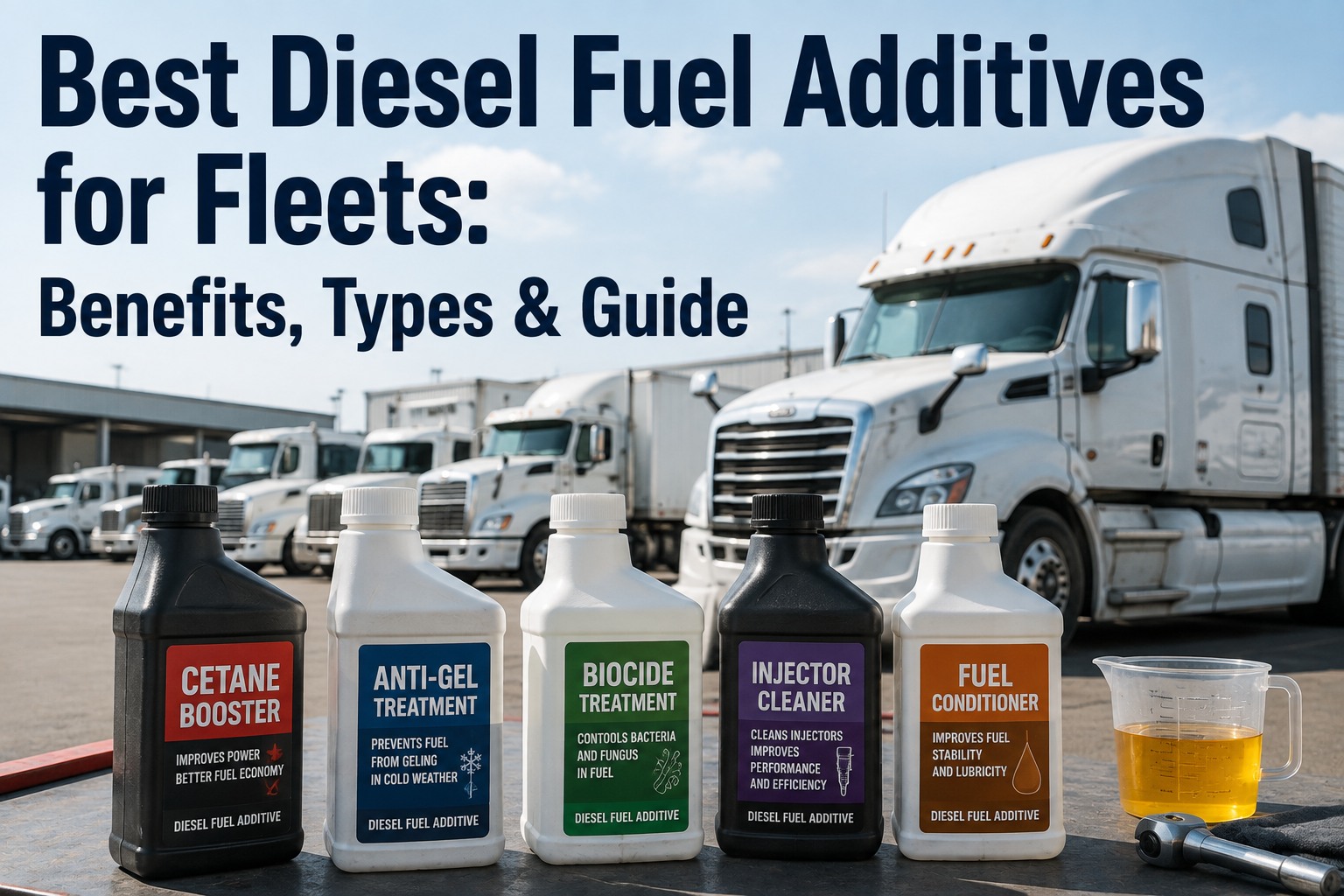
Best Diesel Fuel Additives for Fleets: Benefits, Types & Guide

Five additive categories, when each actually helps, dosage math, seasonal timing. Skip the snake oil and use the additives that prevent breakdowns and pay back 3–8%.

5 types
Additive categories that matter
15°F
Temperature where diesel gels untreated
3–8%
Fuel-cost savings with right program

Why Modern Diesel Fuel Needs Additives

ULSD fuel — the only diesel legally sold in the US since 2010 — solved emissions problems but created four new operational issues. Each of these is a real, measurable problem that additives address.

65%
Lubricity reduction in ULSD
Removing sulfur removed most of diesel's natural lubricating properties. Injection pumps and injectors depend on fuel for lubrication.
15°F
Cloud point (untreated)
Untreated #2 diesel starts to form wax crystals at 15°F and gels completely at 5–10°F. Fleets in cold climates need anti-gel treatment.
150 ppm
Water contamination threshold
Fuel absorbs water from tank breathing, condensation, and fuel deliveries. Above 150 ppm, bacteria grow and fuel-system corrosion starts.
36K PSI
Common-rail injection pressure
Modern injectors operate at 36,000 PSI. Deposits from even minor fuel contamination cause spray-pattern failure and misfires.

The 5 Diesel Additive Categories

Every additive on the shelf falls into one of five categories. Understanding which category solves which problem is 90% of getting additive usage right.

TYPE 1
Cetane Boosters
Increase the cetane number of diesel fuel. Higher cetane means faster, cleaner combustion — smoother idle, easier cold starts, better power.
USE WHEN
Rough idle, hard cold starts, black smoke, or engines needing higher-cetane fuel for performance
SKIP WHEN
Truck runs fine and fuel already meets OEM cetane spec
TYPE 2
Anti-Gel / Cold-Flow
Lower the cloud point and CFPP (cold filter plugging point) of diesel fuel. Prevents wax crystallization that gels fuel lines and blocks filters.
USE WHEN
Temperatures below 15°F expected — every fleet in cold-climate regions during winter months
SKIP WHEN
Warm climate year-round, or fuel supplier already winter-treats seasonal fuel
TYPE 3
Biocides
Kill bacteria and fungi growing at the fuel/water interface in storage tanks. Prevents biomass buildup that clogs filters and corrodes systems.
USE WHEN
Bulk fuel storage tanks, seasonal equipment tanks, contamination found in filter change, dark slime in fuel filter
SKIP WHEN
Fuel constantly cycles through tanks, water separator drained daily, no contamination symptoms
TYPE 4
Injector Cleaners
Detergent additives that dissolve carbon deposits on injector nozzles. Restores proper spray pattern for clean combustion.
USE WHEN
Reduced MPG, rough idle, black smoke, or as preventive maintenance every 15K–30K miles
SKIP WHEN
Fuel from stations using name-brand fuel with existing detergent packages, no symptoms
TYPE 5
Lubricity Additives
Restore the lubricating properties ULSD lost during desulfurization. Protects injection pumps and injectors from premature wear.
USE WHEN
Older engines with high-pressure injection pumps, engines running fuel of unknown lubricity, high-mileage protection
SKIP WHEN
Fuel from major branded stations that meet ASTM D975 lubricity spec, modern engine under warranty
All-in-One ProductsMost commercial "premium diesel additives" combine cetane, lubricity, injector-cleaner, and sometimes anti-gel in one bottle. These are fine for general use but you pay for chemistry you don't always need. Match the specific problem to the specific additive category for cost efficiency.

Seasonal Application Calendar

Additive needs vary dramatically by season. This is the fleet calendar for what to apply and when — based on typical northern-US temperature patterns.

WINTER
Nov – Mar
Primary: Anti-Gel
Anti-gel every tank below 20°F
Emergency de-icer on hand for gelled trucks
Cetane booster helps cold starts
Increased water separator draining
SPRING
Apr – May
Primary: Biocide
Biocide treatment in bulk tanks
Filter changes to remove winter debris
Water separator inspection
Injector cleaner spring service
SUMMER
Jun – Aug
Primary: Lubricity + Cleaner
Lubricity additive for injection protection
Injector cleaner every 15K miles
Storage tank moisture monitoring
Biocide if any water found
FALL
Sep – Oct
Primary: Winter Prep
Begin anti-gel program before first freeze
Fuel filter replacement fleet-wide
Water separator complete drain
Winter fuel transition monitoring
Cold-Climate RuleStart anti-gel treatment two weeks before the first hard freeze — not the day of. Once wax crystals form in the fuel, additive can't reverse it. Prevention works; recovery doesn't.

Dosage Math: Getting the Ratio Right

Additive underdosing wastes money without solving the problem. Overdosing wastes money and can void emissions warranties. Here's the dosage framework for each category.

Additive Type
Typical Treat Ratio
Per 100 Gallons
Notes
Cetane Booster
1:1,000 to 1:500
13–26 oz
Higher for severe cold-start issues
Anti-Gel (mild)
1:500 to 1:250
26–52 oz
For temps 15°F to 0°F
Anti-Gel (severe)
1:200 to 1:100
64–128 oz
For temps below 0°F
Biocide
1:5,000 to 1:2,500
2.5–5 oz
Shock treatment 2× normal dose
Injector Cleaner
1:1,000 to 1:400
13–32 oz
Concentrated version at 1:400
Lubricity
1:1,000
13 oz
Per-tank treatment for continuous protection
Bulk vs Per-TankBulk fuel treatment (adding to storage tank at delivery) is more cost-efficient than per-tank treatment (driver adds to each fill). But bulk treatment locks the whole tank to one additive strategy. Per-tank gives flexibility — use it when different trucks in the fleet need different treatments.

The 5 Diesel Additive Myths

The additive industry is full of marketing claims that don't hold up in practice. Here are the five most common myths that waste fleet money.

01
MYTH Fuel additives boost MPG by 5–15%
TRUTH Realistic MPG gains from injector cleaners on a fouled engine are 2–4%. Any claim above 5% is marketing.
02
MYTH More additive is better
TRUTH Overdosing wastes money and can damage emissions systems. Follow the label ratio exactly — or the max concentration listed for severe conditions.
03
MYTH Adding gasoline prevents diesel gelling
TRUTH This old trick voids warranty, damages injectors, and creates fire risk. Modern anti-gel additives are safer and more effective.
04
MYTH Premium diesel doesn't need additives
TRUTH Premium diesel has better additive packages but rarely includes anti-gel or biocide. Regional problems still need targeted treatment.
05
MYTH Additive brand doesn't matter
TRUTH Chemistry varies significantly. Look for OEM approvals from Cummins, Detroit, Volvo, or PACCAR — these mean the product has been tested against real engines.

Track additive usage across the fleet

Log which additives were applied to which trucks. Track dosage against fuel volume. Correlate additive usage with maintenance outcomes.

The ROI Framework: Do Additives Actually Pay Back?

The right additives pay back 3–8x their cost through prevented breakdowns and repair avoidance. Here's the actual math for each category.

Anti-Gel Treatment
$0.05–$0.10 per gallon
PREVENTS
Gelled fuel breakdowns: $500–$1,500 tow + downtime
Payback: 10:1 in cold climate
Biocide (Bulk Storage)
$0.002 per gallon treated
PREVENTS
Filter clogs, tank cleaning ($2,000+), corrosion damage
Payback: 15:1 in bulk storage
Injector Cleaner (PM)
$0.03–$0.08 per gallon
PREVENTS
Injector replacement ($2,000–$5,000 per injector)
Payback: 5:1 on high-mileage fleets
Lubricity Additive
$0.02–$0.05 per gallon
PREVENTS
Injection pump wear ($3,000+ repair)
Payback: 3:1 on older engines
Cetane Booster (Routine)
$0.03–$0.06 per gallon
PREVENTS
Modest performance gain, no repair prevention
Payback: 1:1 or breakeven
"MPG Boost" Products
$0.05–$0.15 per gallon
PREVENTS
Nothing measurable in independent testing
Payback: Negative

Frequently Asked Questions

There isn't one best additive — different problems need different chemistry. Anti-gel is essential for cold-climate fleets in winter. Biocide is critical for bulk fuel storage. Injector cleaner and lubricity additives provide preventive protection year-round. Cetane boosters help cold starts and rough idle. Match the additive category to the actual problem instead of buying one "premium" bottle that covers everything expensively. Track additive usage per truck in our fleet software.

Yes if any truck will see temperatures below 15°F. Untreated diesel starts forming wax crystals at 15°F and gels completely at 5–10°F, blocking fuel filters and stalling engines. Even fuel labeled "winter-blend" from suppliers often only handles moderate cold — anti-gel is cheap insurance ($0.05–$0.10 per gallon) that prevents $500–$1,500 tow bills plus downtime. Start treatment two weeks before the first hard freeze because additive can't reverse gelling once wax crystals form.

Realistic answer: injector cleaners on a fouled engine can restore 2–4% of lost MPG. Cetane boosters give a small performance improvement but rarely change MPG measurably. Anti-gel and biocides don't affect MPG at all. Any additive claiming 5–15% MPG improvement is marketing — independent testing consistently shows those numbers aren't real. The true fuel savings from additives come from preventing degradation over time, not boosting current performance.

Most name-brand additives with OEM approvals (Cummins, Detroit, Volvo, PACCAR) are warranty-safe. Adding gasoline to diesel — an old anti-gel trick — voids warranty, damages injectors, and creates fire risk. Overdosing any additive can cause emissions-system damage that voids warranty on the DPF or DEF system. Follow label ratios exactly, choose products with OEM approvals, and document additive usage per truck for warranty defense. Contact our team about additive tracking.

Full-season additive programs typically cost $0.05–$0.15 per gallon of fuel used depending on which additives are included. For a fleet using 50,000 gallons/month, that's $2,500–$7,500/month in additive costs. Payback typically runs 3–8x when the additives address real problems: anti-gel prevents $500–$1,500 tow bills, biocide prevents $2,000+ tank cleanings, injector cleaner prevents $2,000–$5,000 injector replacements. Fleets that treat the wrong problems or overdose get zero payback and waste money.

Bulk treatment (adding to fuel storage tanks at delivery) is more cost-efficient and ensures consistent dosing across the fleet. Per-tank treatment (driver adds to each fill) is more flexible when different trucks need different additives. Best practice for larger fleets: bulk-treat the base additives (lubricity, biocide, and seasonal anti-gel) and let drivers add per-tank injector cleaner or cetane booster for specific trucks with symptoms. Try tracking free: sign up here.

Purpose-built for commercial fleets

Additive tracking as part of fleet fuel management

Log which additives were applied to which trucks. Track dosage against fuel volume. Correlate additive usage with fuel filter life, injector performance, and cold-weather breakdowns. Complete fuel-and-additive history archived by VIN. Everything a fleet needs to prove additive programs are working — or catch when they're not — instead of buying premium chemistry on faith.


No credit card required  •  AI-powered maintenance platform  •  Trusted by fleets across North America