Every winter, thousands of diesel trucks strand across North America for the same reason: fuel gelling. It happens because diesel fuel contains paraffin wax — perfectly dissolved and invisible above freezing, but when temperatures drop, the wax crystallizes out of solution, thickens the fuel, clogs filters, and eventually stops flow entirely. Standard #2 summer-blend diesel starts forming wax crystals at the cloud point (typically 32°F but as high as 40°F for lower-quality fuel), plugs fuel filters at the Cold Filter Plugging Point or CFPP (typically 14–23°F untreated), and stops flowing entirely at the pour point (-4°F to -20°F). Miss the transition and you don't just have a slow-starting truck — you have a truck that cannot move until the entire fuel system is warmed and the gel dissolved, which typically means towing to a heated shop, replacing the fuel filter, treating the tank with an emergency deliquefier, and waiting hours for restart. The financial impact of a single gelling event routinely runs $1,500–$5,000 including tow, emergency service, driver detention, missed delivery penalties, and shop time — versus $6–$12 for the anti-gel additive that would have prevented it. Yet every year fleets skip prevention because "winter blend fuel is fine" (it's not always) or "the truck will be inside overnight" (until it isn't). This guide covers exactly how diesel gelling works, the three temperature stages every operator must know, warning signs, the prevention hierarchy (winter blend, additives, fuel heaters, tank protection), the emergency thaw procedure that gets stranded trucks moving, and how Truck Inspection & Maintenance tracks winter prep and cold-weather fuel treatment across every truck in your fleet — free forever for up to 3 vehicles.
Diesel Fuel Gelling in Cold Weather: The Complete 2026 Prevention & Emergency Guide
The three temperature stages, the 18° rule, and the anti-gel additives that keep fuel flowing when the mercury drops.
The Three Temperature Stages
Every conversation about diesel gelling starts with these three terms. Confuse them and you either over-treat (wasting money) or under-treat (stranding the truck). Learn them cold — literally:
Wax Crystals Form
First wax crystals appear in the fuel. Fuel visibly cloudy in the tank or in a clear line. Fuel still flows normally — no filter restriction yet. Warning stage: temperatures dropping further will progress to CFPP.
Filter Plugs
Wax crystals grow large enough to clog the fuel filter mesh. Engine begins fuel starvation — loss of power, hard starting, potential stall. This is the practical operating limit. Anti-gel additives target CFPP specifically.
Fuel Solidifies
Fuel becomes gel-like solid. Cannot flow at all. Fuel pump cannot push through fuel lines. Below pour point, no chemical additive helps — only heat can reliquefy. Full recovery requires warming entire fuel system.
The 18° Rule
When properly treated with cold-flow additives, the CFPP drops approximately 18°F below the cloud point. Example: if your fuel gets cloudy at 30°F, filters plug at 12°F with proper additive treatment. Untreated, CFPP can be as little as 9°F below cloud point. This is the single most important operational number in cold-weather diesel management.
Warning Signs — Recognize Gelling in Progress
Fuel gelling rarely happens instantly. Trucks show clear symptoms as fuel approaches CFPP — recognize them and you can act before the truck strands. Six patterns to watch for:
Cloudy Fuel in Sight Glass
Fuel visibly cloudy through fuel filter housing sight glass or fuel-water separator bowl. Wax crystals actively forming. Prevention window still open — treat immediately.
Hard Cold Starts
Engine cranks longer than normal to start in the morning. Fuel system struggling to prime through partially restricted filter. Not yet a full failure but the trend is clear.
Loss of Power Under Load
Engine loses power on grades or under acceleration. Filter restriction limits fuel flow, engine can't get enough fuel for demand. Common at CFPP threshold.
Fuel Filter Restriction Light
ECU-monitored fuel pressure drops below spec, triggering restriction warning. On modern trucks this is often the first hard alert before performance issues appear.
Engine Stalling & No Restart
Truck stalls and won't restart. Full fuel starvation. Filter completely plugged with wax crystals. Emergency thaw procedure required — do not repeatedly crank battery down.
Ice vs Gel Confusion
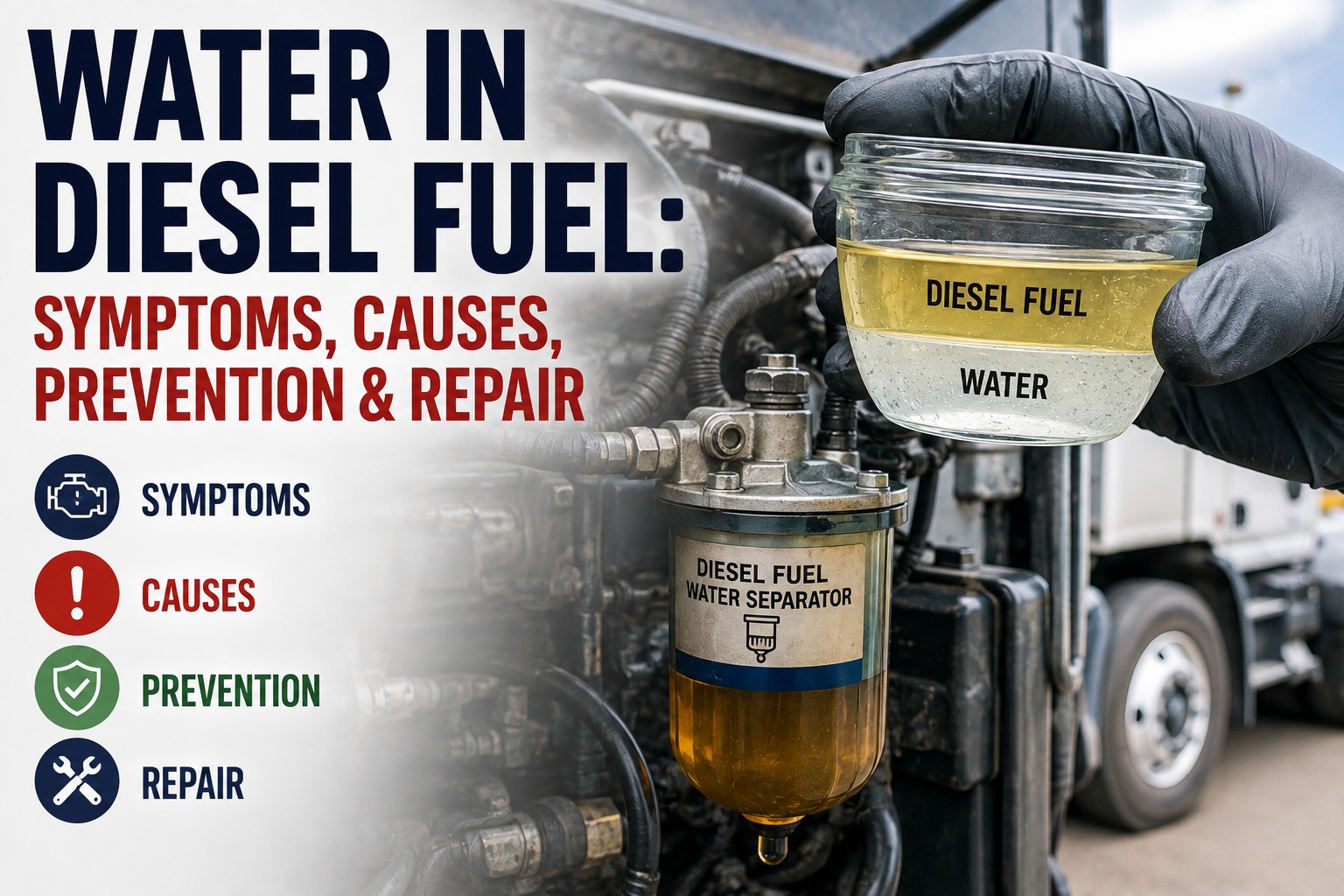
Water in fuel freezes at 32°F, blocking the filter even when the diesel itself hasn't waxed. Same symptoms, same fix (heat) — but diagnosis differs: filter thaws to reveal still-liquid diesel underneath.
The Prevention Hierarchy
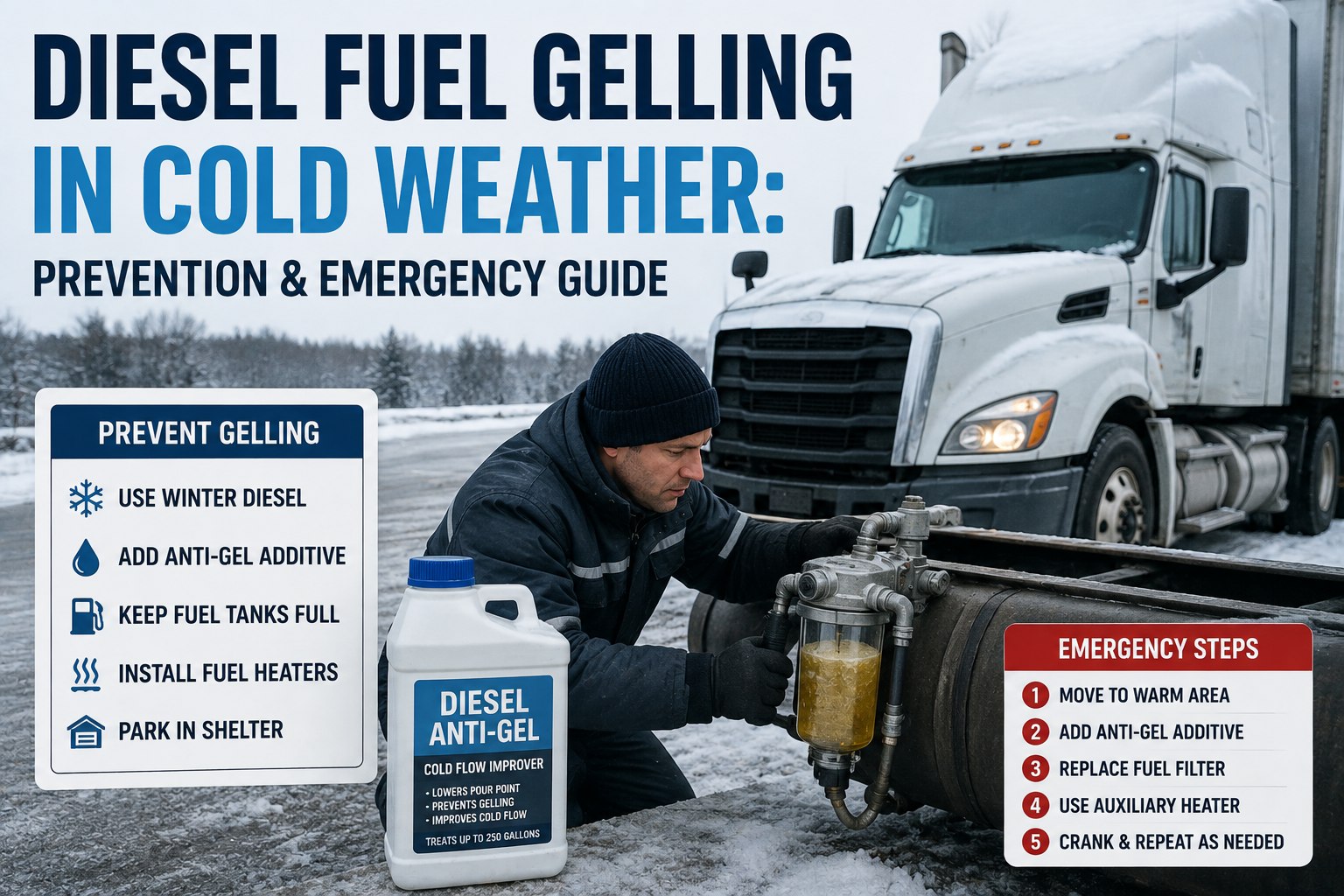
Preventing gelling is exponentially cheaper than treating a gelled truck. Four defensive layers work together. Use all four in cold climates — none of them alone is bulletproof:
Winter-Blend Diesel
Buy winter blend at the pump when temperatures drop. Refineries produce a mix of #2 and #1 diesel (or #2 with cold-flow additives) that meets lower CFPP specifications. #1 diesel has less wax and dramatically lower gel point.
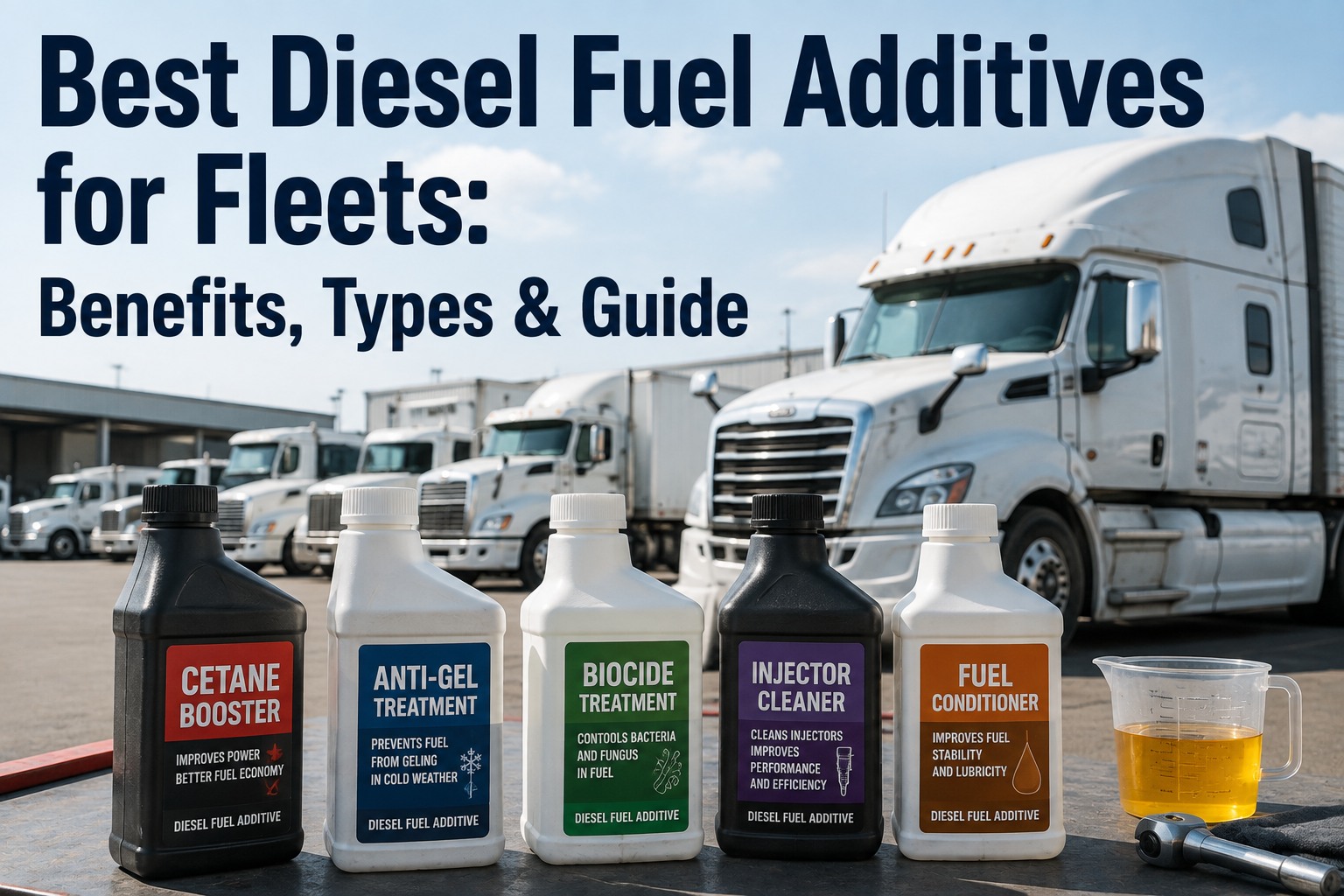
Anti-Gel Additives
Add cold-flow improver to every tank when temperatures forecast below 30°F. Common brands: Howes Diesel Treat, Power Service Diesel Fuel Supplement +Cetane, Hot Shot's Winter Anti-Gel, AMSOIL Diesel Cold Flow. One bottle treats 100–300 gallons.
Fuel Heaters & Warmers
Electric fuel heaters, engine block heaters, and heated fuel filters keep fuel warm through the coldest conditions. Standard equipment on trucks operating in Alaska, northern Canada, and mountain states. Aftermarket kits $200–$800 installed.
Tank & Truck Protection
Park in heated shop overnight when possible. Keep tanks 3/4+ full (less air space = less condensation). Insulate exposed fuel lines. Use engine block heater with timer to warm before dispatch. All zero-cost or low-cost interventions.
Emergency Thaw Procedure
Truck already gelled? Skip the panic — follow this sequence. Do not repeatedly crank the engine (kills battery, damages starter). Do not use open flame near fuel components (this should never need to be said, but it does):
Stop Cranking Immediately
Do not continue trying to start. Battery will die, starter will overheat. Truck is not starting until fuel flows — no amount of cranking changes that. Save battery for the actual restart.
Get the Truck Warm
Move to heated shop if possible. If not: tarp the engine compartment and use a portable heater (never open flame) to warm fuel filter and fuel lines. Warm from filter upstream to tank. Takes 2–8 hours depending on gel severity.
Add Emergency Deliquefier
Power Service Diesel 911, Hot Shot's Diesel Winter Rescue, AMSOIL Diesel Recovery — all reliquefy gelled fuel. Add to tank per label directions. These are DIFFERENT products from prevention anti-gels — they dissolve existing gel rather than prevent formation.
Replace Fuel Filter
The filter is packed with wax crystals and possibly water ice. Replace with new filter before attempting restart. Prime new filter with treated fuel. This is why every diesel truck should carry a spare filter in winter.
Prime & Restart
Prime fuel system per manufacturer procedure. Attempt start with battery at full charge — jump-start from another vehicle if drained from earlier cranking. Truck should start once fuel flows. Run for 10+ minutes before dispatch to verify no repeat.
Track winter fuel treatment across every truck — before the cold snap, not during
Truck Inspection & Maintenance tracks winter fuel treatment applications, fuel filter changes, spare filter inventory per truck, and cold-weather PM checklists across your entire fleet. Pre-winter alerts fire in September. Driver DVIRs capture cloudy-fuel observations and cold-start difficulties. Turn cold-weather prep from a hope into a documented process. Sign up free for up to 3 vehicles.
Anti-Gel Additive Comparison
Not all anti-gel additives are the same. Some are prevention-only, some emergency-only, and some do both. Match the product to your actual situation — using an emergency deliquefier as a preventive is expensive; using a preventive on already-gelled fuel doesn't work at all:
Cold-Flow Improver
Fuel Deliquefier
#1 Diesel / Kerosene Blend
The 6 Most Common Winter Fuel Mistakes
Every gelled truck traces back to one or more of these mistakes. Recognize the pattern and eliminate them before winter hits:
Assuming Winter Blend is Enough
US fuel specs don't specifically require winter operability. Refineries can meet all specs and still gel. Winter blend is a start, not a guarantee — always add anti-gel additive in cold snap conditions.
Adding Additive After Gelling Starts
Cold-flow improvers must mix with fuel BEFORE wax crystals form. Adding to already-gelled fuel does nothing — the wax has already crystallized. Add prevention additives with every fill-up in winter.
Confusing Prevention vs Emergency
Prevention additive on gelled fuel = doesn't work. Emergency deliquefier as prevention = expensive and unnecessary. Two different products for two different situations. Carry both, use appropriately.
Ignoring Water in Fuel
Trace water freezes at 32°F, plugging filters even when diesel hasn't waxed. Drain water separator daily in winter. Keep tanks 3/4+ full to minimize condensation-generating air space.
No Spare Filter On Board
Emergency thaw includes replacing the wax-packed filter. Truck without a spare filter waits for parts delivery — hours or days depending on location. Every diesel truck carries winter spare filter.
Using Open Flame Near Fuel
Cannot be stated enough: NEVER use open flame, propane torch, or unshielded heating device near fuel filter, fuel lines, or tank. Portable electric heater with tarp only. Fire risk is real and catastrophic.
Frequently Asked Questions
At what temperature does diesel fuel gel?
Depends on the fuel and additives. Standard #2 summer-blend untreated diesel starts forming wax crystals at the cloud point around 32°F (0°C) — as high as 40°F for lower-quality fuel. Filters plug at the Cold Filter Plugging Point (CFPP), typically 14–23°F for untreated #2 diesel. Fuel stops flowing entirely at the pour point, typically -4°F to -20°F. Winter-blend fuel and anti-gel additives lower these numbers significantly — properly treated, CFPP drops approximately 18°F below cloud point (the "18° rule").
What's the difference between cloud point, CFPP, and pour point?
Three distinct stages of cold-weather diesel behavior. Cloud point is the temperature where wax crystals first appear — fuel looks cloudy but still flows normally. CFPP (Cold Filter Plugging Point) is where wax crystals grow large enough to clog the fuel filter — engine begins to fuel-starve. Pour point is where the fuel stops flowing entirely and becomes gel-like solid — below this point, no chemical additive helps, only heat can reliquefy. All three shift dramatically with fuel type, quality, and additive treatment.
How do anti-gel additives actually work?
Anti-gel additives contain polymer-based wax crystal modifiers that prevent paraffin from forming the large crystals that block filters. Instead of one big crystal, hundreds of tiny crystals form — small enough to pass through filter media. This lowers effective CFPP by 10–30°F depending on dosage and fuel base properties. Must be added BEFORE wax forms — mixing additive with already-gelled fuel does nothing. Different from emergency deliquefiers, which dissolve existing gel through solvent action.
What do I do if my diesel truck is already gelled?
Stop cranking immediately (dead battery makes recovery harder). Move truck to heated shop if possible; if not, tarp engine compartment and use portable electric heater (never open flame) to warm fuel filter and lines. Add emergency deliquefier (Diesel 911, Diesel Winter Rescue, AMSOIL Diesel Recovery) to tank. Replace fuel filter — it's packed with wax crystals. Prime fuel system and attempt restart with fresh battery charge. Full recovery typically takes 2–8 hours depending on gel severity.
Do I need anti-gel additive if I buy winter-blend diesel?
Yes — as a belt-and-suspenders approach in serious cold. US diesel fuel specifications don't specifically require winter operability, so refineries can meet all specs and still sell fuel that gels. Winter blend gives you baseline protection; anti-gel additive adds 10–30°F additional CFPP margin. In markets that occasionally see temperatures below 0°F, running additive with every fill-up during cold months is cheap insurance against a $1,500–$5,000 gelling event. Talk to our team about winter prep documentation.
How does Truck Inspection & Maintenance help with cold-weather fuel management?
Truck Inspection & Maintenance tracks winter fuel treatment applications per vehicle, fuel filter change dates, spare filter inventory per truck, and cold-weather PM checklists across your fleet. Pre-winter alert reminders fire in September for annual winter prep tasks. Driver DVIRs capture cloudy-fuel observations, cold-start difficulties, and fuel restriction warnings — creating a documented trail of cold-weather performance. Free forever for up to 3 vehicles. Sign up in 10 minutes.
Winter fuel treatment tracking, spare filter inventory, and cold-weather PM alerts — for every truck.
A $6–$12 bottle of anti-gel additive prevents a $1,500–$5,000 gelling event. Truck Inspection & Maintenance tracks winter fuel treatment applications, filter change dates, spare filter inventory per truck, and cold-weather PM alerts across your fleet. Pre-winter reminders fire in September. Driver DVIRs capture cloudy-fuel observations before they become strandings. Free forever for up to 3 vehicles with no hardware and no contracts. Set it up in 10 minutes.