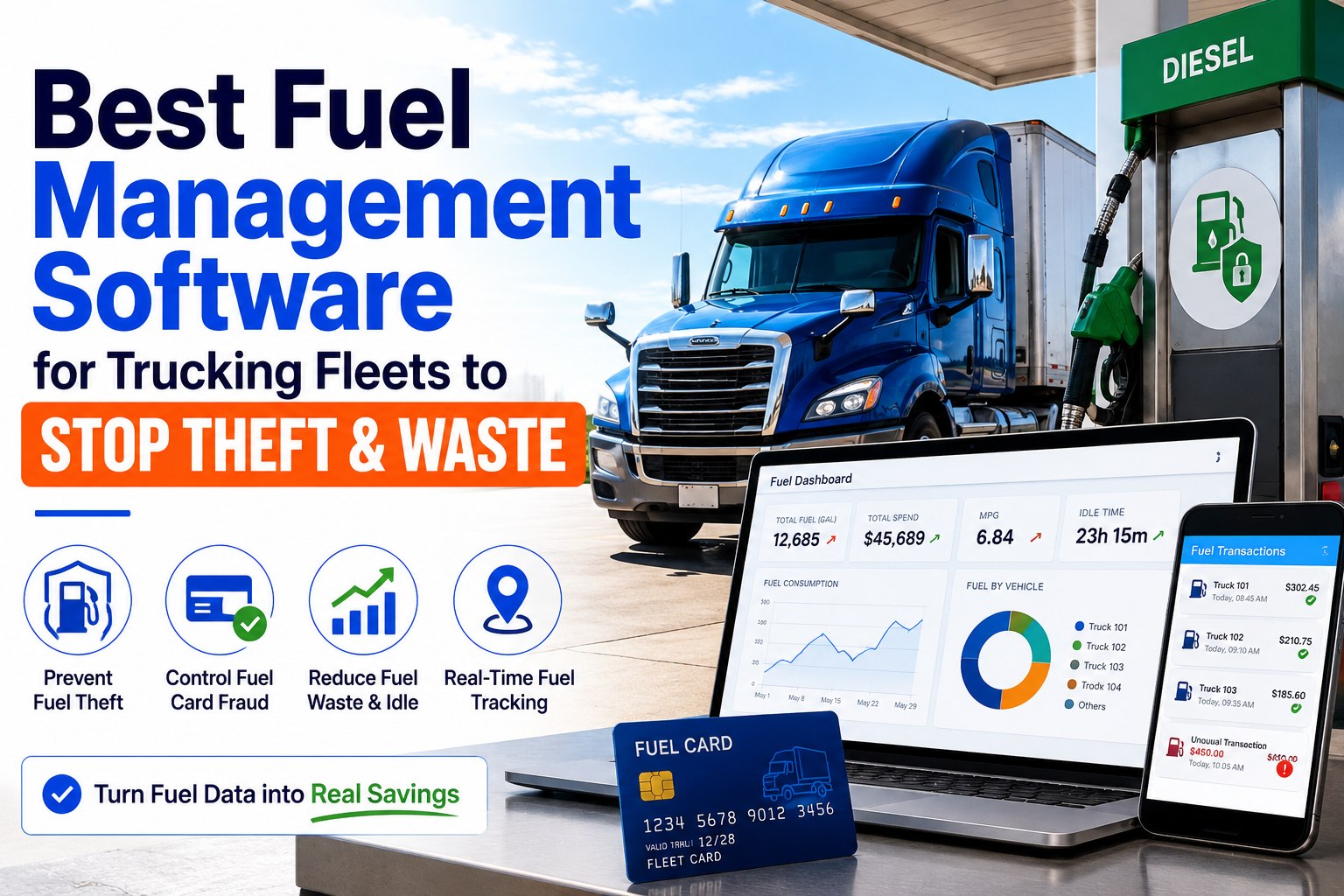
The fleet management software market crossed $30 billion in 2026 — and approximately 40% of fleet managers regret their first software choice. That's not because the platforms are bad. It's because most buyers evaluate based on vendor demos and feature lists instead of operational reality. The slick dashboard that wins the demo fails when your hardware overheats in Arizona summer, your drivers park in urban garages with poor GPS signal, your shop techs need to update work orders from underground mining levels with no cell service, or your $20/vehicle/month sticker price quietly becomes $45/vehicle/month once hardware, installation, and the features you actually need get added in.
The 2026 reality: fleet management software pricing ranges from free basic tracking to over $60 per vehicle per month at the enterprise tier, with first-year total cost of ownership for a 50-vehicle fleet running anywhere from $31,000 (budget tier) to $53,000+ (premium with full feature stack). Capabilities have expanded dramatically — what used to be "GPS tracking" is now an integrated stack of telematics, automated PM scheduling, digital DVIRs, work-order automation, compliance documentation, fuel monitoring, driver behavior coaching, predictive AI analytics, and API integrations with ERP and accounting systems. The difference between fleets that get genuine ROI and fleets that overpay for shelfware comes down to one thing: a structured evaluation framework applied before the contract is signed.
This guide is that framework — the 9 evaluation criteria, the feature-category comparison rubric, the pricing-tier breakdown, the red-flag warning signs, and the implementation checklist that separates platforms that work from platforms that just demo well. Start your free trial to evaluate a complete platform on your actual fleet — no credit card, no contract commitment, free for up to 3 trucks.
Best Fleet Management Software of 2026: Top Picks Reviewed
The complete 2026 buyer's framework for choosing fleet management software — 9 evaluation criteria, feature-category breakdowns, pricing-tier comparison, red-flag warning signs, and the implementation checklist that separates platforms that work from platforms that just demo well.
Quick Answer: How to Choose Fleet Management Software in 2026
The best fleet management software in 2026 is the platform that aligns with your operational structure — not the one with the longest feature list. Decision-makers should evaluate platforms against 9 core criteria: feature completeness across maintenance/inspection/compliance, offline mobile capability, integration readiness, pricing transparency, implementation timeline, trial availability, hardware requirements, customer support quality, and demonstrated ROI. Pricing ranges from $5 to $60 per vehicle per month with first-year TCO of $31,000–$53,000 for a 50-vehicle fleet. Top features that deliver real ROI: automated PM scheduling (60% downtime reduction), digital DVIRs (eliminating $1,270-$23,048 FMCSA penalty risk), defect-to-work-order automation, fuel monitoring (30-40% of operating costs), and offline mobile inspection capability. Avoid platforms requiring contract commitment before trial, proprietary hardware purchases, or hidden feature gating across pricing tiers.
The 9 Evaluation Criteria — Score Every Platform
Use this scoring rubric on every platform you evaluate. Score each criterion 1-5. A platform scoring below 30/45 will likely become a regret purchase. Above 38/45 indicates strong operational fit. Contact our sales team for a scored evaluation against your specific operation.
Essential Feature Categories — What Modern Platforms Include
2026 fleet management software has consolidated dramatically. Where buyers used to assemble 5 separate tools for telematics, maintenance, inspections, fuel, and compliance, modern platforms unify all six categories on one system of record. Here are the must-have feature categories every serious platform should cover.
2026 Pricing Tiers — What You'll Actually Pay
Fleet management software follows a three-tier pricing model in 2026, with substantial variation in what each tier actually includes. Understanding the tiers before vendor demos protects you from overpaying for features you'll never use OR underbuying and outgrowing the platform in 6 months.
First-year total cost of ownership for a 50-vehicle fleet: $31,000 (entry) to $53,000+ (enterprise) when hardware, installation, training, and integration are included. The advertised per-vehicle rate often doubles by the time the contract is signed.
7 Red Flags to Avoid in Vendor Evaluations
Across hundreds of fleet software purchases, these are the warning signs that separate reliable vendors from costly mistakes. Every one of them is a contract trap that emerges only after you've signed. Sign up free to test a platform that passes all 7 red-flag tests upfront.
The 5-Step Evaluation Process
Follow this sequence to avoid joining the 40% of buyers who regret their first purchase. Skipping any step is how regret purchases happen.
Frequently Asked Questions
Per-vehicle monthly pricing ranges from $5 (entry-tier) to $60+ (enterprise-tier) in 2026. First-year total cost of ownership for a 50-vehicle fleet typically runs $31,000–$53,000 when hardware, installation, training, data migration, and integration costs are included. The advertised per-vehicle rate often roughly doubles by the time everything is added. Best-practice: request 12-month TCO breakdown including all line items before signing. Contact our sales team for a TCO worksheet customized to your fleet.
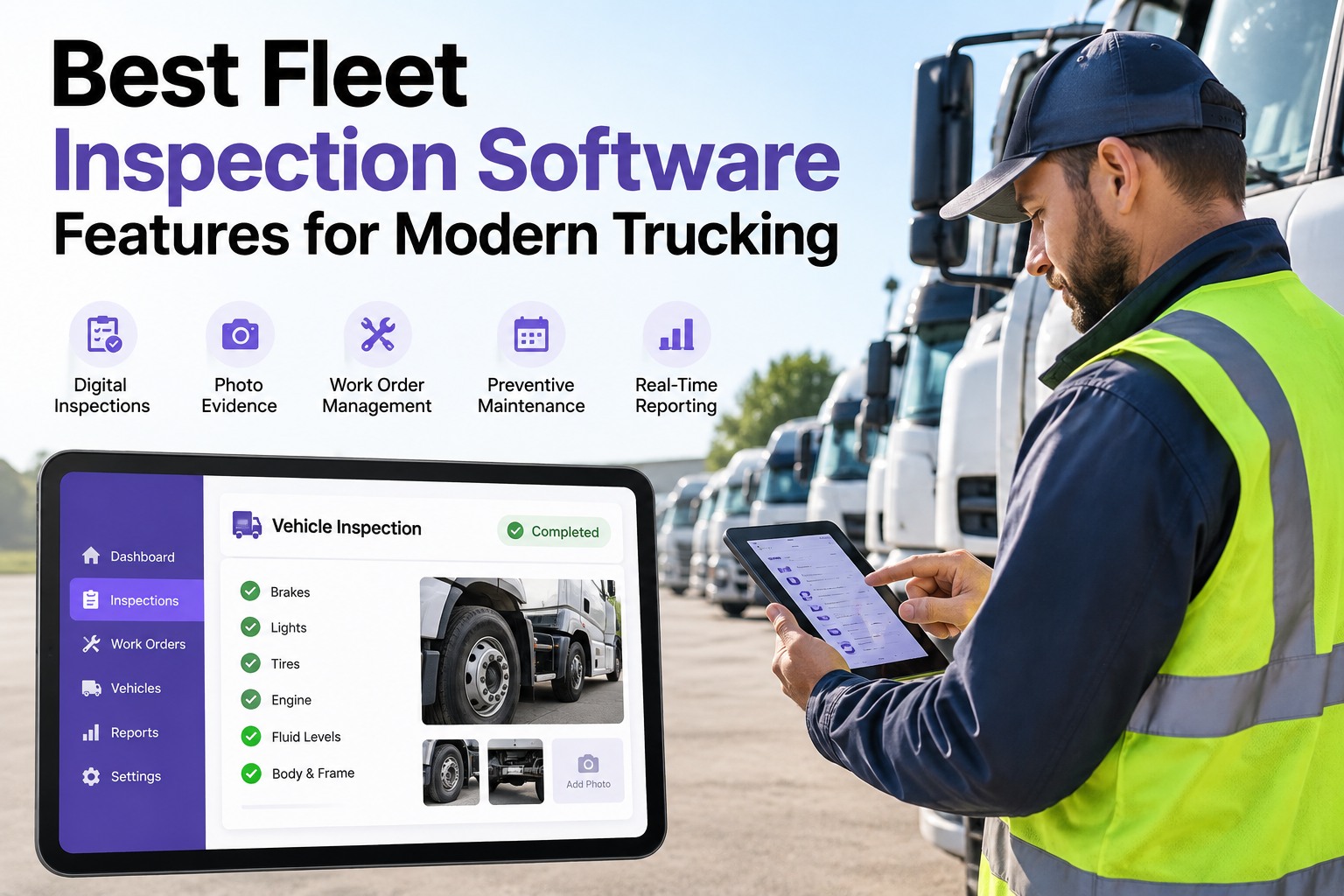
The 2026 baseline feature set: real-time GPS tracking with 30-second refresh, multi-trigger PM scheduling (mileage/hours/calendar), mobile DVIRs with photo evidence and GPS timestamps, defect-to-work-order automation, fuel monitoring and IFTA reporting, compliance documentation (FMCSA / DOT / OSHA / MSHA as applicable), driver behavior scoring, and offline mobile capability. Modern platforms unify all of these on one system of record — older platforms force you to bolt together 4-5 separate tools.
Modern cloud-based platforms deploy in 10 minutes for technical setup, then 8-12 weeks for full operational rollout including asset registry, PM template configuration, pilot deployment, and fleet-wide training. Legacy enterprise platforms still quote 6+ month implementations with mandatory professional services packages — that's a signal the platform is too complex for modern operations. Software-first platforms now compete on speed-to-value, not consulting hours. Start your free trial to verify deployment speed on your actual fleet.
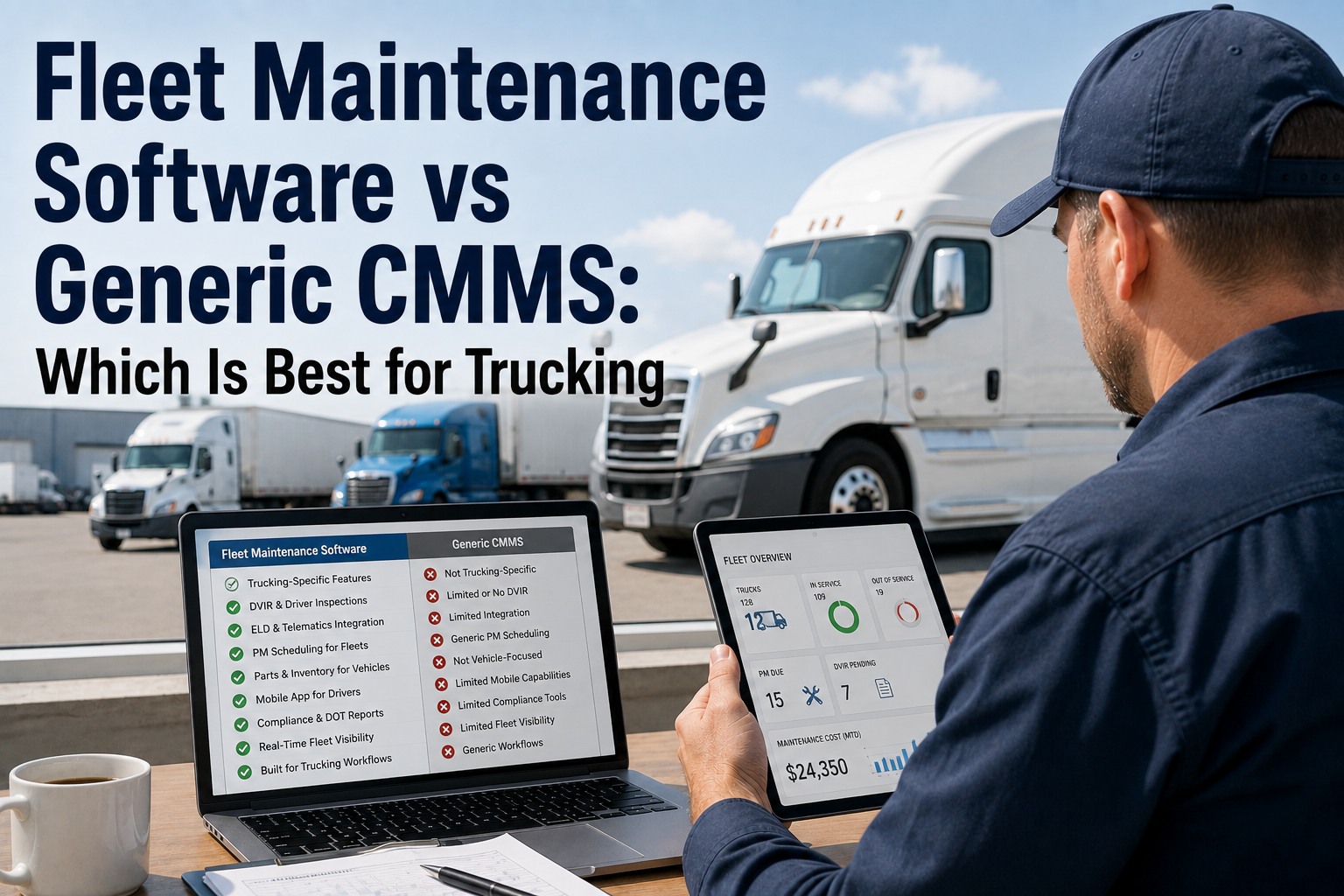
No — and you actively shouldn't. The 2026 best-practice is one platform handling inspections, maintenance scheduling, work orders, compliance documentation, fuel tracking, and reporting. "Best of breed" with 5 separate tools creates data drift, duplicate entry, integration maintenance overhead, and the chronic problem of defects flagged in one tool that never make it to work orders in another tool. Unified platforms eliminate the integration tax — what you pay for in subscription you save 10× in operational complexity.
Insist on a minimum 14-day full-feature trial — preferably with no credit card required and no mandatory contract. Onboard 5-10 actual assets. Have real drivers complete real inspections. Test offline capability at your actual job sites. Measure defect-to-work-order cycle time. Verify reporting accuracy. Vendors confident in their product offer this; vendors requiring contract commitment before trial are betting you won't discover limitations until locked in. Talk to our sales team about pilot terms.
Industry data shows $40,000–$70,000 annual ROI for a 50-vehicle fleet, achieved through fuel savings (5-15% reduction), maintenance cost reduction (20-30% through structured PM), unplanned downtime reduction (up to 60% through PM scheduling alone), insurance discounts from telematics, accident prevention from driver behavior coaching, and eliminated compliance penalty exposure. Payback periods typically run 3-9 months. Smaller fleets see proportional ROI starting with strong PM compliance plus mobile DVIRs as the foundation.
Apply the 9-Criteria Framework to a Platform That Scores 45/45
500+ fleets evaluated against the framework picked the platform that scores 45/45: complete feature stack, mobile-first inspections, full offline capability, 50+ telematics integrations, transparent flat pricing, 10-minute setup, risk-free trial, no proprietary hardware, and customer references at every fleet size. The 2026 standard for fleet management software.