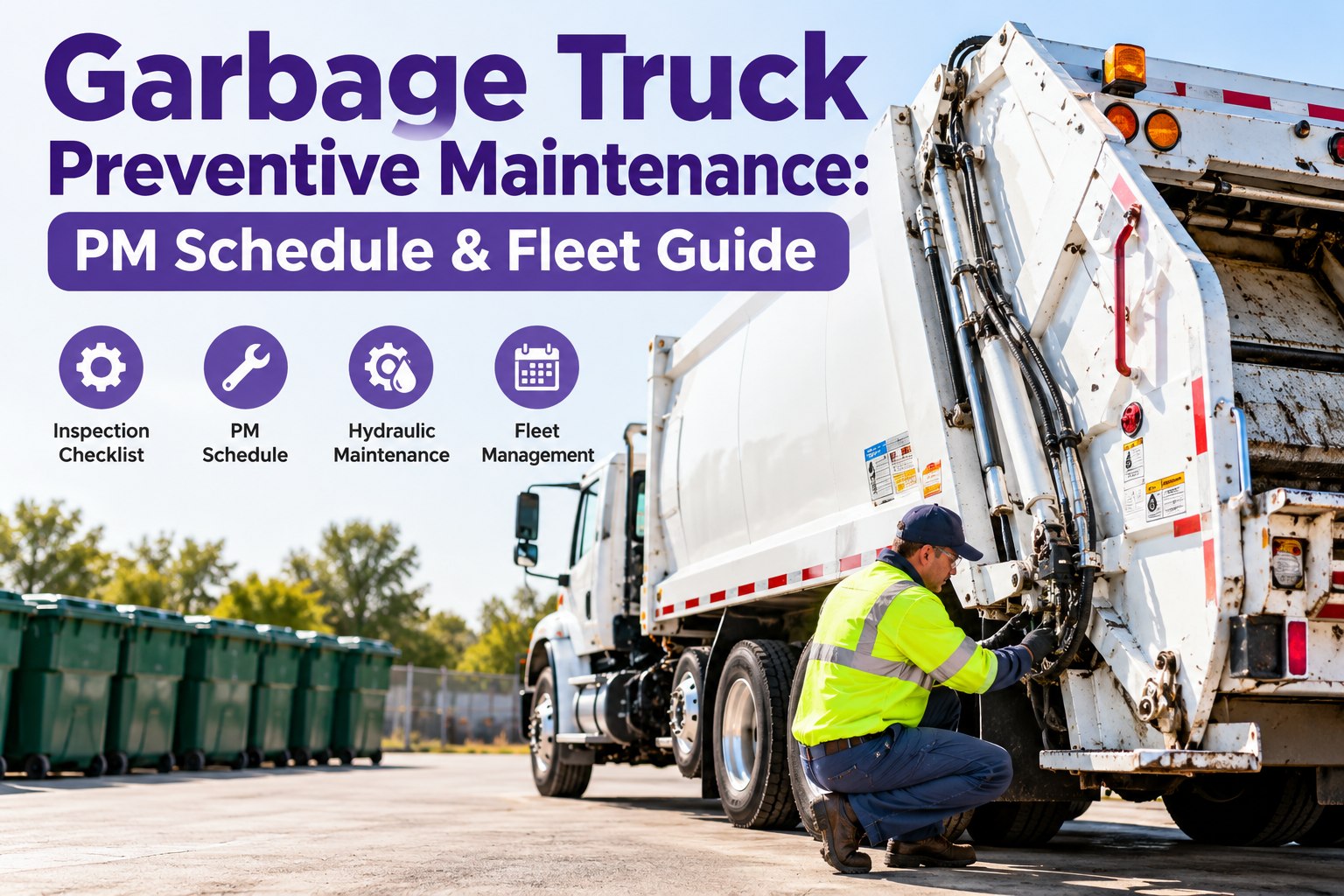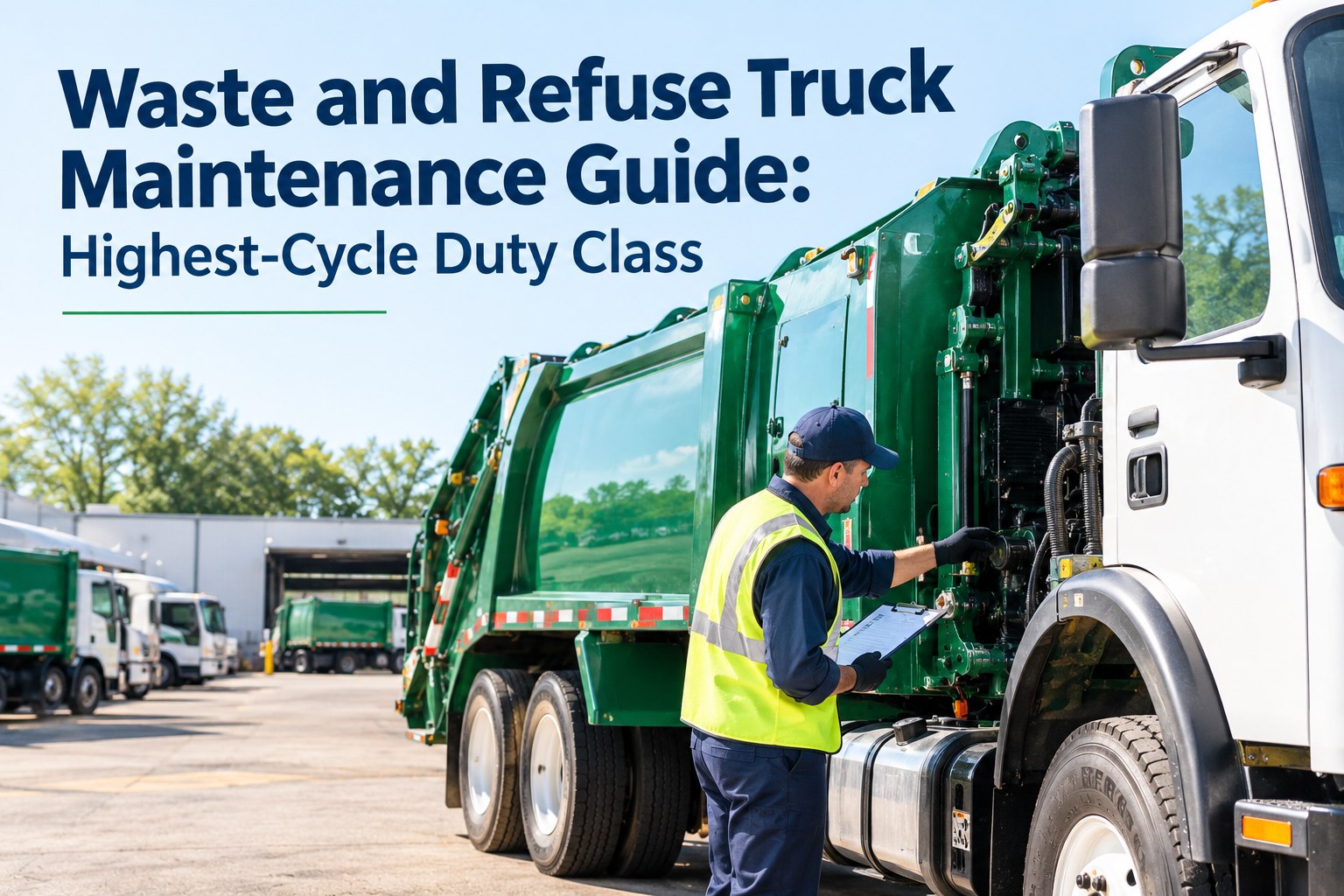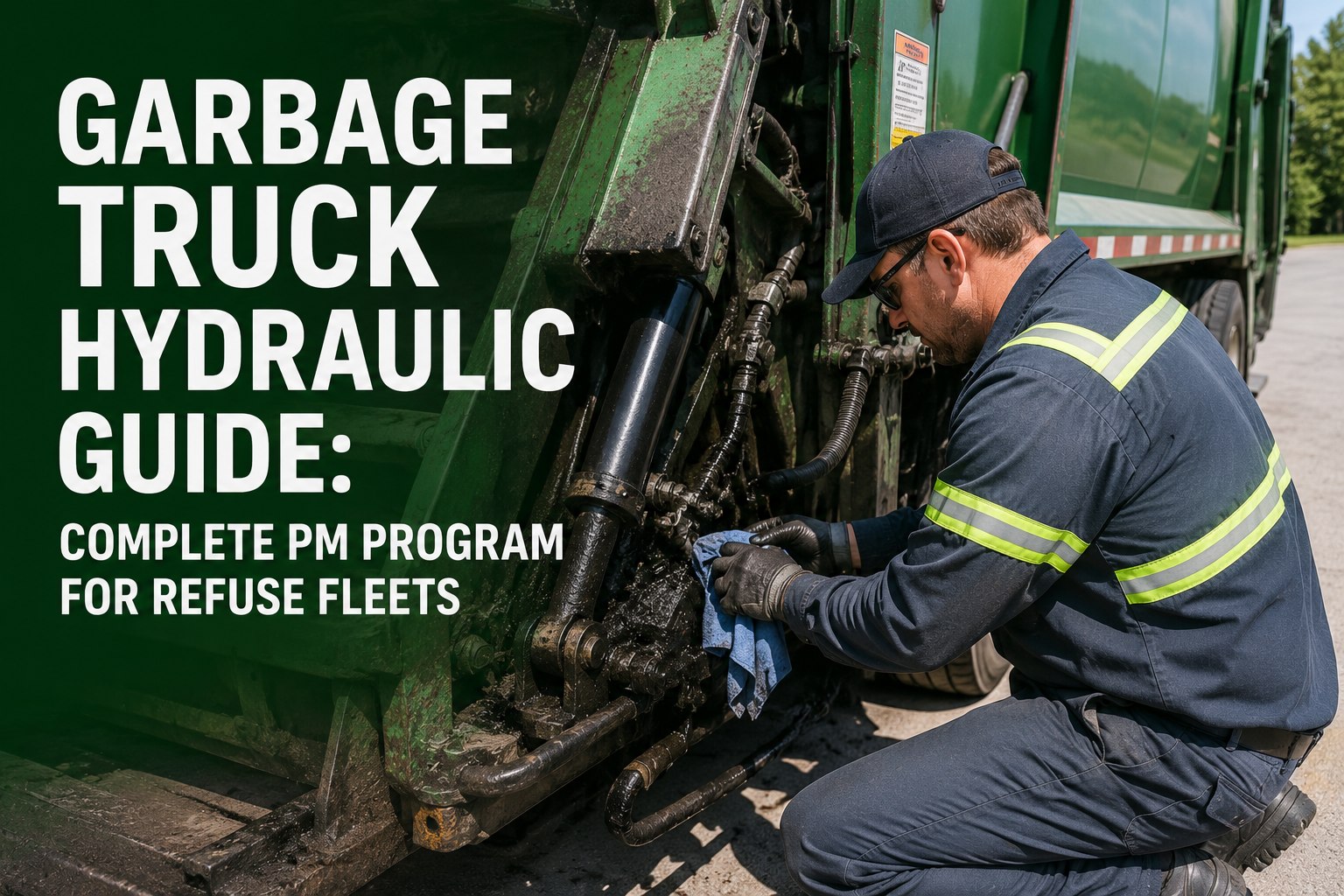
Every refuse fleet manager runs into the same wall: the truck has to be on the street when the route runs, and PM has to happen when it doesn't — but a garbage truck's "doesn't" is a narrow, awkward slice of the week. Refuse trucks cycle their hydraulics 800–1,200 times per route and rack up engine wear 3–4× faster than an over-the-road truck because they idle constantly to run the packer, so they need more maintenance than a highway truck, not less — squeezed into less available time. That leaves three real windows to work with: the weekend, the weeknight after routes finish, and the route swap where a spare truck covers so a unit can come in mid-week. Each opens up different maintenance capacity, carries different labor cost, and suits a different kind of job. Pick the wrong window for the work and you either pay weekend overtime for a job a weeknight could've handled, or you try to cram a major hydraulic repair into a three-hour overnight slot and send the truck out unfinished. This guide compares all three head-to-head so you can match the window to the work. Truck Inspection & Maintenance turns whichever window you pick into scheduled, tracked, above-95%-compliant PM — start a free trial or contact our team.
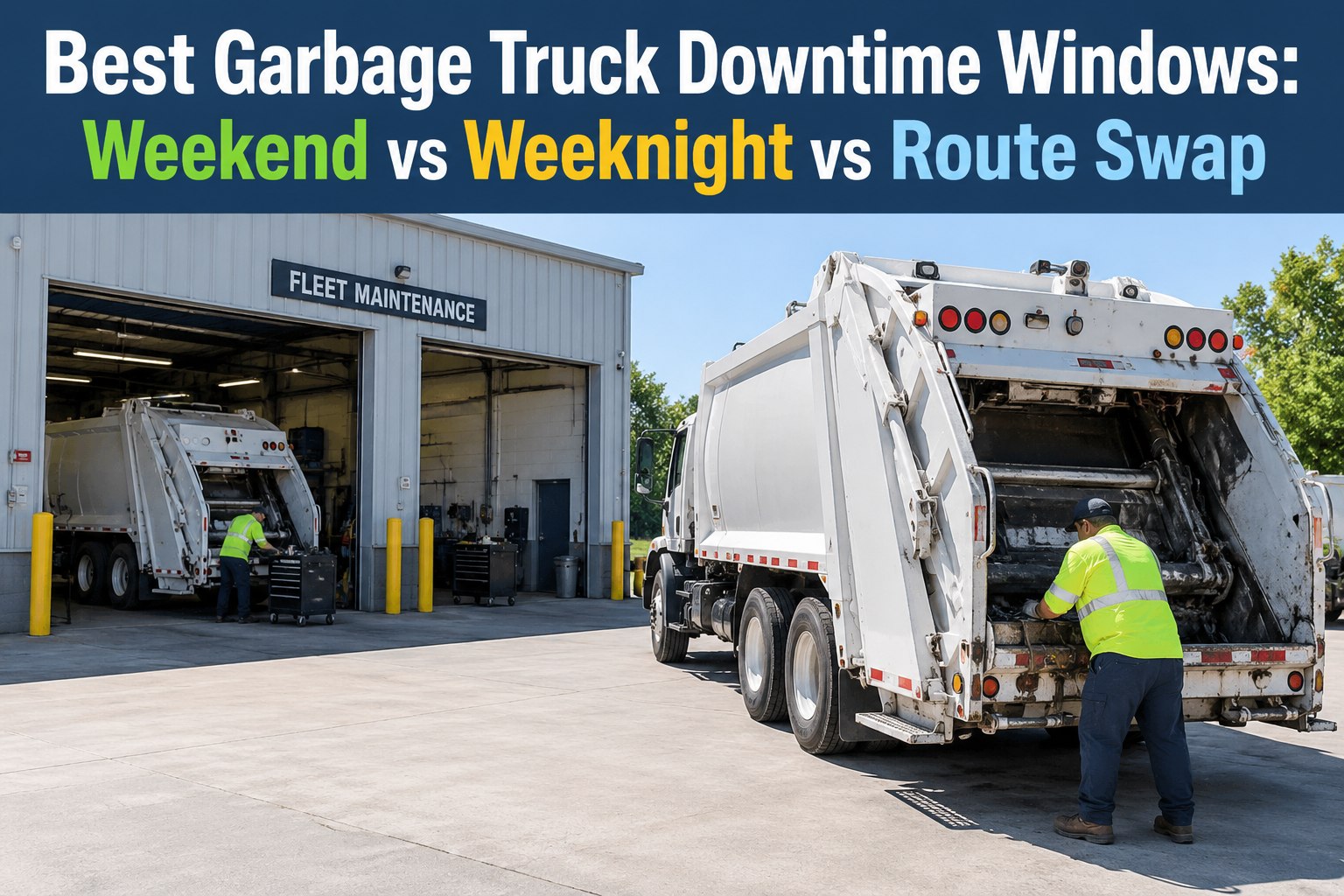
Best Garbage Truck Downtime Windows: Weekend vs Weeknight vs Route Swap
Three windows. Three cost profiles. Three job types. Here's which one fits which work — and what it costs to get it wrong.
First, What You're Fighting For — The Cost of an Unplanned Day
Every window decision traces back to one number: what a refuse truck costs when it's down without warning. That's the money PM windows exist to protect:
The window only matters if the work actually gets scheduled and tracked. Start a free trial and turn any window into above-95% PM compliance.
The Head-to-Head Scorecard
Rated across the five factors that decide a refuse PM window. More filled blocks is better on capacity and route-safety; the cost row reads plainly:
Window 1 — The Weekend
The heavyweight. When routes don't run Saturday and Sunday, the truck is free for a full uninterrupted block — the only window big enough for real work.
Window 2 — The Weeknight
The workhorse. Routes finish, trucks return, and a few hours open up every single night — short, but relentless and repeatable.
Window 3 — The Route Swap
The flexible option. Keep a spare truck (or float capacity from a light route) and you can pull any unit in during normal daytime hours while its route stays covered.
The Quick Matcher — Which Window for the Job
Match the work to the window that fits it, and stop paying weekend rates for weeknight jobs:
The Real Answer Isn't One Window — It's Routing Each Job to the Cheapest Window That Fits It
The fleets that win at refuse PM don't pick a single window and force everything into it. They run all three: weeknights absorb the constant stream of small, prevention-critical fixes; route swaps handle planned mid-week services at day-shift rates; and weekends are reserved for the heavy jobs that genuinely need a full block. The trick is knowing, the moment a defect or a due-service appears, which window it belongs in — and that only works when every defect, engine-hour reading, and PM interval lives in one system instead of scattered across DVIR paper, a whiteboard, and a spreadsheet. That routing is where a $400 planned part stays $400 instead of becoming an $8,200 mid-route failure. Start a free trial and route every job to the right window automatically.
Whichever window you pick, the work only pays off if it's scheduled, tracked, and above 95% compliant.
Replace paper DVIRs and PM spreadsheets with mobile inspections, automated work orders, and real-time compliance dashboards — so every defect routes to the right window and no service slips. Start a free trial or talk to our team.
Frequently Asked Questions
Which downtime window is best for refuse truck PM?
There's no single best — each fits different work. Weekends suit heavy jobs needing a full block, weeknights handle the constant stream of small prevention fixes, and route swaps cover planned mid-week services at day-shift rates. The best fleets route each job to the cheapest window that fits it.
Why do refuse trucks need more maintenance than highway trucks?
They cycle hydraulics 800–1,200 times per route and idle constantly to run the packer, accumulating engine wear 3–4× faster per mile than an over-the-road truck. That drives 3–5× the downtime rate — more maintenance needed, squeezed into less available time.
Is weekend PM worth the overtime cost?
Only for work that genuinely needs the full uninterrupted block — major hydraulic overhauls, packer-body work, annual DOT inspections. Weekend hours are your most expensive, so reserve them for big jobs and push filter changes or fluid top-offs to a weeknight instead.
What is a route-swap maintenance window?
You keep a spare truck (or float capacity from a light route) so any unit can be pulled in during normal daytime hours while the spare covers its route. You get straight-time labor and full parts access, but it only works if the fleet has spare capacity — at 100% utilization the window closes.
How much does an unplanned refuse truck breakdown cost?
Roughly $260–$450 per hour once missed routes, overtime, and municipal SLA penalties are counted, with the average truck losing 8.7 unplanned days a year. And a part that costs $400–$800 planned runs $3,200–$8,200 when it fails mid-route — the 3–5× reactive multiplier.
How does Truck Inspection & Maintenance help with PM windows?
It replaces paper DVIRs and PM spreadsheets with mobile inspections, automated work orders, engine-hour PM scheduling, and real-time compliance dashboards — so every defect and due service routes to the right window and PM compliance stays above 95%. Start a free trial or contact us.
Weekend, weeknight, or route swap — the win isn't the window you pick, it's routing every job to the one that fits it.
Mobile DVIRs that catch defects, engine-hour PM that schedules the work, automated work orders that route it to the right window, and dashboards that prove it got done — one system that keeps refuse trucks on the street and off the shoulder.