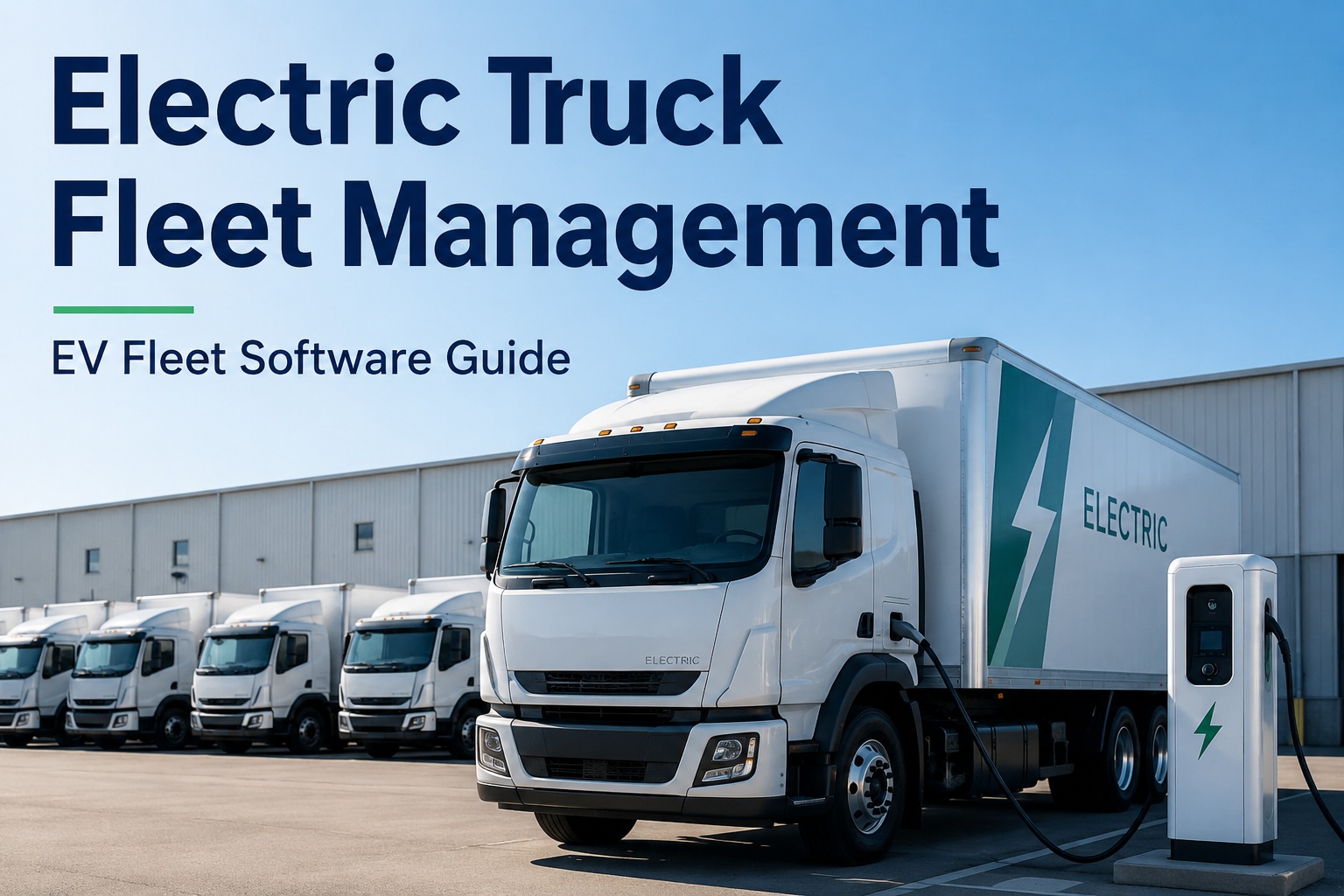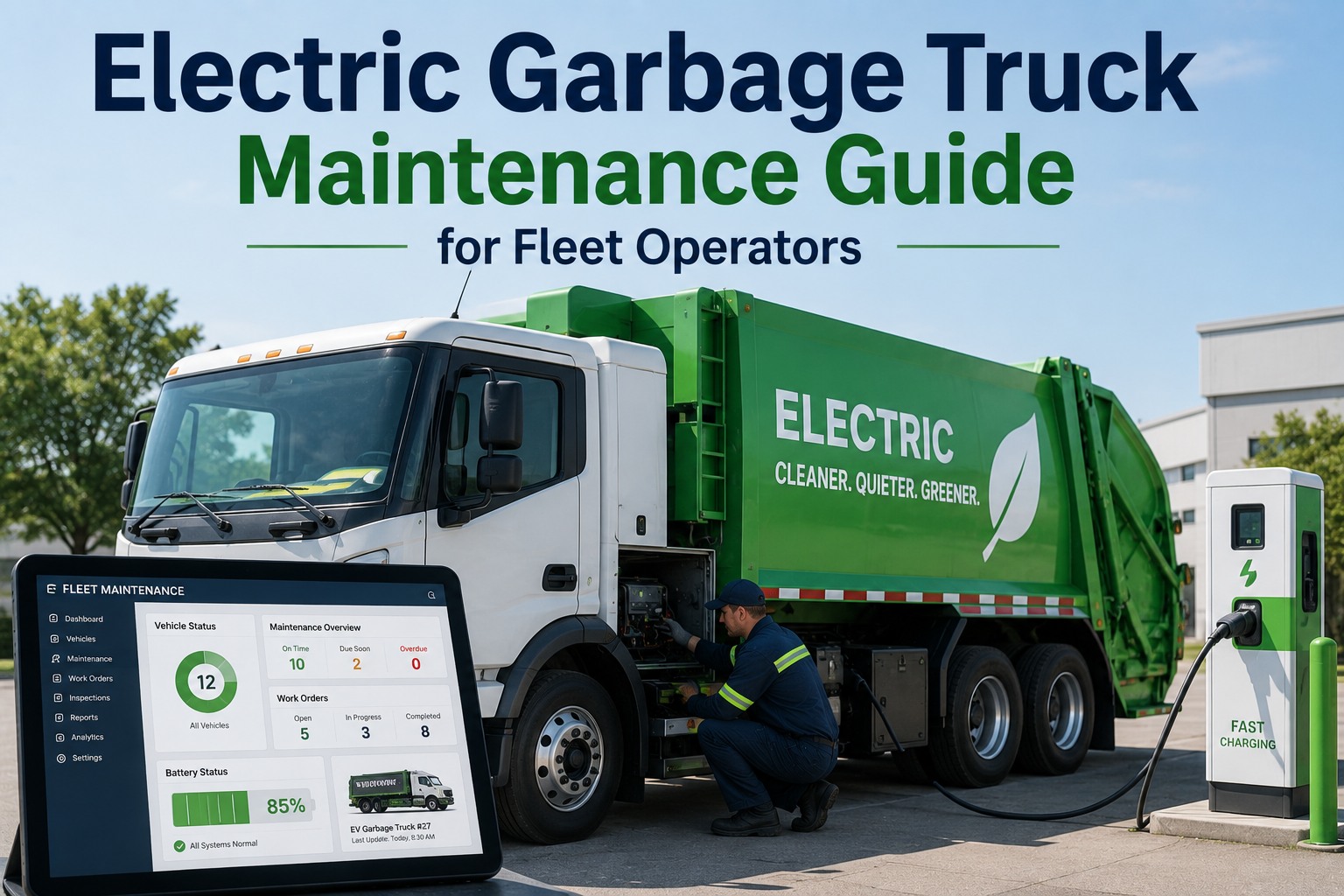
The garbage truck is quietly becoming the poster child for heavy-duty electrification — and it makes sense the moment you look at the duty cycle. A refuse truck stops as often as 700 to 1,000 times a day, crawls a predictable 80-to-200-km route, and returns to the same depot every night. That's a punishing profile for a diesel — all that stop-start, idling, and compaction work burns fuel and shreds brakes — but it's very nearly the ideal case for an electric drivetrain, where every stop feeds energy back through regenerative braking. The payoff shows up hardest in the shop: New Haven projected roughly $3,500 a year to maintain its electric refuse truck versus up to $30,000 for the diesel it replaced. But going electric doesn't just shrink the maintenance list — it rewrites it. Manage your EV refuse fleet free. This guide lays out exactly what maintenance disappears, what brand-new tasks take its place, why the battery is the new engine, and how the numbers actually pencil out for a fleet operator.
Electric Garbage Truck Maintenance Guide for Fleet Operators
Electric refuse trucks cut maintenance cost by more than 40% — but they don't just remove work, they change it. What disappears, what's new, why the battery is the engine you now manage, and how to keep an EV fleet on the road.
Why Refuse Is the Ideal EV Case
Not every fleet is a natural fit for electrification. Refuse is — the exact traits that make the diesel version expensive to run are the ones that make the electric version shine.
The Maintenance Shift: Gone vs New
This is the heart of the transition. Electrifying a refuse truck doesn't just trim the maintenance list — it swaps out whole categories. Roughly 40% fewer moving parts means much of the diesel service schedule simply vanishes, while a new set of high-voltage tasks appears in its place.
The Numbers That Drive the Decision
The upfront price is higher — often two to three times a diesel — but maintenance and energy costs run so much lower that total cost of ownership is where the case is won. These are the figures fleet operators are seeing in 2026.
The Battery Is the New Engine
On a diesel you watch fuel level and oil life. On an electric refuse truck the battery is the asset that determines whether the route gets finished — so state of charge, state of health, and thermal condition become the numbers that matter most. Truck Inspection & Maintenance tracks battery SOC in real time, alerts when a truck starts a shift under its threshold, and trends state of health so a degrading pack is caught long before it strands a route.
Managing the Battery
The battery is where EV-specific maintenance concentrates, and most of it is monitoring rather than wrenching. Four things decide whether the pack does its job and lasts its life.
An EV refuse truck should begin each shift near full charge. A truck that pulled less than a full charge risks a mid-route range failure — the problem that doomed early EV pilots.
Cold weather can cut usable capacity 20–30% and calls for battery preconditioning; extreme heat raises HVAC load and stresses pack longevity. Season changes the plan.
Beyond today's charge, the pack's long-term capacity slowly degrades. Trending state of health turns an eventual expensive surprise into a planned, scheduled event.
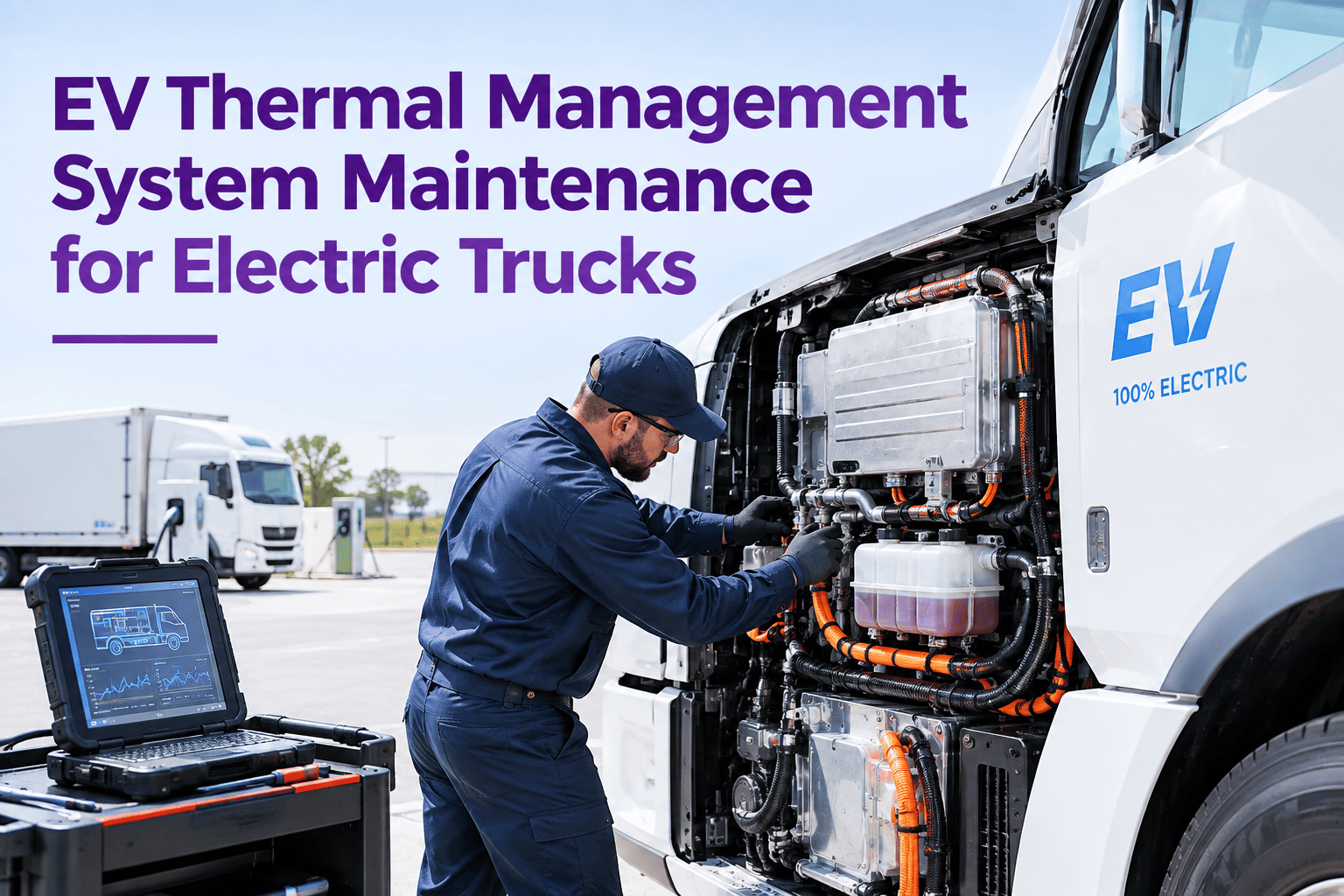
The battery's cooling and thermal-management system is now a serviceable item — coolant, pumps, and controls that keep cells in their safe operating window.
Don't Forget: The Body Is Still Hydraulic
Here's the trap fleets fall into — assuming an electric truck means electric everything. The chassis and drivetrain are electric, but the refuse body doing the actual work usually isn't.
The packer blade and lift arm typically remain hydraulic — the same cylinders, pumps, hoses, and seals that need regular inspection on a diesel truck.
Hydraulic fluid changes, filter service, and leak checks carry straight over — this part of the PM schedule doesn't change at all.
Heavy stop-and-go loads still wear tires, suspension, and steering — and an EV's battery weight makes tire and chassis checks just as important.
Regen: The 700-Stops Advantage
Regenerative braking is where the refuse duty cycle and the electric drivetrain fit together perfectly — and it changes how you maintain the brakes.
Your Team and Depot Need to Be Ready
The trucks are only half the transition. Two pieces of readiness decide whether electrification succeeds, and both need to start early.
Technicians need proper training and safety procedures to work on high-voltage systems. Diagnostics change, tools change, and the risks are different — this can't be an afterthought.
Enough chargers, enough electrical capacity, and enough scheduling discipline. Utility upgrades — transformers, switchgear, trenching — can take months to years, so a fleet wanting trucks in 2028 should start the utility conversation now.
The Data Changes Too
Switching powertrain changes the data flowing into your maintenance system. If the platform only understands fuel and oil, half your new fleet is invisible.
How to Transition Without Getting Burned
The fleets that succeed don't flip the whole yard at once. A phased approach consistently delivers better results — prove it on a slice, learn the patterns, then scale.
Frequently Asked Questions
Yes, substantially — the U.S. Department of Energy puts the drop at around 43% versus diesel, and ICCT data shows battery-electric trucks at about $0.14 per mile in maintenance against $0.22 for diesel. The savings come from eliminating whole categories: no oil changes (roughly $180 every 6,000 miles), no transmission service (about $800 a year), no exhaust aftertreatment like DPF and DEF systems (around $900 a year), and greatly reduced brake wear thanks to regenerative braking. An electric drivetrain has roughly 40% fewer moving parts than a diesel engine and transmission, so there's simply less to fail. Real fleets bear this out — New Haven projected about $3,500 a year to maintain its electric refuse truck versus up to $30,000 for the diesel. Over a 500,000-mile life that's $40,000-plus saved per truck. Start a free trial to track the savings.
Electrification removes a lot of work but adds a new set of tasks centered on the high-voltage system. The big ones are battery health and thermal management — monitoring state of charge, state of health, cell balance, and the battery's cooling system — plus high-voltage safety, which requires specific technician training and procedures because the diagnostics and risks are different from diesel. Charging infrastructure becomes a maintained asset too: chargers, connectors, and depot electrical equipment all need upkeep. And software matters — the battery management system and vehicle software need updates. Importantly, the refuse body itself is usually still hydraulic, so compaction and lift-arm service, hydraulic fluid, hoses, and seals carry over unchanged. The list is shorter overall, but it's a different list requiring different skills. Ask about EV-specific PM schedules.
Temperature has a real operational impact. Cold weather can reduce usable battery capacity by 20 to 30%, which directly shortens range, and it often requires battery preconditioning — warming the pack before or during charging so it performs and charges properly. Extreme heat cuts the other way, increasing HVAC load and, over time, stressing battery longevity. For a refuse fleet this means seasonal planning: routes that finish comfortably on a mild day may need adjustment or a mid-shift top-up in deep winter, and battery state of charge should be watched more closely when temperatures swing. This is exactly why real-time battery monitoring matters — knowing the actual available capacity on a cold morning prevents a truck from being dispatched on a route it can't finish. Start free and monitor battery in real time.
It depends on your route profile, but for many refuse operations the total cost of ownership favors electric despite a purchase price that can run two to three times a diesel. The case rests on much lower fuel and maintenance costs over the vehicle's life, plus incentives that offset a large share of the premium — federal credits of $7,500 to $40,000, and state programs like California's HVIP at $50,000 to $75,000 per truck, which together can cover 50 to 75% of the price gap. On higher-mileage routes (generally above about 30,000 miles a year) the fuel-cost savings compound enough that electric crosses the break-even line around year four. On very low-mileage residential routes the math is closer and diesel or CNG may still win, so the right move is to match your specific route data to the powertrain rather than assume one answer. Start free and compare cost-per-mile.
Because the refuse duty cycle plays to every electric strength and away from diesel's weaknesses. Garbage trucks make 700 to over 1,000 stops a day, and every one of those stops feeds energy back through regenerative braking — recovering roughly a quarter to a third of consumed energy and dramatically reducing brake wear, where a diesel would be burning fuel and shredding pads. Routes are predictable and low-mileage, typically 80 to 200 km a day, which sits comfortably within battery range, and trucks return to a central depot every night, making planned overnight charging straightforward. The stop-start, low-speed, idle-heavy work that makes refuse collection so costly and dirty in a diesel is precisely what an electric drivetrain handles most efficiently. Add quiet operation for early-morning residential routes and it's arguably the best heavy-duty EV use case there is. Start free and optimize your routes.
Run Your Electric Refuse Fleet on Real Data
Electric garbage trucks cut maintenance cost by more than 40% and spend more days on the road — but only if you manage the battery, the regen, and the still-hydraulic body the way each demands. Truck Inspection & Maintenance tracks battery state of charge and health, ties brake PM to actual regen use, keeps the hydraulic body on schedule, and compares cost-per-mile across diesel, CNG, and EV in one place — so your transition runs on evidence, not hope.