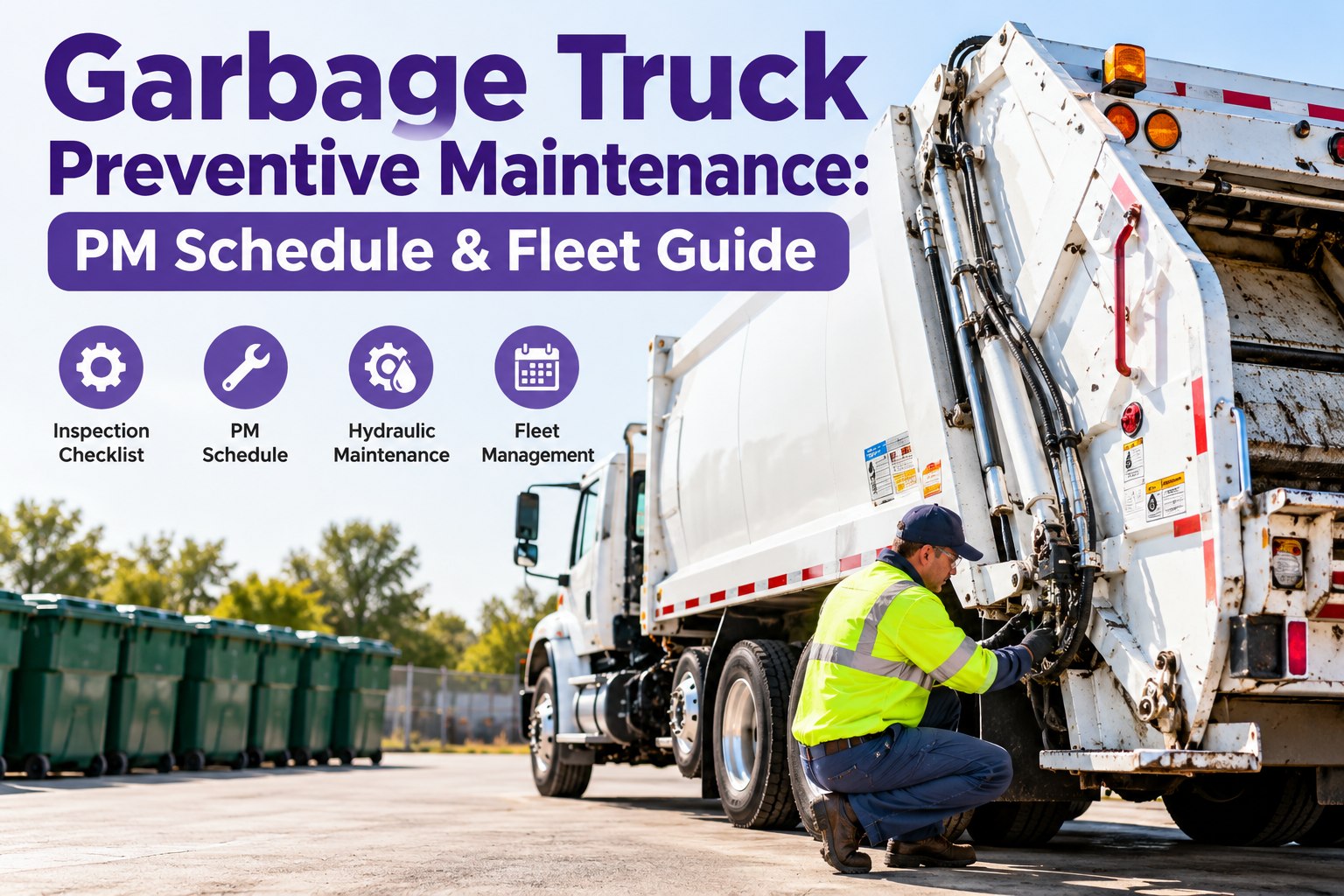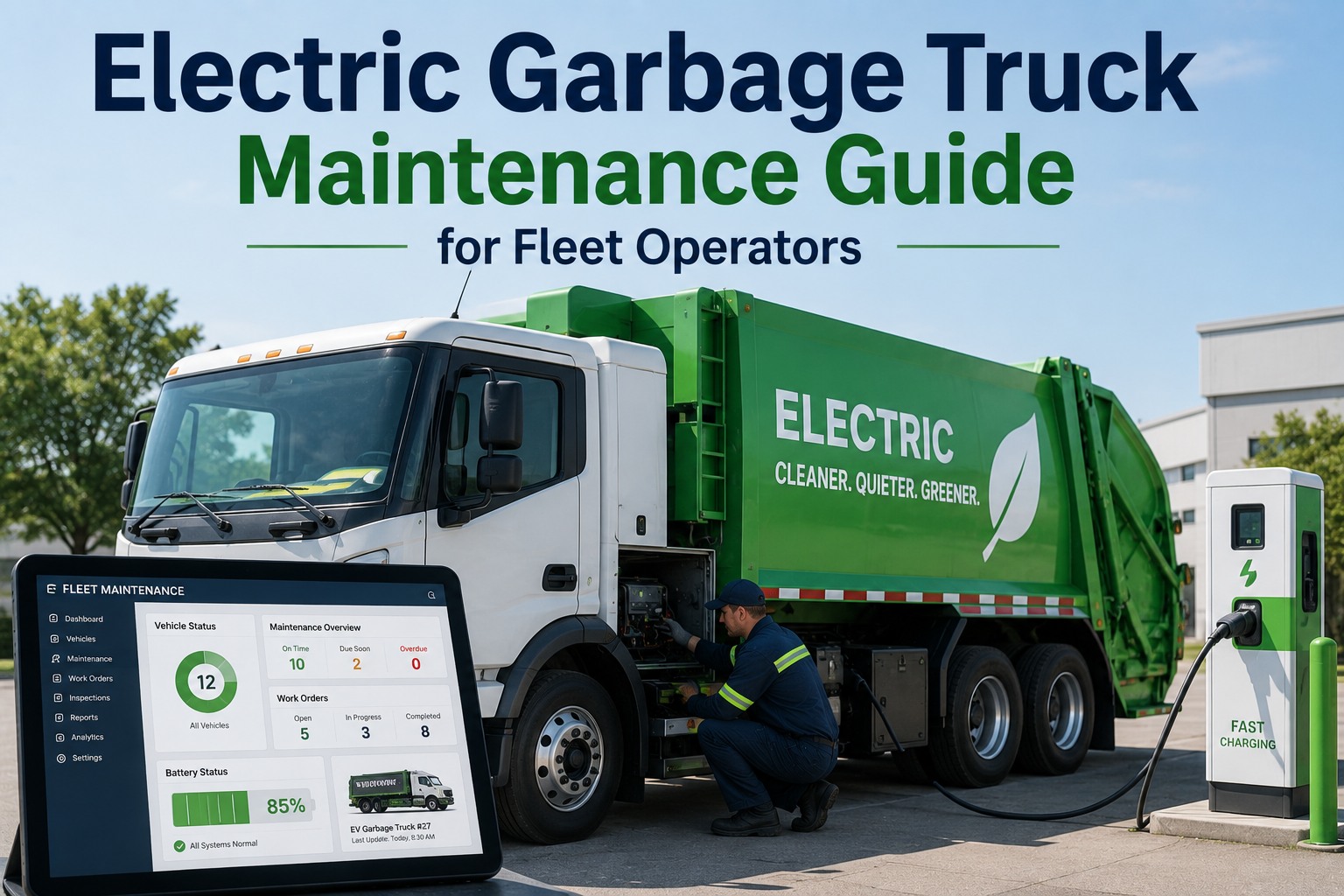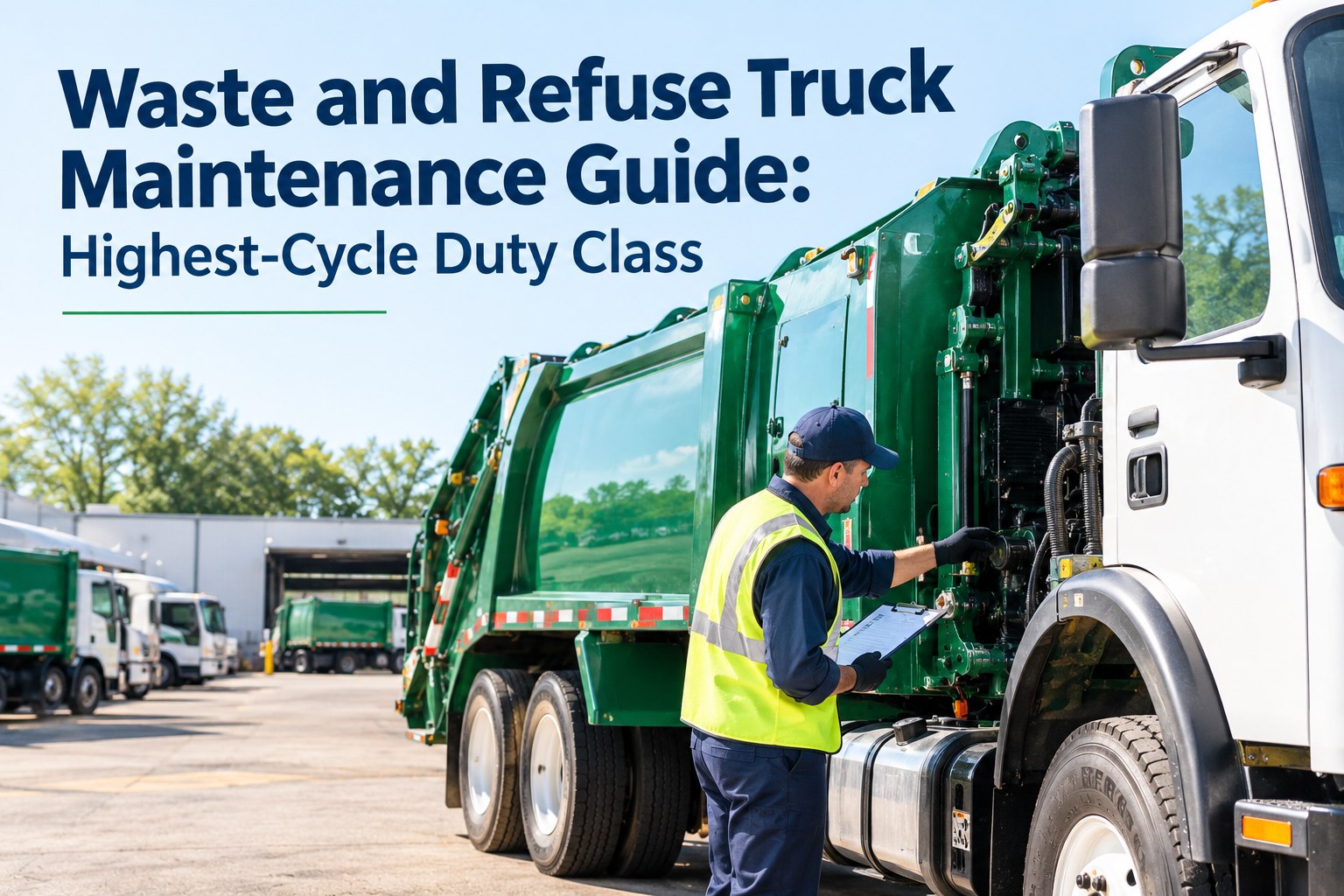
A refuse truck lives in a duty cycle no other truck class touches. On a residential route it does 800-1,200 start-stops per shift, 600-1,000 hopper cycles, 400-700 packer cycles, plus arm lifts on automated side loaders. On a commercial front-loader route it's fewer stops but each cylinder stroke lifts a loaded container overhead multiple tons. Component wear on refuse trucks is measured in cycle counts, not miles. Mileage-based PM from OTR playbooks under-schedules refuse work by 40-60% and over-runs hydraulic + brake components until they fail on route. This guide breaks down cycle-anchored PM cadence, the refuse-specific pre-trip, and the KPIs that predict a mid-route breakdown before it strands a driver 3 blocks from a customer. Truck Inspection & Maintenance tracks refuse cycles alongside miles for accurate PM triggering — sign up free or contact our team.
Waste & Refuse Truck Maintenance — The Highest-Cycle Duty Class in Trucking
Mileage PM under-schedules refuse work by 40-60%. Anchor PM to cycles, not miles.
What Makes Refuse the Harshest Duty Class
Three numbers show why refuse economics don't map onto any other fleet class:
Residential refuse route runs 800-1,200 brake applications per shift vs OTR 8-15. Brake linings, air compressor duty cycle, transmission wear all compress by 60-80x per shift.
Packer body cycles 400-700 times per shift on residential, 80-150 on commercial. Each cycle stresses hydraulic cylinders, pump, hoses, packer blade wear, and body mounting.
Refuse chassis life runs 6-8 years vs OTR 8-12 years — same age, 2x the wear cycles compressed into the same clock time. Component replacement schedules run accordingly compressed.
Refuse trucks brake 60-80x more than long-haul. Start a free account and put PM on cycles, not miles.
Cycle-Anchored PM — Why Miles Don't Work Alone
A refuse truck may only rack 25K-45K miles per year but does the equivalent hydraulic + brake work of a 200K-mile OTR truck. Mileage-only PM misses the wear entirely. Track both miles AND cycles, and trigger PM on whichever hits first:
Lube + Filter + Basic Chassis Inspection
Engine oil + filter, chassis lube, fuel filter, air filter restriction, tire condition + PSI, walk-around. Runs every 2-3 weeks on typical residential route. Cycles hit 8K well before 7,500 miles on many routes.
Brake + Hydraulic + Everything in PM-A
Full brake inspection under actual duty cycle wear, hydraulic fluid level + condition, packer + hopper cylinder inspection, hose condition, filter service, PTO service. Runs every 4-6 weeks. Cycles usually trigger before miles.
Full Body + Chassis + Everything in PM-B
Complete body inspection (packer blade, tailgate seal, hopper wear plates, cylinder rod condition), full brake service including drum measurement, alignment check, complete hydraulic system audit, Federal Annual Inspection §396.17 aligned when timing works. Runs 2-3x per year.
Major Overhaul + Body Service
Transmission service, engine deep service, hydraulic cylinder reseal or replace based on inspection, packer blade replacement window, body mount inspection, complete tailgate service. Runs roughly annually on residential, every 15-18 months on commercial.
Want a printable cycle-anchored PM cadence card for the shop wall? Contact our team and we'll send one, free.
Refuse Body Subsystems — What Wears Fast
The refuse body isn't part of standard truck training. These 6 subsystems have refuse-specific wear patterns and refuse-specific inspection points:
Packer Blade & Slide Rails
Wear: Blade contact surface, slide rail wear from packer cycling, blade cutting edges from container contact. Inspect: Every PM-B, replace blade at PM-D window or when material passes packer.
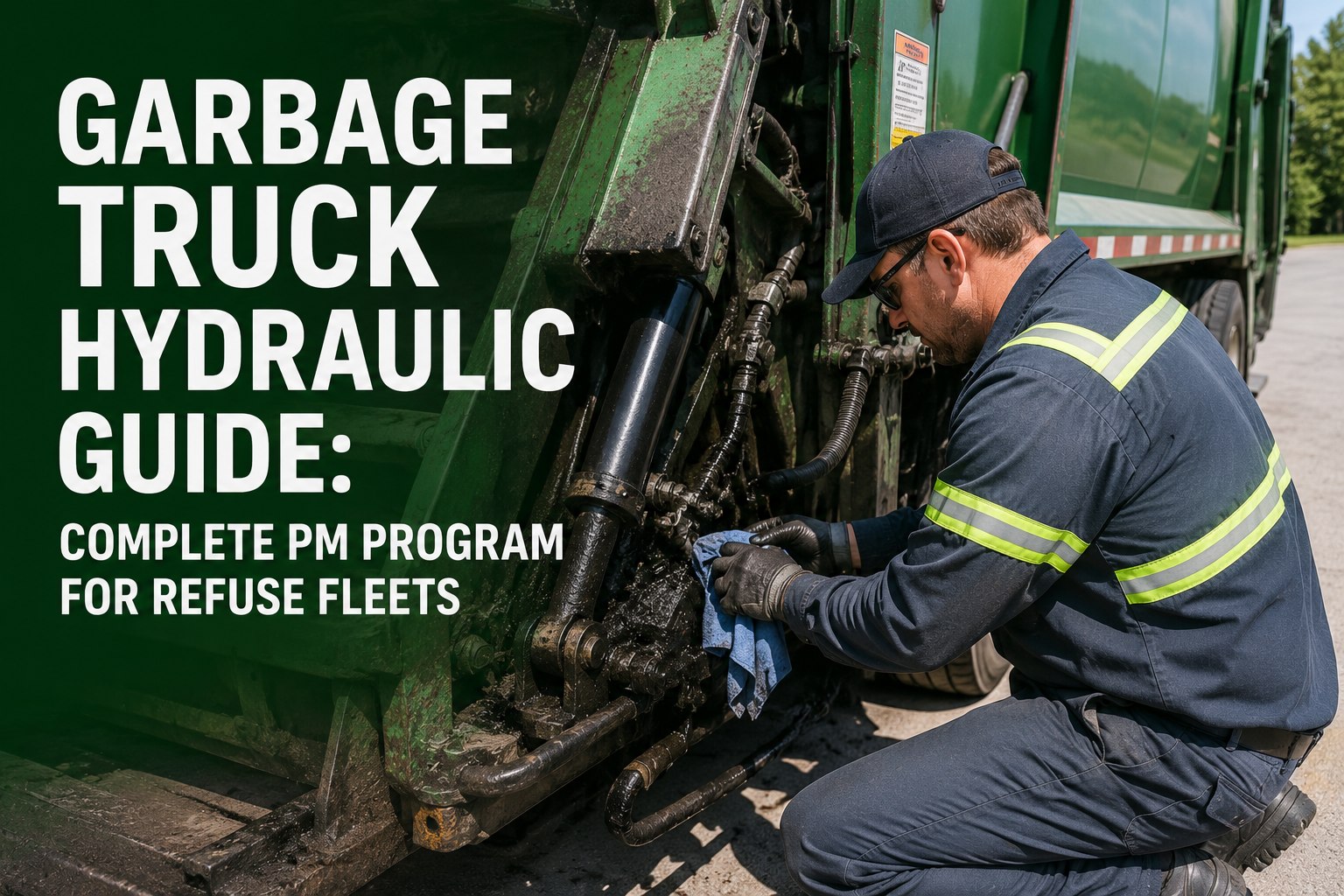
Hydraulic Cylinders — Packer + Tailgate
Wear: Rod pitting from contaminated fluid, seal wear from cycle count, chrome damage from container contact. Inspect: Rod condition + drift test at PM-B, reseal at PM-D.
Tailgate Seal & Hinge System
Wear: Rubber seal compression from cycling, hinge pin wear, latch mechanism wear, leachate corrosion. Inspect: Seal at every PM-A (leachate leak = customer complaint), hinge pins at PM-B.
Automated Arm (ASL Only)
Wear: Arm cylinder seals, grabber wear plates, arm-tower slew bearing, hose flex points at joints. Inspect: Full arm cycle test at PM-A, cylinder + bearing at PM-B, slew bearing at PM-C.
Front Loader Forks (FL Only)
Wear: Fork tip wear from container contact, cylinder rod damage, fork frame cracking at high-cycle joints, lift arm bushing wear. Inspect: Fork tips at PM-A, frame + cylinders at PM-B, bushings at PM-C.
Body Drain & Leachate System
Wear: Drain valve corrosion, leachate line clog, leachate tank capacity, body floor rust from continuous wet loading. Inspect: Drain + tank at PM-A, floor + walls at PM-B.
Connect Heil/McNeilus/New Way/Labrie body controller cycles into PM triggers — sign up free and configure in under 20 minutes.
The One Data Feed That Fixes Refuse PM Scheduling — Cycle Counters on Body Controls
Most refuse fleets track miles because that's what the truck ODO shows and telematics ingests. The problem is that a truck that racks 32 miles at 7 mph on a residential route did the wear-equivalent of an OTR truck that ran 180 miles at highway speed — every start-stop, packer cycle, and arm lift wore components in ways the odometer doesn't see. Modern refuse body controllers (Heil, McNeilus, New Way, Labrie) all expose cycle counters — packer cycles, arm lifts, tailgate opens, PTO engagement time. Feeding those counters into the maintenance system alongside miles lets PM triggers fire on whichever comes first. Fleets that add cycle-based triggers alongside miles typically cut mid-route breakdowns by 30-45% within one year because they finally schedule brake and hydraulic service when the parts actually wore out. Start a free account and connect body controller cycle counts to your PM triggers today.
The Refuse Pre-Trip — 7 Items Beyond Standard DVIR
Standard §392.7 pre-trip is required, but doesn't cover the refuse body. Seven additional items that catch most pre-shift refuse-specific failures:
Hydraulic Reservoir Level + Sight Glass
Check level at operating temp, verify clear fluid color, no milky appearance or metal particulate visible. Any darkening = don't route, WO immediately. 30 seconds.
Packer Cycle Test — Empty Body
Full packer cycle empty. Verify blade extends, retracts, cycle time within baseline, no unusual noise or shudder. Any hesitation = don't route.
Tailgate Open + Close Cycle
Full tailgate open and close, verify safety props deploy, seal seats, latch engages positively. Tailgate failing mid-route means load falling out on customer street.
Arm or Fork Cycle Test (ASL / FL)
Full extend and retract of automated arm or front-loader forks. Verify smooth cycle, no drift, grabber or fork tips positioning correctly. Any fault = don't route.
Body Leachate Drain Check
Verify body drain valve closed, leachate tank not full from prior shift, no visible weep at floor drain fittings. Overflow mid-route = environmental complaint.
Safety Interlocks Verified
Rear-view camera working, backup alarm audible, body-up interlock preventing drive, hopper safety cover functional. Rear-of-truck fatalities happen when interlocks bypassed.
PPE + Route Sheet + Cycle Counter Baseline
Gloves, safety glasses, hi-vis, and route sheet confirmed. Note starting cycle counter reading on body controller — subtract at shift end for daily cycle count tracking.
Need help mapping the 7-item refuse pre-trip to your route sheets? Get in touch for a free 15-minute setup review.
PM that finally schedules brake and hydraulic service when the parts actually wore out.
Miles + cycle count PM triggers, 7-item refuse pre-trip on driver phones, body controller data ingestion for accurate wear tracking. Free forever for up to 3 vehicles — create your free account or talk to our team.
KPI Dashboard — 6 Refuse-Specific Metrics
Six numbers built specifically for refuse operations. Watch these and mid-route breakdowns become rare:
Unplanned failures that strand truck on residential or commercial route. Above 3 = PM triggers not catching wear.
Percentage of fleet with body controller cycle data feeding PM triggers. Below 100% = trucks scheduled on wrong data.
Routes finished on schedule without mechanical delay. Below 98% = customer service failures, missed pickup complaints.
Pre-trip defect logged to shop close-out. Above 24 hr = truck sitting when route needs it.
Zero tolerance for leachate leaks on customer routes. Every event = environmental complaint + potential fine.
PMs completed within +5% of cycle trigger. Slipping past cycle trigger = wear item running past design life.
Cut mid-route breakdowns 30-45% in year one — create your free account in 10 minutes.
The 5 Refuse-Specific Failure Patterns to Watch
Five patterns that show up on refuse fleets constantly and rarely register in standard PM programs:
Brake Wear Under-Scheduled by Miles
Pattern: Truck at 22K miles per PM standard, brake linings measured at PM-B look fine. Fleet using cycle counts sees the truck did 180K brake applications and inspects brakes at that point instead — 2mm lining left, immediate service prevents road-side out-of-service.
Packer Cylinder Rod Damaged by Debris
Pattern: Sharp metal in load makes contact with packer cylinder rod during compression. Chrome plating scored. Seal wears fast against damaged chrome, cylinder leaks within 2-3 weeks. Rod condition inspection at every PM-B catches early.
Tailgate Seal Failure Missed Until Complaint
Pattern: Compressed rubber seal starts leaking leachate on customer street. Customer calls city or hauler. By that point 30+ homes have wet driveway trails. Seal inspection every PM-A is the cheap prevention.
Hydraulic Fluid Not Analyzed
Pattern: Contamination and moisture accumulate in hydraulic reservoir over months of cycling. Fluid analysis skipped, contamination scores components internally. Cylinder rebuild bills 3-4x higher than they should be. Fluid analysis at PM-C is cheap insurance.
Automated Arm Slew Bearing Ignored
Pattern: ASL arm slew bearing accumulates wear from 100-200 cycles per day. Not typically part of PM-A/B. Bearing loosens, arm develops play, container drop risk climbs. Slew bearing inspection at PM-C is a 5-minute check that prevents a $12K+ bearing failure.
Frequently Asked Questions
Why can't refuse fleets use standard mileage-based PM?
Refuse trucks rack low miles (25K-45K/yr) but do the wear equivalent of 200K+ OTR miles. Cycle-based triggers (start-stops, packer cycles, arm lifts) capture the actual wear that mileage misses.
What cycle counts should trigger PM tiers?
PM-A at ~8,000 start-stops (or 7,500 mi, whichever first). PM-B at ~20,000 start-stops or 15,000 packer cycles or 15,000 mi. PM-C at ~60,000 start-stops or 45,000 packer cycles or 40,000 mi. PM-D at ~150,000 start-stops or 100,000 packer cycles or 100,000 mi.
How do you get cycle count data from the truck?
Modern refuse body controllers from Heil, McNeilus, New Way, and Labrie all expose cycle counts (packer, arm, tailgate, PTO). Body controller data feeds into telematics or directly into the maintenance system for PM trigger firing.
What's the ROI of adding cycle-based PM triggers?
Fleets that add cycle-based triggers alongside miles typically cut mid-route breakdowns 30-45% within one year. The recovery comes from finally scheduling brake, hydraulic, and body service when parts actually wore out — not when the calendar or ODO said to.
What's the difference between residential and commercial refuse PM cadence?
Residential runs higher cycle counts per shift (800-1,200 start-stops, 400-700 packer cycles) so PM tiers hit more often on calendar. Commercial front-loaders have fewer stops but heavier per-cycle hydraulic loads — same PM tiers, different trigger ratios.
How does Truck Inspection & Maintenance handle refuse fleets?
Cycle-based PM triggers alongside miles from body controllers (Heil, McNeilus, New Way, Labrie), 7-item refuse pre-trip on driver phones, defect-to-WO routing, and refuse-specific KPI dashboard. Free forever for up to 3 vehicles — sign up in 10 minutes or contact us.
Track cycles, not just miles. Refuse trucks that finish their route instead of stranding it 3 blocks from a customer.
Miles + cycle count PM triggers from body controllers, 7-item refuse pre-trip with photo evidence, refuse-specific KPI dashboard. Free forever for up to 3 vehicles — no hardware, no contract, no credit card.