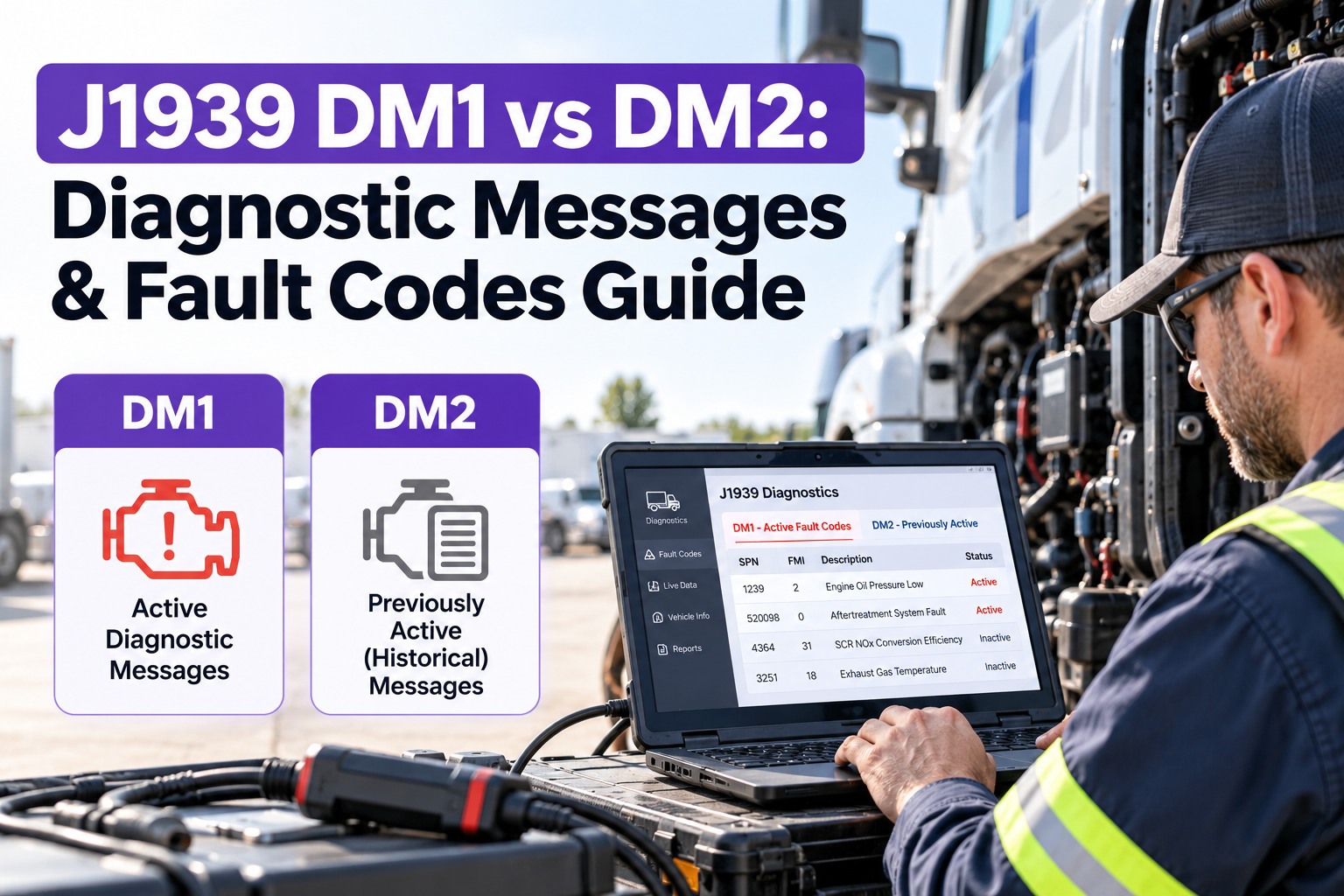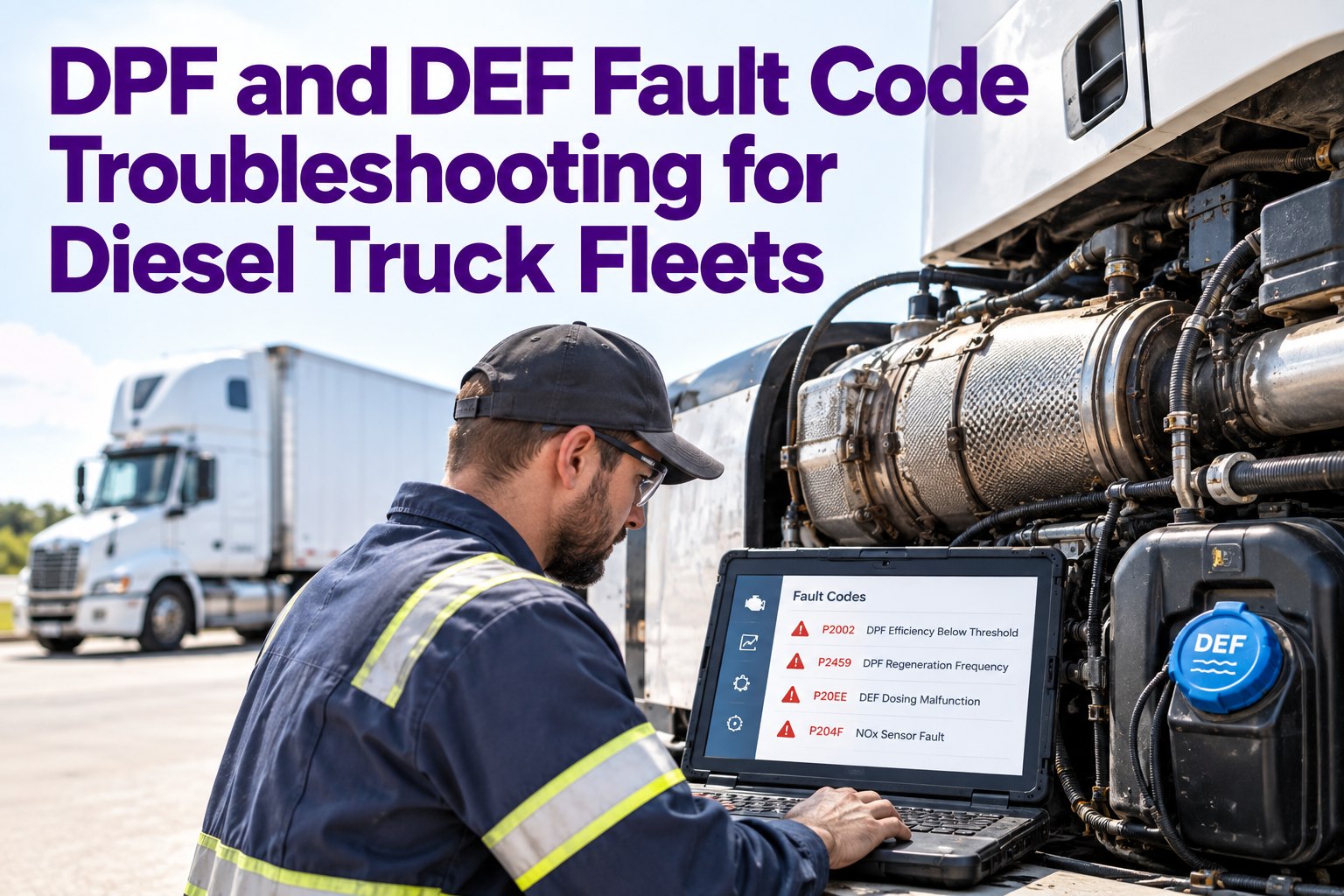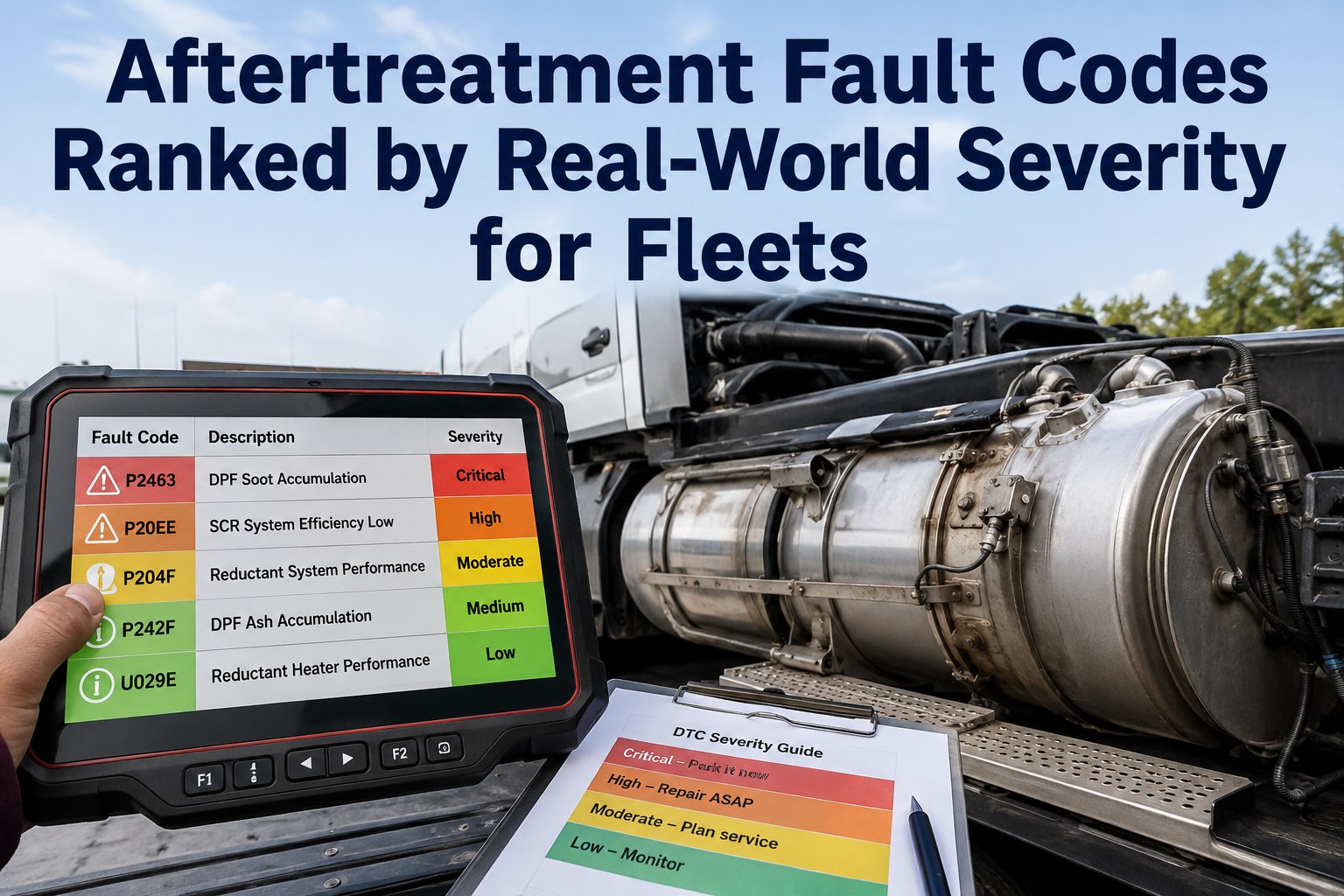
A single heavy truck can throw around 300 diagnostic trouble codes in a month. Most are noise — a momentary sensor blip, an emissions advisory, a code that clears itself on the next drive cycle. Buried in that flood are the two or three that actually matter: the transmission overtemp, the aftertreatment fault two drive cycles from a 60% power derate, the low oil pressure that ends in a seized engine. The old way of handling this fails in both directions — a technician either drowns trying to read every code, or the flat feed gets ignored and the one that mattered slips through. In manual systems, roughly 70% of fault codes never get logged at all. Turn the code flood into a short action list free. Integrating real-time fault code alerts with Truck Inspection & Maintenance solves the real problem, which isn't capturing codes — it's triaging them. Every code is scored by severity the instant the ECU fires it, then routed to the response it deserves: stop the truck now, service within 48 hours, schedule it, or just monitor. This guide breaks down how that triage works and why it's the difference between data and action.
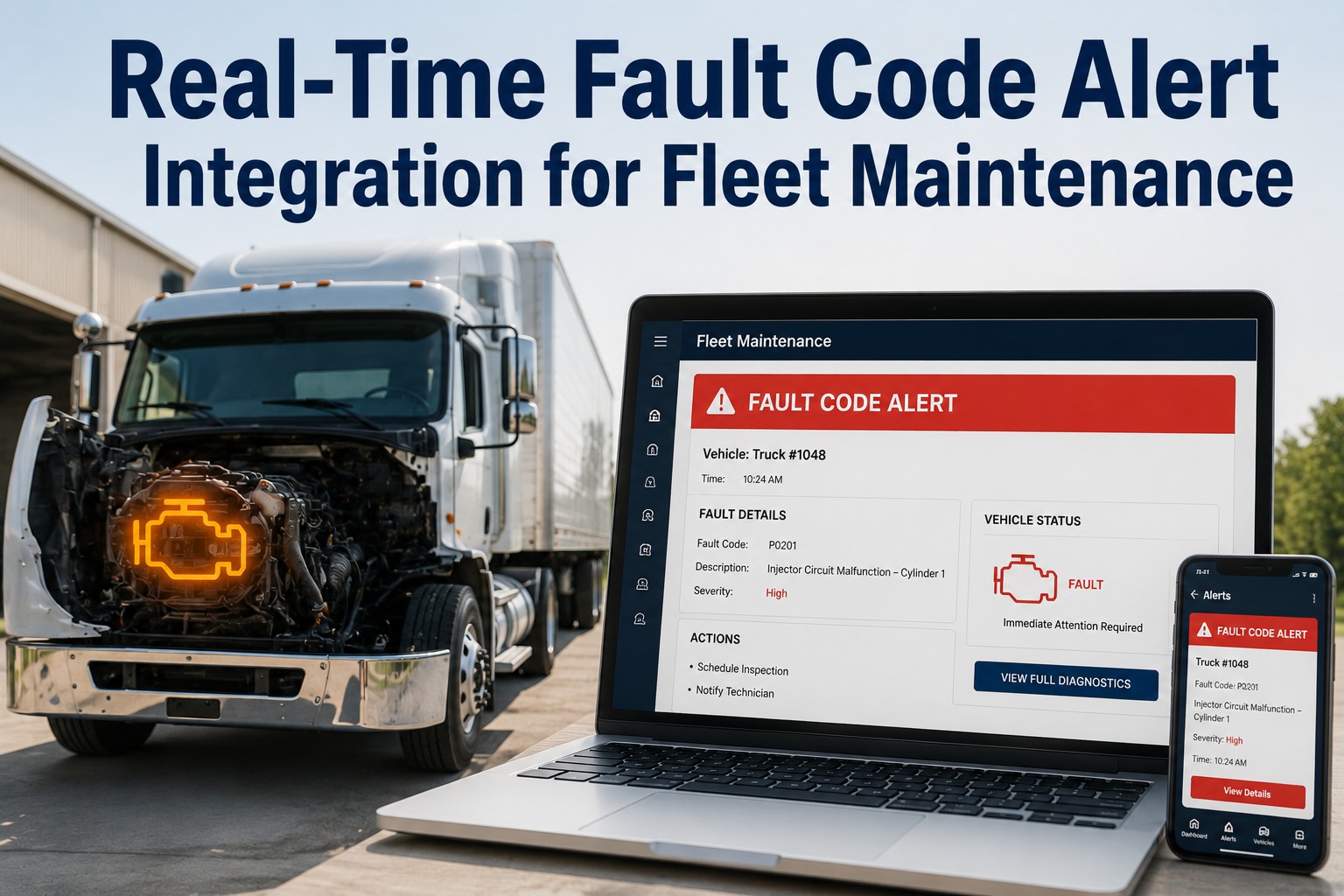
Real-Time Fault Code Alert Integration for Fleet Maintenance
Stop drowning in codes. Truck Inspection & Maintenance captures every diagnostic trouble code the moment your ECU fires it, scores it by severity, and routes it to the right action — so 300 monthly codes become the handful your team actually needs to act on.
The Problem Isn't Capture — It's Noise
Modern trucks already broadcast their fault codes; over 90% of 2026 vehicles ship telematics-ready. The failure has never been getting the data. It's that a raw, unsorted feed of hundreds of codes is genuinely unusable — so it gets ignored, and the codes that mattered vanish into it.
The Severity Funnel
This is the mechanism that makes fault codes useful instead of overwhelming. Every code the fleet generates pours in at the top, a scoring engine grades it against historical outcomes and the vehicle's own history, and it drops out into one of four action lanes — already sorted, before anyone touches it.
The Four Lanes, in Detail
Each severity tier maps to a specific response and a specific kind of code. Here's what lands in each lane and what happens when it does.
Major damage or a safety hazard if operation continues. The driver and dispatch are alerted instantly and an urgent work order fires.
Continued operation will accelerate damage or risk a derate. A work order is created and prioritized for service within two days.
Real but not immediate. The code is logged and scheduled into upcoming maintenance before it can escalate.
No immediate impact. Tracked and addressed at the next scheduled PM — no emergency action, but never lost.
The Cost of Letting One Sit
Severity scoring matters because ignored codes don't stay still — they escalate on a clock. A code in the wrong lane, or no lane at all, compounds into consequences far bigger than the original fault.
From 300 Codes to One Prioritized List
Truck Inspection & Maintenance captures every DTC the instant your ECU fires it, translates it to plain English, scores its severity against historical outcomes and the vehicle's own record, and routes it to the right action — an instant driver alert, an auto work order, or a queued PM item. Your team acts on the warning instead of clearing it.
What Happens the Instant a Code Fires
For a critical code, the path from ECU to a technician's queue takes seconds — no shop visit, no manual transcription, no waiting for the truck to come in.
Beyond a Single Code: Related-Fault Intelligence
The most useful triage doesn't read codes one at a time. A single mechanical problem often lights up three to five connected DTCs at once — and reading them together is what turns a confusing cluster into one clear diagnosis.
Why Fleets Turn On Fault-Code Alerts
Real-time, scored fault-code alerting is the cheapest predictive-maintenance win available, because the capability is usually already sitting unused in telematics you own.
Frequently Asked Questions
Usually not. Over 90% of vehicles built in recent years ship telematics-ready, and if your trucks already have GPS tracking they very likely have DTC transmission capability sitting unused. The integration connects via API to major telematics platforms — Samsara, Geotab, Motive, Verizon Connect, and OEM systems — as well as direct OBD-II and J1939 devices, and activates that fault-code stream without a hardware purchase on most fleets. You're turning on a capability you already own rather than buying a new one. Start a free trial to activate it.
Each code is scored against historical outcome data and the specific vehicle's maintenance history, then classified into one of four tiers: Critical means stop now, Urgent means service within 48 hours, Moderate means schedule service, and Informational means monitor only. A transmission overtemperature warning routes to Critical and alerts the driver instantly; a small EVAP leak routes to Informational and simply queues for the next PM. The scoring also cross-references active, pending, and historical codes so related faults are read together. This is the step that turns hundreds of raw codes into a short, prioritized list your team can actually act on. See the scoring against your fleet.
The moment the ECU logs the code on the OBD-II or J1939 bus, the telematics device reads it and transmits it immediately for critical severity — not batched into the next routine sync. The platform translates the raw code into plain English, assigns a severity level, and cross-references the vehicle's history to set urgency. Then it automatically generates a work order containing the fault code, a plain-English description, the vehicle ID, GPS location, and driver contact, and pushes an instant alert to your team so the job is actioned before the vehicle's next trip. No one has to be watching a dashboard or transcribing anything.
It compounds. An unresolved emissions fault can escalate from a warning to an out-of-service order, and EPA-tier engines will automatically derate — cutting horsepower by up to 60% — if certain sensor codes go uncleared for two drive cycles, which can strand a loaded truck. OEMs can also deny warranty claims if telematics show a vehicle ran repeatedly with active severe DTCs. And beyond compliance and warranty, a small code left to grow becomes a roadside failure, where emergency repair runs three to nine times the cost of the scheduled fix the early code would have allowed. Catching and routing the code early avoids all of it. Start free and stop the escalation.
That's exactly the failure the triage design prevents. A flat feed of every code a truck generates is unusable — it's why 70% of codes go unlogged in manual systems and why teams tune the whole thing out. Severity scoring inverts that: instead of hundreds of undifferentiated entries, the system hands over a short, prioritized list, with only Critical and Urgent codes generating active work orders and Informational codes quietly queuing for the next PM. The point isn't to surface more; it's to surface only what matters, in the order it matters. Every code is still captured and logged as a timestamped compliance record — it just doesn't demand attention it hasn't earned. Start free and cut the noise.
Act on the Codes That Matter, Ignore the Rest
Truck Inspection & Maintenance turns your fleet's fault-code stream into real action — every code captured the instant it fires, scored by severity, and routed to the right response, from an instant driver alert to a queued PM item. Catch the derate before it happens, kill the noise, and turn diagnostics you already collect into breakdowns you never have.