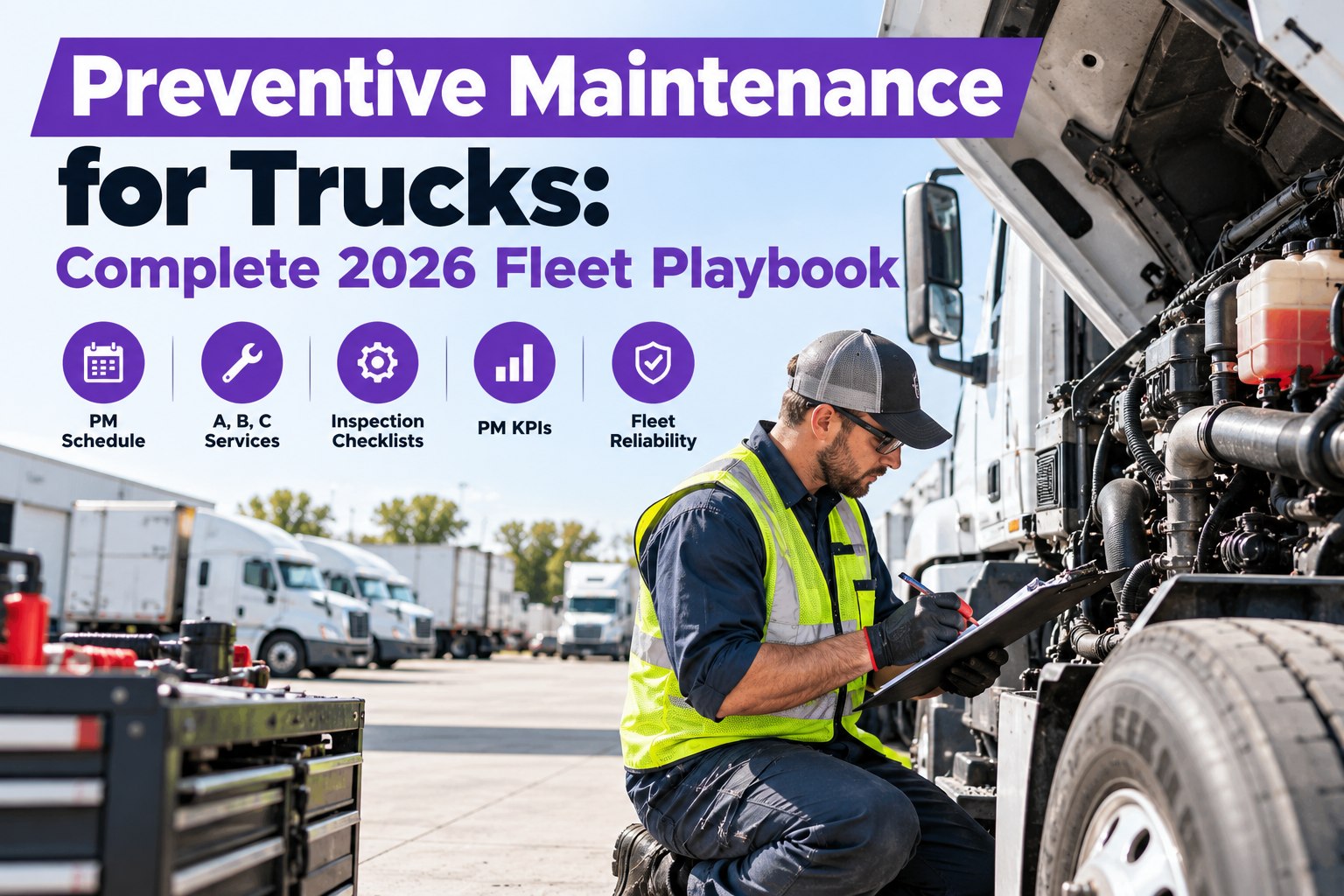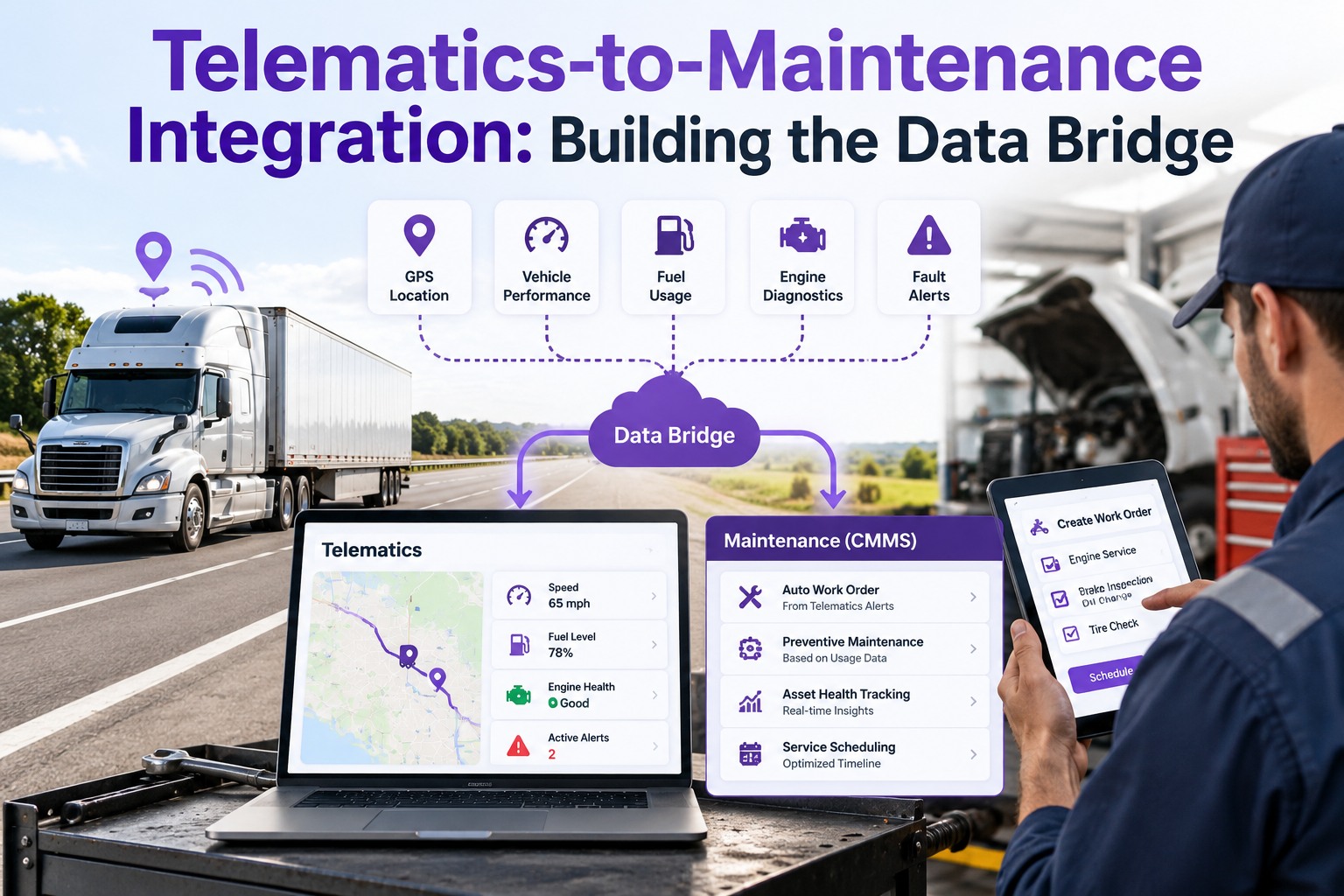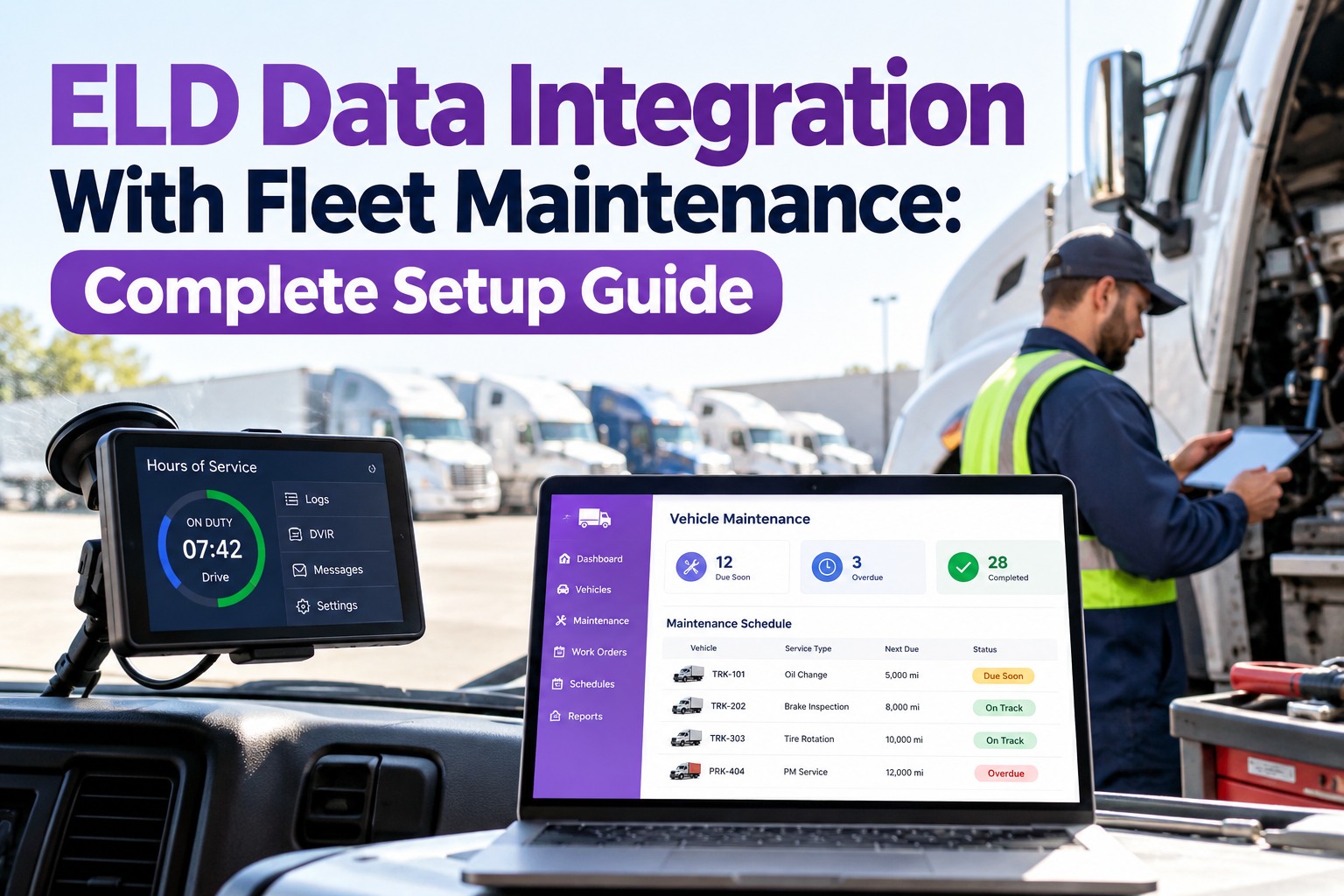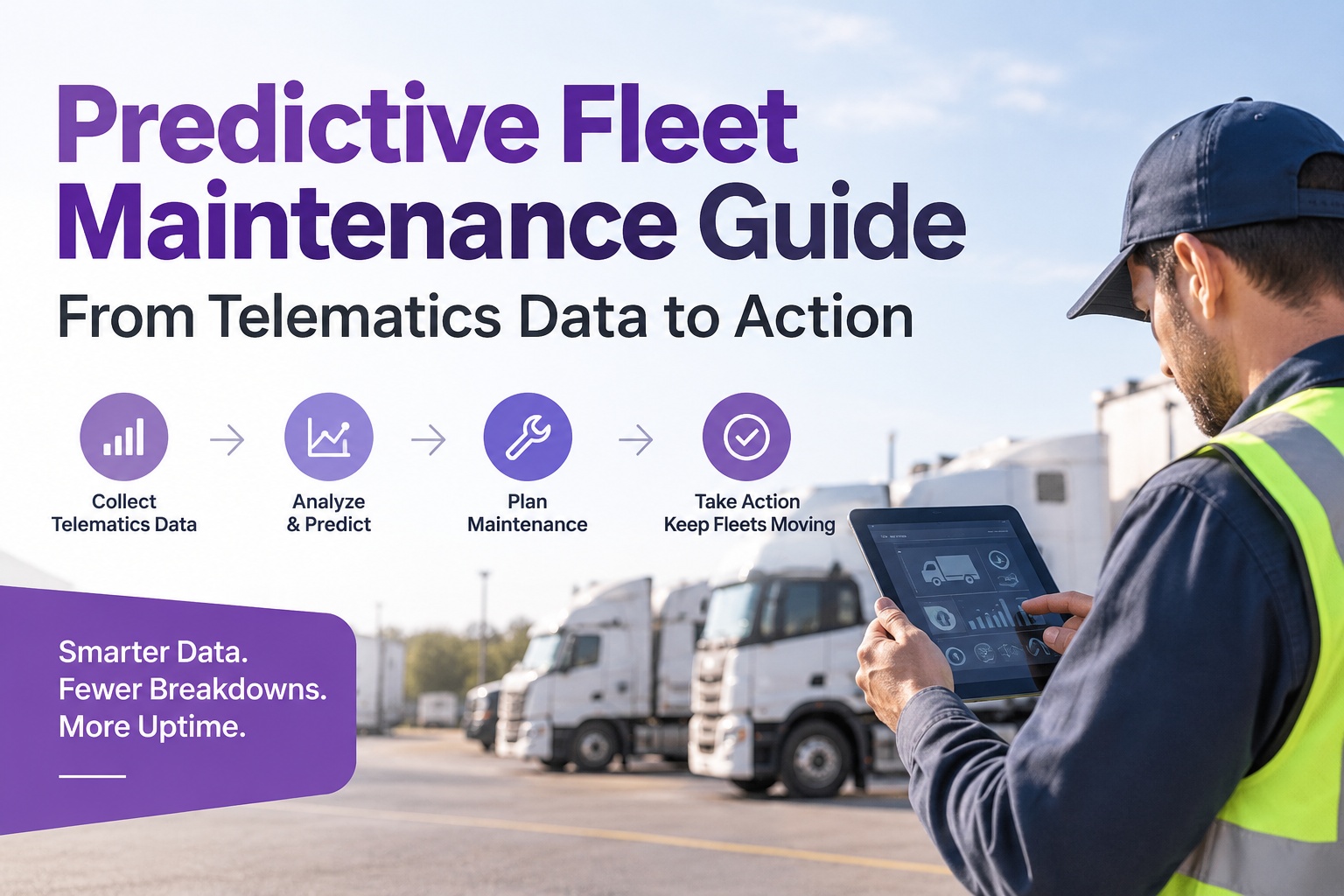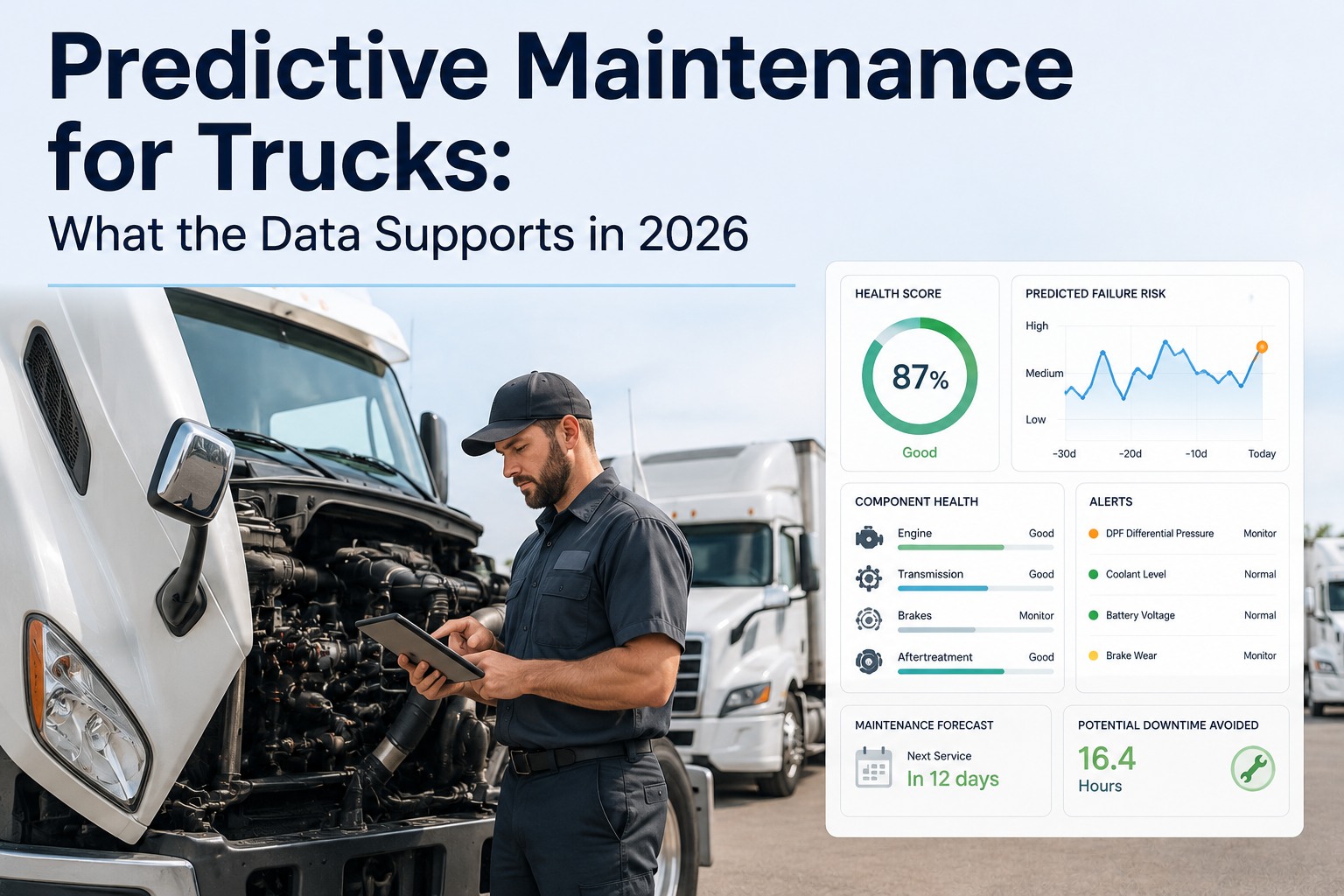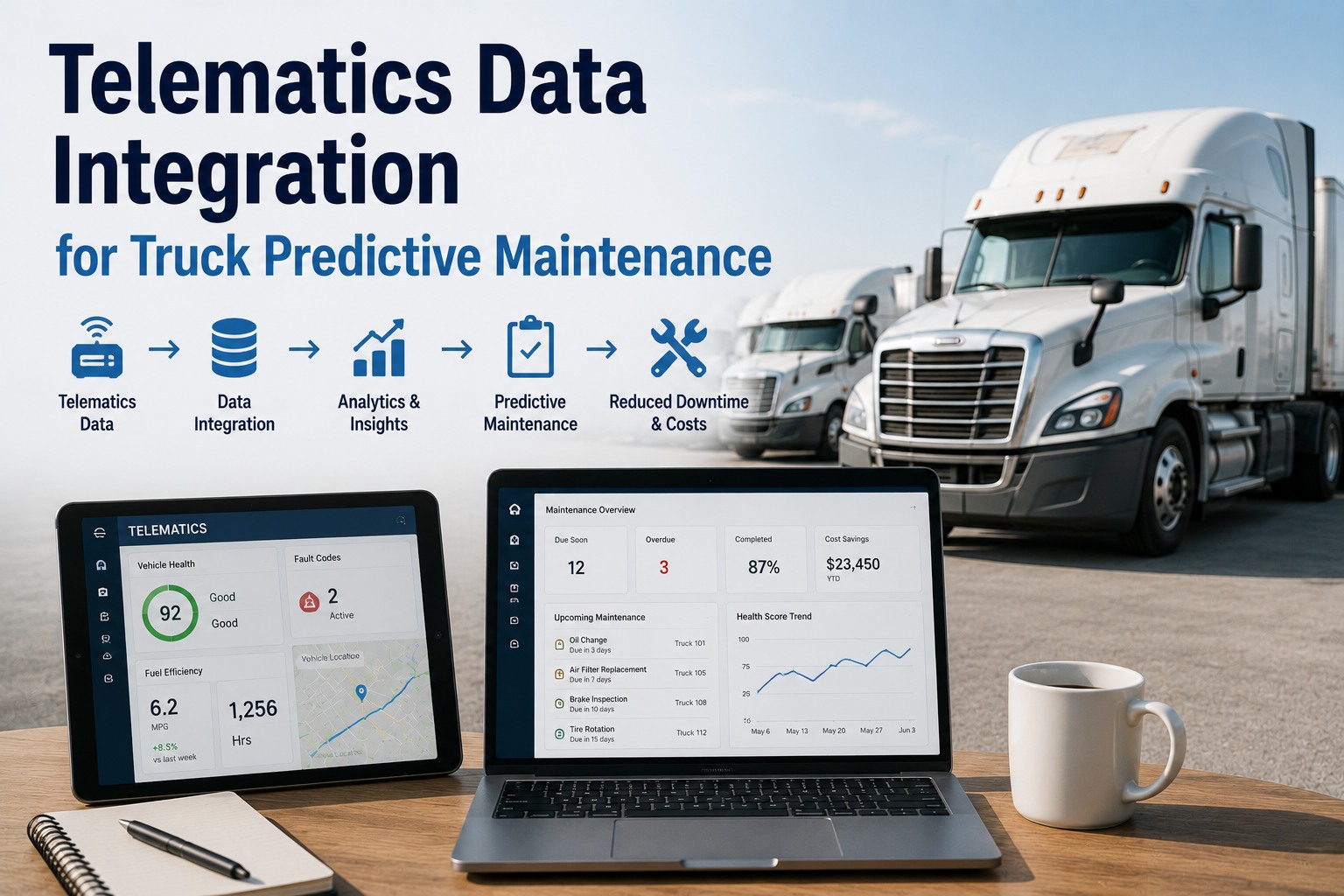
In 2026 the fleets winning on uptime aren't the ones with the best mechanics — they're the ones with the best data. And the gap is brutal: 73% of fleets still run reactive maintenance, fixing trucks after they break, at a cost three to five times higher than planned repairs. The other side of that line looks completely different. Machine-learning models now predict 85 to 95% of major component failures, surfacing the risk 20 to 45 days before a breakdown — a brake pad degrading faster than its peers, an engine trending hot over two weeks, a bearing whispering the vibration pattern that precedes a failure. The signals were always there in the telematics stream; what was missing was something watching every one of them across every truck at once. Turn your telematics into predictions free. Integrating predictive telematics with Truck Inspection & Maintenance connects the data you already broadcast to the maintenance decisions it should be driving — scoring failure risk, auto-generating work orders, and moving your operation from firefighting to forecasting. This guide breaks down how the three maintenance approaches differ, how prediction actually works, and why the smartest fleets run predictive and preventive together.
Predictive Maintenance Telematics Integration for Trucks
Stop fixing trucks after they break. Truck Inspection & Maintenance turns the telematics your fleet already streams into scored failure predictions weeks ahead — auto-generating the work order before the driver ever sees a warning light.
73% of Fleets Are Still Guessing
Reactive maintenance means your first warning is a truck stopped on the shoulder, not a dashboard alert three weeks earlier. The cost of that model is measurable, large, and mostly preventable.
Three Ways to Maintain a Fleet
Every maintenance program sits at one of three levels of maturity. The difference between them isn't effort — it's timing, and timing is everything when a breakdown costs thousands.
The truck runs until something fails, then it's towed and repaired under emergency conditions. No warning, maximum downtime, highest cost — 3 to 5 times a planned repair.
Service happens at fixed mileage or calendar intervals. A big step up — but it services every truck the same, replacing good parts too early and still missing failures that don't follow the schedule.
Real health data forecasts each specific component's failure and schedules the fix during planned downtime. Right part, right truck, right time — minimum cost, maximum uptime.
How the Prediction Actually Happens
Prediction isn't a black box — it's a learning curve. The system establishes what "normal" looks like for each truck, then watches for the drift away from it, getting sharper the longer it runs.
The Signals Were Always There
Modern trucks broadcast hundreds of data points. The problem was never the data — it's that no human team can watch every signal across every truck and catch the subtle combinations that precede a failure. An alternator's voltage drifts, its temperature creeps, its output sags — individually unremarkable, together a failure three weeks out. That's the pattern the AI connects and a person can't.
What the Models Watch
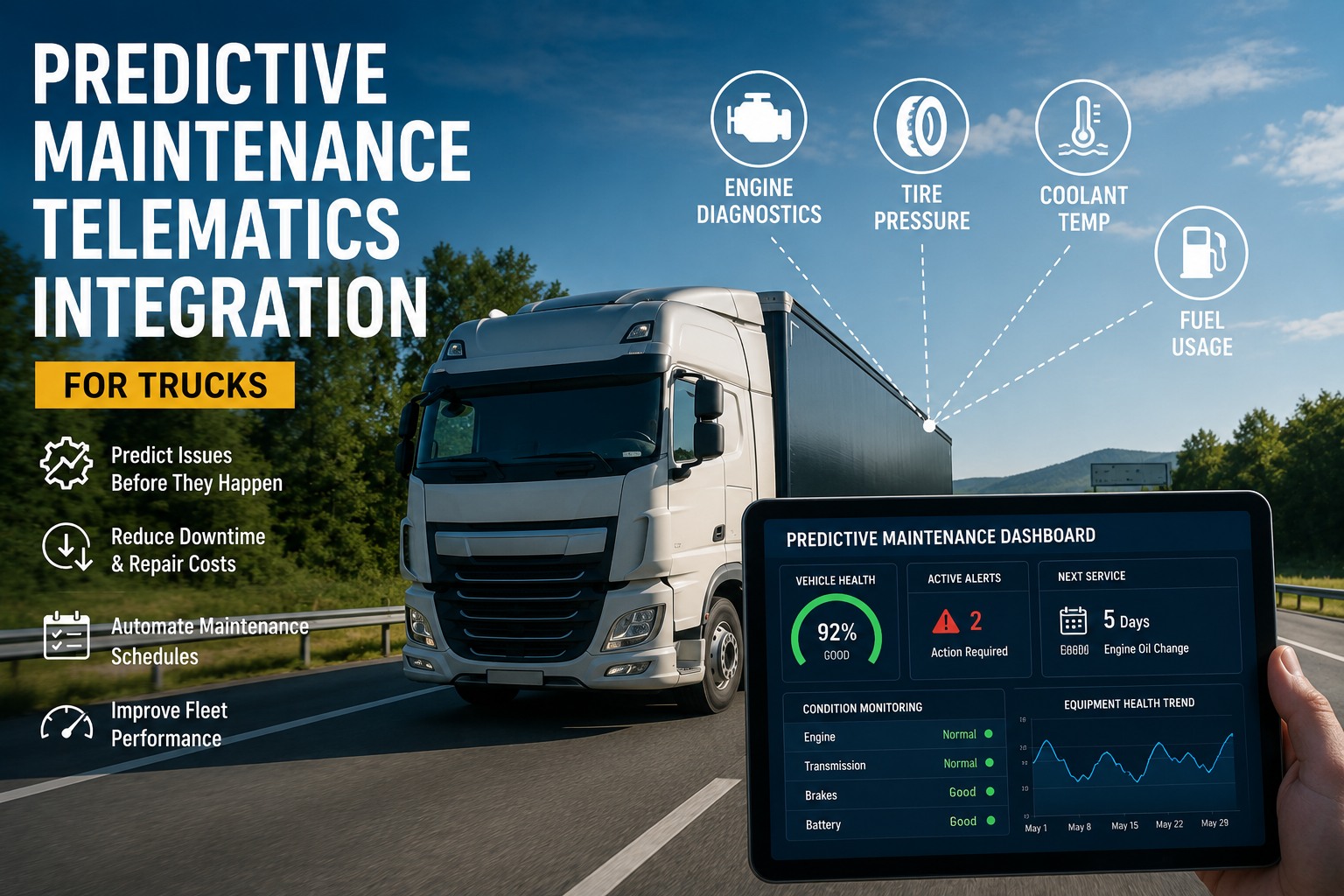
Predictive maintenance draws on every stream the telematics provides, correlating them against each vehicle's own history to spot the early signature of a failure.
Diagnostic trouble codes, temperature trends, and performance drift that precede engine and aftertreatment failures.
Voltage patterns and charging behavior — battery and alternator failures are among the earliest, easiest catches.
Abnormal wear and pressure loss that flag alignment, suspension, or load problems before a tire fails.
Pad and system data showing which trucks are wearing faster than their baseline, scheduled before metal-on-metal.
Coolant, oil, and thermal variance that reveal cooling-system and lubrication trouble weeks ahead.
Every signal, scored and trended per vehicle — the complete predictive picture in one platform.
Start free →From Signal to Prevented Breakdown
The prediction only matters if it turns into an action. The integration closes that loop automatically, so a risk score becomes a scheduled repair without anyone watching a dashboard.
What Fleets Actually Get
The numbers from 2026 deployments are consistent across operators, and they compound: fewer breakdowns means less downtime means lower cost means longer vehicle life.
Frequently Asked Questions
Preventive maintenance services vehicles on fixed intervals — every so many miles or months — regardless of each truck's actual condition. It's a major improvement over reactive "fix it when it breaks," but it treats every vehicle identically, which means replacing parts that still had life left and still missing failures that don't line up with the schedule. Predictive maintenance instead acts on real health data: it continuously analyzes telematics, engine diagnostics, and repair history to calculate the probability that a specific component on a specific truck will fail within a defined window, then schedules the fix before it happens. One is time-based; the other is condition-based. The best programs use both. Start a free trial to run both.
Modern machine-learning models achieve 85 to 95% accuracy predicting major component failures once they've learned a fleet's patterns, and they surface that risk roughly 20 to 45 days before traditional diagnostics would raise an alarm. The system isn't fully accurate on day one — it builds a vehicle-specific baseline within about 24 hours, produces its first predictions at 75 to 80% accuracy within 72 hours using fleet-wide patterns, then climbs into the 85 to 95% range over three to six months as it learns your specific trucks, routes, and operating conditions. That improving curve is why the value grows the longer the system runs. See prediction accuracy on your data.
In most cases, no. Over 90% of 2026 commercial vehicles ship with factory-embedded telematics, and most vehicles built after 2015 already broadcast hundreds of diagnostic data points. If your trucks have telematics or GPS tracking, the data you need is already flowing — the integration connects to major providers like Geotab, Samsara, and Verizon Connect and analyzes those existing streams. For older vehicles without connectivity, inexpensive OBD-II devices at roughly $50 to $150 each add it. The essential first step actually requires zero hardware: digitizing your maintenance records in the platform so the models have history to learn from. Start free and connect your telematics.
The economics are strong because unplanned breakdowns are so expensive: unplanned downtime runs $448 to $760 per vehicle per day, a single breakdown costs $3,000 to $9,000, and the average vehicle loses 8.7 days a year to it — roughly $150,000 to $450,000 annually for a 25-truck fleet, most of it preventable. Against that, predictive maintenance typically cuts breakdowns by up to 70 to 75%, lowers maintenance costs 25 to 40%, and reduces downtime hours by up to 45%. Most fleets see measurable savings within 30 to 90 days and reach full payback often within the first quarter, with 2 to 4 times ROI over 12 to 24 months. Starting with 5 to 10 high-value trucks proves the return before you scale. Start free and measure your ROI.
It's not a question of skill — it's a question of scale and subtlety. A modern truck broadcasts hundreds of data points continuously, and across a whole fleet that's an impossible volume for any human team to monitor in real time. More importantly, failures are rarely signaled by one obvious reading; they show up as subtle combinations — a slight voltage drift plus a small temperature creep plus a minor output drop that together mean an alternator is three weeks from failing, even though no single value looks alarming. People connect those dots only in hindsight, after the part fails and the truck stops. Machine learning watches every signal on every vehicle at once and catches the combination in advance, which is exactly the work it's suited for and humans aren't. Start free and let the AI watch.
Move Your Fleet From Firefighting to Forecasting
Truck Inspection & Maintenance turns the telematics you already stream into scored failure predictions 20 to 45 days ahead — then auto-generates the work order to fix it during planned downtime. Run predictive and preventive together, start with your highest-value trucks, and stop letting breakdowns you could have seen coming set your schedule.