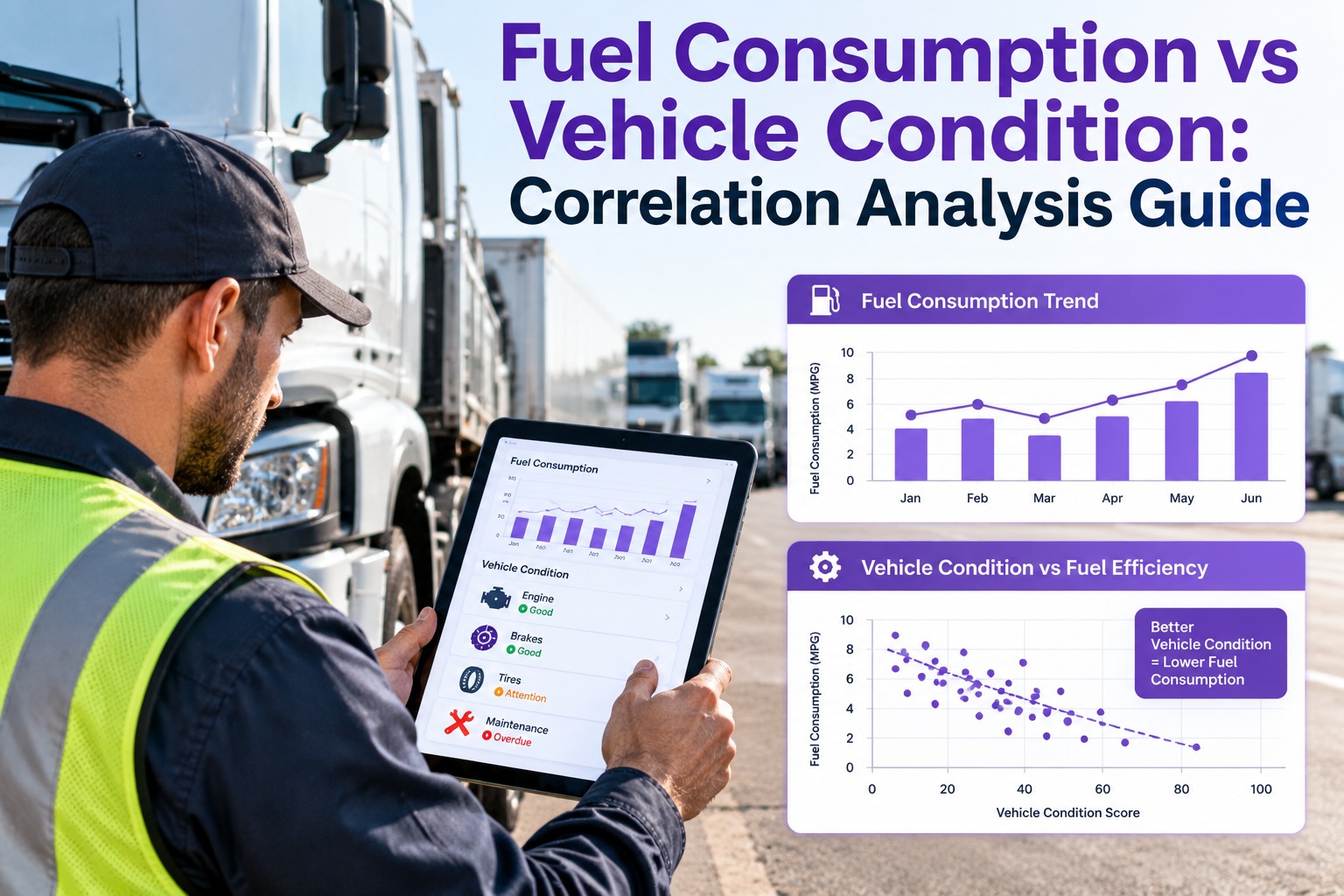
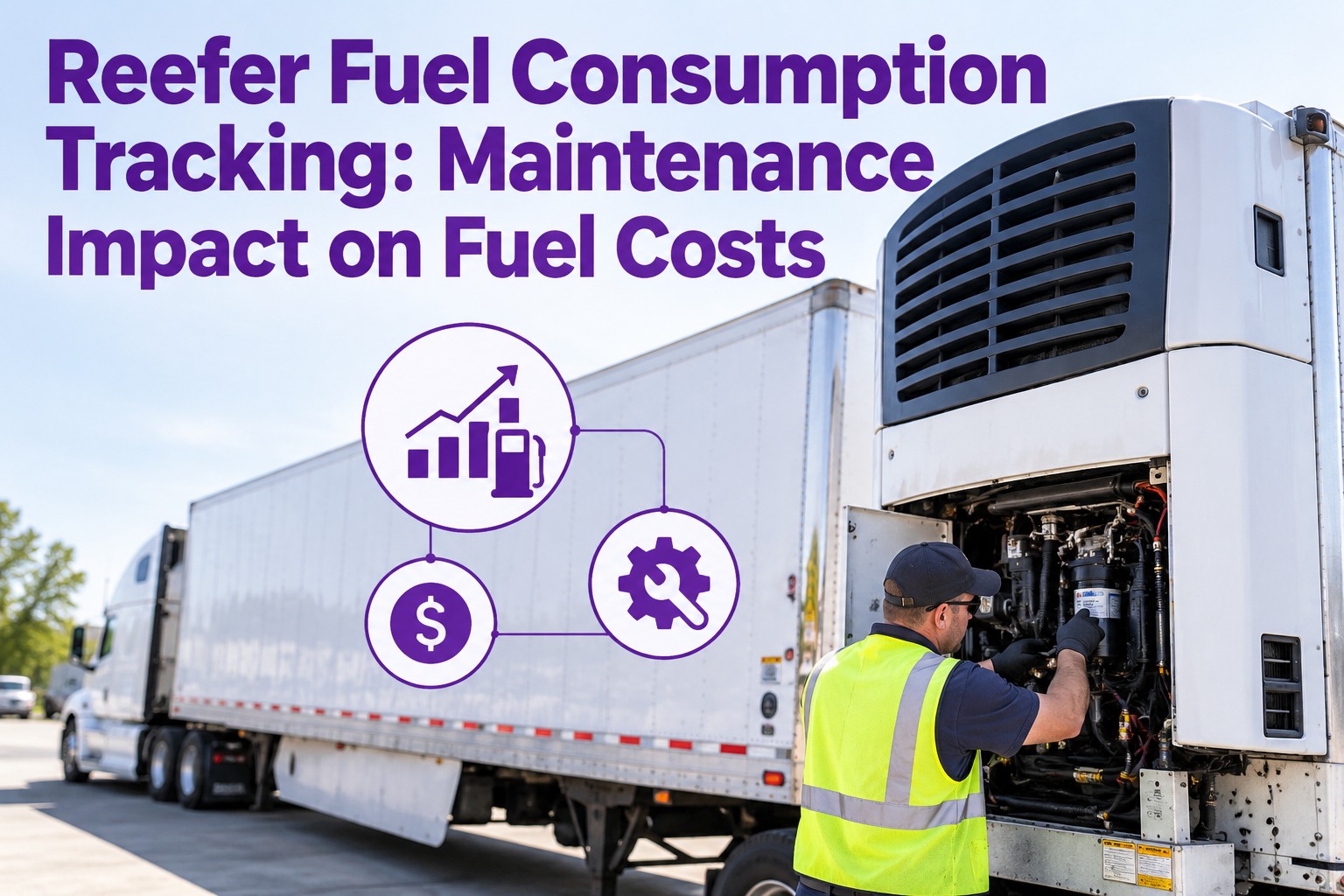
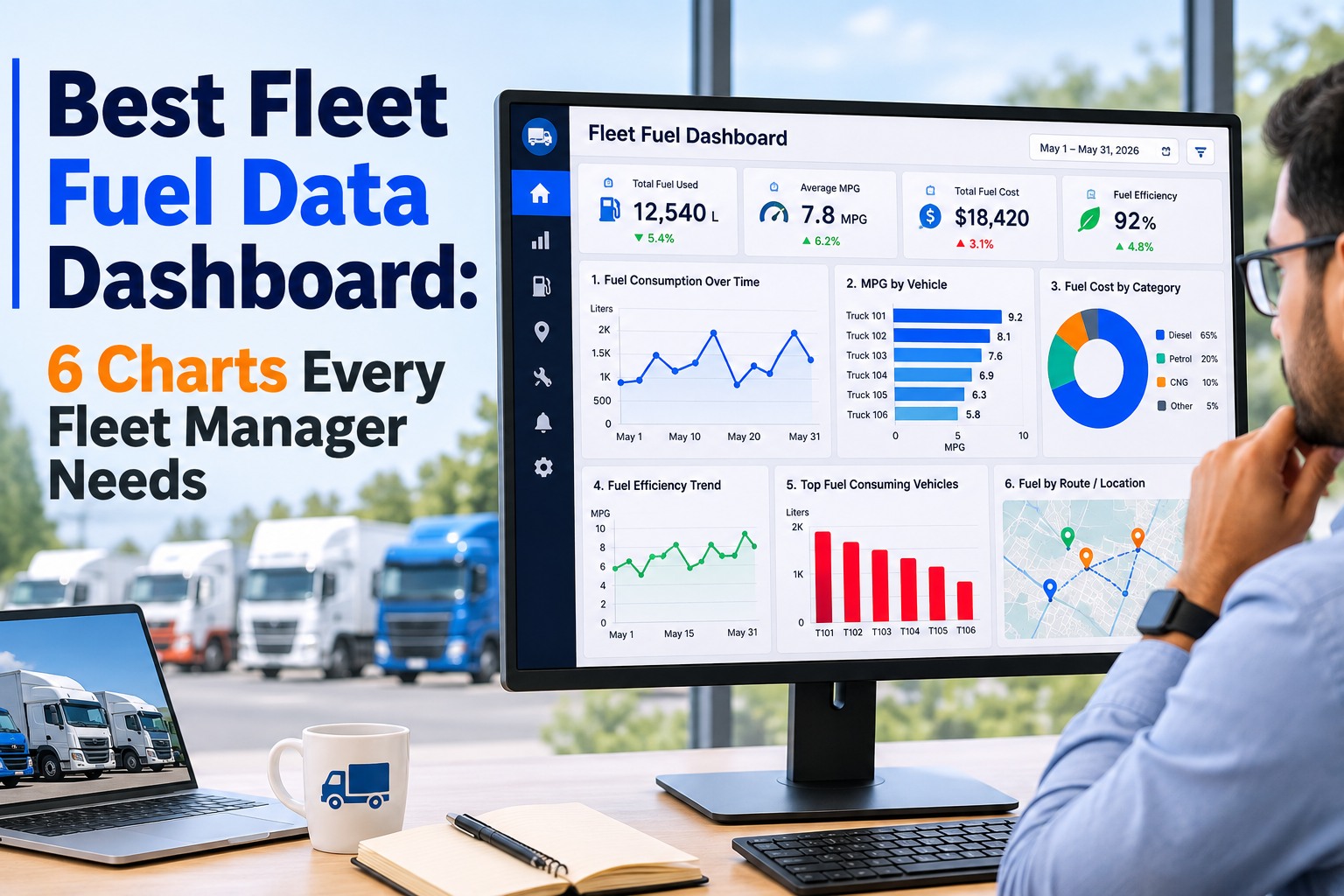
Every truck in your fleet is running a continuous health check you're probably not reading: its fuel burn. A dragging brake, an under-inflated tire, a failing oxygen sensor, a clogging fuel filter — each one makes the engine work harder and the miles-per-gallon decline, usually weeks before anything trips a warning light or shows up on a DVIR. Fuel consumption and vehicle condition move together, which means a rising burn rate on a steady route is the truck telling you something's wearing out. This guide covers how that correlation works, which faults cost the most fuel, and how to turn an MPG trend into a service decision — with Truck Inspection & Maintenance Management Software (TIM) making the link. Start free and turn fuel trends into service with TIM.
TIM · Fuel & Condition Analytics
Rising Fuel Burn Is a Truck Telling You It's Wearing Out
Fuel economy isn't just a cost line — it's a live reading of mechanical condition. When MPG drifts down on a route that hasn't changed, the cause is almost always a wearing component quietly adding drag or burning richer. Read in isolation, that's a fuel bill. Correlated with the truck's condition and tied to maintenance, it's an early-warning system — and TIM connects the fuel trend to the inspection and work-order record so a declining number becomes a scheduled fix, not a surprise breakdown.
Why Fuel Burn Tracks Condition
The physics is simple: anything that adds resistance or upsets combustion makes the engine spend more fuel to do the same work. That's why a condition problem shows up as a fuel problem — often long before it shows up as a failure.
◔
Added drag
Under-inflated tires, dragging brakes, and misalignment all force the engine to push harder against resistance that shouldn't be there — straight fuel waste.
◑
Bad combustion
Worn plugs, clogged injectors, or a failing oxygen sensor throw off the fuel-air mixture, so fuel gets burned incompletely or over-delivered.
◕
Restricted flow
A clogging fuel filter or a dirty air filter chokes the supply, and the engine compensates in ways that cost efficiency and signal a service is due.
What Each Fault Costs in Fuel
Not every condition issue hits MPG equally. Some are small and cumulative; a few are dramatic. Here's what the common culprits do to fuel economy — and what a decline of each size should make you check.
| Condition issue | Effect on fuel economy | What it points to |
| Failing oxygen sensor |
Up to ~40% loss in the worst cases |
Bad fuel-air mixture — the single biggest MPG killer |
| Low tire pressure |
~0.2% per 1 PSI below spec |
Rolling resistance — small per PSI, large across a fleet |
| Dragging brakes |
Noticeable, continuous drag |
A caliper or shoe not releasing — also a safety issue |
| Worn plugs / injectors |
Misfires and poor spray waste fuel |
Ignition or fuel-delivery service due |
| Clogged fuel / air filter |
Restricted flow, engine compensates |
A cheap filter overdue for replacement |
| Wheel misalignment |
Added resistance plus tire wear |
Alignment — and the tires it's scrubbing |
Figures are representative ranges from general fuel-economy guidance; real impact varies by vehicle, load, and route. Use them to prioritize what to check when a truck's MPG falls, not as exact diagnoses.
The point isn't the exact percentage — it's that a decline has a short list of mechanical suspects. Contact our team to tie fuel declines to inspection checks in TIM.
How to Run the Correlation — Four Steps
Turning fuel data into a condition signal isn't complex analytics — it's a disciplined baseline-and-compare. Do these four things and a rising burn rate stops being noise and starts being a work order.
1
Baseline per truckEstablish each unit's normal MPG on its typical route and load — the number that counts as healthy for that truck, not a fleet average.
→
2
Track the trend, not the dayFuel varies trip to trip with weather and traffic. Watch the moving trend over weeks — a steady decline is the signal, a single bad tank isn't.
→
3
Flag the deviationWhen a truck drifts a set amount below its own baseline and stays there, flag it. The deviation from its normal is what matters, not the raw MPG.
→
4
Inspect the short listSend it to the shop with the fuel-fault short list — tires, brakes, sensors, filters — so the inspection is targeted, not a blind hunt.
!
Isolate what you're measuring
Fuel economy shifts with load, weather, terrain, and driver behavior — not just condition. That's why the method compares a truck to its own baseline on a similar route, and watches the trend rather than one tank. Correlation only means something once the obvious non-condition variables are accounted for; otherwise you'll chase a cold week as if it were a failing injector.
Fuel Data Is Only Useful When It Reaches Maintenance
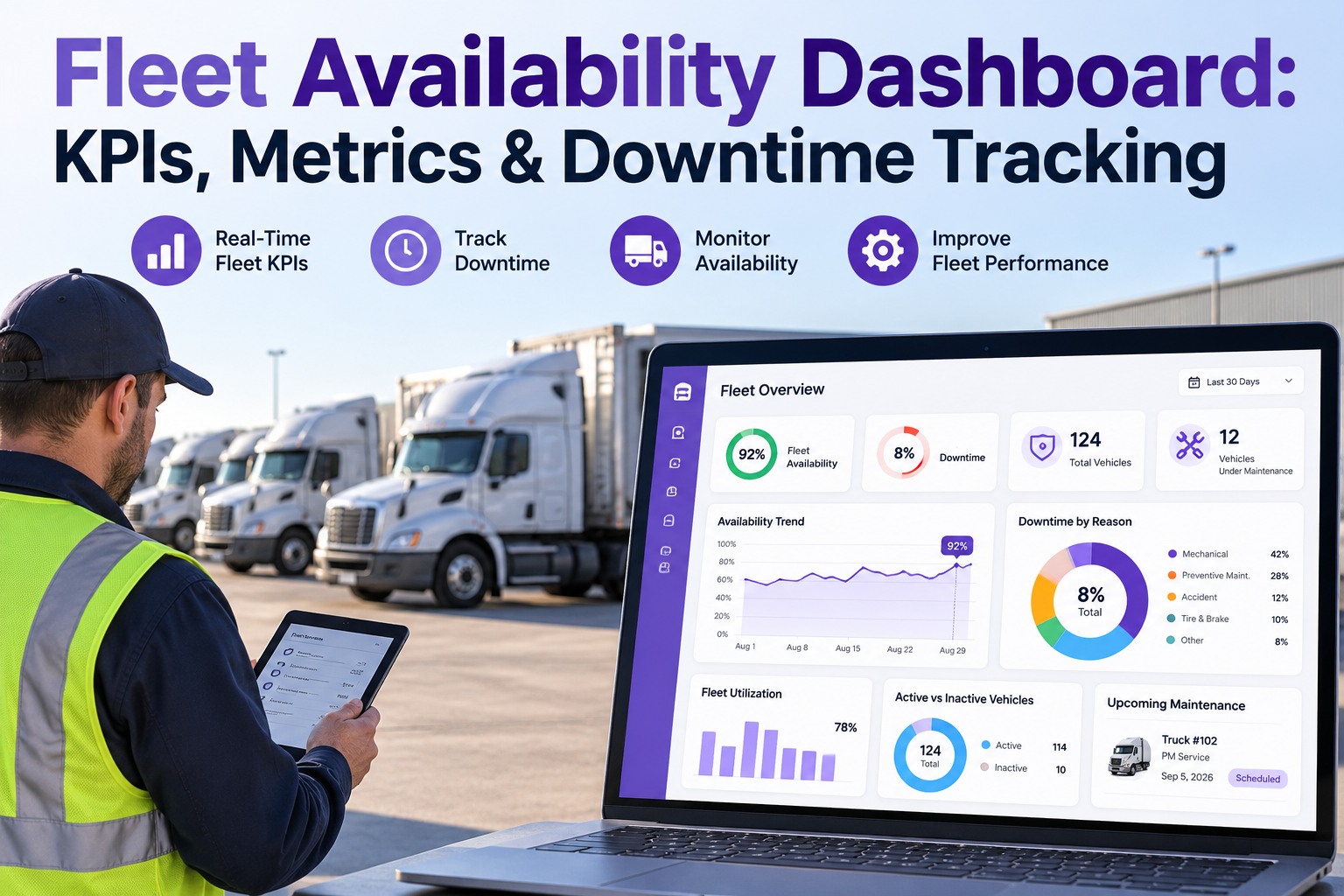
An MPG report that sits in a fuel-card dashboard tells you a truck is costing more — but not what to do about it. TIM closes that gap: each truck's fuel trend lives beside its inspection and repair history, so a sustained decline can be flagged, sent to the shop with the likely-cause short list, and turned into a work order against that unit. The fuel curve becomes the trigger, and the inspection confirms the cause — one record from signal to fix.
What the Fuel-Condition Signal Catches Early
The value of reading fuel as a condition gauge is time. These are the things a watched MPG trend surfaces before they become a roadside event or a wrecked component.
01
A brake that never fully releasesConstant drag shows in the fuel curve long before the pad overheats or the wheel-end gives trouble.
02
A slow tire leak across the fleetPressure creeping down on several units is a small MPG hit each — but a visible trend in aggregate, and a safety fix.
03
A sensor drifting out of specA failing oxygen sensor is the biggest single MPG hit there is — and fuel is often the first place it's visible.
04
A filter overdue for serviceA gradual MPG slide that recovers the moment a cheap filter is changed is the cleanest correlation you'll see.
How TIM Runs It
From Fuel Trend to Confirmed Repair
TIM is where the fuel number stops being a cost report and becomes a maintenance signal — tied to the same truck's inspection and repair record.
Per-unit fuel baselinesEach truck's normal MPG tracked against its own route and load, so deviations are real, not fleet-average noise.
Trend, not single-tankFuel watched as a moving trend, so a sustained decline flags and a one-off bad tank doesn't.
Decline to inspectionA flagged decline routes to the shop with the likely-cause short list — targeted checks, not a blind hunt.
Fuel beside conditionThe MPG trend lives next to the DVIR and repair history, so cause and effect sit on one record.
Finding to work orderWhat the inspection confirms becomes a graded, assigned repair against that unit.
Fleet-wide patternsA fault showing across several trucks surfaces as a pattern, not a coincidence — a systemic fix.
Frequently Asked Questions
Does fuel consumption really indicate vehicle condition?
Yes — fuel burn is one of the most sensitive continuous indicators of mechanical health a truck produces. Almost any condition problem that adds drag or disrupts combustion shows up as higher fuel use: dragging brakes, low tire pressure, misalignment, worn plugs or injectors, a failing oxygen sensor, a clogging filter. Because fuel is measured every trip, a developing fault often appears in the MPG trend before it trips a warning light or gets caught on an inspection. The key is correlating the fuel trend with the truck's condition rather than reading it as a pure cost number.
Start free and read fuel as a condition signal with TIM.
What mechanical problem hurts fuel economy the most?
A failing oxygen sensor is typically the single largest hit — in the worst cases it can cut fuel economy by as much as 40%, because it feeds the engine a wrong fuel-air mixture across every mile. After that, the biggest contributors are usually the continuous-drag faults: dragging brakes and significantly under-inflated tires, where each PSI below spec costs roughly 0.2% on its own but adds up fast across a fleet. Worn plugs and injectors, clogged filters, and misalignment are smaller individually but common, which is why a fuel decline has a fairly short list of mechanical suspects to check.
How do I separate a real condition problem from normal fuel variation?
By comparing each truck to its own baseline and watching the trend, not the day. Fuel economy naturally swings with weather, traffic, terrain, load, and driver behavior, so a single bad tank means nothing. What matters is a sustained decline below that specific truck's normal MPG on a similar route — a decline that holds over weeks rather than a one-off. Accounting for the obvious non-condition variables first is what makes the correlation trustworthy; otherwise you risk chasing a cold snap or a heavy load as if it were a failing part.
How big a fuel decline should trigger an inspection?
There's no universal number, because the right threshold depends on each truck's normal variation — a unit with a very steady route can be flagged on a smaller deviation than one that swings naturally. The practical approach is to set a deviation from each truck's own baseline that holds over a trend, rather than a fleet-wide percentage, and tune it so you catch genuine declines without chasing noise. Once a truck crosses its threshold and stays there, that's the trigger to inspect the fuel-fault short list — tires, brakes, sensors, and filters first.
What should I check first when a truck's MPG falls?
Start with the cheap, common, high-impact items and work toward the complex. Tire pressure across all positions is first — it's the easiest to check and a frequent culprit. Then look for dragging brakes, inspect the air and fuel filters, and check for engine codes pointing at the oxygen sensor or injectors, which carry the largest fuel penalties. Alignment and tire wear come next. Running the inspection in that order means you confirm or rule out the likeliest and least expensive causes before spending time on the rest, which is exactly the short list a fuel-triggered work order should carry.
Baseline · Trend · Flag · Inspect
Stop Reading Fuel as Only a Cost
Every truck's fuel burn is a continuous reading of its mechanical condition — a rising number on a steady route is a wearing part announcing itself early. Baseline each unit, watch the trend, flag the real deviations, and send them to the shop with the fuel-fault short list. Read that way, fuel stops being a bill you absorb and becomes an early-warning system you act on. TIM puts the fuel trend, the inspection, and the repair on one record, so the signal always ends in a fix.
No credit card required · Free for up to 3 trucks · Per-unit fuel baselines, trend flags, and inspection-to-work-order built in