A flatbed has no walls to hide behind. The load is out in the open, held by straps, chains, winches and the deck itself, so every worn component is a securement problem waiting for a bump in the road. Federal rules treat it that way: 49 CFR Part 393, Subpart I sets how cargo must be secured and which damaged tiedowns can't be used, and §392.9 requires the driver to check the load during the trip. That means flatbed maintenance covers two things at once: the truck and trailer, and the securement gear that rides on them. This guide gives you a deck-to-tarp inspection checklist, the securement rules in plain numbers, and a PM plan, plus how Truck Inspection & Maintenance Management Software keeps all of it documented. Start free and put the flatbed checklist on every driver's phone.
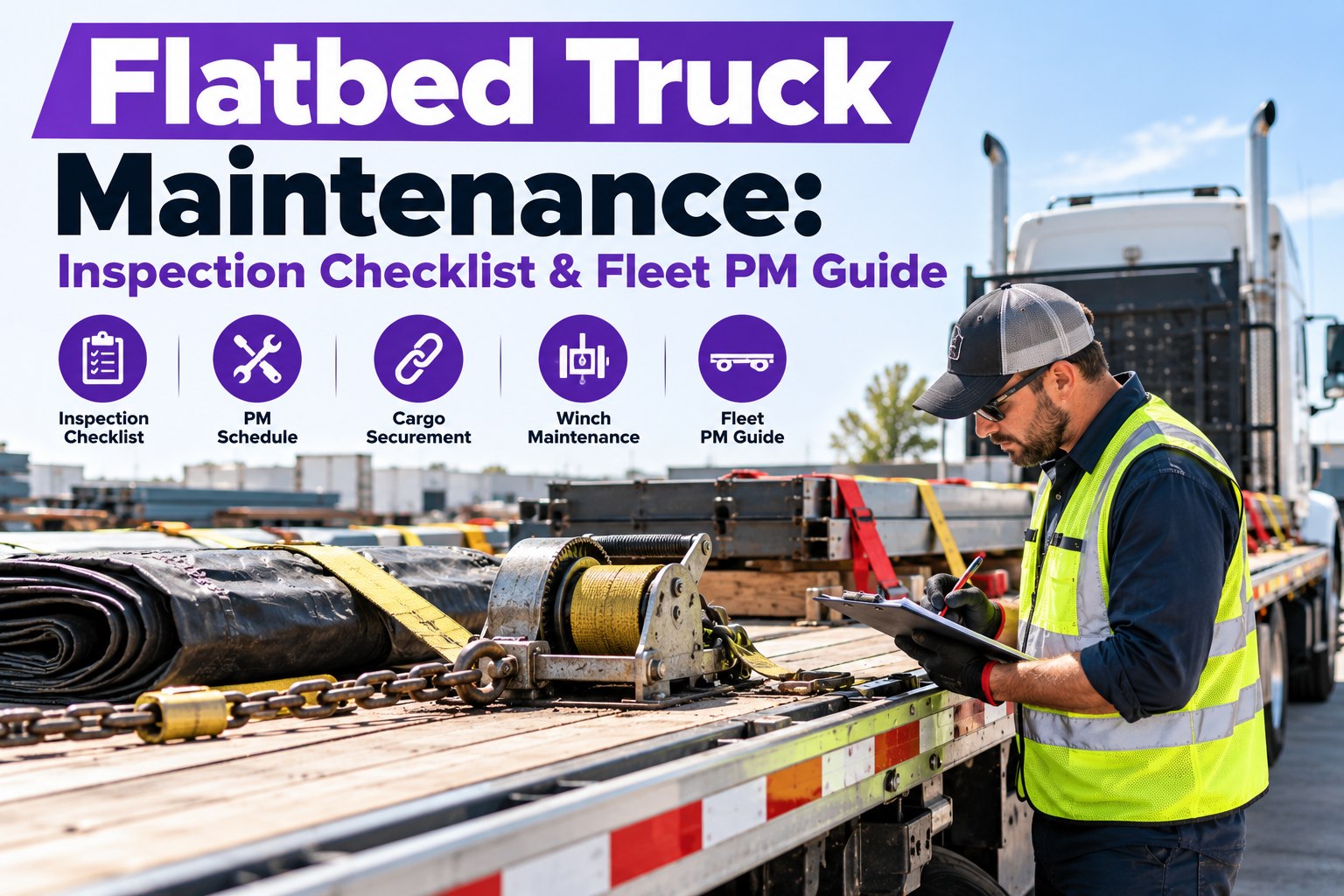
Flatbed Truck Maintenance: Inspection Checklist & Fleet PM Guide
Securement gear wears out quietly, and a paper checklist rarely follows a damaged strap to the shop. Truck Inspection & Maintenance Management Software gives drivers a flatbed-specific inspection on their phone. Failed items become defects, defects become work orders, and trailer PM stays on schedule, so gear gets inspected before it goes on a load.
Where Flatbeds Actually Fail
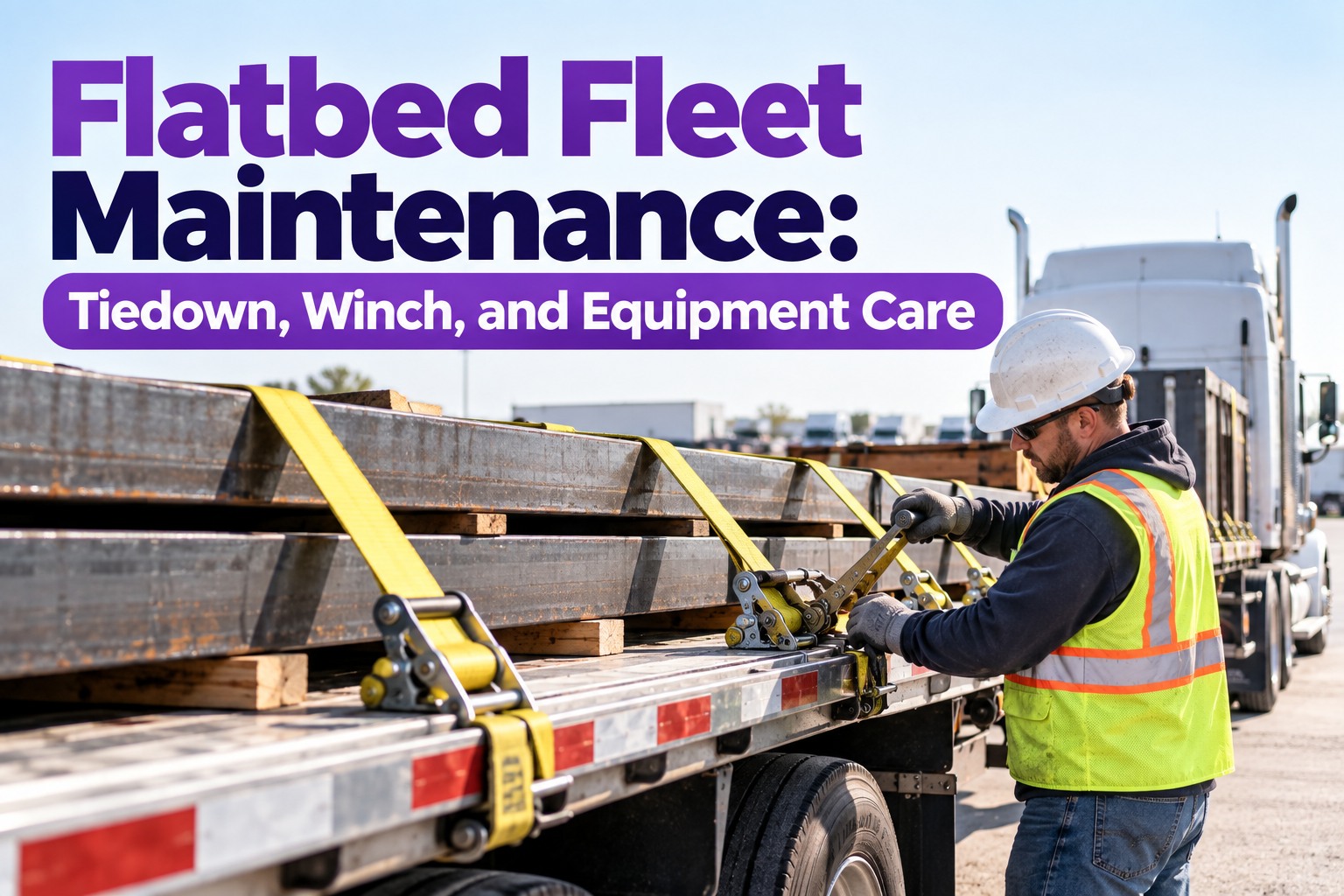
Dry vans mostly fail at the wheel end. Flatbeds add four more places where wear turns into a roadside problem:
The Flatbed Inspection Card: Keep in Service or Tag Out
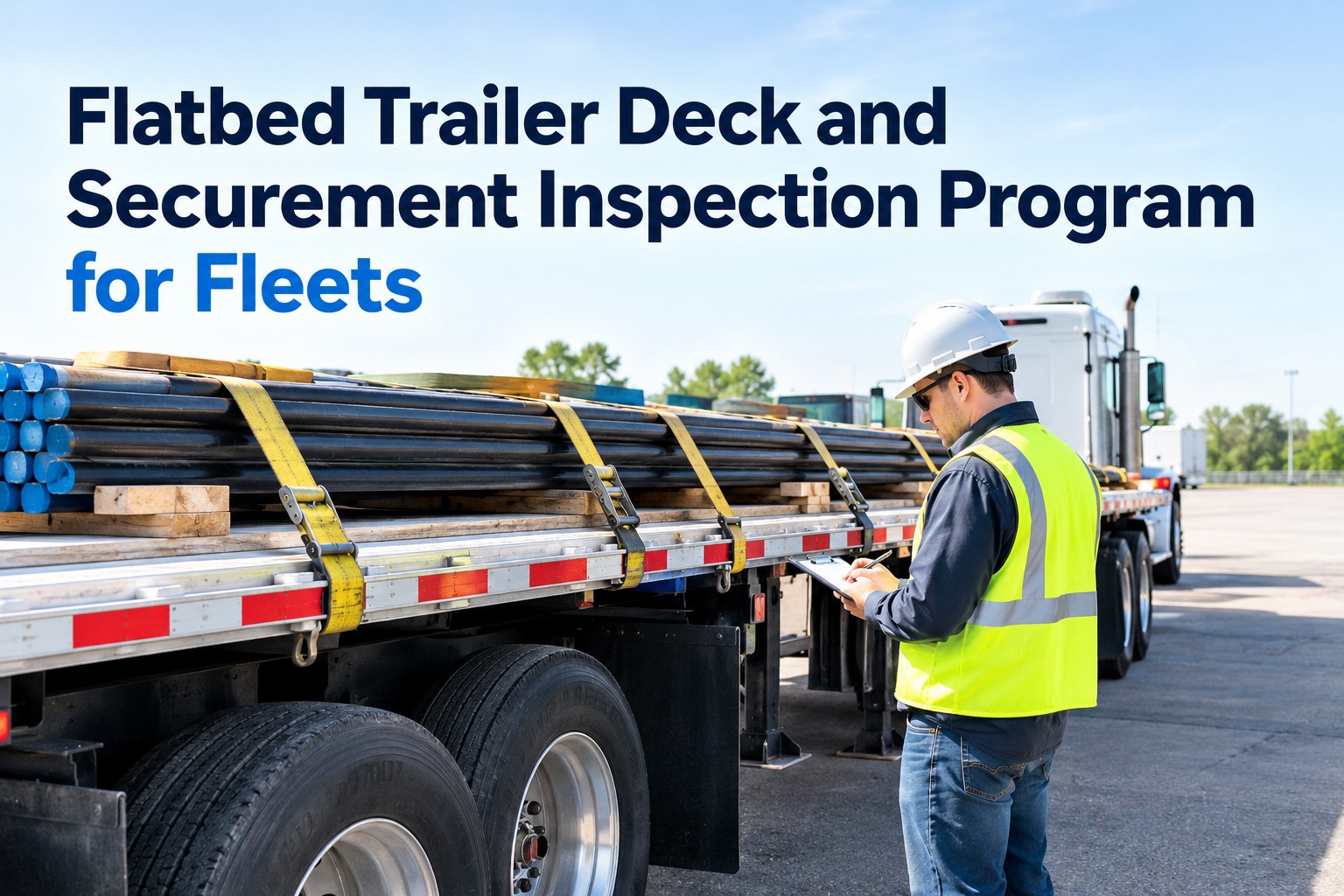
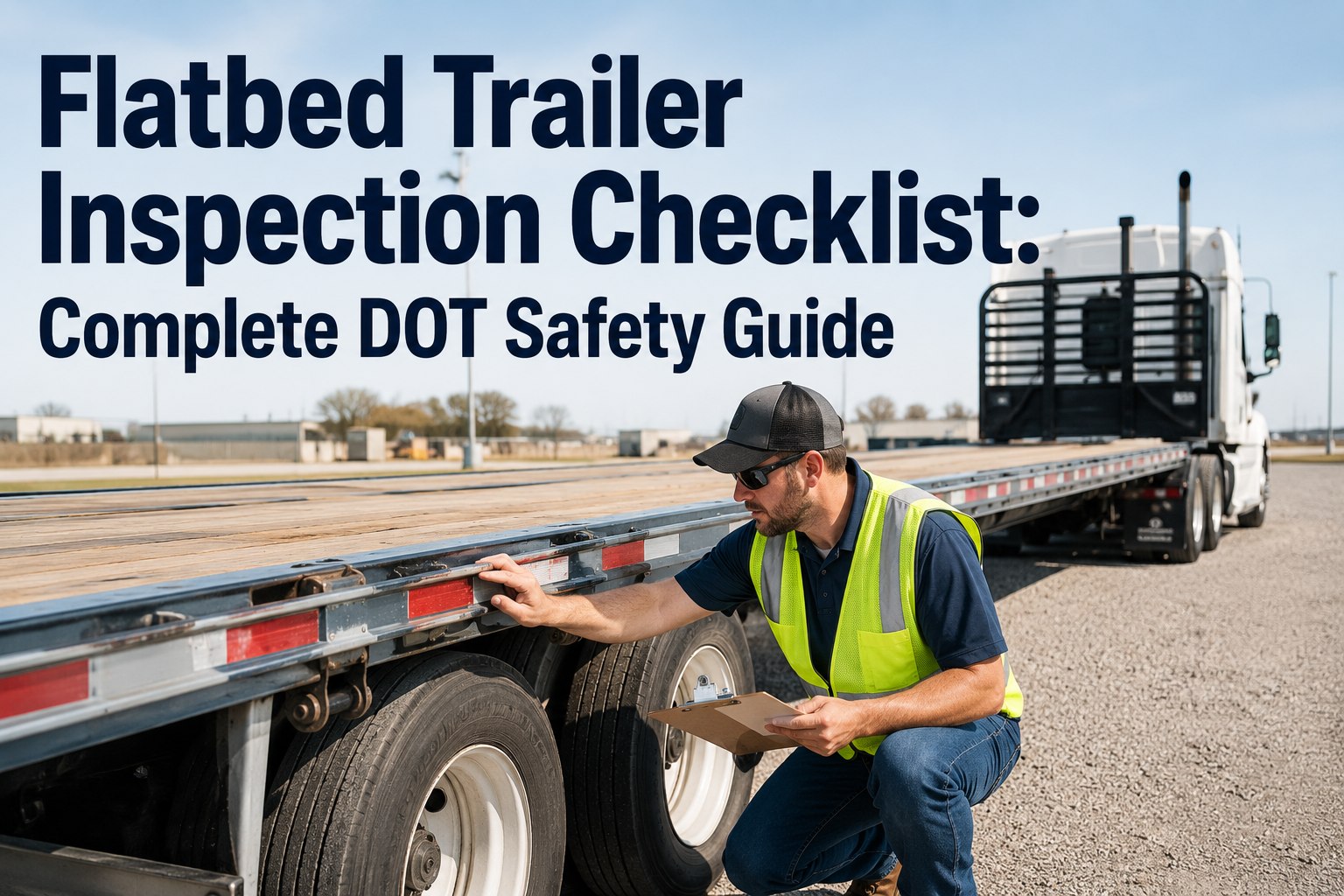
Walk the trailer front to rear, then the gear. For each item, the question is simple: is it fit to hold a load today? Use this as your baseline and defer to the manufacturer's criteria for specific gear.
| Component | Keep in service | Tag out and repair |
|---|---|---|
| Deck & frame | Solid boards or plate, intact welds, straight crossmembers | Rot, cracks at welds, bent or missing crossmembers |
| Winch & track | Pawl engages, handle and bar straight, mounts tight | Worn pawl, bent bar, loose or cracked mount |
| Webbing straps | Legible tag, clean webbing, hardware intact | Cuts, burns, knots, abrasion, UV damage, no tag |
| Chains & binders | Grade markings visible, links move freely | Stretched, bent or gouged links, damaged hooks, worn binders |
| Tarps & tarp straps | No tears, bows and straps intact | Tears that can flap, broken bows or rollers |
| Edge protection & dunnage | Present and undamaged | Missing or cracked, so straps cut on edges |
| Tires, brakes, lights | Same standard as any trailer | Anything that fails your pre-trip criteria |
How Many Tiedowns? The Rule in Four Steps
Under §393.110, the minimum tiedown count depends on the length and weight of the article. This applies to cargo that isn't blocked against a headerboard or otherwise restrained, so check the full rule for your load type.
Separately, §393.102 requires the combined working load limit (WLL) of your tiedowns to be at least 50% of the cargo weight. That's why legible WLL tags matter: gear you can't rate can't be counted.
Flatbed Gear Needs Its Own Record
Track each trailer, winch set and tarp system as its own asset. Drivers inspect gear on their phone, damaged items become defects with photos, and defects go straight to a work order. Every trailer keeps its history, even when a different tractor pulls it each week. Free for up to 3 trucks.
The Securement Timeline: When to Re-Check the Load
Securement isn't a one-time check at the dock. Under §392.9, the driver has to re-examine the load as the trip goes on:
Flatbed PM: What to Add to Your Schedule
Standard truck and trailer PM still applies. Add the flatbed-specific items below to your PM-A/B/C templates, and set intervals by miles, engine hours and time, whichever comes first. Intervals depend on your load types, so tune them from your own defect history.
- Straps, chains and binders
- Winch operation and handle
- Tarp and edge protection
- Deck boards and welds
- Winch mounts and tracks
- Landing gear and stake pockets
- Brakes, tires and lights
- Full frame and crossmember review
- Tarp system or roller service
- Gear retirement and replacement
- Annual DOT inspection (§396.17)
Frequently Asked Questions
Give Every Flatbed a Checklist That Follows the Gear to the Shop
Flatbed-ready inspections, defect-to-work-order routing, trailer PM and a service history per asset in one platform. Start free to run your first inspection, or contact us and we'll help build your checklist.