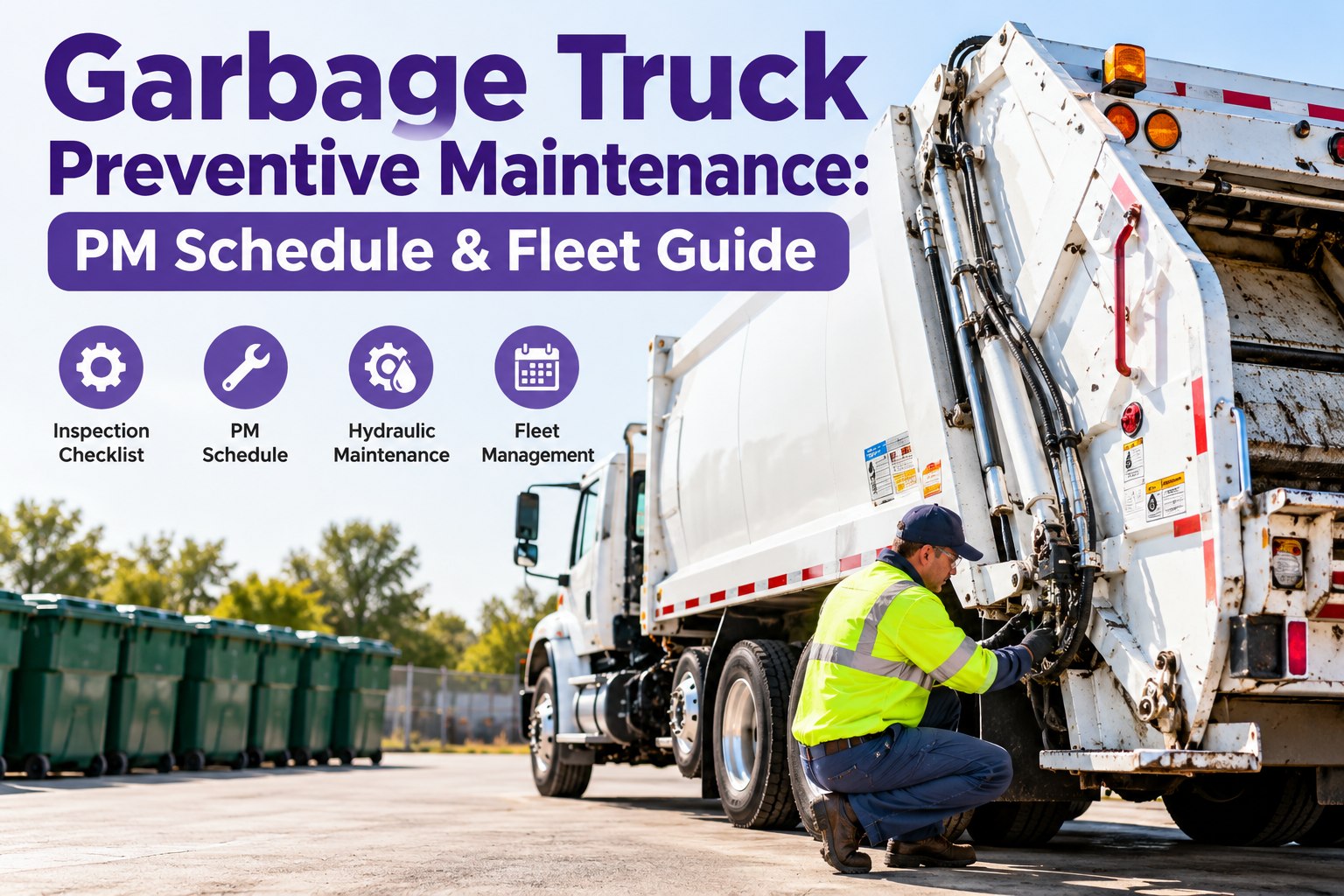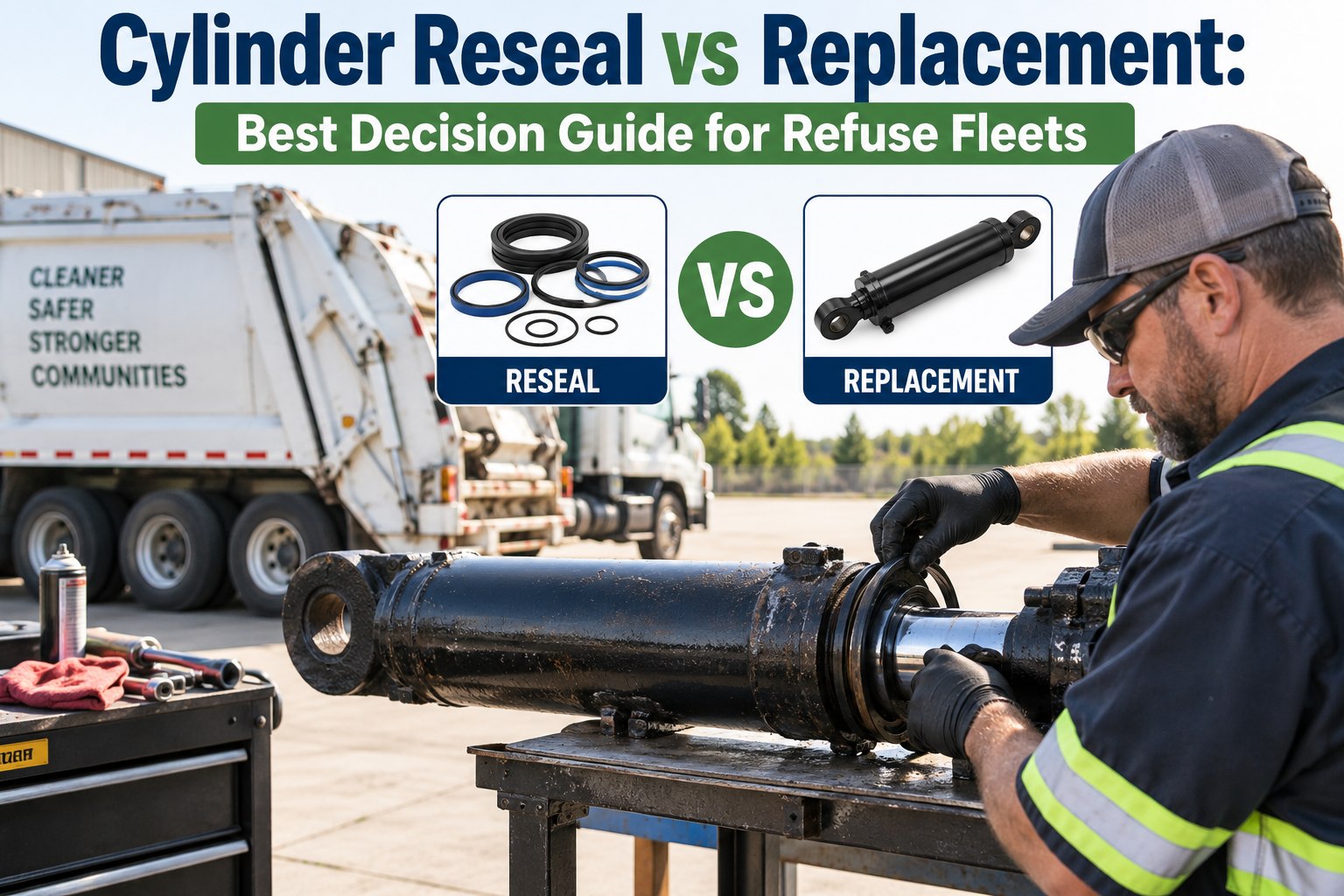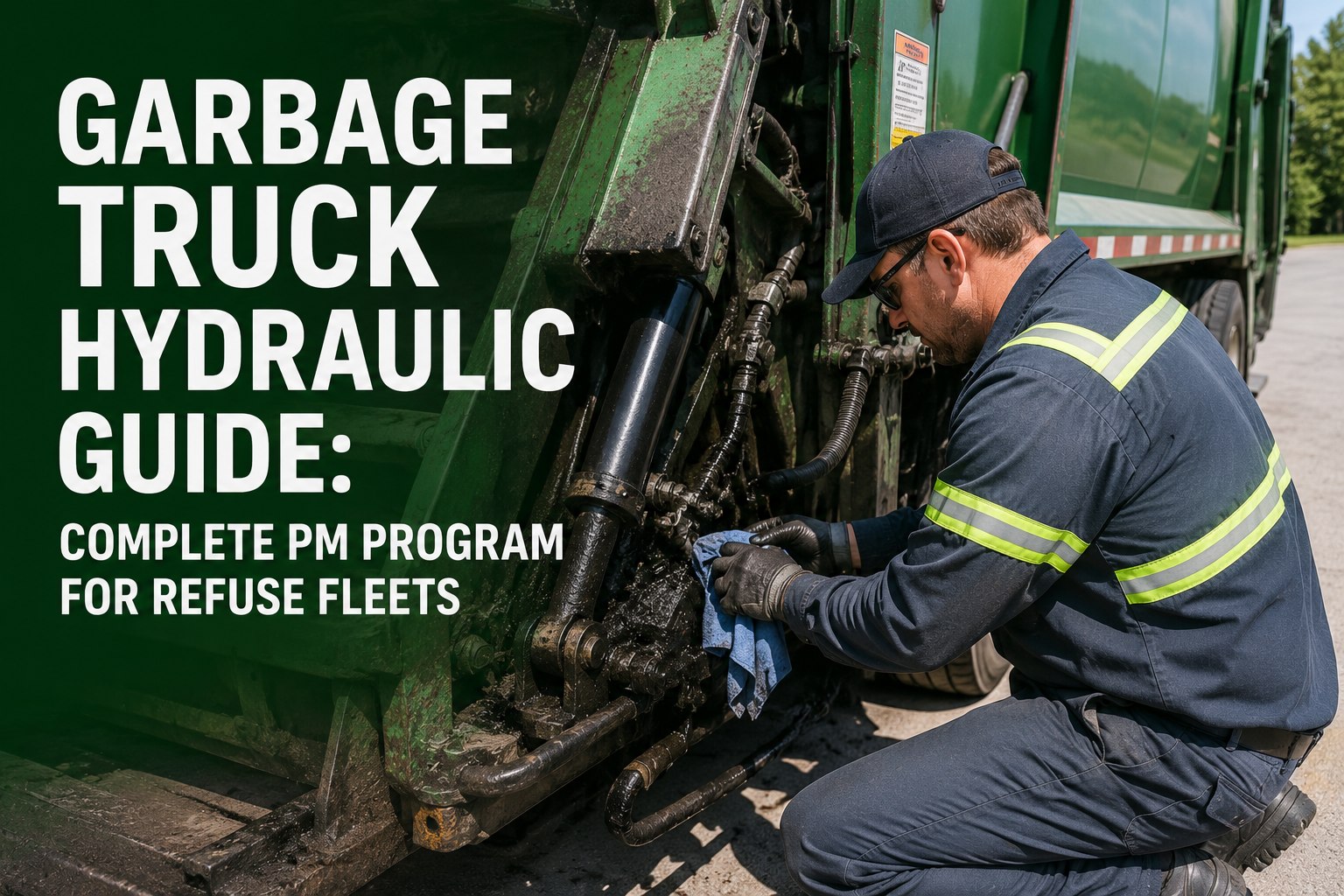
A garbage truck doesn't earn a dime sitting in the yard. And when one stops mid-route, the cause is almost always the same: the hydraulic system that runs the packer, the lift arm, and the tailgate has failed. A blown hose, a leaking cylinder, or a cavitating pump pulls the whole truck out of service — and with it, a route that still has to be covered by overtime, a spare unit, or a contractor. The frustrating part is that most hydraulic failures aren't sudden. They announce themselves for days through milky fluid, a drifting packer blade, or oil pooling at end of shift — signals a disciplined preventive-maintenance program catches long before they become a roadside breakdown. Start tracking hydraulic PM free. This guide shows exactly how refuse fleets cut hydraulic downtime by roughly 35% — through fluid analysis, cylinder and pump inspections, and packer PM intervals that turn surprise failures into scheduled work.
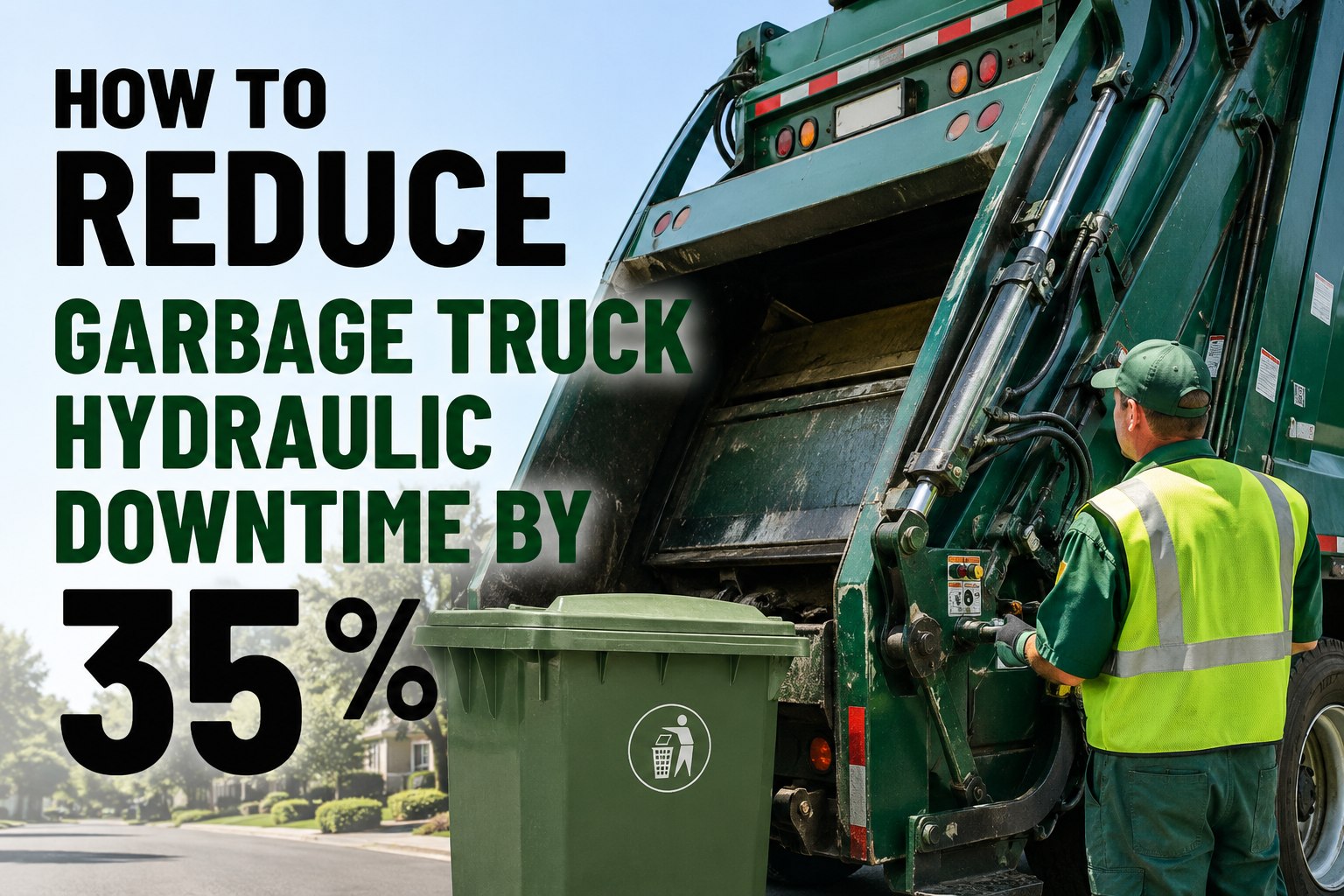
How to Reduce Garbage Truck Hydraulic Downtime by 35%
The hydraulic PM playbook for refuse fleets — fluid analysis intervals, cylinder and packer-pump inspections, early-warning signs, and the maintenance schedule that turns surprise breakdowns into planned work and saves thousands per route, per year.
Why Hydraulics Are the #1 Downtime Driver
A refuse truck leans on its hydraulics harder than almost any vehicle on the road — hundreds of pack cycles a day, constant pressure swings, and a working environment full of grit and debris. That's why the hydraulic system, not the engine, is usually the first thing to put a truck down.
A packer runs hundreds of compression cycles per shift. Every cycle loads the pump, cylinders, and valves — wear accumulates fast compared to an over-the-road truck.
Dust, moisture, and debris constantly threaten the fluid. Contamination wears every internal component at once — and contaminated fluid is the root of most failures.
The packer, lift arm, and tailgate all share one system. A single blown hose or failed pump doesn't slow the truck — it sidelines the entire route.
The Four Failures That Cause Most Downtime
Refuse hydraulic breakdowns cluster around four culprits. Knowing the symptoms of each is half the battle — because every one of them is catchable before it strands a truck.
Watch for: milky or cloudy fluid, dark metallic smell, filters clogging faster than normal, sluggish operation across all circuits.
Root cause: dirt, water, and metal entering through worn seals, bad fill procedures, or a failed breather — accelerating wear everywhere at once.
Watch for: visible oil on the rod or body, packer blade drifting down on its own, slow or uneven extension, oil pooling under the truck at shift's end.
Root cause: worn rod seals and packing, often from contaminated fluid scoring the cylinder — caught early, it's a seal kit, not a new cylinder.
Watch for: a whining or growling pump, inconsistent power, heat building in the system, erratic packer speed.
Root cause: the pump inlet is starved for oil — an undersized or restricted inlet hose, low fluid, or a sticking dry-valve bleed line. It pits the pump housing fast.
Watch for: repeatedly blown hoses, failed cylinder packing, pressure spikes especially on older trucks.
Root cause: a misadjusted or undersized pressure-relief valve. Never raise the relief setting to mask a failing pump — that's how one problem becomes three.
The PM Program That Hits 35%
Downtime drops when inspection moves from "when it breaks" to fixed intervals tied to engine hours. Here's the schedule that catches the four failure modes early — built around hours, the way refuse hydraulics actually wear.
Fluid level, hoses, fittings, cylinder rods, and the ground under the truck. Log any seepage before it becomes a stream.
Test fluid with an analysis kit for water, metals, and particulate. Replace filters and flush immediately after any contamination event.
Inspect rod seals, packing, and hose routing for chafing. Verify the packer holds position without drift under load.
Check pump output, inlet condition, and relief-valve setting against spec. Confirm breather and bleed lines are clear and functional.
Put Every Hydraulic Interval on Autopilot
Truck Inspection & Maintenance schedules hydraulic PM by engine hours, alerts you before fluid analysis and packer service come due, captures leak findings with photos on the daily inspection, and auto-creates a work order the moment a defect is logged — so nothing slips until it breaks.
Catch It Early: The Warning-Sign Ladder
Hydraulic failures escalate in stages. The earlier you intervene, the cheaper and faster the fix — and the difference between a planned seal kit and a stranded truck is usually just a few days of paying attention.
The Math: Why 35% Pays for Itself
Hydraulic uptime isn't a maintenance nicety — it's route economics. Every prevented breakdown saves on three fronts at once, and the numbers add up fast across a fleet.
Frequently Asked Questions
Contaminated fluid is the underlying driver of most failures. Dirt, water, and metal particles enter through worn seals, sloppy fill procedures, or a failed reservoir breather, and contaminated fluid then accelerates wear on the pump, cylinders, and valves all at once. That's why the four most common breakdowns — fluid contamination, cylinder leaks, pump cavitation, and overpressurization — are so often linked. A disciplined fluid-analysis program attacks the root cause directly. Start a free trial to schedule fluid testing.
A common interval is every 250 engine hours using a fluid-analysis kit that checks for water intrusion, metal particles, and particulate contamination. If a test comes back contaminated, flush and replace the fluid immediately and change all filters after the event. Because refuse hydraulics work in a dirty, high-cycle environment, staying on this interval is one of the highest-return maintenance habits a waste fleet can build.
Watch for milky or cloudy fluid, a dark metallic smell, filters clogging faster than usual, and sluggish operation across all circuits — those point to contamination. Visible oil on a cylinder rod, a packer blade drifting down without command, uneven extension, and oil pooling under the truck signal cylinder leaks. A whining or growling pump with inconsistent power points to cavitation. Catching any of these early turns a major repair into a minor one. See how digital inspections flag these early.
Because it masks a failing pump while quietly damaging everything downstream. Raising the pressure-relief setting to compensate for a pump that's losing output drives the whole system past its design pressure, which blows hoses and destroys cylinder packing. The correct move is to diagnose and address the pump, and always verify the relief-valve setting against spec when replacing a failed pump — never raise it to chase lost pressure.
Moving from reactive repair to interval-based PM — daily leak checks, 250-hour fluid analysis, monthly cylinder audits, and quarterly pump service — commonly cuts hydraulic-related unplanned stops by around a third. The savings compound: an emergency repair typically costs several times the same job scheduled, and every prevented breakdown also avoids the overtime, spare-truck, and missed-pickup costs of covering an interrupted route. Across a fleet, that's thousands saved per route each year. Start free and build your PM schedule.
Keep Every Packer Packing and Every Route Covered
Truck Inspection & Maintenance gives waste fleets one platform to schedule hydraulic PM by engine hours, track fluid-analysis intervals, capture leaks on digital inspections with photos, and turn every defect into an instant work order — so hydraulic failures become planned maintenance, not stranded trucks and uncovered routes.