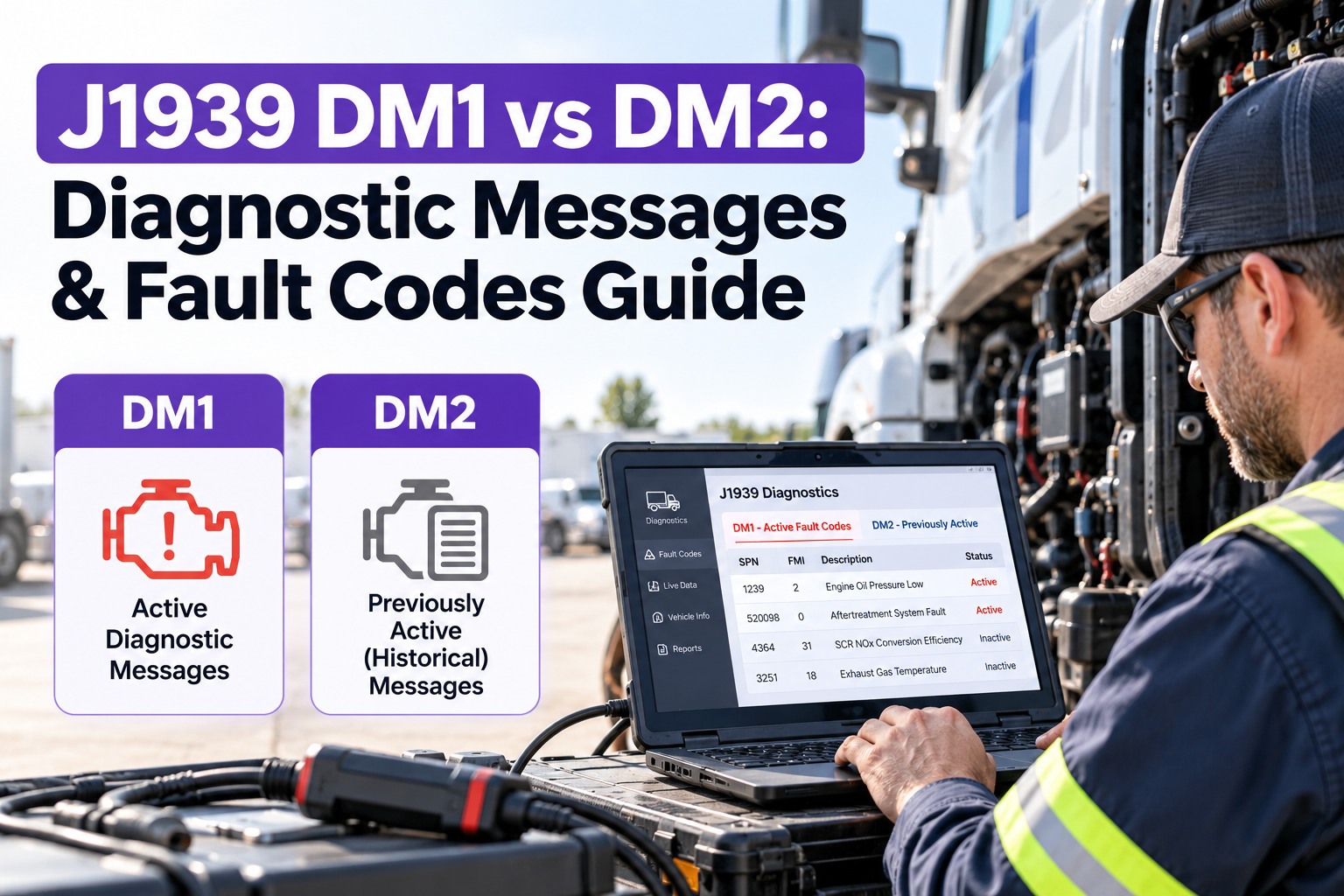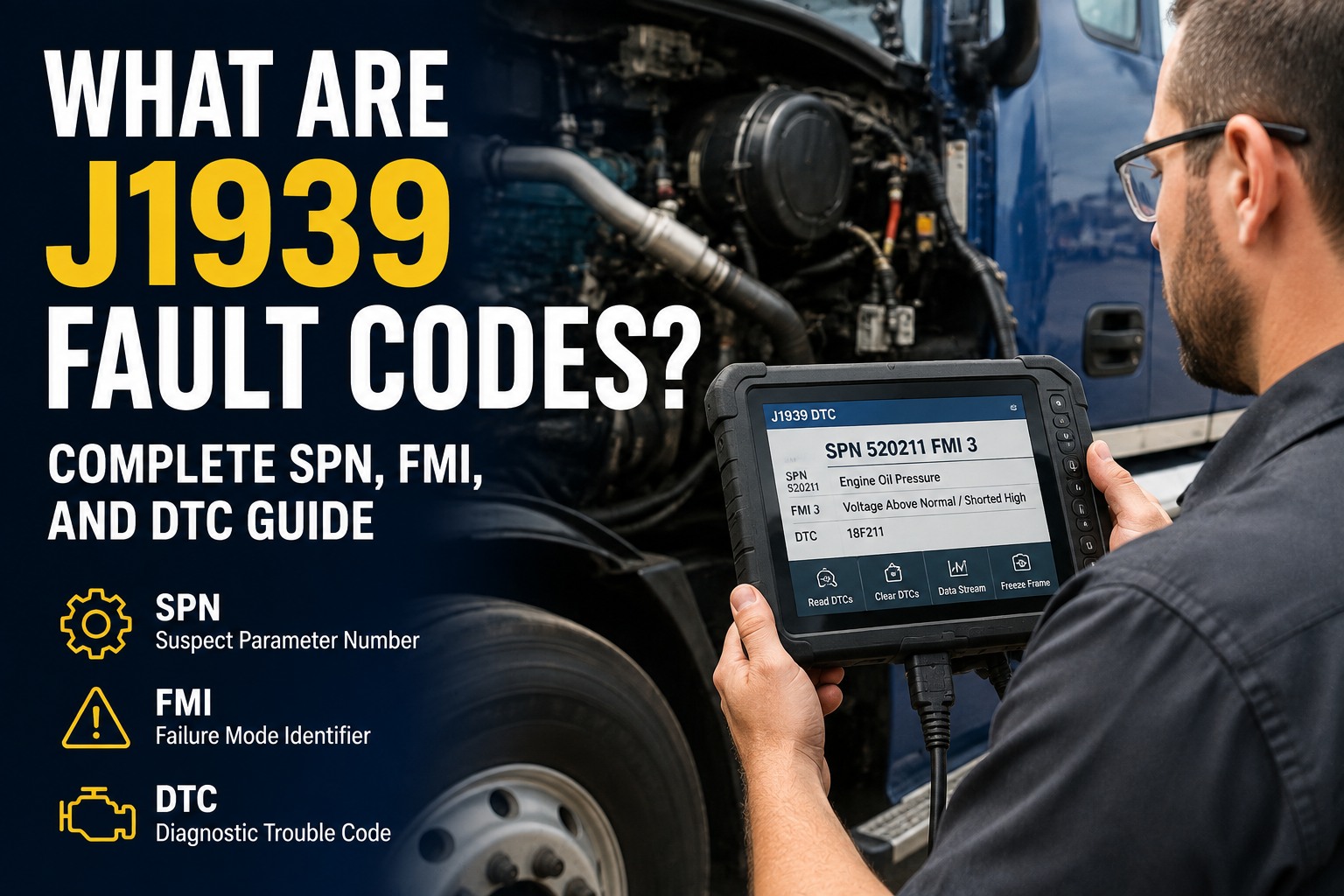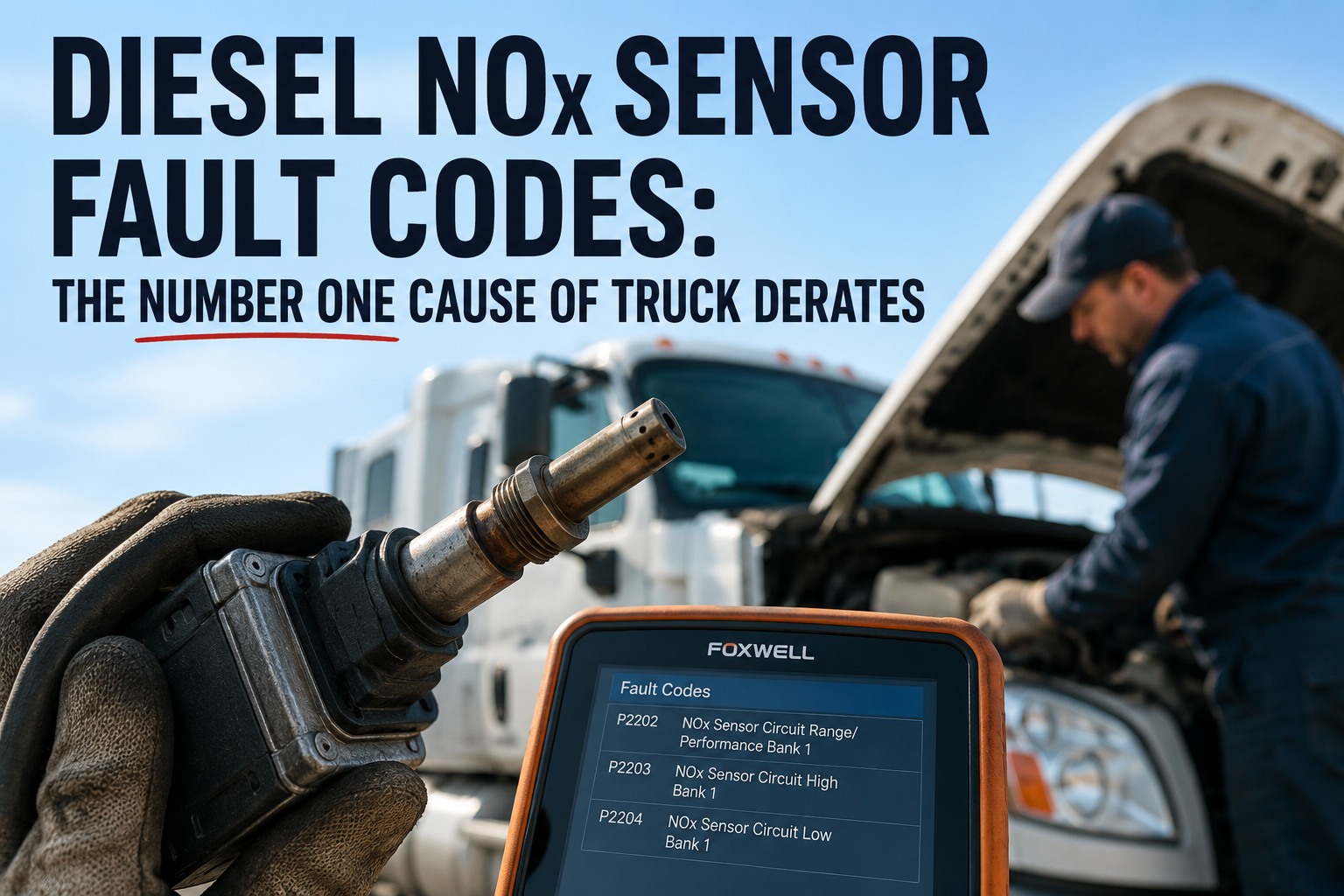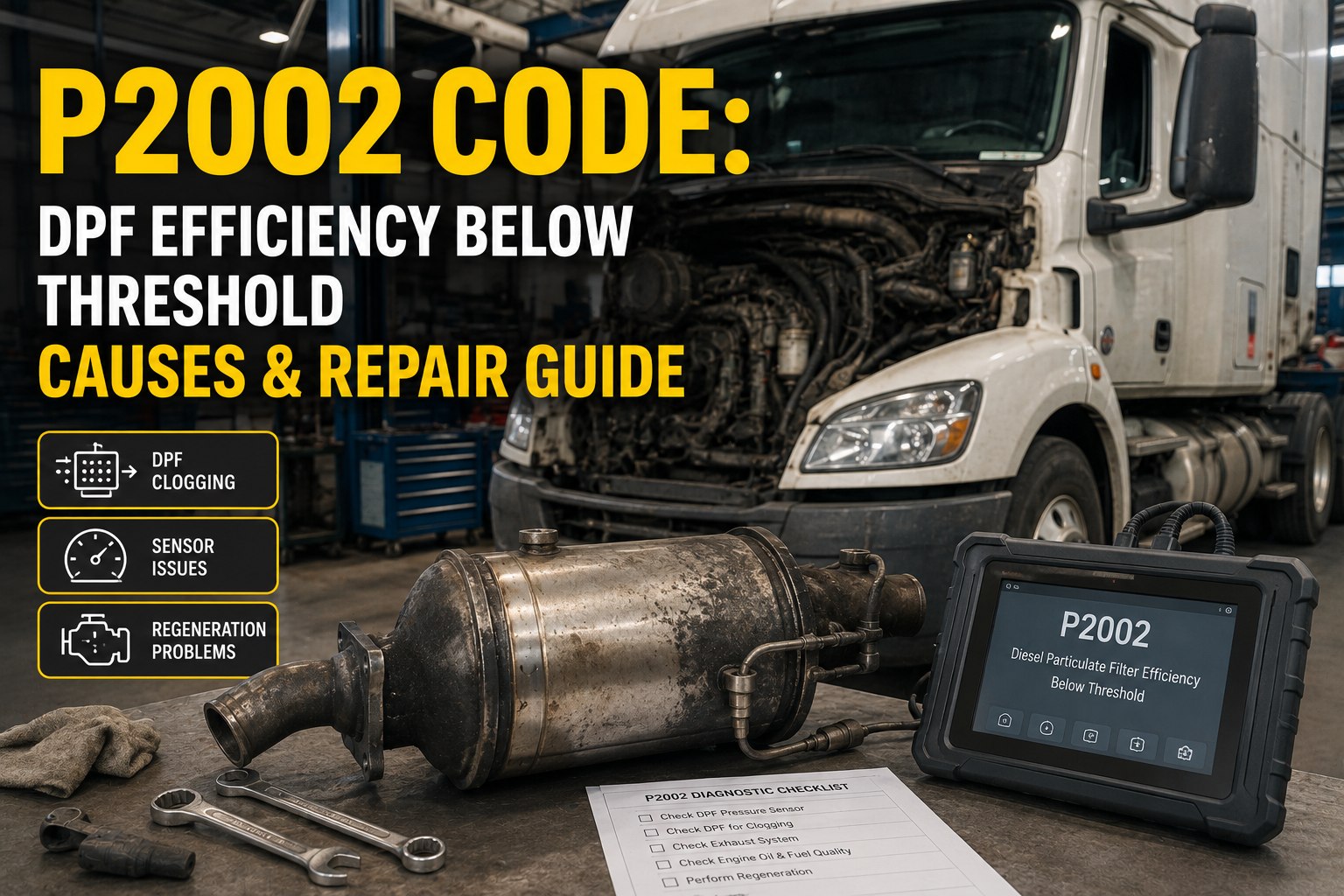
P2002 is the code that panics owner-operators and shouldn't — at least not always. It reads as "Diesel Particulate Filter Efficiency Below Threshold (Bank 1)," and in plain terms it means the truck's computer has decided the DPF isn't trapping soot as well as it should. Here's the part that trips people up: sometimes that's a $4,000 filter on its way out, and sometimes it's a $0 fix that clears itself after one good highway run. The code alone doesn't tell you which — the diagnosis does. Rushing to replace the filter before confirming the cause is how shops hand out invoices for parts that were never broken. Track your DPF health before P2002 hits free. This guide walks the P2002 the way a good diesel tech does: decode what the ECM is actually measuring, rank the real causes from most to least likely, follow the diagnostic sequence in order, and match the fix to the finding — with honest cost ranges at each step. And because the code is really a story about your duty cycle, we'll cover how to keep it from coming back.
P2002 Code: DPF Efficiency Below Threshold — Causes & Repair
Before you replace a $4,000 filter, read what the code is really telling you. A tech's walkthrough of P2002 — what the ECM measures, the causes ranked by likelihood, the diagnostic order, and the fix matched to each finding.
What the ECM Is Actually Measuring
The truck can't see soot directly. Instead, the ECM watches the pressure difference between exhaust entering the DPF and exhaust leaving it — the delta-P reading from a differential-pressure sensor. A healthy filter creates a predictable pressure drop as it traps particulate. When the math between that pressure signal and the expected filtration efficiency doesn't add up over roughly two monitoring cycles, the ECM sets P2002.
Symptoms You'll Notice
P2002 rarely travels alone. Alongside the check-engine light, the truck usually tells you something's wrong through how it drives and what it burns.
On steadily, or flickering as the system attempts and fails to regenerate the filter.
Sluggish acceleration; with high soot load the ECM forces a limp strategy to protect the system.
Repeated regeneration attempts burn extra fuel, and a struggling filter drags efficiency down.
The truck tries to regenerate more often than normal, and cycles may fail to complete.
Post-injection fuel used to raise exhaust heat can seep into the crankcase, shortening oil life.
If the filter is cracked or compromised, you may see exhaust smoke under hard acceleration.
The Real Causes, Ranked by Likelihood
This is where a good diagnosis saves money. The causes of P2002 are not equally common — start at the top and work down, because replacing the DPF first (the most expensive option) is usually the wrong first move.
The Diagnostic Sequence
Follow it in order. Each step either finds the fault or rules out a cause, so you spend money only where the truck tells you to — never guessing.
The Best Fix for P2002 Is Catching It at P0-Nothing
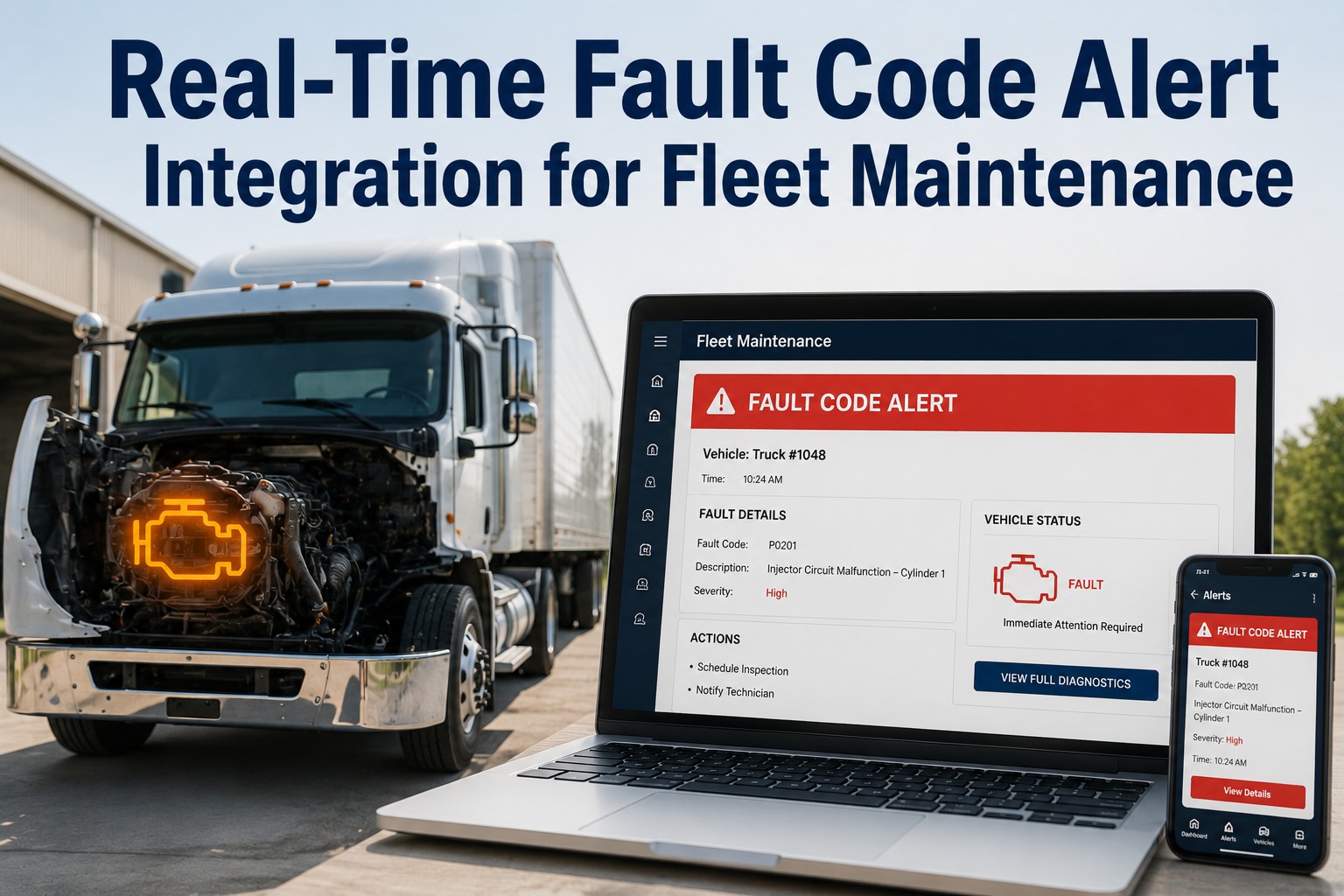
By the time P2002 sets, soot has already crossed the line. Truck Inspection & Maintenance trends DPF pressure differential and regeneration data over time, so a filter loading abnormally fast shows up as a rising line weeks before the code — and a truck stuck on a soot-building duty cycle gets flagged before it ever derates on the highway.
Repairs & What They Cost
Match the fix to the finding, and P2002 is often cheap. The cost ladder runs from free to four figures — most trucks land near the bottom, which is exactly why you diagnose before you replace.
Command a regen or drive at sustained highway speed to burn off soot. The first thing to try, and often the whole fix.
Apply the latest firmware if an outdated regeneration strategy is the culprit.
Replace a faulty delta-P sensor that was reporting a problem that didn't exist.
Fix cracked pipes or failed gaskets upstream so pressure readings are accurate again.
When a regen won't clear it, a bake-and-clean service removes ash and stubborn soot.
The last resort — only when the filter is physically cracked or so ash-loaded it can't be cleaned. Diagnose first.
Keeping P2002 From Coming Back
Here's the truth most cause lists bury: P2002 is usually a duty-cycle problem wearing the costume of a parts problem. The filter is designed to clean itself — it just needs the conditions to do so. Give it those and the code stays gone.
Regular sustained runs let exhaust reach the 500–600°C that burns soot off. A filter on short trips never gets the chance.
Cutting a regeneration cycle short leaves the job half-done and stacks soot toward the next code. Let it finish.
Excessive idling produces soot without the heat to clear it. Reducing idle time attacks the problem at the source.
Low-sulfur diesel and low-ash (DPF-rated) engine oil minimize the deposits that clog the filter prematurely.
Frequently Asked Questions
Short-term, cautiously, but don't ignore it. P2002 is a moderate-to-high severity code: in the near term you may notice reduced power and worse fuel economy, and if the soot load keeps climbing the ECM will force a limp/derate strategy to protect the aftertreatment system, which can strand a loaded truck. Running a poorly filtering DPF also stresses the turbo and the rest of the exhaust system, turning a cheap fix into an expensive one. The safest move is a sustained highway drive or a forced regeneration as soon as you see the code, followed by a proper diagnosis if it returns. Start a free trial to monitor DPF health.
Sometimes, yes. P2002 is frequently a soft code, meaning it reflects a real-time condition rather than a permanent fault. If the underlying issue is simply a full filter, a successful regeneration — triggered by a good highway run or commanded through a scan tool — restores filtration, the check-engine light goes out, and the code clears on its own. But if it clears and then returns, that's your signal there's a genuine underlying fault: a failing pressure sensor, an exhaust leak, a duty cycle that never allows regeneration, or a physically damaged filter. A code that keeps coming back is a hard problem, not a soft one, and needs the diagnostic sequence. Ask about catching it early.
It ranges enormously, which is the whole reason to diagnose before you buy parts. A forced regeneration or highway drive costs nothing and resolves many cases. An ECM software update runs $0 to $150, a differential-pressure sensor about $80, an exhaust leak repair $50 to $150, and a professional DPF cleaning around $200. Only at the far end — a filter that's physically cracked or so ash-loaded it can't be cleaned — does replacement come in at $1,000 to $4,000 or more. Most trucks land near the bottom of that ladder, so a shop that quotes a filter replacement before confirming the delta-P reading and ruling out the sensor is skipping steps that could save you thousands. Start free and track repair costs per truck.
Duty cycle — specifically, driving patterns that never let the DPF regenerate. The filter needs exhaust temperatures in the 500–600°C range to burn off accumulated soot, and reaching that requires sustained higher-speed running. Trucks stuck on constant short trips, heavy idling, or low-speed urban routes produce soot steadily but never get hot enough to clear it, so it builds until efficiency drops below threshold and the code sets. This is why the same truck can throw P2002 repeatedly while an identical unit on highway routes never does. The fix isn't a part; it's periodic highway runs, less idling, and letting regeneration cycles finish. Monitoring which trucks run soot-building routes lets you rotate them onto highway work before they derate. Start free and flag at-risk trucks.
No — not for any truck operating on public roads. While DPF removal is sometimes discussed as a permanent way to stop the code, deleting or defeating the diesel particulate filter is illegal for on-road vehicles under emissions law, carries substantial fines, voids warranties, and fails roadside and CSA inspections. For a commercial fleet the regulatory and financial exposure dwarfs the cost of simply maintaining the system. The right permanent solution to recurring P2002 is fixing the root cause — clean or replace the filter if it's genuinely bad, repair the sensor or leak if that's the fault, and correct the duty cycle so the filter can do the self-cleaning it was designed to do. Start free and keep the system healthy.
Don't Replace the Filter Until the Truck Says To
P2002 is a diagnosis, not a diagnosis-free trip to the parts counter. Truck Inspection & Maintenance trends your DPF pressure and regeneration data so the code rarely surprises you — catching a fast-loading filter early, flagging the trucks whose routes manufacture soot, and logging every repair and cost so you know what actually fixed it. Catch it before the derate, fix the real cause, and keep it gone.