Winter doesn't just stress commercial fleets — it exposes every weakness in your maintenance program in a 90-day window. Engine oil thickens and increases startup resistance below freezing. Diesel fuel begins forming paraffin crystals at 15°F that clog fuel lines and starve injectors. Diesel Exhaust Fluid (DEF) starts freezing at 28-32°F. Batteries lose significant cranking power in cold temperatures — older batteries that performed fine in summer fail outright on a -10°F morning. Tire pressure drops 1-2 PSI for every 10°F temperature reduction, putting trucks below safe inflation specs by the time drivers notice. Industry data from UD Trucks reports North American logistics losses in the billions of dollars annually attributable to cold-weather disruptions — emergency roadside service, weather-delayed deliveries, missed customer commitments, and accidents traceable to unprepared equipment.
The fleets that come through winter operations intact share one pattern: they prepare in October-November, not in February when the first deep freeze hits. They run a structured 8-system winterization protocol covering engine cooling, fuel system, battery and electrical, tires and chains, brakes and air system, DEF management, cab and HVAC, and driver emergency supplies. They flag the trucks that experienced fuel gelling, battery failures, or starting problems in previous winters for priority attention. They establish written winter pre-trip inspection workflows. They stock anti-gel additives, replacement filters, chains, and emergency supplies before the temperatures actually drop. And they document everything — because the trucks that fail in February are almost always the trucks that nobody inspected in October.
This guide breaks down the complete fleet winterization protocol for 2025-2026: the 8 critical systems, the seasonal preparation timeline, the cold-weather pre-trip inspection workflow, the state-by-state chain regulations, and the driver readiness framework. Start your free trial of our truck inspection and maintenance software to deploy winter PM schedules and seasonal inspection templates on one platform — live in 10 minutes, free for up to 3 trucks.
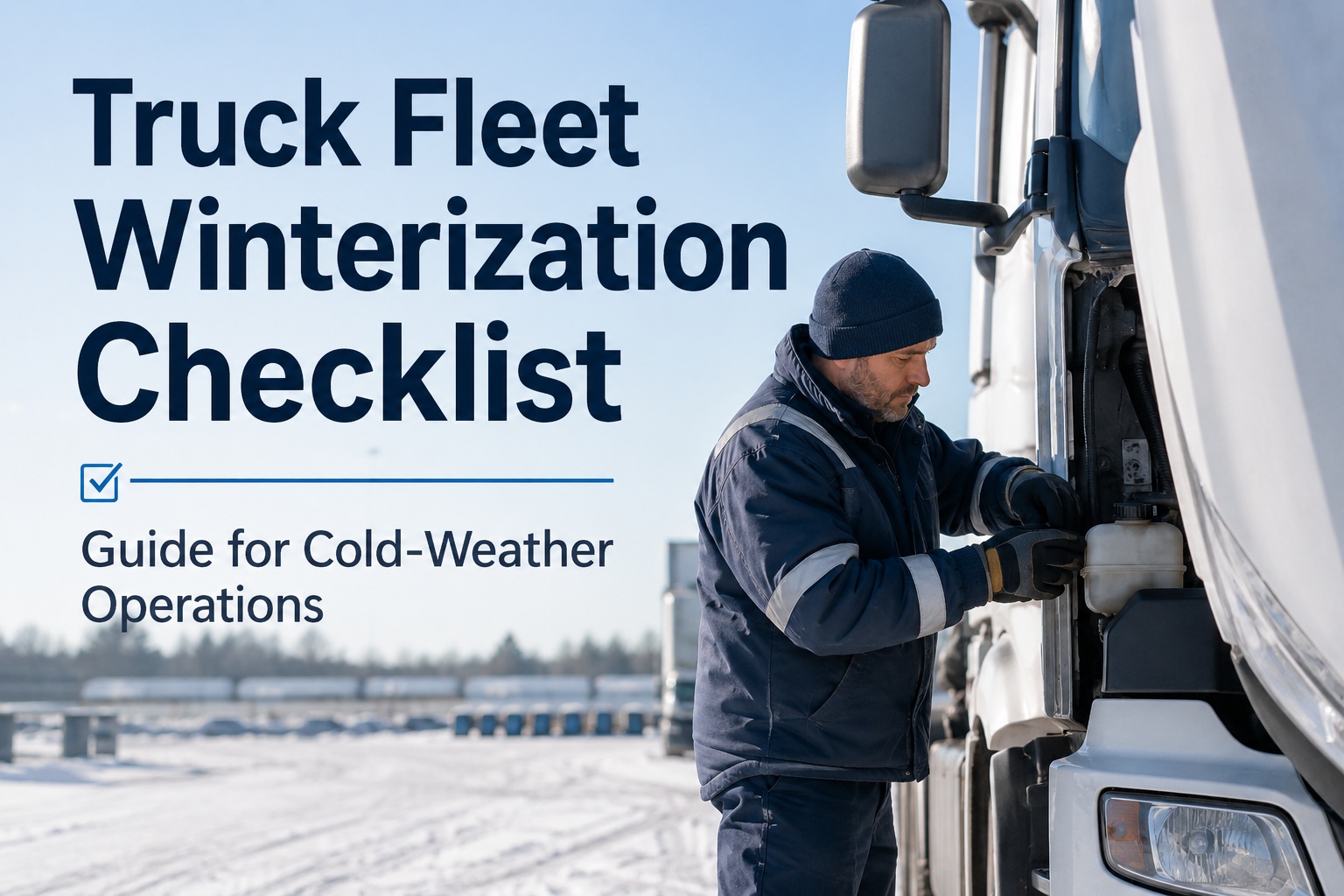
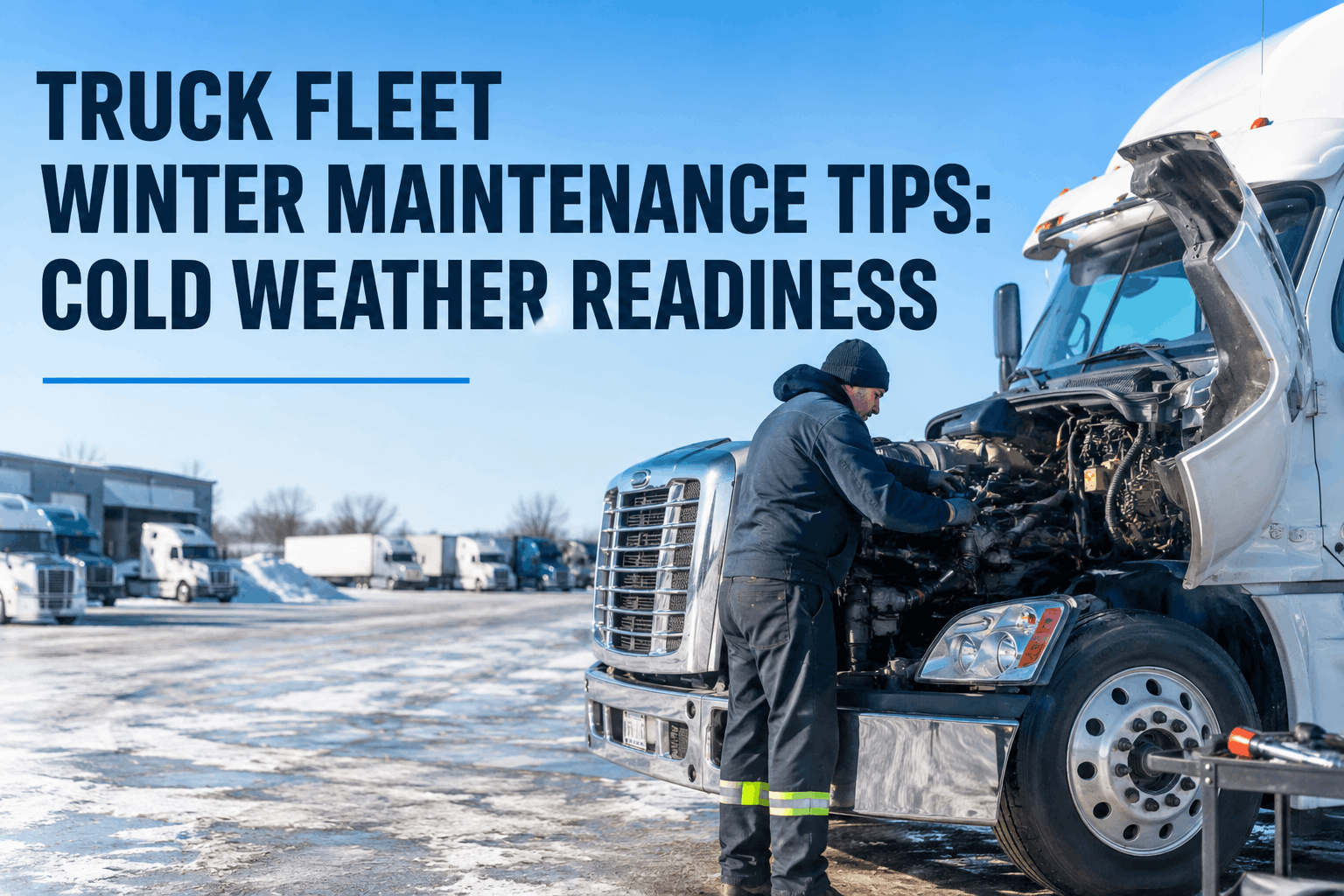
Truck Fleet Winter Maintenance Tips: Cold Weather Readiness
The complete 2025-2026 winterization protocol — 8 critical systems, seasonal prep timeline, anti-gel and cold-start procedures, tire chain regulations, and the driver readiness framework that keeps commercial fleets operating when temperatures drop below zero.
The 8 Critical Winter Maintenance Systems
Each of these 8 systems addresses a specific cold-weather failure mode. Skip any one and you create a single point of failure that strands a truck at the worst possible time. Contact our sales team for help configuring winter PM schedules across all 8 systems.
The Cold-Weather Failure Cascade — What Goes Wrong First
Cold weather follows a predictable failure progression. Knowing the sequence helps fleet managers prioritize winterization work and understand which trucks are at highest risk on any given morning.
The Seasonal Preparation Timeline
Winter readiness isn't a December project — it's an October-November discipline. Here's the proven seasonal timeline that keeps fleets operating when temperatures crash. Sign up free to schedule winter PM templates against your fleet calendar.
FEB
APR
State Tire Chain Regulations — Major Jurisdictions
Tire chain requirements vary significantly by state and route. Carrying chains is one thing — knowing the regulations and having drivers trained on installation is another. Here are the major regulatory frameworks fleet managers should track.
| State | Chain Requirement | Speed With Chains | Notes |
|---|---|---|---|
| California | Required Oct-Apr in chain control zones | 30 mph max | Strictest; 3 levels (R1/R2/R3) |
| Oregon | Required when posted on highways | 35 mph max | Mandatory carrying Nov-Apr |
| Washington | Required in chain-up areas when posted | 30 mph max | Mountain passes |
| Colorado | Code 18 requirements on I-70 | 30-35 mph | Traction law + chain law tiers |
| Pennsylvania | Permitted on tractors when posted | 30 mph max | Required carrying in some areas |
| Montana | Required on mountain passes when posted | 30 mph max | Statewide carrying recommended |
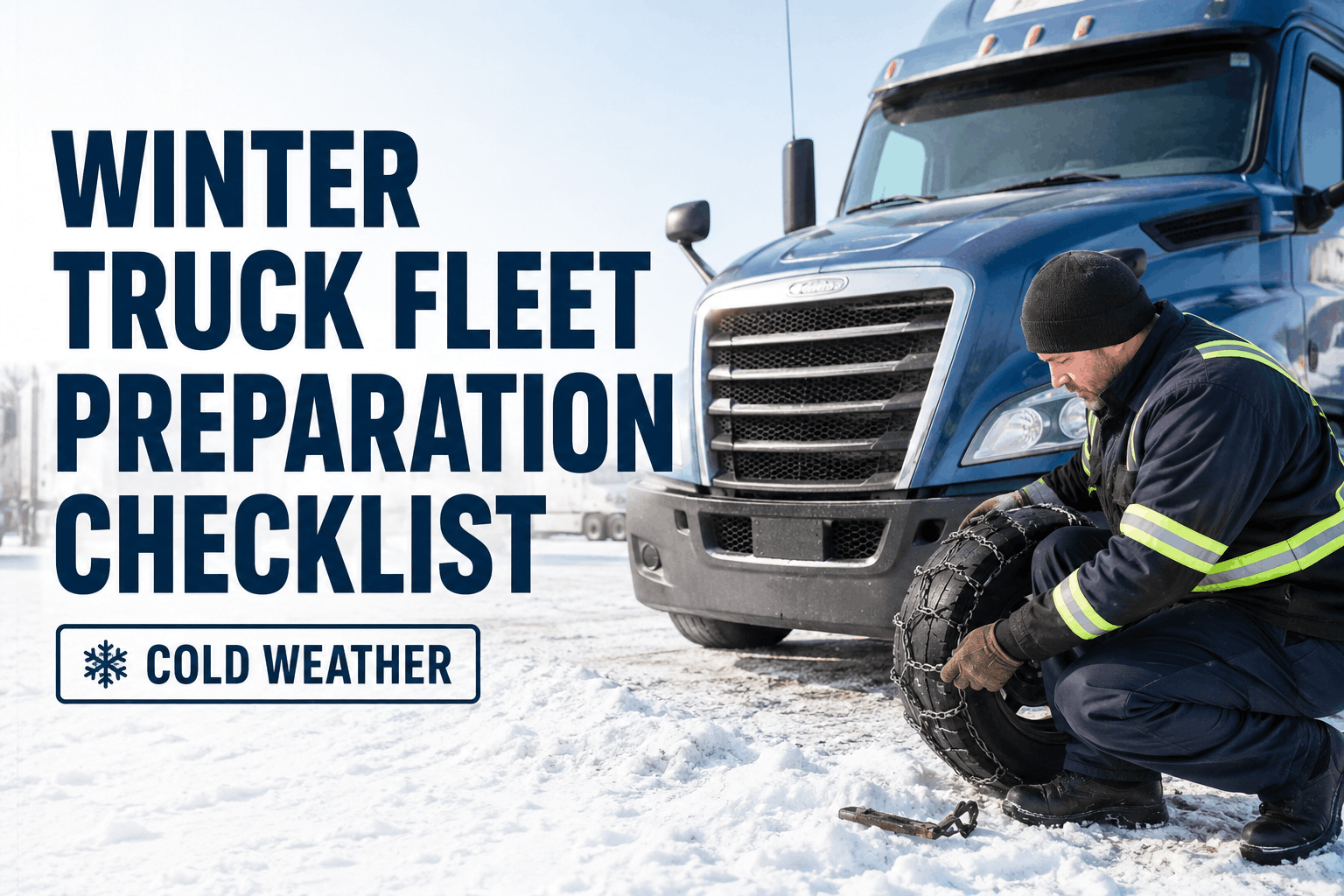
After installing chains, drive 50-100 meters and recheck for looseness. Chain should not contact truck body — finger-width gap between chain and tire. Observe posted speed limits (typically 30-50 km/h or 20-30 mph).
Cold-Weather Pre-Trip Inspection — What Drivers Should Check
Standard §396.13 pre-trip inspections need additional cold-weather items during winter operations. These extra checkpoints catch failure modes that summer inspections never encounter.
Frequently Asked Questions
October-November, before the first deep freeze. Foundation work (battery replacement, cooling system service, fuel transition) takes 4-6 weeks for a typical 25-50 truck fleet. Fleets that wait until December are scrambling against weather — and the trucks that fail first are usually the ones that needed the most preparation. The proven seasonal timeline: October for asset audit and parts ordering, November for system services and driver briefings, December for active monitoring with cold-weather pre-trip workflows live. By January-February peak cold events, the fleet should be in maintenance mode, not preparation mode. Contact our sales team for help configuring winter PM schedules.
Standard #2 diesel begins forming paraffin crystals around 15°F (the "cloud point") and can completely gel below 0°F. The crystals clog fuel filters, restrict fuel line flow, and eventually starve the injectors — engine won't start or stalls mid-route. Prevention: switch to winterized #1/#2 blend before temperatures drop, add anti-gel and cetane additives below 15°F, drain water separators weekly (water freezes inside the fuel system causing similar symptoms), replace fuel filters at the start of winter, and keep tanks topped to minimize condensation. Carrying emergency anti-gel and a backup fuel filter is standard practice in northern operations.
Cold temperatures reduce a battery's chemical reaction efficiency, dropping cranking capacity by 35%+ at 0°F compared to 80°F. Older batteries (3+ years) that performed adequately in summer often fail outright in winter — the residual capacity that handled warm-weather starts isn't enough for cold-soaked engines. Engine oil also thickens in cold, requiring more cranking power to turn the engine over. The combination eats battery capacity rapidly. Prevention: proactively replace batteries at 3 years before winter, test cold-cranking amps (CCA) annually, keep terminals clean and protected from corrosion, verify alternator output, and use block heaters or shore power on overnight-parked trucks in sub-zero forecasts. Start your free trial to track battery age across your fleet.
Tire pressure drops approximately 1-2 PSI for every 10°F temperature reduction — a natural consequence of air contracting as it cools. A truck inflated to spec at 70°F can be 6-12 PSI below spec at 10°F. Underinflated tires reduce fuel economy 3-5%, accelerate tread wear, increase blowout risk, and degrade braking traction on slippery roads. Recheck pressure after every cold front and before every dispatch in winter — drivers should treat pressure verification as part of the cold-weather pre-trip. Air contraction also affects spare tires, which must be checked regularly during winter operations because they're often forgotten until needed.
California has the strictest framework — chains required October through April in designated chain control zones across mountain passes (3-tier R1/R2/R3 system). Oregon, Washington, Colorado, Pennsylvania, and Montana all enforce chain requirements when posted, typically on mountain passes and during severe weather events. Most western states with significant mountain pass traffic mandate chain carrying November through April even if not always required to install. Speed limits with chains installed typically run 30-35 mph maximum. Chain regulations change by jurisdiction — fleets routing through Sierras, Rockies, Cascades, or Appalachians should verify current state DOT requirements before each winter season. Talk to our sales team for help integrating chain compliance into your fleet PM and inspection workflows.
For fleets operating in regions where overnight temperatures regularly drop below 0°F, yes — block heaters are essential rather than optional. They warm engine block and fluids before startup, reducing cold-start engine wear, improving fuel economy at startup, and providing reliable starts when standard cranking would fail. Installation cost is modest ($150-$400 typical), and the ROI shows up as fewer no-start incidents, less battery strain, and reduced cold-start engine damage. Fleets that park outdoors overnight in northern climates should consider block heaters non-negotiable on Class-7/8 trucks. Plug into shore power at terminals when available — and consider portable battery-powered block heaters for trucks parking off-property. Sign up free to track block heater PM intervals.
Run a Winter-Ready Fleet — Document Every System
500+ fleets deploy seasonal winterization protocols on our truck inspection and maintenance software: 8-system PM templates, cold-weather pre-trip DVIRs, defect-to-work-order automation, parts inventory for winter supplies, and audit-ready records. Document readiness, prevent breakdowns, and operate through the toughest 90 days of the year on one platform.