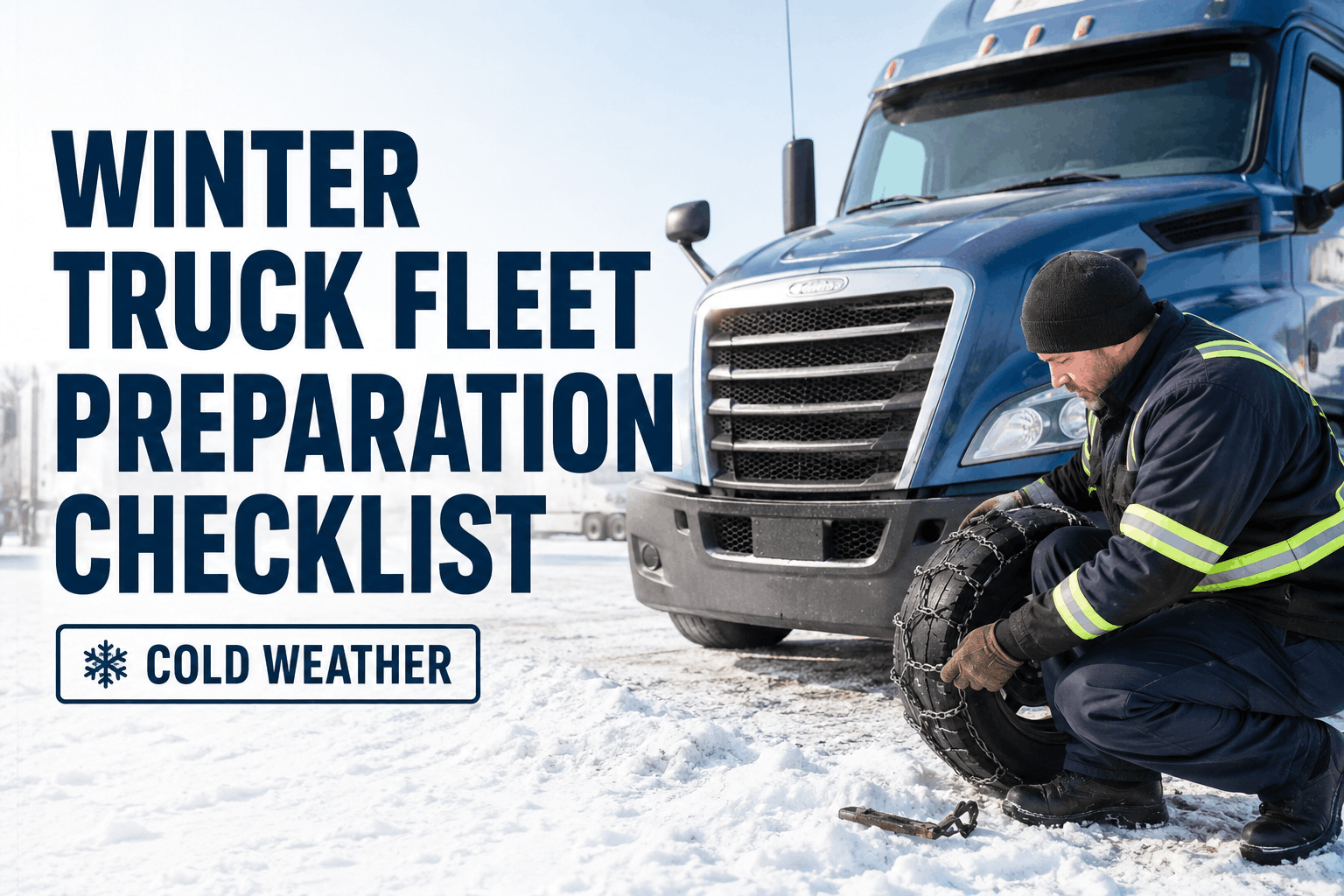
Winter doesn't break trucks creatively — it breaks them predictably. Diesel gels at 15°F, DEF freezes solid at 12°F, batteries lose up to 60% of their cranking power at 0°F, and moisture trapped in air lines freezes brakes shut. Every one of these failures has a known temperature threshold and a known fix, which means winter strandings aren't bad luck — they're skipped steps. The math is stark: full winterization runs $500–$1,200 per truck, while a single cold-weather breakdown averages $2,500–$5,000 before you count missed loads. This guide breaks down the seven systems cold weather attacks, the exact temperature each one fails at, and the checklist that keeps your fleet rolling through the freeze. Schedule your winterization free.
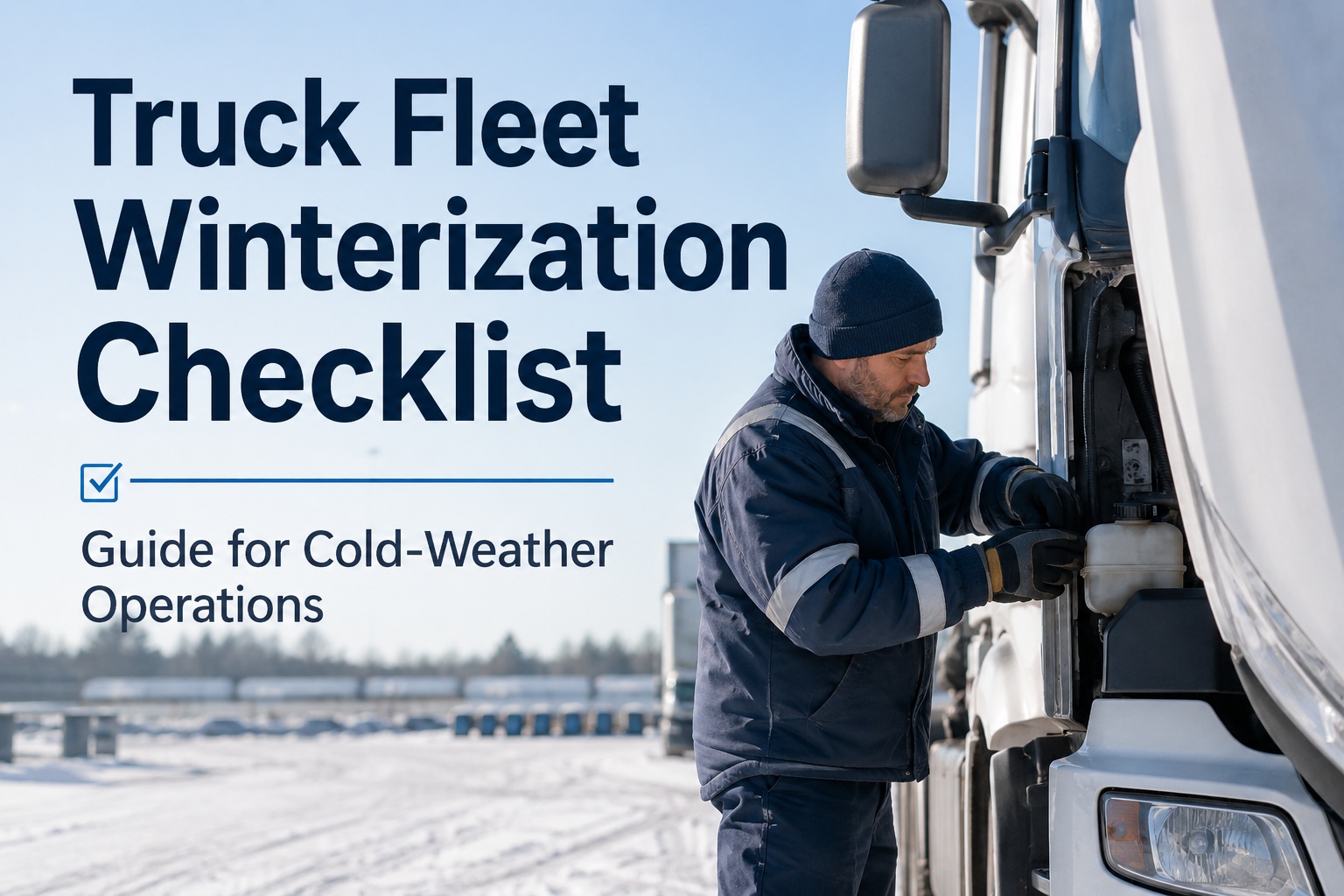
Truck Fleet Winterization Checklist for Cold-Weather Operations
Cold snaps gel fuel, kill batteries, and freeze air lines. Schedule and verify every winterization task so your fleet keeps rolling through winter — no roadside surprises.
The Cost of Skipping Winter Prep
Winterization feels like an expense until you price the alternative. Cold-weather failures don't just cost a repair — they cost a tow in a snowstorm, a stranded driver burning HOS, a missed delivery, and often a damaged component that turns a $40 problem into a four-figure one.
The Seven Systems Winter Attacks
Every cold-weather no-start traces back to one of these seven systems. Each fails at a known temperature, and each has a clear pre-season fix. Knowing the threshold tells you exactly when to escalate from routine checks to full winter protocol.
Paraffin wax crystallizes and plugs filters — the #1 cold no-start. Treat with anti-gel before 20°F, replace filters, drain water separators daily.
A battery fine in September fails in November. Load test now; replace anything below 75% capacity before the first cold snap, not after.
Moisture from a failing air dryer freezes valves and lines shut — a catastrophic safety failure. Service the dryer before winter, drain tanks daily.
Frozen DEF can damage pumps and injectors. Verify tank and line heaters work — a failed heater means a $3,000–$8,000 repair.
Coolant rated to 20°F can fail at 8°F — a cracked block is a $12,000+ repair. Test the antifreeze mix and bring it to full winter protection.
Summer-weight oil resists flow on cold starts, straining the starter. Switch to OEM-spec winter viscosity and verify block heaters function.
Pressure drops as temps fall, cutting load capacity and traction. Check pressure and tread, and adjust for cold baseline before dispatch.
Winter wiper fluid, fresh blades, working defrost and lights, and a stocked emergency kit. The cheapest system, and the one that keeps drivers safe.
Schedule All Seven Before First Frost
Truck Inspection & Maintenance fires a seasonal winterization work order for each system — assigned to the right tech, with the right checklist, weeks before the cold hits.
The Pre-Season Winterization Checklist
Run this 6–8 weeks before your region's first frost — start in September or early October to beat the service-shop bottleneck and parts shortages. Each item is a pass-or-fix before the truck faces real cold.
Timing: Why September Beats December
The single biggest winterization mistake is waiting. Late prep collides with backordered parts and overwhelmed service bays — so the trucks that need help most sit longest. Pulling the work forward turns a scramble into a routine.
Frequently Asked Questions
Begin 6–8 weeks before your region's first frost — typically September or early October. Starting early avoids the service-shop bottleneck and parts shortages that hit once cold weather arrives. Switch to cold-weather inspection procedures when overnight temps regularly drop below 32°F, and escalate to full protocol below 15°F.
Battery failures and fuel system issues lead. A battery at 80% capacity in September may deliver only 50% at 0°F, and diesel gelling from paraffin wax is close behind — often indistinguishable from a battery failure without diagnosis. Both are entirely preventable with pre-season load testing and anti-gel treatment before fuel reaches its cloud point.
Standard No. 2 diesel reaches its cloud point around 20°F and begins gelling near 15°F as paraffin wax crystallizes and clogs filters. Apply anti-gel additive before temps reach the cloud point — no additive can reverse gelling once it starts. Treated fuel resists plugging 20–25°F below the cloud point, and winter-blend or No. 1 diesel lowers the threshold further.
Generally no — extended idling causes DPF soot buildup, wastes fuel, and can lead to aftertreatment failures. Better options: plug in block heaters 2–4 hours before departure, use APUs for cab heat during rest, and park in covered or heated areas. If you must idle, keep RPMs above 1,000 to maintain exhaust temperature.
It turns winter prep into a scheduled, verified process instead of a memory test. Truck Inspection & Maintenance fires a seasonal work order for each system ahead of frost, assigns it with the right checklist, flags trucks with a history of cold-weather failures, and timestamps every completed task — so nothing gets skipped and you can prove it was done.
Keep Every Truck Rolling Through Winter
Truck Inspection & Maintenance schedules and verifies every winterization task across all seven cold-weather systems — fuel, batteries, air brakes, DEF, cooling, oil, and tires — assigned, checklisted, and timestamped before first frost, so a $40 part never costs you a $5,000 breakdown.