The truck transmission inspection that catches problems early costs $400 in fluid and filter. The transmission inspection that misses problems costs $5,000-$20,000 in rebuild or replacement — and the gap between these two outcomes is the difference between disciplined inspection routine and reactive maintenance. Modern Class 8 trucks have shifted decisively to Automated Manual Transmissions (AMTs) like the Eaton Endurant, Detroit DT12, Volvo I-Shift, and Mack mDRIVE — sophisticated systems that combine gearsets and clutches with actuators, sensors, and Transmission Control Modules (TCMs). AMTs are more efficient than traditional manuals but they're also more complex and more expensive to repair. A driver report of "something feels off" might be the system recalibrating — or it might be the beginning of a $12,000 problem. Knowing the difference requires structured inspection.
Three forces make 2026 transmission inspection more important than it was even five years ago. First, AMT adoption is now dominant — most new Class 8 trucks ship with AMTs, and AMT failure modes are different from traditional manual transmissions (electronic actuator failures, TCM calibration drift, software glitches in addition to mechanical wear). Second, fluid maintenance economics have changed: AMTs like the Eaton Endurant are rated for 750,000-mile linehaul drain intervals on factory-specified synthetic fluid (Eaton PS-386 only), but field data shows AMTs failing well before that when fluid maintenance is neglected. Third, the cost of getting it wrong has grown — modern AMT rebuilds run $8,000-$15,000, complete replacements $15,000-$25,000+, and the downtime per repair averages 5-10 days. The disciplined approach is structured 7-system inspection at every PM cycle, plus driver awareness of 6 specific warning signs that catch problems early.
This guide is the complete commercial truck transmission inspection checklist for 2026: the 7-system inspection framework, the 6 warning signs every driver and technician should recognize, comparison of manual vs AMT vs automatic, service intervals by transmission type, and the digital workflow that turns transmission inspection into auditable maintenance records. Start your free trial of our truck inspection and maintenance software to deploy transmission inspection templates with fluid-condition tracking — live in 10 minutes, free for up to 3 trucks.
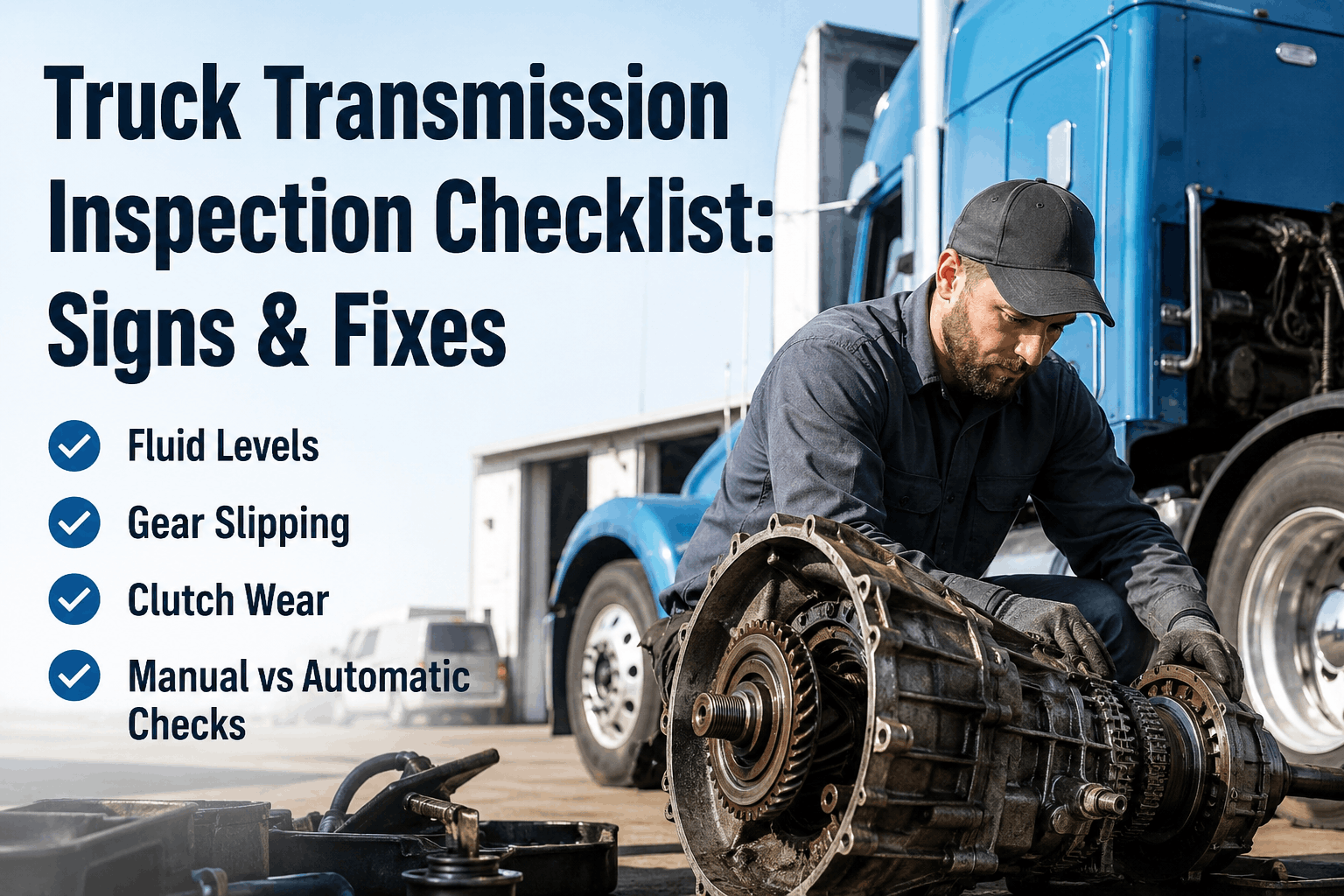
Truck Transmission Inspection Checklist: Signs & Fixes
The 7-System Transmission Inspection Framework
Every transmission inspection covers these 7 systems. Each addresses a distinct failure mode and catches a different category of problem before it becomes catastrophic. Contact our sales team for help deploying transmission inspection templates.
01 Fluid Level & Condition
02 Cooler & Lines
03 Gear Engagement
04 Clutch & Actuator (AMT)
05 Shift Quality & Pattern
06 TCM & Software (AMT)
07 Mounts & Linkage
The 6 Warning Signs Every Driver Should Recognize
Transmission failures rarely happen suddenly — they announce themselves through specific warning signs that drivers and technicians can catch days or weeks before catastrophic failure. The earlier the catch, the lower the repair cost.
Slipping Out of Gear Under Load
Hard or Harsh Shifts
Whining or Grinding Noises
Burning Smell
Fluid Leaks
Delayed Engagement
Manual vs AMT vs Automatic — What's Different
Three transmission architectures dominate commercial trucking. Each has different inspection priorities, failure modes, and service requirements.
| Attribute | Manual | AMT | Automatic |
|---|---|---|---|
| Primary failure mode | Clutch wear | Actuator/TCM | Hydraulic/valve |
| Class 8 market share 2026 | Declining | Dominant | Vocational |
| Common examples | Eaton FR/FRO | Endurant, DT12, I-Shift | Allison 4500/4700 |
| Fluid type | Synthetic 75W-90 | OEM-specific synthetic | TES 295, TES 668 |
| Service interval | 500K-750K mi | 500K-750K mi | 50K-150K mi (severe) |
| Clutch wear concern | Driver-dependent | Actuator-dependent | None (torque converter) |
| Electronic complexity | Low | High (TCM, sensors) | Medium |
| Repair cost typical | $3-8K rebuild | $8-15K rebuild | $6-12K rebuild |
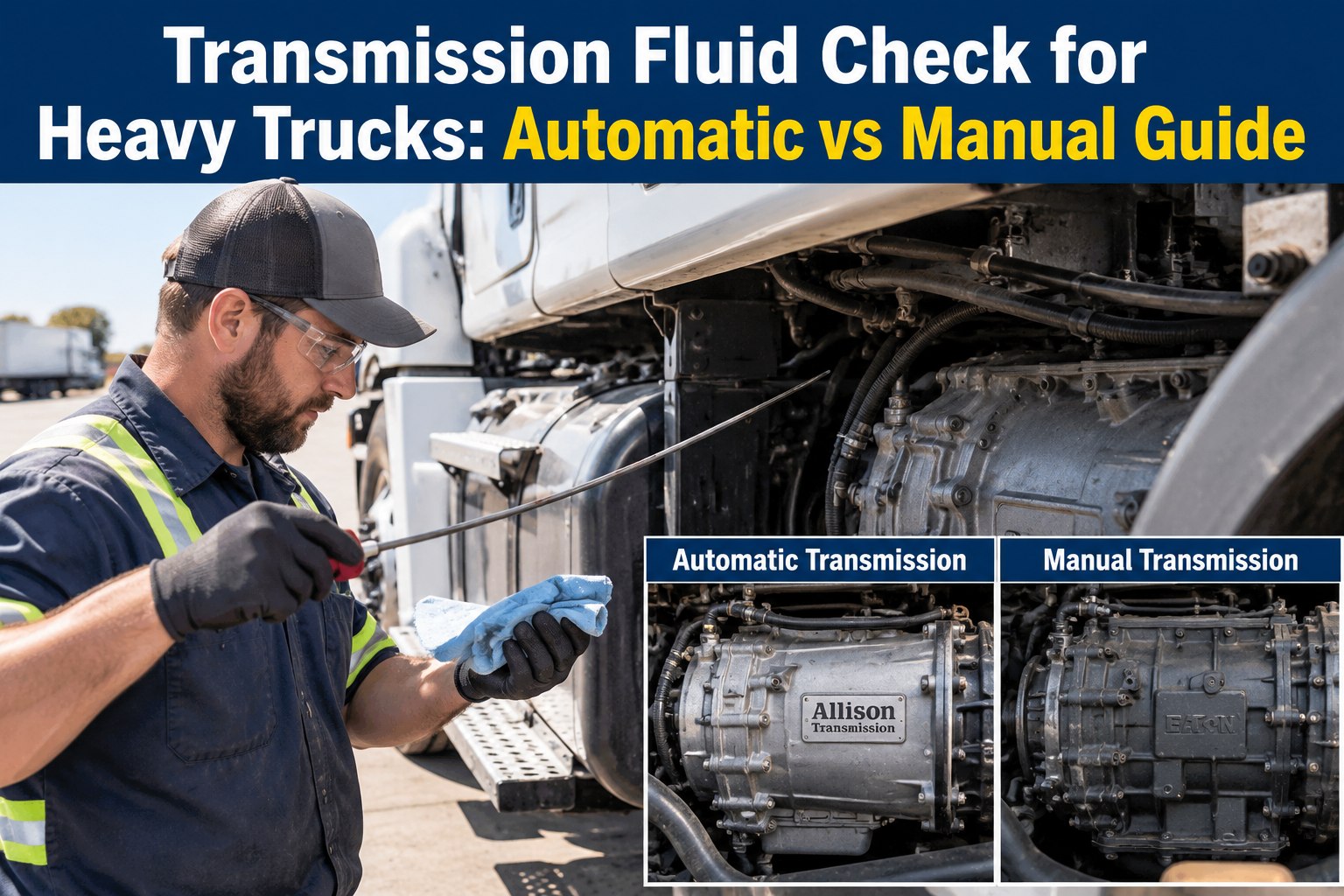
AMTs combine mechanical complexity of manuals with electronic complexity of automatics — meaning the inspection program needs to cover BOTH mechanical wear (clutch friction material, gear sets) AND electronic systems (sensors, actuators, TCM software). The Eaton Endurant alone has documented fault patterns: SPN 788 (clutch actuator), SPN 5614, SPN 706 (clutch cover per Eaton CLIB-0040), plus codes 64/66/19 for clutch actuator failure. Fluid maintenance is critical for all three architectures, but the symptom presentations differ — manuals show clutch wear via pedal behavior, AMTs via actuator codes, automatics via shift firmness changes.
Inspection Intervals & Fluid Service
Transmission inspection happens at multiple cadences — driver awareness daily, technical inspection at PM intervals, and major service at OEM-specified mileage.
| Interval | Inspection Scope |
|---|---|
| Daily (pre-trip) | Visual leak check, warning light scan, normal engagement on first shift |
| Weekly | Fluid level check (cold, level ground), pan visual, no new leaks |
| Monthly | Fluid condition (color/smell), cooler line condition, mount inspection |
| PM-B (25-30K mi) | Full 7-system inspection, fault code pull, fluid sample if AMT |
| PM-C (50-60K mi) | Fluid + filter change for automatic; oil sample for AMT |
| AMT major service | 500K-750K mi per OEM (Eaton: 750K HD / 500K XD on PS-386) |
| Automatic major | 50K-150K mi severe duty / 100K-150K linehaul (TES 295 or 668) |
FreightWaves industry principle: "fluid condition is more important than fluid mileage." OEM intervals assume normal operating conditions — severe duty operations (heavy loads, high ambient temperatures, mountain operation, frequent stop-and-go) shorten effective fluid life significantly. Inspect fluid at every PM regardless of mileage to expected service. Hot, dark, burnt-smelling fluid at 200,000 miles signals failure in progress, not "still within interval." For AMTs, also check Eaton ServiceRanger or equivalent diagnostic for clutch wear prognostics — these systems forecast remaining clutch life and let you schedule service before failure.
Frequently Asked Questions
How often should I check truck transmission fluid?
Driver-level fluid level check should happen weekly — on level ground at operating temperature for most automatic and AMT systems (manual transmissions check at the fill plug, level when fluid reaches the threshold). Technical fluid condition inspection (color, smell, particulates) happens at every PM cycle, typically PM-B every 25,000-30,000 miles. The OEM-specified fluid change interval depends on transmission type and duty cycle: Eaton Endurant 750,000 miles linehaul / 500,000 XD on PS-386 synthetic; Detroit DT12 service intervals vary by duty; Allison automatics 50,000-150,000 miles depending on operating conditions and approved fluid (TES 295, TES 668). Critical principle from FreightWaves: "fluid condition is more important than fluid mileage" — burnt-smelling or contaminated fluid signals failure regardless of service interval. Start your free trial to track fluid condition over the vehicle lifecycle.
What's the difference between AMT and traditional manual transmission inspection?
AMTs (Automated Manual Transmissions) like the Eaton Endurant, Detroit DT12, Volvo I-Shift, and Mack mDRIVE combine mechanical gearsets with electronic actuators and TCMs (Transmission Control Modules). Inspection covers BOTH mechanical and electronic failure modes — unlike traditional manuals which are mechanical-only. Mechanical inspection items overlap: fluid condition, clutch wear, gear engagement quality. AMT-specific items add: fault code review (SPN 788, 5614, 706 common on Endurant), TCM software version verification, actuator function check, clutch wear prognostics via diagnostic tools (Eaton ServiceRanger), and software update compliance. AMTs eliminate driver clutch input but introduce new failure modes: actuator failures, TCM calibration drift, sensor faults, and limp mode triggers after overnight air loss. AMT repairs typically run higher than equivalent manual repairs because of the electronic complexity layer.
What does it cost to repair or replace a truck transmission?
Costs vary significantly by transmission type and damage extent. Clutch replacement (manual or AMT): $1,500-$4,000 parts and labor. Transmission rebuild — manual: $3,000-$8,000; AMT: $8,000-$15,000; Allison automatic: $6,000-$12,000. Complete transmission replacement with new or remanufactured unit: $10,000-$25,000+ depending on type. AMTs cost more to rebuild because of electronic component prices and software programming requirements. Beyond direct repair cost, factor 5-10 days of downtime (typical) and rental tractor or lost revenue impact. The catch-it-early calculation: a $400 inspection catching low fluid prevents $8,000 in damage; recognizing clutch slippage early prevents driving on a slipping clutch (which destroys it fast). Disciplined inspection routine pays for itself before the first prevented failure. Contact our sales team for transmission inspection workflow.
What does burnt-smelling transmission fluid mean?
Burnt-smelling transmission fluid is one of the most serious warning signs in any transmission — and it almost always means the transmission has been overheating. In automatics, it indicates clutch packs are slipping and friction material is breaking down. In AMTs, it indicates the friction clutch is overheating from prolonged slipping (often actuator-related), excessive use under load, or low fluid level. In manuals, burnt fluid suggests the synchronizers or bearings have been overheating from low fluid or operator abuse. Action when burnt smell is detected: stop using the truck immediately, do not attempt to "drive it home." Continued operation on burnt fluid accelerates internal damage rapidly. Drain and inspect the fluid (metal shavings, discoloration), pull fault codes if AMT/auto, and identify the root cause of overheating before refilling — simply changing the fluid doesn't fix the underlying problem.
What are the most common Eaton Endurant transmission problems in 2026?
Field data from 2024-2026 identifies four recurring issues. (1) Clutch actuator failures — codes 64/66/19 — typically caused by seal wear or low voltage; fix is recalibration or LCA (linear clutch actuator) replacement. (2) Gear slipping under load — usually low fluid (use only Eaton PS-386 synthetic) or TCM calibration drift; check fluid first, then re-calibrate. (3) Limp mode after overnight air loss — air system bleed-down related; verify air system integrity. (4) Clutch cover issues per fault code 706 — Eaton CLIB-0040 service bulletin covers the 430mm clutch cover inspection and replacement procedure. Other indicators to watch: any "trans fault" warnings, delayed engagement, slipping under acceleration, or burnt smell from clutch. ServiceRanger diagnostic provides clutch wear prognostics for proactive replacement before failure. Endurant overhaul typically runs $8,000-$15,000, making preventive inspection economically critical. Sign up free to track Endurant inspection and fault code history.
How long do AMT and automatic truck transmissions typically last?
AMTs are rated for approximately 750,000 miles before extended service in linehaul applications — but field data shows significant variation based on fluid maintenance and operating conditions. AMTs operated on factory-specified synthetic fluid (Eaton PS-386 for Endurant), with disciplined fluid inspection, and operated within design parameters routinely exceed 1,000,000 miles before major service. AMTs operated with neglected fluid maintenance, severe-duty cycling, or excessive idle time can fail at 400,000-500,000 miles. Allison automatics in vocational applications typically run 500,000-800,000 miles with appropriate service. Manual transmissions in linehaul commonly exceed 1,000,000 miles if clutches are replaced when worn (clutch life varies 300,000-500,000 miles depending on driver). The single biggest variable in commercial transmission lifespan isn't the design — it's whether fluid is inspected and changed when condition warrants, regardless of mileage interval. Talk to our sales team for fleet-wide transmission lifecycle tracking.