Electric truck inspection in 2026 isn't simpler than diesel inspection — it's different. The items that disappear with electrification (engine oil, transmission fluid, belts, exhaust system, fuel system, aftertreatment) get replaced by items that didn't previously exist: high-voltage battery State of Health monitoring, HV cable integrity testing, charge port condition, thermal management coolant loop performance, 12V auxiliary battery health, regenerative braking function, and Battery Management System diagnostics. The stakes are higher than a typical diesel inspection in one specific way: the battery pack on a heavy-duty electric truck operates at 400-800 volts — voltage high enough to cause cardiac arrest on direct contact. A bent charge port pin can immobilize a $300,000+ vehicle. A 12V auxiliary battery failure stops the truck dead regardless of how much energy the main battery holds. The inspection workflow needs to evolve, not just shrink.
The good news for fleet managers: every FMCSA inspection regulation that applies to diesel applies identically to electric trucks. 49 CFR §392.7 still mandates pre-trip safety verification. §396.11 still requires the post-trip DVIR. §396.13 still requires reviewing the previous DVIR before driving. §396.17 still requires annual periodic inspection of all Appendix A systems by a qualified inspector. The FMCSA eDVIR Final Rule (Docket FMCSA-2025-0115, effective March 23, 2026) covers electronic inspection reports for both diesel and electric fleets. The difference: electric trucks add EV-specific items layered on top of the standard checklist, and the qualified inspector for the annual must be trained on high-voltage systems. Additional regulatory frameworks apply specifically to the HV battery side: OSHA 29 CFR 1910.303 (Electrical Systems General Requirements), SAE J2929 (HV Battery Safety Standards), NFPA 70E (Electrical Safety in the Workplace), and SAE J1772 (charging coupler standard).
This guide is the complete electric truck inspection checklist for 2026: the 6-section EV inspection structure, what disappears and what's added versus diesel, the daily/weekly/annual workflow, and the safety protocols that protect drivers and technicians around high-voltage systems. Start your free trial of our truck inspection and maintenance software to deploy EV-adapted inspection templates across your fleet — live in 10 minutes, free for up to 3 trucks.
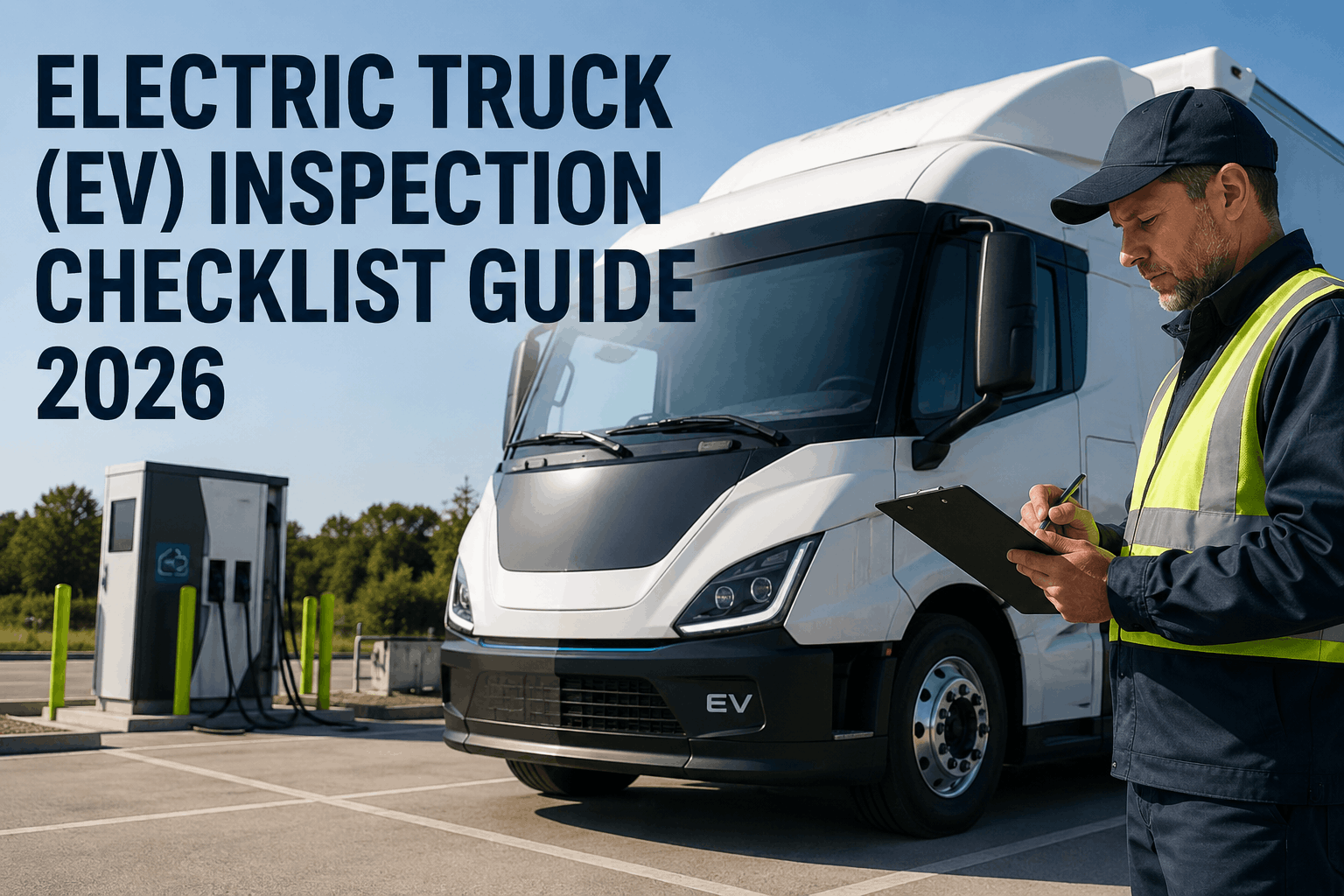
Electric Truck (EV) Inspection Checklist Guide 2026
The 6-Section EV Inspection Structure
Every EV truck inspection covers these 6 sections beyond the standard FMCSA items. Each addresses failure modes unique to battery-electric operation. Contact our sales team for help deploying EV inspection templates across your fleet.
01 Battery Pack Exterior
02 HV Electrical System
03 Thermal Management
04 Charging System
05 BMS & Diagnostics
06 Safety Equipment
What Changes from Diesel — The Inspection Diff
Understanding what disappears and what's added makes the EV inspection workflow click. Most categories shift in one direction or another rather than vanishing entirely.
REMOVED FROM EV INSPECTION
ADDED TO EV INSPECTION
Shared items behave differently. Brake pads wear less but rotors are prone to corrosion from underuse (regen does the deceleration work) — inspect for rust pitting rather than thickness depletion. Tires wear 20-30% faster than diesel equivalents due to higher curb weight and instant torque delivery. Suspension components see higher loads from battery weight. Cabin HVAC depends on battery power, not engine heat — confirm operation before dispatch in extreme temperatures.
The EV Inspection Schedule — Daily / Weekly / Annual
EV inspection follows the same tiered schedule as diesel — daily checks catch obvious issues, longer intervals catch the gradual battery degradation and connector wear that daily visual checks miss.
| Interval | EV Inspection Tasks | Time |
|---|---|---|
| Daily (pre-trip) | SoC verified, charge port visual, HV warnings, fluid leaks, smells, regen function | 20-30 min |
| Weekly | Insulation resistance check, thermal coolant level, 12V battery voltage, charge cable inspection | 30-45 min |
| Monthly | Full SoH review, BMS log analysis, charge port deep clean, thermal pump test | 1-2 hrs |
| Quarterly | HV cable full inspection, insulation resistance trend analysis, brake corrosion check | 2-3 hrs |
| Annual (§396.17) | Full Appendix A + EV systems by HV-trained qualified inspector | 4-8 hrs |
| Software Updates | BMS firmware, charging protocol updates — per OEM advisory schedule | Variable |
FMCSA Compliance — Same Rules, Plus EV Items
Every FMCSA requirement that applies to diesel applies identically to electric trucks. EV-specific items layer on top — not replace — the standard inspection framework.
Pre-Trip Inspection
DVIR Documentation
Prior DVIR Review
Annual Periodic
Hours of Service
Frequently Asked Questions
Do electric trucks still need DOT pre-trip inspections?
Yes — fully. Every FMCSA requirement that applies to diesel trucks applies identically to electric trucks operating in interstate commerce: §392.7 pre-trip inspection, §396.11 post-trip DVIR, §396.13 prior DVIR review, and §396.17 annual periodic inspection. The inspection items adapt for EV-specific components — battery State of Charge instead of fuel level, charge port and cable instead of fuel cap, regenerative braking system in addition to friction brakes, HV cable integrity instead of fuel lines — but the regulatory framework is identical. The eDVIR Final Rule effective March 23, 2026 covers both diesel and electric fleets. Electric fleets also add charging-specific workflow: charge level verification before dispatch, charging-port condition inspection, and integration of charging schedule with maintenance scheduling. Start your free trial to deploy EV-adapted FMCSA-compliant inspections.
Can regular mechanics inspect electric trucks?
For daily and weekly inspections, yes — drivers can perform standard visual EV checks without HV certification. For any work that involves opening HV systems, disconnecting battery packs, performing insulation resistance testing, or servicing the HV electrical system, only HV-certified technicians may perform the work — under OSHA 29 CFR 1910.303, SAE J2929, and NFPA 70E. The annual periodic inspection under §396.17 requires a qualified inspector who must additionally be trained on high-voltage systems for electric trucks. Many fleet maintenance shops are training technicians in HV certification as their EV vehicle counts grow; HV-certified labor commands a premium in the 2026 market. Plan for HV training as part of any fleet electrification roadmap.
What's the most overlooked item in EV truck inspections?
The 12V auxiliary battery. Electric trucks have a high-voltage main battery (400-800V) powering the drive system, plus a conventional 12V auxiliary battery powering the vehicle's computers, lights, locks, and HV system contactors. When the 12V battery fails, the entire vehicle won't "wake up" regardless of how much energy the main battery holds — making it the single most common cause of unexpected EV truck downtime. Yet daily inspections often skip 12V voltage testing because drivers assume the big battery is the only one that matters. Add 12V voltage check to every weekly inspection. Other commonly overlooked items: charge port pin condition (bent pins are the most common charging fault), thermal coolant leaks (battery longevity depends on thermal management), and brake rotor corrosion from regen underuse. Contact our sales team for comprehensive EV inspection templates.
How do regenerative brakes change brake inspection?
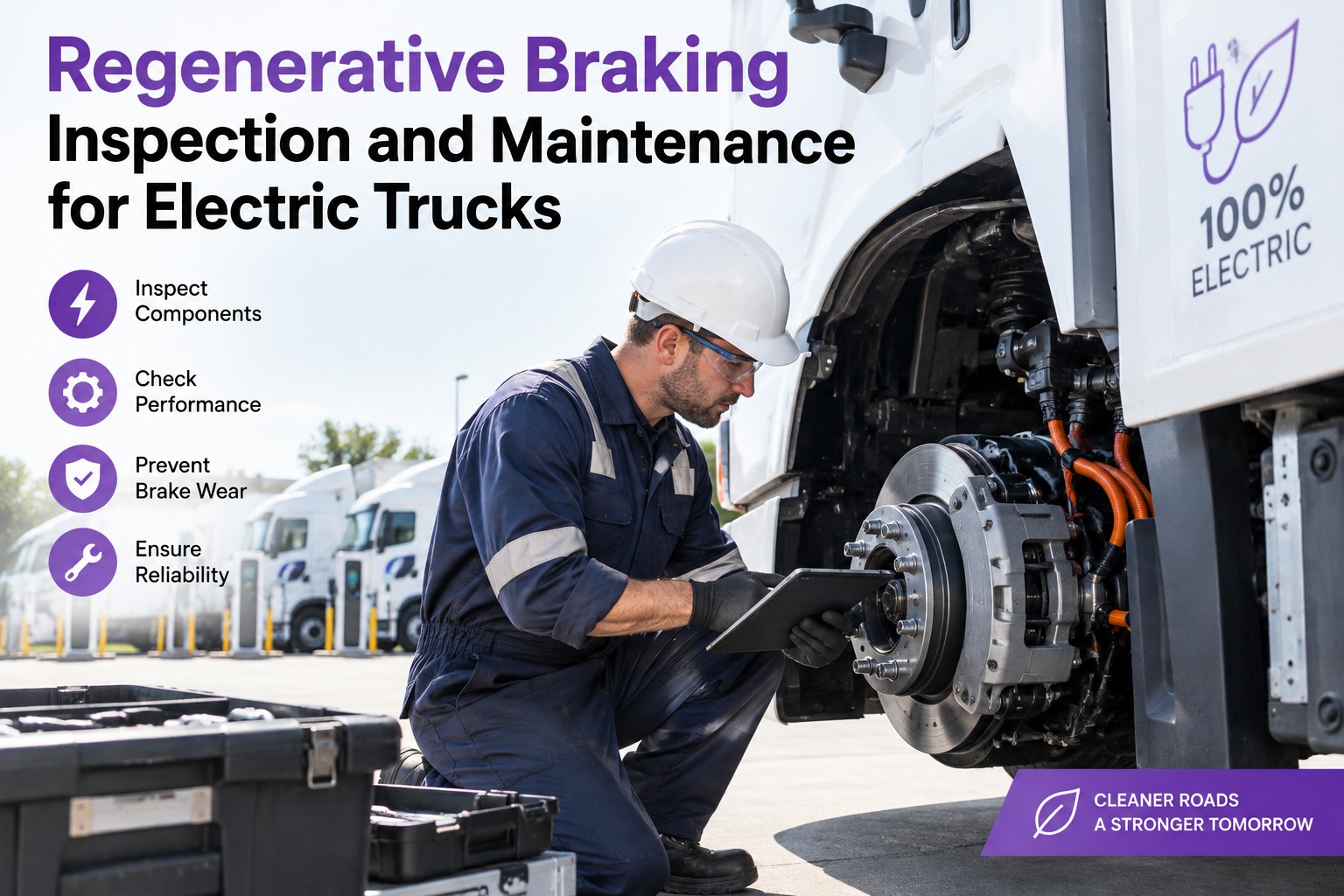
Regenerative braking does most of the deceleration work in normal driving, which means friction brake pads experience far less wear than on a diesel truck — pads commonly last 2-3 times longer. The flip side is that friction brakes can corrode and seize from underuse, especially in humid environments or where trucks sit between routes. The inspection focus shifts: less attention to pad thickness, more attention to rotor surface condition (rust pitting, scoring, glazing), caliper sliding pin lubrication, and brake function under actual use (occasionally bypass regen to fully exercise friction brakes). During the daily test drive or yard movement, verify regen activates when throttle is released (felt as deceleration without pedal pressure) — inconsistent regen indicates motor controller or BMS issues. Both regen and friction brakes need inspection, just for different failure modes.
How often should battery State of Health be checked?
State of Charge (SoC) should be verified before every dispatch — it's the EV equivalent of "do I have enough fuel for this route." State of Health (SoH) measures battery capacity relative to new, and should be reviewed monthly per vehicle to track degradation trends. SoH naturally declines over time (industry-typical 2-4% per year on commercial EVs), but unusual rate-of-decline signals problems: rapid SoH loss can indicate cell failure, thermal management problems, or improper charging practices. Best practice: log SoH at every monthly PM, plot the trend per vehicle, and investigate any vehicle declining faster than fleet average. SoH data is essential for warranty claims, replacement budgeting, and resale value — and modern fleet maintenance software auto-captures it from BMS telemetry. Sign up free to track SoH trends across your EV fleet.
What safety equipment is required for EV truck inspections?
For drivers performing standard daily inspections, no special PPE is required since the work is visual and doesn't involve opening HV enclosures. For technicians servicing HV systems, requirements include Class 0 or Class 00 rubber insulating gloves rated for the system voltage, insulated tools rated 1,000V minimum, arc-flash-rated face shields and clothing per NFPA 70E, voltage detectors verified before each use, and HV lockout/tagout equipment. The vehicle itself must have a Class C-rated fire extinguisher onboard (electrical fires require Class C; standard ABC dry chemical does not work on HV electrical fires), accessible emergency HV disconnect with clear labeling, and isolation monitoring indicators that warn of insulation breakdown. All of this is mandated under OSHA 29 CFR 1910.303 and SAE J2929. Talk to our sales team for guidance on EV safety program structure.