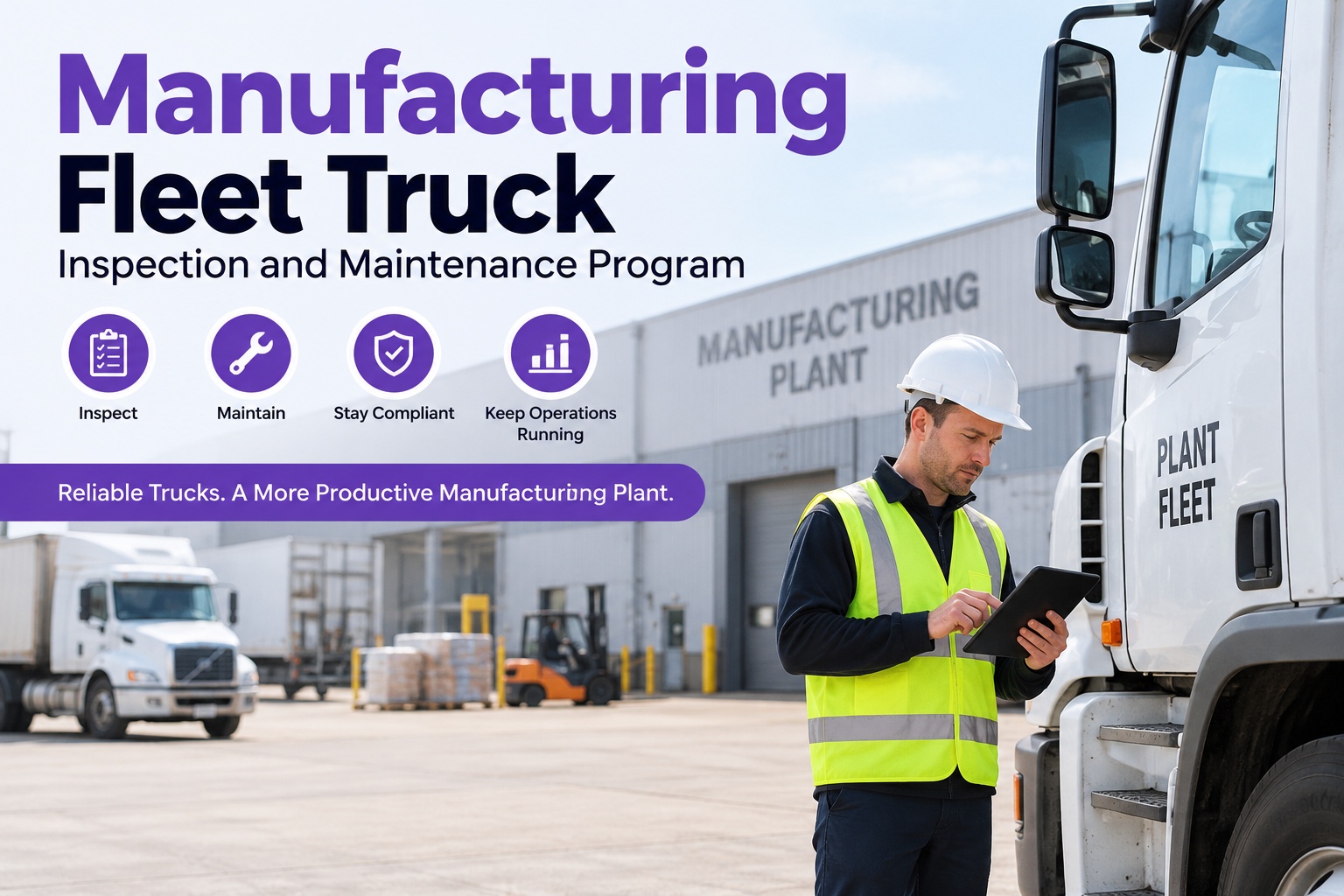
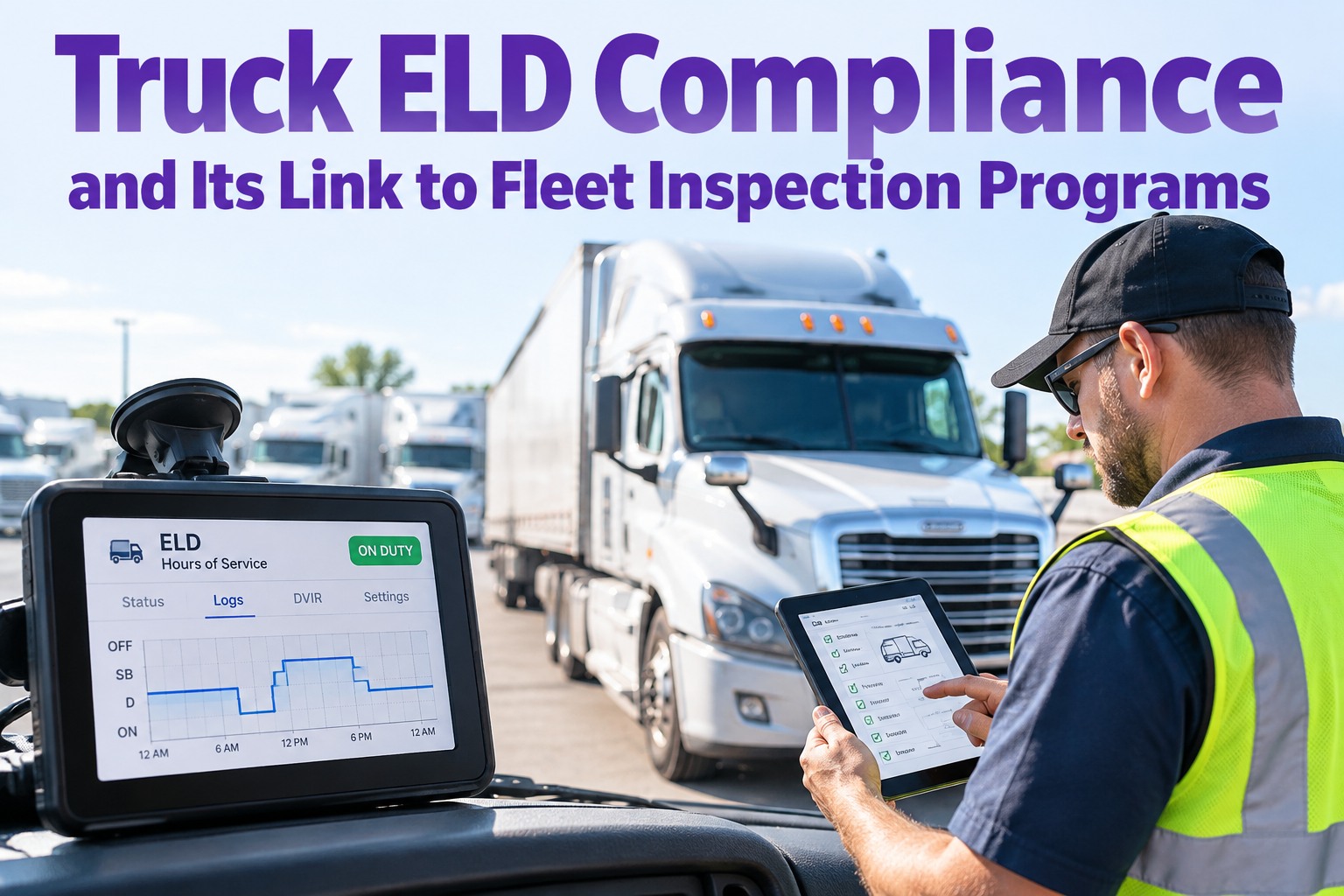
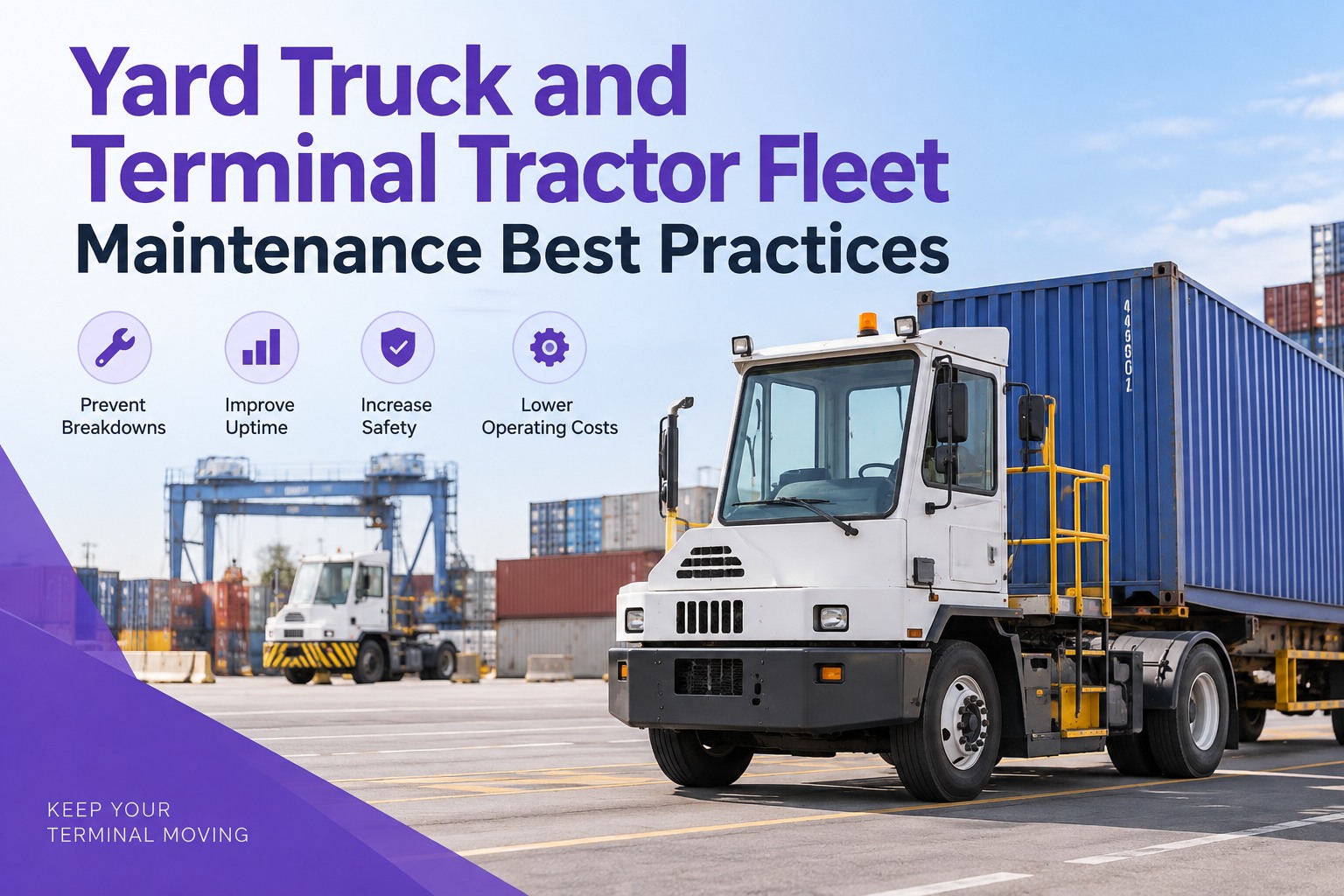
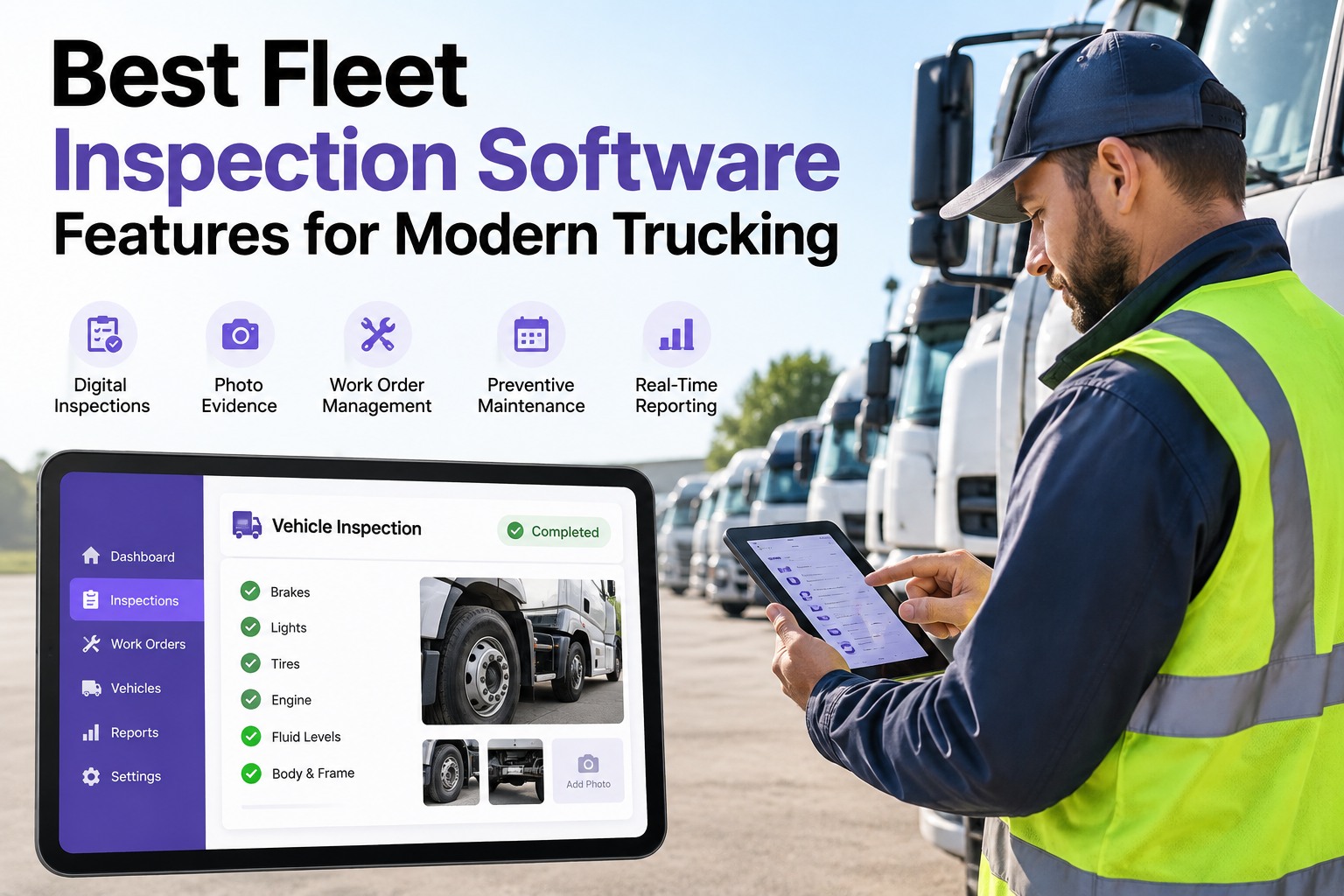
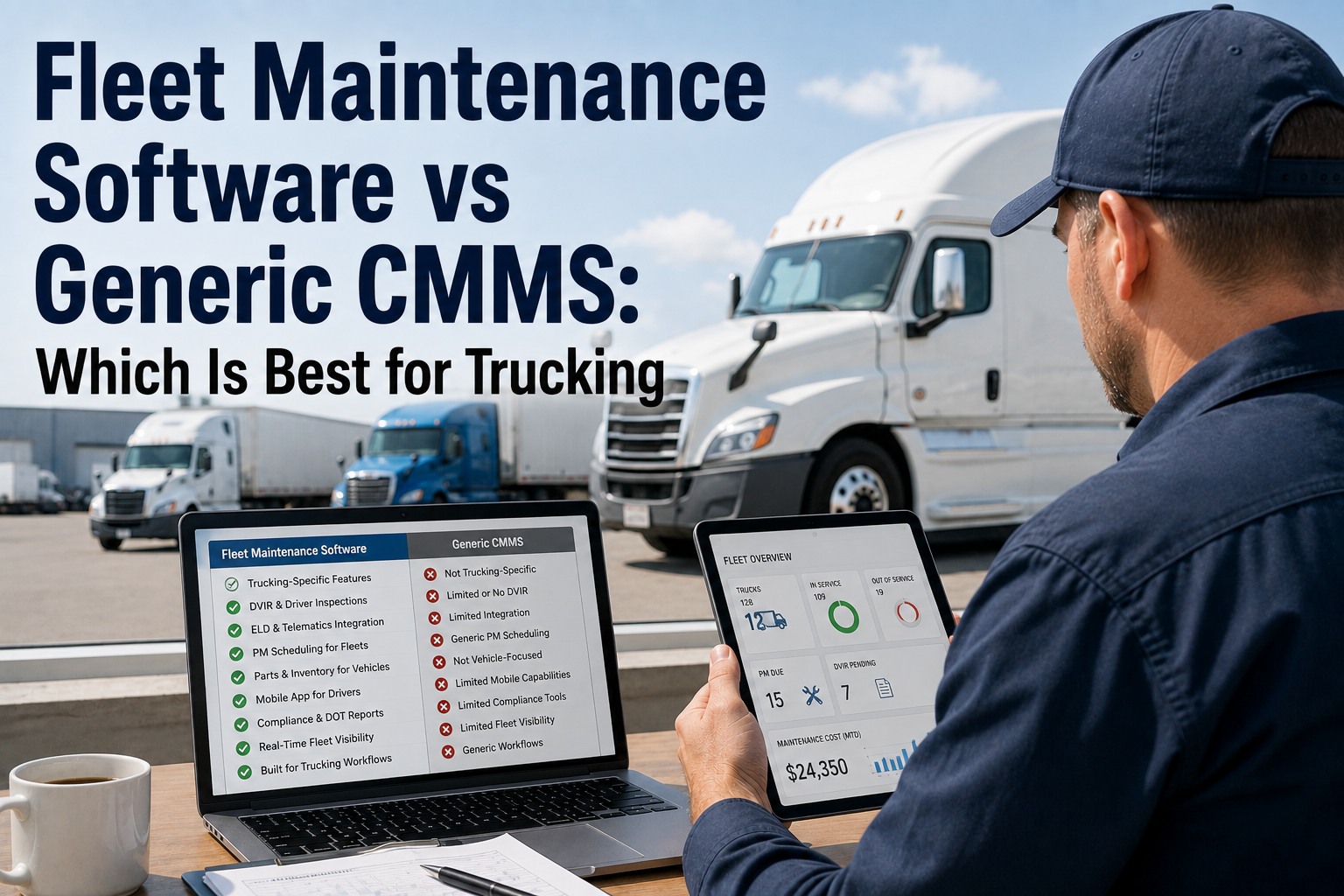
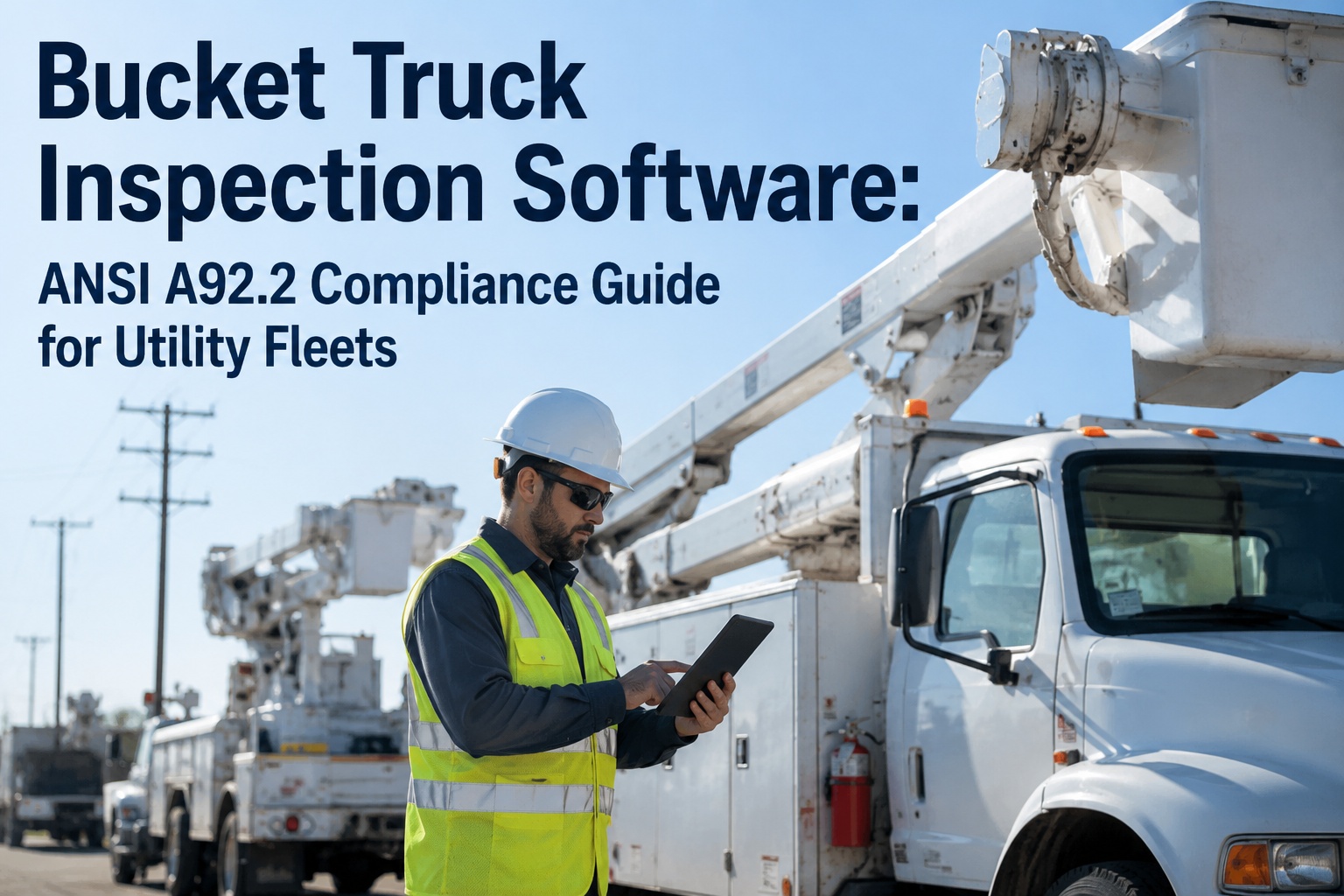
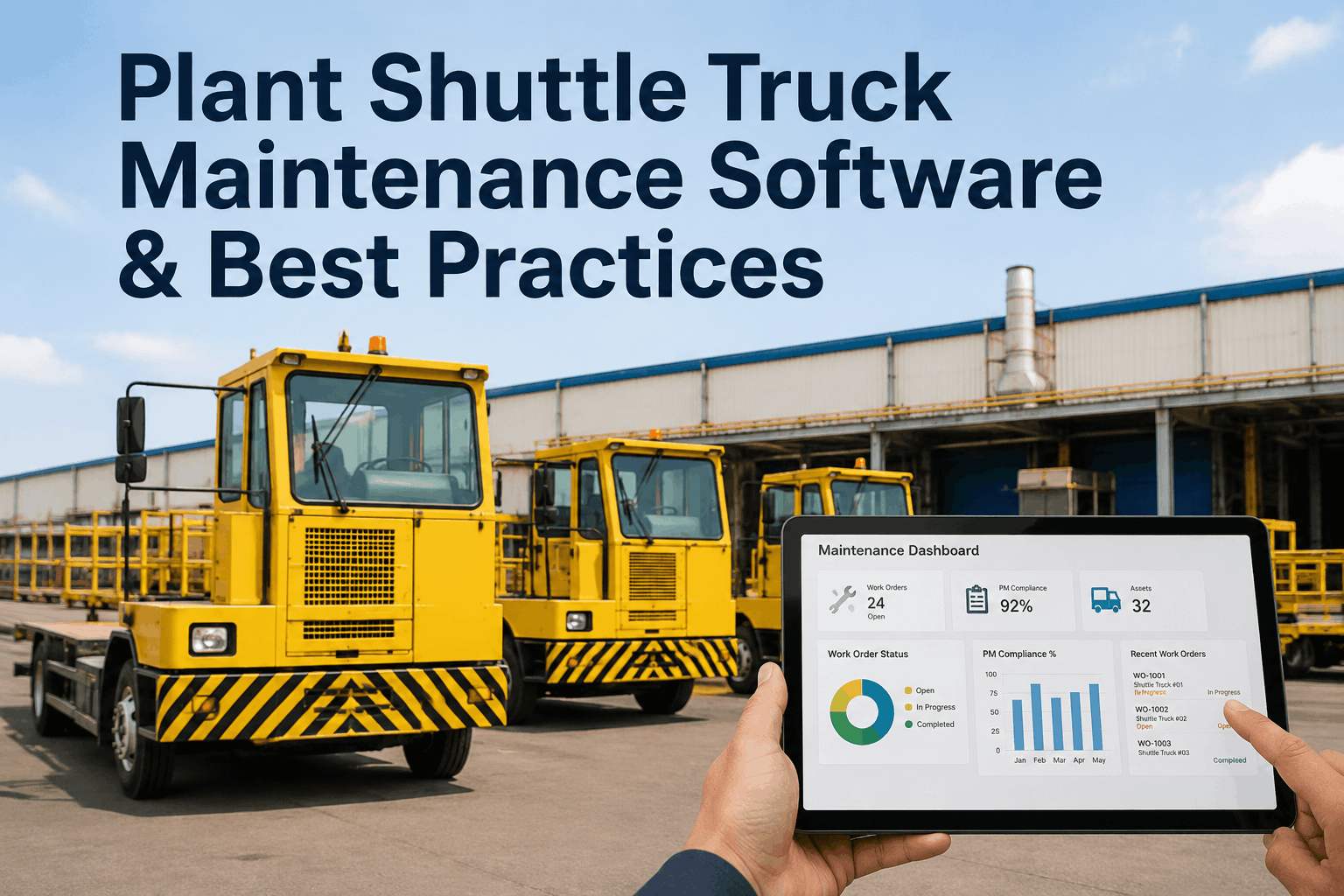
A manufacturing fleet isn't one fleet — it's two. There's the highway side that runs raw materials in and finished goods out, subject to FMCSA rules, DOT audits, and §396.11 DVIRs. And there's the yard side that shuttles pallets, feeds the dock, and moves trailers 200 yards to the loading bay — often the same drivers, often the same hooks, but on OSHA turf, not DOT. Most plants inspect the two the same way, which means they either over-comply on yard trucks or under-comply on highway ones. The fix is a single inspection program with two paths built into it. Start free and run both sides of your fleet on one platform.
Manufacturing Fleet · Highway + Yard · One Program
One Inspection Program for the Plant's Highway Trucks and the Yard Fleet Both
A manufacturing operation runs two fleets under one roof — DOT-regulated over-the-road trucks and OSHA-scope yard equipment. Truck Inspection & Maintenance Management Software gives each its own inspection path — FMCSA §396.11 for the highway side, shift-start pre-use for the yard side — with one asset record, one dashboard, and one weekly report the plant manager actually reads.
2 pathsFMCSA highway · OSHA yard
1 recordevery asset, every inspection, one file
1 reportweekly view for the plant manager
The Two Sides of a Manufacturing Fleet
Every plant's fleet lives in one of two worlds — sometimes both. Getting the inspection right means matching the rule set to the actual work, not applying one policy to a fleet that has two jobs.
HIGHWAY
🛣️
Over-the-road side
Class 8 tractors, dry-van and flatbed trailers, sometimes tankers. Move raw materials in from suppliers, finished goods out to customers or DCs.
FMCSA §396.11 DVIR
§396.17 annual
CDL drivers
CSA scoring
YARD
🏭
Plant-yard side
Yard tractors (hostlers, spotters), forklifts, box trucks, plant utility vehicles. Shuttle trailers dock-to-dock, feed the loading line, stage inbound receiving.
OSHA 1910.178 (PIT)
Shift-start pre-use
Non-CDL usually
Plant safety scope
The overlap trap A yard tractor that occasionally leaves the plant grounds — even just across a public street to a nearby DC — becomes an FMCSA-regulated vehicle for that trip. Plants that "run yard trucks" but occasionally cross a public road are the ones surprised by roadside inspections. The inspection program has to treat crossing-eligible assets as highway assets, even when they mostly live in the yard.
Two Inspection Paths, Not Two Systems
The mistake most manufacturing fleets make isn't policy — it's platform. They run one system for highway DOT and a different system (or paper, or a foreman's memory) for the yard. Same defect logged twice; same asset record living in two places; same repeat problem never getting caught because the two data sets never talk. The fix is one platform with two inspection paths a driver walks based on the asset they're operating.
🚚
Highway Path
Every dispatch
- Full CDL-order 7-zone walkaround
- Air-brake test sequence with numeric entry
- Signature chain per §396.13 (3 sigs)
- eDVIR retained per §396.11
- Annual §396.17 tracked to next-due date
- Coupling & cargo securement §393.100+
~8 min guided
🚜
Yard Path
Shift start
- OSHA 1910.178-scope pre-use check
- Horn, backup alarm, lights, brakes
- Hydraulics: fluid level, hose condition
- Tires, chains, guarding
- Operator sign-off retained per plant policy
- Defects still route to shop work orders
~3 min guided
The Plant's Fleet, One Dashboard View
The plant manager doesn't need two dashboards — they need one that shows every asset's status regardless of which side of the fleet it lives on. A yard hostler that fails its pre-use should show up next to a Class 8 that failed its DVIR, because from a plant-uptime perspective both are the same problem: a truck the plant needed today that can't move.
Plant Fleet Condition · Live
32 assets · 2 fleets
HIGHWAY
10Ready
2Defect scheduled
1OOS — grounded
1In shop
YARD
14Ready
3Defect scheduled
0Pre-use failed
1In shop
What the Plant-Yard Inspection Actually Covers
OSHA's Powered Industrial Truck rule (1910.178(q)(7)) requires that a yard truck or forklift be inspected before use, and taken out of service if a defect affects safe operation. The plant defines the checkpoints; the software gives the operator a guided path that captures them consistently.
🔊
Horn & backup alarm
Both audible from 20 feet; alarm activates automatically in reverse.
💡
Lights & strobes
Headlights, taillights, strobes/amber beacon functional. Load light where equipped.
🛑
Brakes & controls
Service brake holds under load; parking brake sets fully; inching/torque-converter response normal.
🛞
Tires & wheels
Solid tires uncracked or pneumatic tires at pressure. Lug nuts present. No debris in tread.
💧
Hydraulics & fluids
Fluid level, no hose weeps, lift chains lubricated, mast rails clean. Fifth-wheel oiled for hostlers.
🛡️
Guarding & seat belt
Overhead guard secure; seat belt fastens/retracts; operator restraint intact.
Assets a Manufacturing Fleet Actually Runs
The mix varies by plant, but most manufacturing fleets end up with the same six asset categories. Each has its own inspection template on the highway or yard path.
🚚
Class 8 tractors
Highway path · CDL · DOT-regulated · Annual §396.17
📦
Trailers (van, flat, tank)
Highway path · own DVIR · own §396.17 sticker
🚜
Yard tractors / spotters
Yard path · pre-use check · unless crossing public road
🏗️
Forklifts & PITs
Yard path · OSHA 1910.178 · daily pre-use required
🚐
Box trucks / service vans
Highway path if GVWR 10K+ & interstate · otherwise plant-scope
🛻
Utility & sweeper trucks
Yard path · manufacturer's maintenance schedule
Two Paths, One Platform, One Record Per Asset
Truck Inspection & Maintenance Management Software runs the FMCSA-compliant highway walkaround and the OSHA-scope yard pre-use on the same platform, with per-asset templates that route drivers into the correct path automatically. Every defect from either side becomes a graded work order; every asset carries one record; the plant manager gets one live dashboard and one weekly compliance report.
The Rollout — Plant, Then Highway
Most manufacturing fleets that move to a unified platform get more value faster by starting with the yard, not the highway. The yard is where the culture change lands quickly and the wins are visible; the highway side follows once the pattern is proven.
Phase 1
Yard first
Roll pre-use checks to hostlers and forklifts. Operators build the habit on 3-minute checks, defect data starts flowing.
Weeks 1–3
Phase 2
Highway drivers
Class 8 fleet moves from paper DVIR to guided digital. Signature chain enforced; §396.17 tracker set up per trailer.
Weeks 3–6
Phase 3
Shop unified
Highway and yard work orders merge into one queue. Shop foreman sees both fleets' repair load on one dashboard.
Weeks 6–10
Phase 4
Reporting to plant management
Weekly rolled-up report goes to plant manager and safety director. PM compliance and repeat-defect flags visible across both fleets.
Weeks 10+
Frequently Asked Questions
When does a yard truck become an FMCSA-regulated vehicle?
The moment it crosses a public road, even briefly. A yard tractor that shuttles trailers between two plant buildings entirely on private property stays under OSHA; the same tractor that runs 100 yards down a public street to a rented DC becomes FMCSA-regulated for that trip. In practice, most crossing-eligible yard trucks are treated as FMCSA assets full-time to avoid the on-again-off-again compliance headache. Our software lets you tag an asset as "highway" or "yard" or "crossing-eligible" and picks the inspection path accordingly.
Start free and configure crossing-eligible assets
Do forklifts really need a written daily inspection?
OSHA 1910.178(q)(7) requires that powered industrial trucks be examined before being placed in service, and that they not be used if the examination shows conditions adversely affecting safety. It doesn't spell out "written" — but every OSHA citation defense goes better with a written record than a memory, and most plants standardize on written checks as insurance. A guided 3-minute digital check satisfies both the letter and the spirit of the rule, and gives you a defect audit trail if anything happens.
Contact us to build an OSHA-defensible pre-use flow
Can highway drivers and yard operators use the same app?
Yes — same app, different paths triggered by which asset they open. A driver logs in, picks the truck they're taking, and the software loads the highway or yard template accordingly. This is how a plant with driver-operators (people who drive Class 8 outbound but hostle yard trailers on the same shift) can inspect both types of asset without switching systems. The record stays with the asset either way.
Start free with dual-role operator access
What's the biggest inspection risk unique to a manufacturing fleet?
Assets that live in the gap between OSHA and FMCSA — yard hostlers that occasionally cross public roads, spare Class 8s used for on-plant shuttling, service vans that occasionally leave to fetch parts. These get inspected as whichever side the operator remembers that day, which usually means neither side gets done right. A unified platform that classifies the asset once, then routes every inspection consistently, closes this gap — and it's the single biggest source of both DOT and OSHA findings at manufacturing plants.
Contact us to audit your gap-risk assets
Highway + Yard · One Program · Zero Gaps
Cover Both Sides of Your Plant Fleet on One Platform
Truck Inspection & Maintenance Management Software runs FMCSA-compliant highway inspections and OSHA-scope yard pre-use checks on the same platform, with per-asset templates, automatic defect-to-work-order routing, one asset record per unit, and a weekly plant-fleet report that covers highway and yard side by side. Manufacturing fleets use it to close the gap between DOT and OSHA scope, cut shop turnaround, and give the plant manager one dashboard instead of two.
No credit card required. Free for up to 3 trucks. Built for FMCSA-compliant fleets.