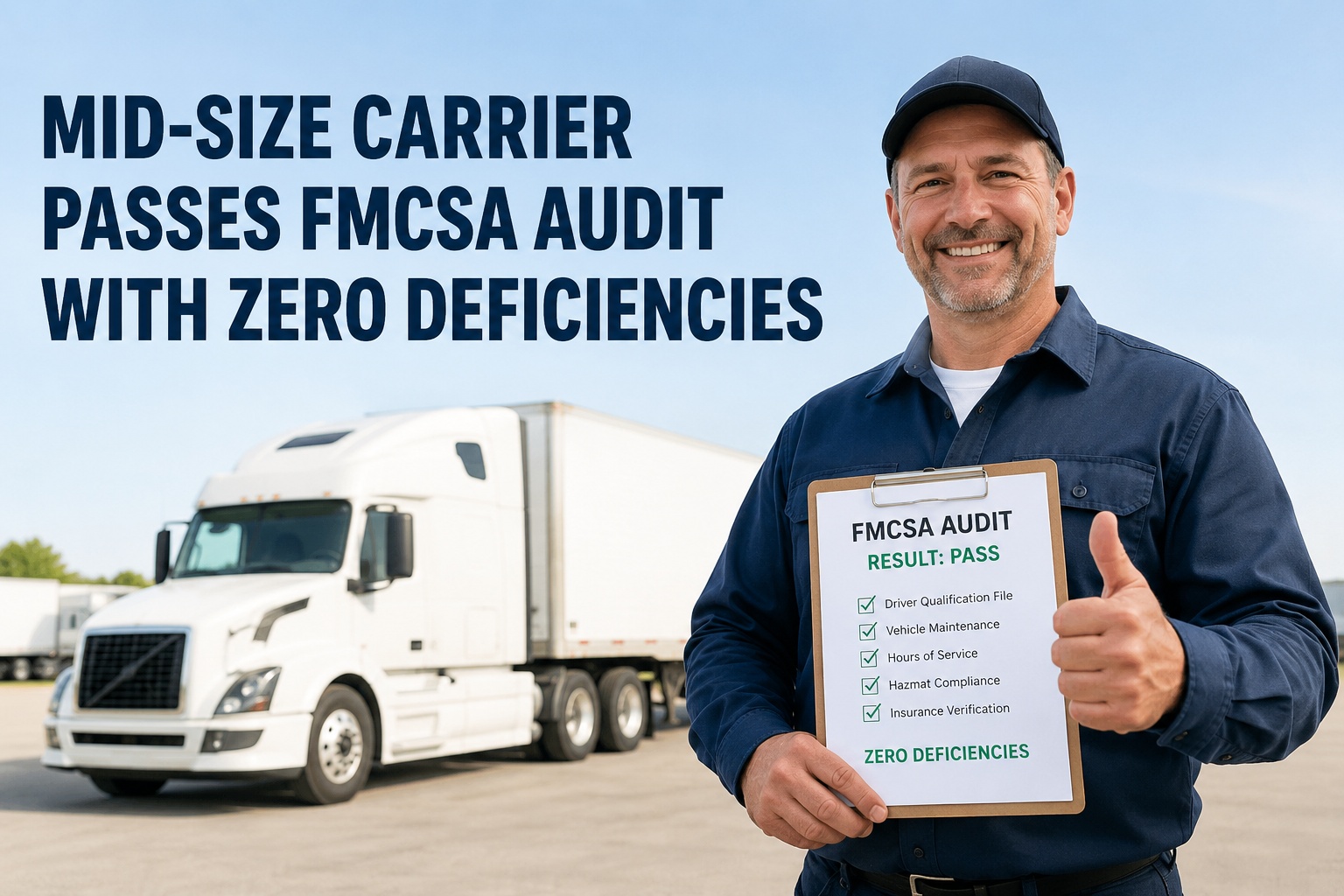
Discover how a 142-vehicle municipal Public Works fleet passed its FMCSA compliance audit with zero violations—an outcome only 7% of motor carriers achieve—by replacing paper-based DOT compliance tracking with a cloud-based records system, digital DVIRs, and automated expiration alerts. Government fleets face a higher compliance bar than the private sector: every record is potentially subject to FOIA requests, council scrutiny, and public accountability on top of standard FMCSA review. The City Public Works director walked into a Wednesday-morning DOT audit and walked out three days later with a clean rating. No corrective action letter. No fines. No conditional safety designation. This case study shows the exact compliance architecture that produced the zero-violation outcome—six compliance pillars built on cloud documentation, three rollout phases sized for government procurement timelines, and the audit-day playbook that turned what most fleet directors dread into what this team had been preparing for every working day of the previous year.
The Government Fleet Compliance Bar Is Higher
Private fleets answer to DOT. Government fleets answer to DOT, the city council, the public records officer, and any citizen who files a FOIA request. A missing inspection isn't just a safety risk—it's a political liability, a budget question, and potentially a headline. Contact Support to discuss your public-sector compliance posture, or Start Free Trial to start building audit-readiness today.
The Public Works Fleet at a Glance
The Six Compliance Pillars Auditors Examined
DOT audits follow a predictable structure—the same six compliance areas every time. The Public Works director built the fleet's compliance architecture around exactly those six pillars, with each one mapped to a specific cloud record system long before the audit notice arrived.
The 6-Month Rollout Sized for Government Procurement
Private fleets can deploy in 30 days. Government fleets work through procurement, IT security review, and union notification cycles that turn a 30-day rollout into a 6-month phased implementation. This is the timeline the Public Works director actually ran.
- Cooperative purchasing agreement secured (Sourcewell / GSA)
- City IT security review of cloud platform completed
- Union labor classification language reviewed with shop steward
- Vehicle roster and operator list compiled across all 5 departments
- Six compliance pillars mapped to cloud record structure
- Inspection forms configured for trucks, plows, sweepers, loaders
- Pilot with Streets Division (24 vehicles, 18 operators)
- FOIA-export and audit-export functions tested with mock requests
- All 142 vehicles & 88 operators live on digital DVIRs
- Three years of paper records scanned and indexed into cloud
- Automated expiration alerts configured at 90/60/30/14/7 days
- Department supervisors trained on dashboard & audit-export tools
The Audit-Ready Dashboard the Director Watched Daily
Audit readiness isn't a project—it's a posture. The director reviewed the compliance dashboard every morning, addressing any amber or red status before it could become an audit finding. This is what the dashboard showed on a typical Tuesday.
Could your fleet pass a DOT audit on Tuesday morning?
See how cloud compliance records, digital DVIRs, and automated alerts make audit-readiness a daily posture instead of a fire drill.
Audit Day, Hour by Hour
The audit started on a Wednesday morning when the FMCSA investigator's email arrived at 7:48 AM. The next three days were entirely predictable—because every record the auditor would request was already organized, indexed, and exportable in seconds. Here is how it played out.
The Audit Outcome
The clean rating wasn't a single moment. It was the cumulative result of a fleet running audit-ready every day. The outcomes split into compliance results, time savings, and the public-trust dividend that mattered most to a government fleet director.
Compliance Posture: Before vs After
| Metric | Before | After | Change |
|---|---|---|---|
| DOT audit outcome | 2 prior years with findings | Zero violations | Clean rating |
| DVIR submission rate | ~71% | 100% | +29 pts |
| Audit prep time | 3-4 weeks | Under 4 min | Instant |
| Late medical cert renewals | 5 per year | 0 | Eliminated |
| Missed annual inspections | 3 per year | 0 | Eliminated |
| FOIA response time | 5-10 business days | Same day | Same-day |
| Records storage cost / year | $18,400 | $2,800 | −85% |
| Council reporting time | 2-3 days | 30 minutes | 94% faster |
What Made Audit-Readiness Permanent
One clean audit is a single event. Audit-readiness as the everyday operating mode is the discipline that government fleets need to sustain across budget cycles, council transitions, and staff turnover. Four practices kept the posture in place.
Compliance Dashboard Reviewed Daily
Fifteen minutes every morning, the director scanned the six-pillar dashboard. Amber items got actioned that day. Red items never had a chance to appear.
FOIA-Ready From Day One
Every record was structured so a FOIA request could be fulfilled by export, not by manual assembly. Public accountability became a five-minute task, not a five-day project.
Quarterly Mock Audits Internal
Every quarter, the safety coordinator ran a mock audit against the same checklist the FMCSA uses. Any gap found internally was fixed before it could be found externally.
Records Migration Was Never Optional
Three years of historical paper records were scanned and indexed during deployment. Audit retention windows applied to digital records from day one—no gap between old paper and new digital.
I'd seen what a DOT audit could do to a government fleet director's career. We'd had findings in two of the last three audits, and every time the explanation back to council was the same—paper records, missed alerts, things slipping through. The cloud platform changed what was possible. The morning the audit notice came in, I exported the full package in under four minutes. Three days later we had a clean rating. No fines, no corrective letter, no headline. My team had been running audit-ready every single day for fourteen months. The audit just confirmed what the dashboard had been showing us all along.
Make Every Day an Audit Day
Government fleets don't pass DOT audits by getting lucky. They pass them by running audit-ready every working day—with cloud compliance records, digital DVIRs, automated expiration alerts, and a dashboard the director actually watches. The 7% who pass clean aren't different fleets. They're fleets with different systems.
Ready to Run an Audit-Ready Fleet?
See how cloud compliance records, digital DVIRs, and automated alerts turn DOT audits into a four-minute export instead of a three-week fire drill—with measurable compliance gains inside the first 60 days.