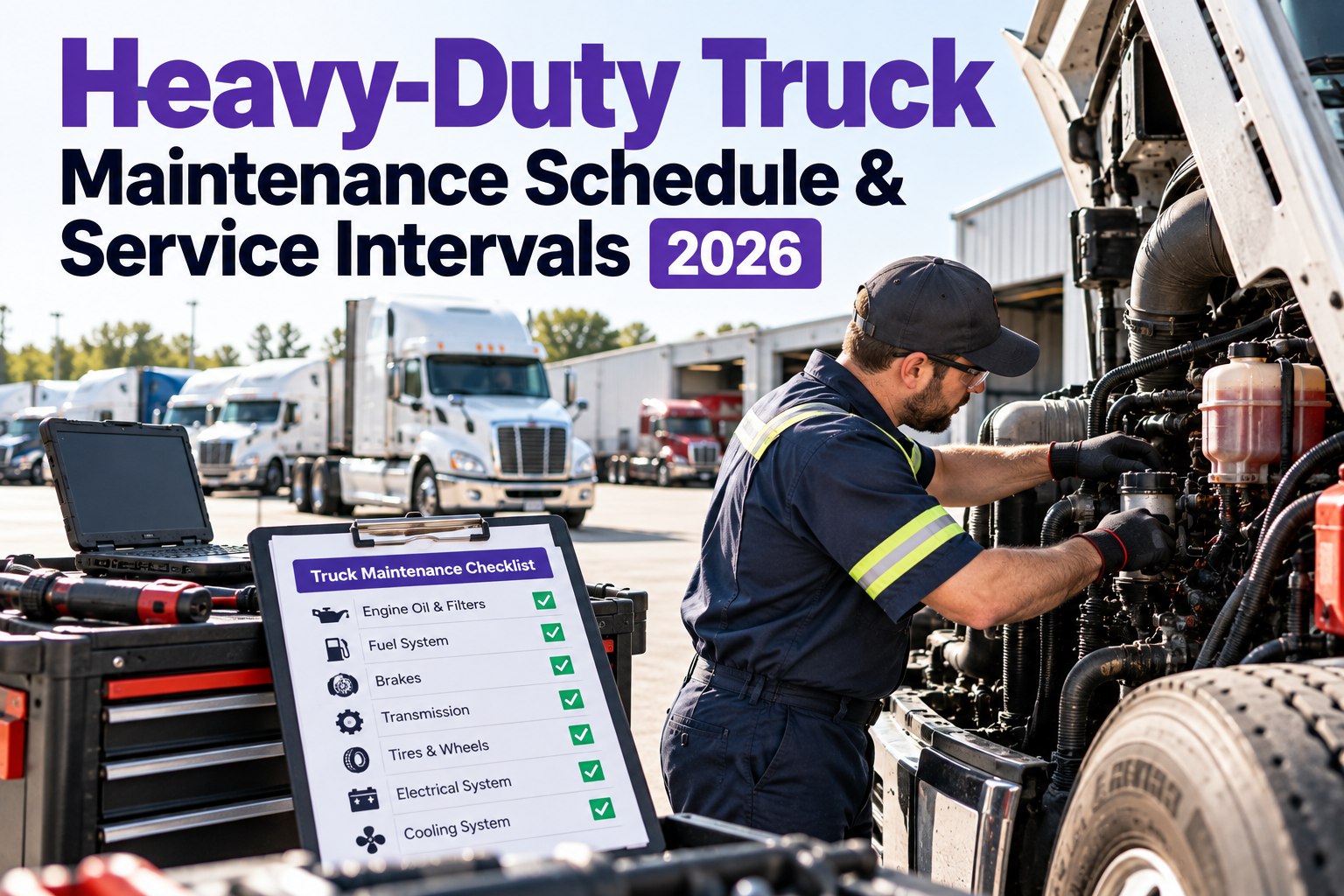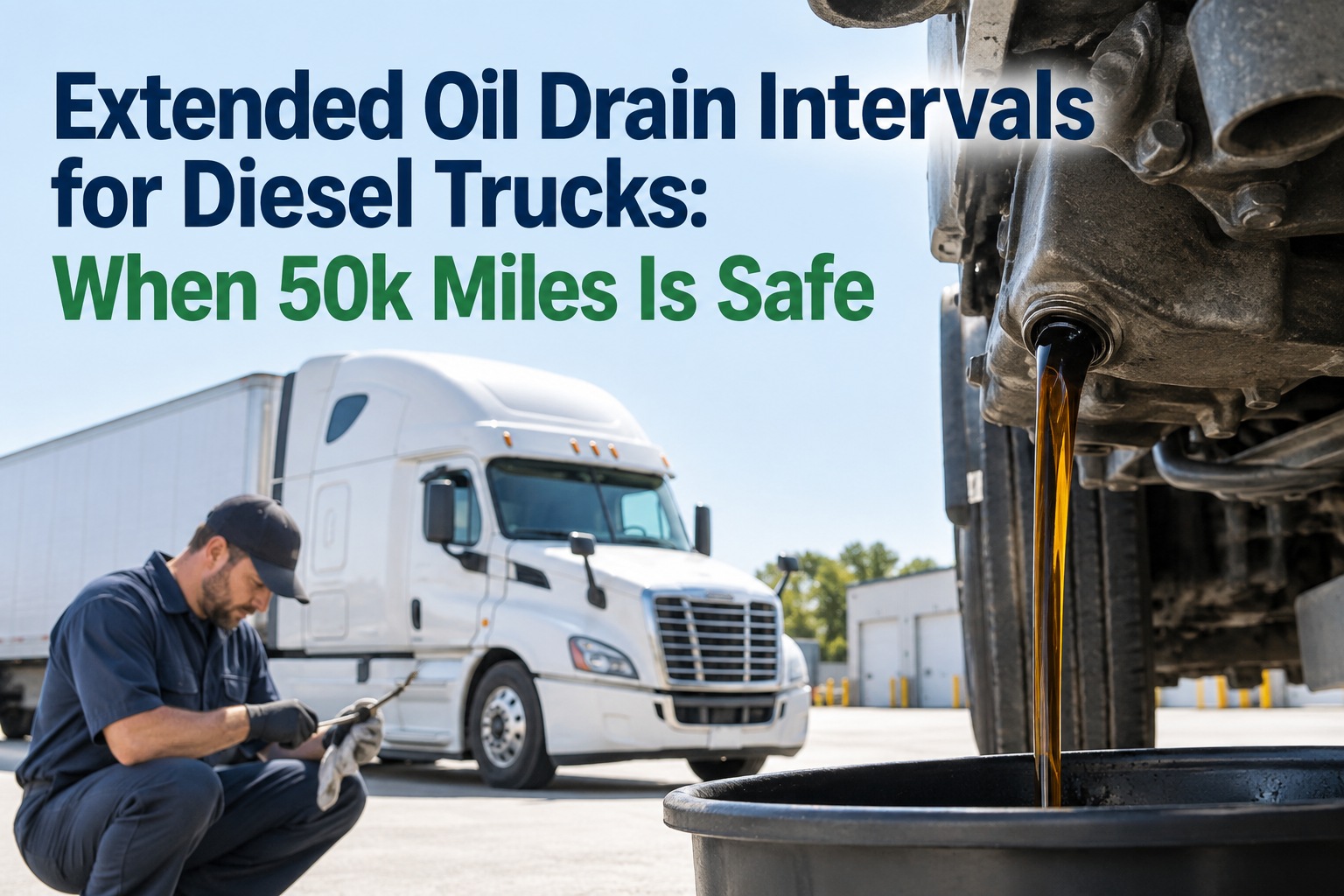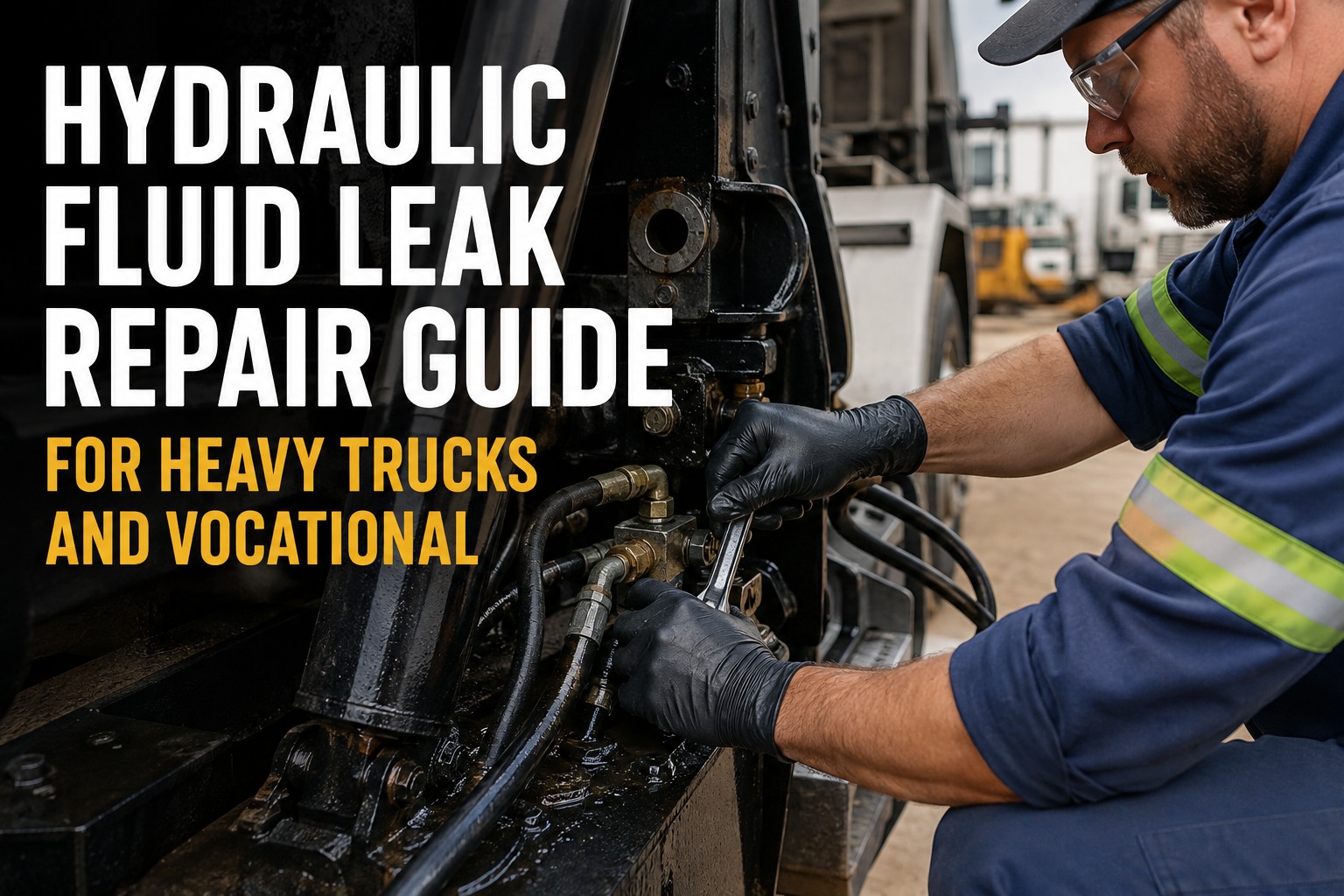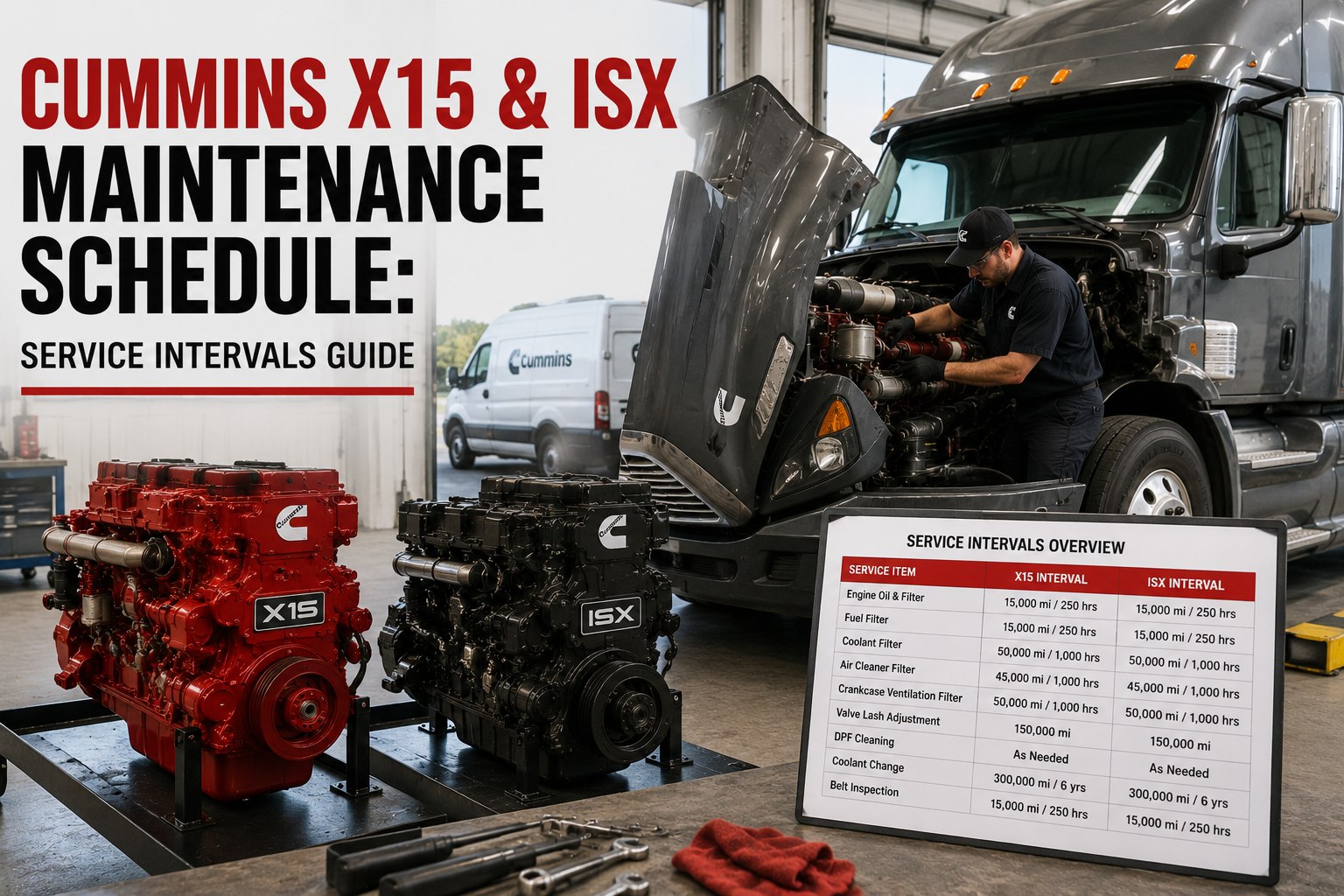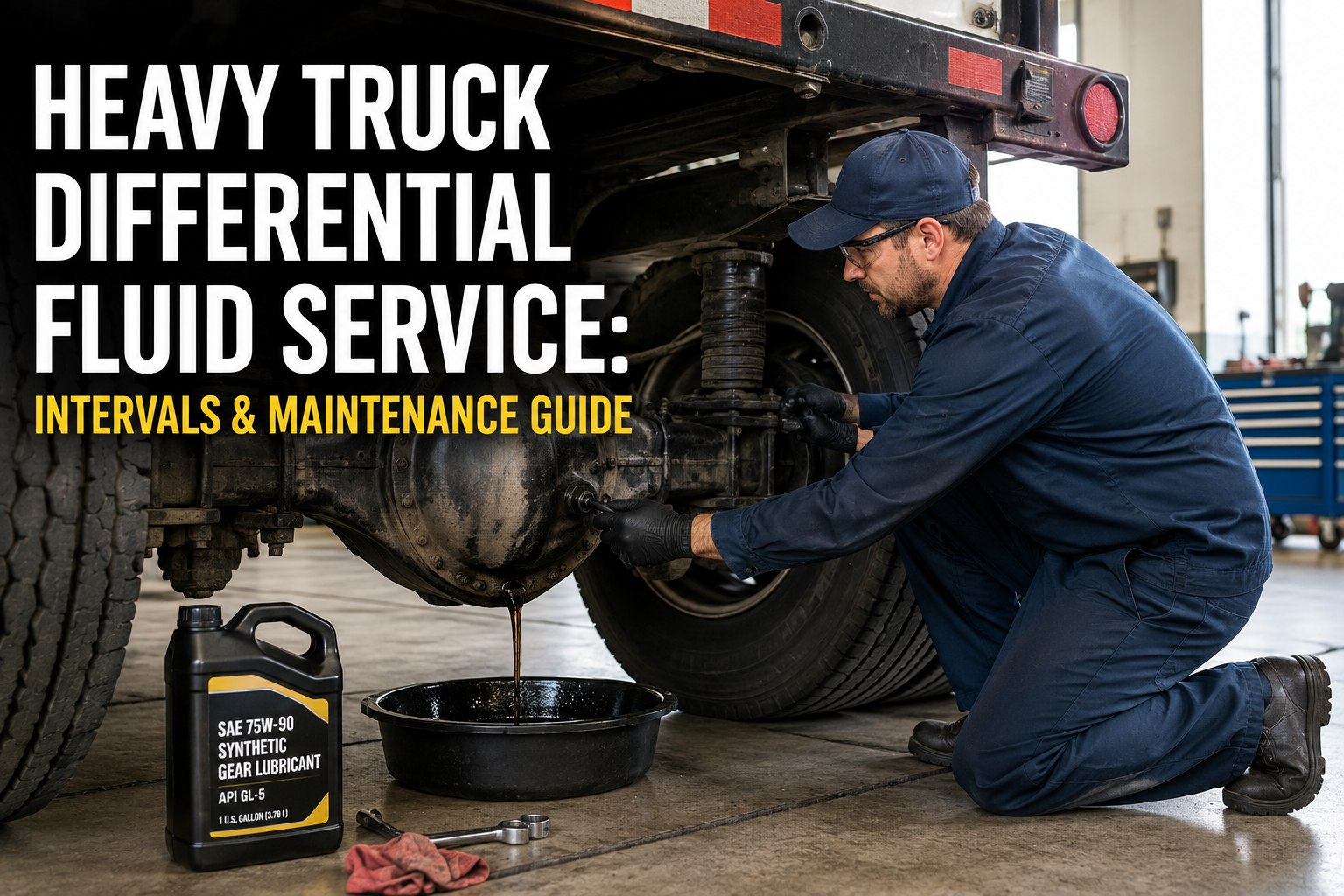
Differential fluid is the most quietly punished lubricant on a commercial truck. It runs inside a sealed housing under extreme pressure and heat, absorbing the full torque of the drivetrain every time the truck accelerates, climbs, or hauls a heavy load — and unlike engine oil, it has no filter to catch the metal particles it slowly grinds off the ring and pinion gears. Fleet data from the American Trucking Associations' Technology and Maintenance Council shows differential-related failures account for roughly 6% of all commercial drivetrain failures, at repair costs ranging from $4,200 to $18,000 — and 78% of those failures trace back to contaminated, degraded, or low lubricant that a systematic fluid service program would have caught 30 to 90 days earlier. That gap between what the fluid is doing and what most PM checklists actually track is why differential service gets treated as a $200 checkbox instead of the $200 event that prevents a $10,000 rebuild. This guide breaks down exactly when to change differential and axle fluid on heavy trucks, the intervals that apply to highway versus vocational duty cycles, the correct fluid types for each axle position, the warning signs that appear before failure, the real cost picture, and how our Truck Inspection & Maintenance software turns differential service from a missed line item into a tracked, scheduled, cost-visible event across every truck in the fleet. Ready to see it in action? Start a free trial of Truck Inspection & Maintenance, or contact our support team for a walkthrough.
Heavy Truck Differential & Axle Fluid Service: Intervals, Fluids, Costs
The most neglected lubricant on your truck runs unfiltered, under extreme pressure, absorbing every pound of torque. Here's exactly when to change it — and how Truck Inspection & Maintenance software keeps every axle on schedule across your fleet.
Why Differential Fluid Fails Differently Than Engine Oil
Engine oil has a filter. Differential fluid does not. That single design difference explains why gear oil degrades the way it does — and why the "just top it off" mentality kills axles.
Service Interval Matrix: By Duty Cycle
There is no single "right" interval for heavy truck differential fluid. The correct answer depends on duty cycle, position on the truck, and manufacturer specification. Here's the matrix that actually reflects fleet reality.
The Fluid Degradation Timeline
Gear oil doesn't fail all at once. It degrades through predictable stages — and each stage leaves a signature you can spot at service. Here's what's happening inside the housing at every mileage marker.
Fluid Specification: Getting It Right
Gear oil specification errors cause about 12% of premature differential failures according to fleet studies — and they are the most preventable failure mode of all. The wrong fluid destroys an axle just as fast as no fluid. Here's what to spec.
The 6 Warning Signs Drivers Hear First
Differential problems announce themselves through sound and feel before they show up on a shop lift. Train drivers to report these six symptoms — every one is a fluid service or diagnostic trigger.
Truck Inspection & Maintenance software runs your diff service on autopilot
Set intervals per axle position and duty cycle. Auto-scheduled work orders hit before the mileage threshold. Fluid analysis results attach to unit history. Cost-per-mile tracked at the axle level — all in one platform built for commercial fleets.
The Real Cost Math: Service vs. Repair vs. Replace
Fleet managers make one calculation on every deferred maintenance decision: what does it cost to do it, and what does it cost to skip it? Here's the math on differential service specifically.
The Service Procedure: What Actually Happens
Differential fluid service is a 45–90 minute shop procedure per axle. Here's the sequence, so drivers, managers, and DIY shops all understand what proper service looks like.
Fluid Analysis: The Data Layer Above Fluid Changes
Sending a fluid sample to a lab every service costs $20–$40 per axle and reveals problems 30–90 days before they cause failure. For fleets over 20 trucks, fluid analysis pays for itself on the first prevented rebuild — and Truck Inspection & Maintenance software attaches every lab report to the axle's service history so trends surface across the whole fleet, not just one truck at a time.
Fleet Maintenance Rhythm: What to Do When
The strongest fleets run differential service on a rhythm, not a reaction. Here's the daily-to-annual cadence that keeps axles alive across an entire fleet — the same cadence Truck Inspection & Maintenance software automates through DVIR checklists, scheduled PM triggers, and mileage-based work order generation.
Top Mistakes That Kill Differentials Early
Every failed differential we see traces back to one of these preventable mistakes. Learn them, teach them to your techs, and you'll add 200,000–400,000 miles to your axle life.
Frequently Asked Questions
Highway linehaul trucks: every 100,000–250,000 miles on the rear differential and 50,000–100,000 miles on the inter-axle differential. Regional and mixed-duty trucks: 80,000–120,000 miles rear, 40,000–75,000 miles inter-axle. Vocational and severe-duty trucks: 50,000–80,000 miles rear, 25,000–50,000 miles inter-axle. Off-road and construction: 30,000–50,000 miles rear. Always verify against the axle manufacturer's specification (Meritor, Dana, Eaton) — those numbers govern warranty coverage. Truck Inspection & Maintenance software stores those intervals per truck and per axle position, so the right service triggers automatically at the right mileage.
A routine differential fluid service on a Class 8 truck costs $200–$400 per axle including fluid, labor, and gasket replacement. Tandem-axle service (rear diff plus inter-axle differential) runs $400–$700 total. Add $20–$40 per axle if you also pull a sample for fluid analysis. Compare that to $4,000–$10,000 for a differential rebuild or $8,000–$18,000 for complete axle replacement, and the routine service pays for itself many times over.
Six main symptoms: whining or howling on acceleration (pitch changes with speed), clunk or bang on throttle-on/throttle-off (excessive backlash), rumble or growl on coast (bearing wear), fluid puddle under the housing (seal failure), burnt sulfur smell after long hauls (oxidized gear oil), and vibration through the cab floor (advanced bearing damage or driveshaft imbalance). Any one of these is a service trigger. Two or more together usually means damage has already started.
Most Class 8 rear differentials use SAE 80W-90 or 75W-90 API GL-5 hypoid gear oil, with 80W-140 specified for high-heat vocational applications. Full synthetic PAO-based gear oil is preferred for its longer service life and better cold-weather flow. Trucks with limited-slip or locking differentials require friction-modifier additive — using non-LSD fluid causes chatter and clutch pack wear. Inter-axle differentials (power dividers) often require a manufacturer-specific lubricant different from the rear diff, so always cross-reference the axle manufacturer specification, not just the year and model. Truck Inspection & Maintenance software stores the correct fluid spec per axle on each unit so techs never guess — contact our team for a walkthrough.
You can, but not for long — and not without cost. Low differential fluid causes rapid heat buildup, additive breakdown, and metal-on-metal contact between the ring and pinion. Within a few hundred miles of running low, gear teeth begin to score and bearings begin to overheat. Within a few thousand miles, the axle is typically a rebuild candidate. If a low-fluid condition is detected, park the truck, diagnose the leak, replace the seal, and refill before any further operation. Running to failure costs 20 times what fixing it early costs.
Not necessarily. The front drive axle on an all-wheel-drive Class 8 truck typically sees less torque and less heat than the rear, so its fluid degrades slower — front axle intervals often run 20–30% longer than rear. But if you're already in the shop for rear service, doing both at once saves labor time and simplifies your fluid history record. Most fleets align front-axle service to every second rear-axle service — a cadence Truck Inspection & Maintenance software handles automatically once the intervals are set. Try free: sign up here.
Truck Inspection & Maintenance software turns diff service into a scheduled event, not an emergency
Interval tracking per axle position. Fluid analysis results attached to unit history. Cost-per-mile visibility at the axle level. Auto-scheduled work orders that hit before the mileage threshold — not after. DVIR-driven defect capture that flags leaks and noise the moment a driver reports them. Everything a fleet manager needs to keep every axle alive to 1 million miles — in one platform, built specifically for commercial fleets.